

 Computer Forum
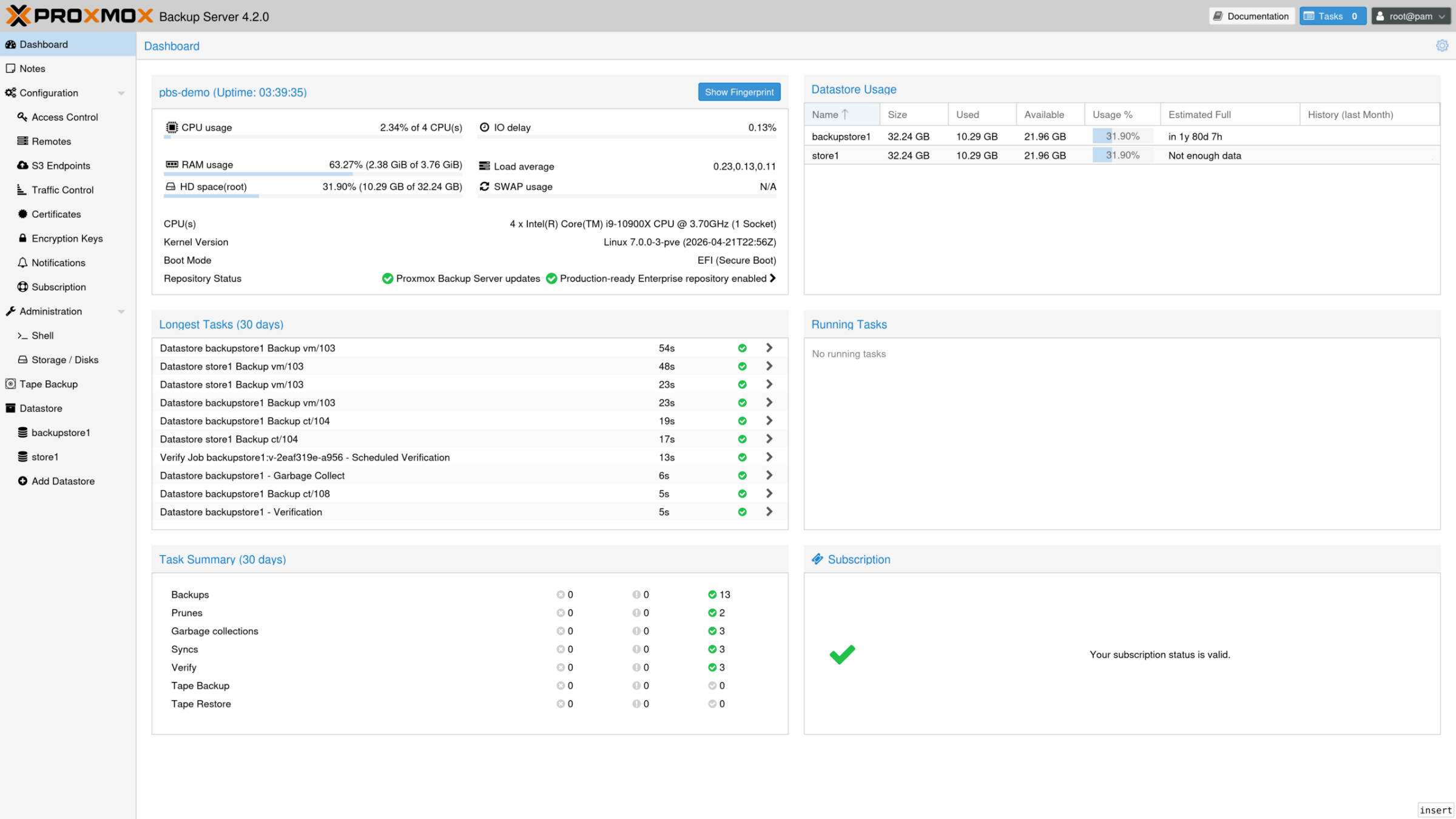 Proxmox Backup Server 4 2 Dashboard (Bild © Proxmox)
Updates for infrastructure and storage
The new release moves to Linux kernel 7.0 as the default stable release and integrates ZFS 2.4 for enterprise storage management. A major highlight of this release is the official transition of S3-compatible object stores from the technology preview phase to full support.
With this official integration, S3-supported data stores now include operational monitoring tools. Users can track the number of requests and traffic statistics directly from the data store overview, which allows for the configuration of notification thresholds when traffic exceeds expected limits.
Data management and synchronization optimization
To improve administrative flexibility, Proxmox Backup Server 4.2 allows you to move backup groups and namespaces within the same datastore. This enables the reorganization of existing backups while maintaining data consistency.
Synchronization workflows have received both security and performance improvements. Server-side encryption is now available for push synchronization jobs, ensuring that snapshots are encrypted before they are sent to external or less secure remote locations. Conversely, pull synchronization jobs can now be configured to decrypt snapshots retrieved from remote data stores.
The developers have introduced a worker-threads property to eliminate performance lags in networks with high latency. This allows the system to process multiple groups in parallel, which significantly increases the overall throughput of synchronization tasks.
Improvements to the user interface and system
The web interface includes several usability improvements and bug fixes. The datastore usage window on the dashboard now retains the column status, and a new option allows remote connections to use the node's HTTP proxy.
The developers have also refined the presentation of storage information; for example, S3-based datastores now explicitly list local cache usage instead of just general storage usage. On the technical side, the update fixes a critical issue with OpenID Connect where requested URLs were lost, which previously prevented deep links from working. In addition, a bug has been fixed that caused the pre-selected area of the logged-in user to change when creating new users.
The update concludes with enhanced localization support, with translations updated for a variety of languages, including Spanish, French, German, Russian and Traditional Chinese.