
 Computer Forum
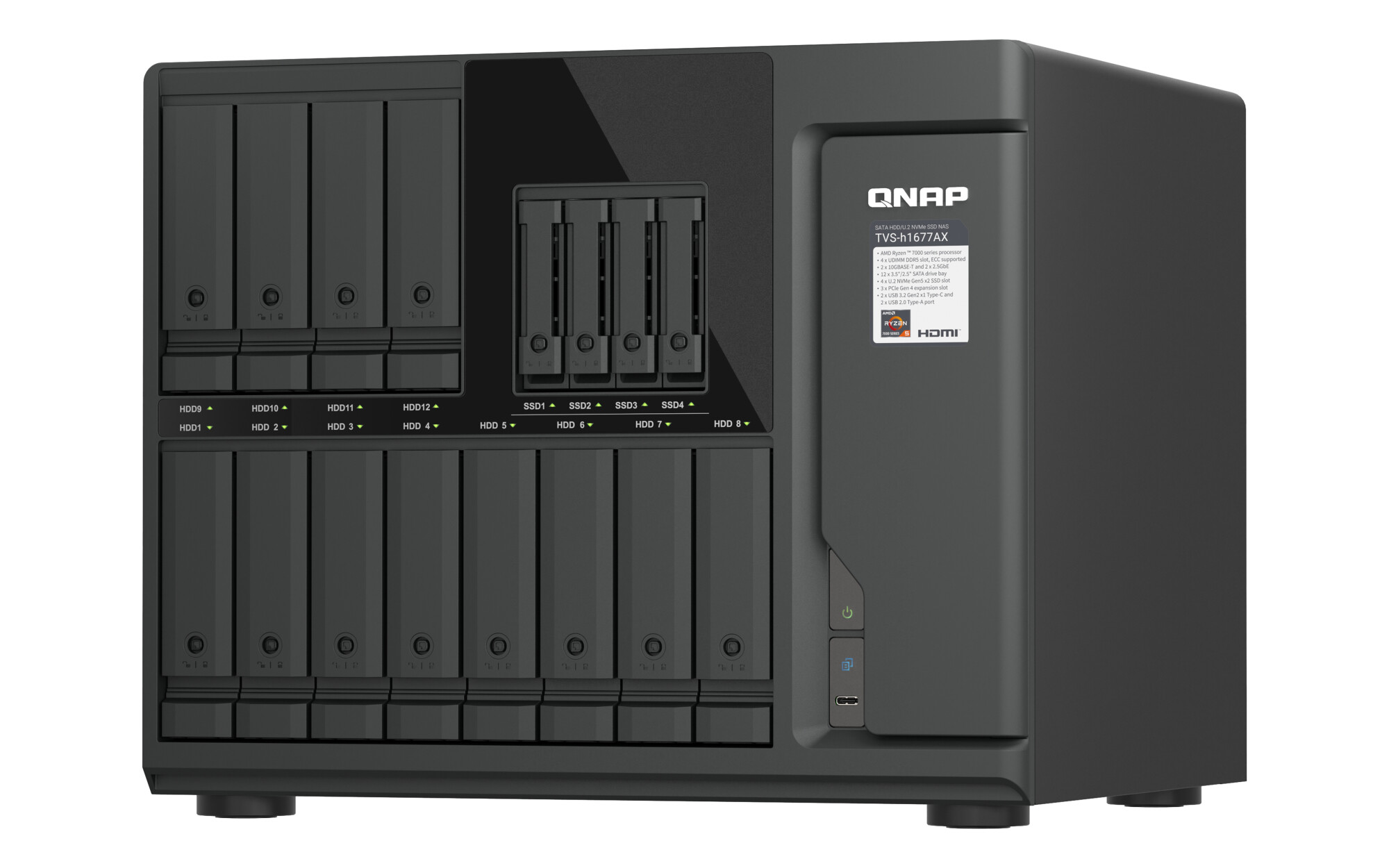 QNAP TVS h1677AX (Image © QNAP)
The TVS-hx77AX series is powered by AMD Ryzen 7000-series processors based on the Zen 4 architecture. This hardware upgrade delivers a significant increase in IPC (Instructions Per Clock) performance compared to previous generations. To support memory-intensive tasks, the systems can be equipped with up to 192 GB of DDR5 RAM, with ECC (Error Correction Code) memory available as an option for improved data reliability.
This combination of computing power and high-bandwidth memory is designed to enable the simultaneous operation of multiple virtual machines (VMs), the development of containerized applications, and the high-throughput decompression of large datasets.
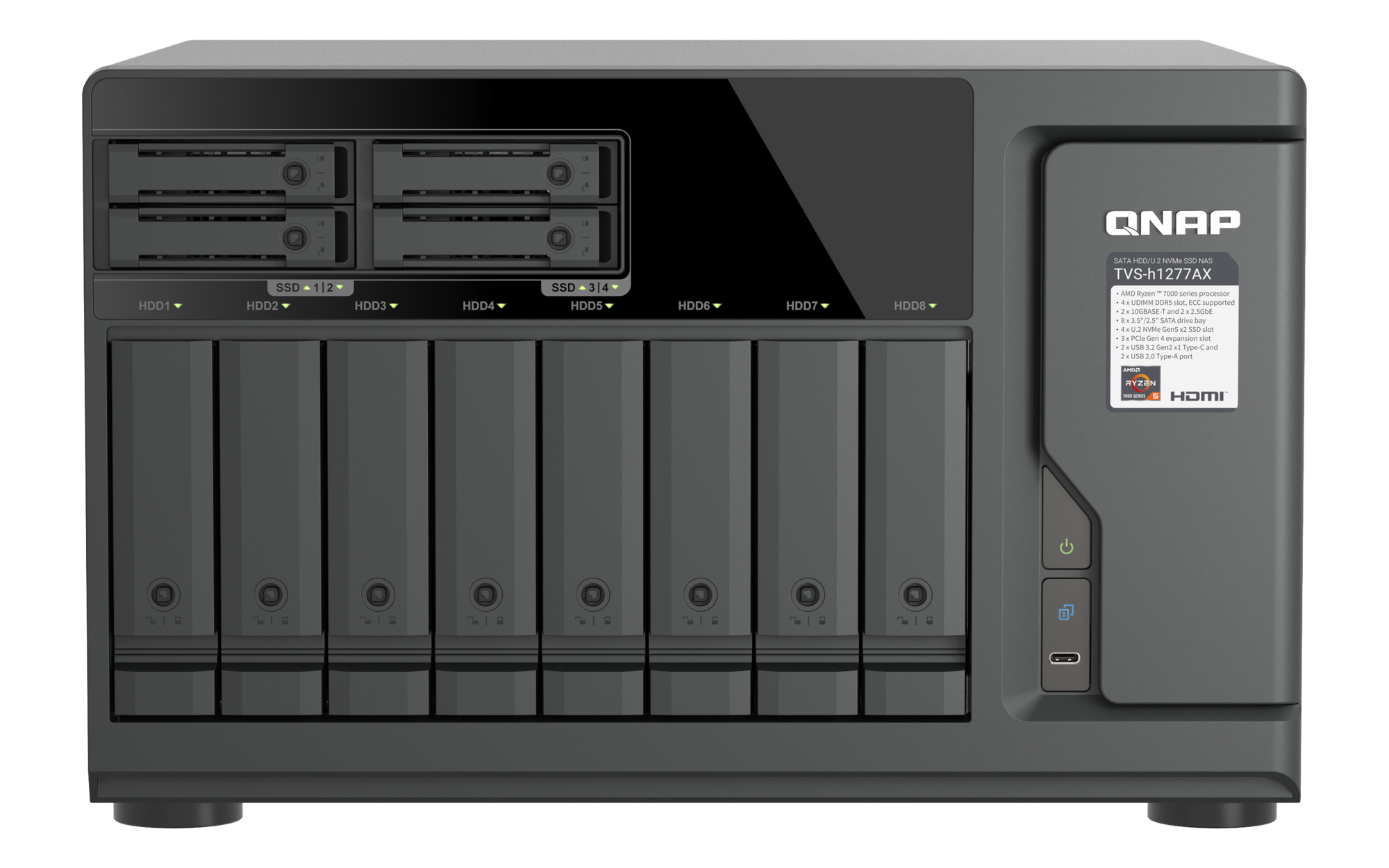 QNAP TVS h1277AX Front (Image © QNAP)
Network Throughput and AI Data Pipelines
To address the latency bottlenecks often associated with large-scale AI data pipelines, the TVS-hx77AX series comes standard with two 10GBASE-T and two 2.5-GbE ports. For enterprises requiring higher bandwidth, the systems offer three PCIe Gen 4 slots that support the installation of 25-GbE SmartNICs such as the QXG-25G2SF-BCM.
The integration of 25-GbE enables the use of NFS over RDMA (Remote Direct Memory Access). This technology allows for direct data transfer between storage subsystems without involving the CPU, resulting in extremely low latency. This level of performance is comparable to local NVMe SSD access, which is a critical requirement for AI training and high-resolution video post-production.
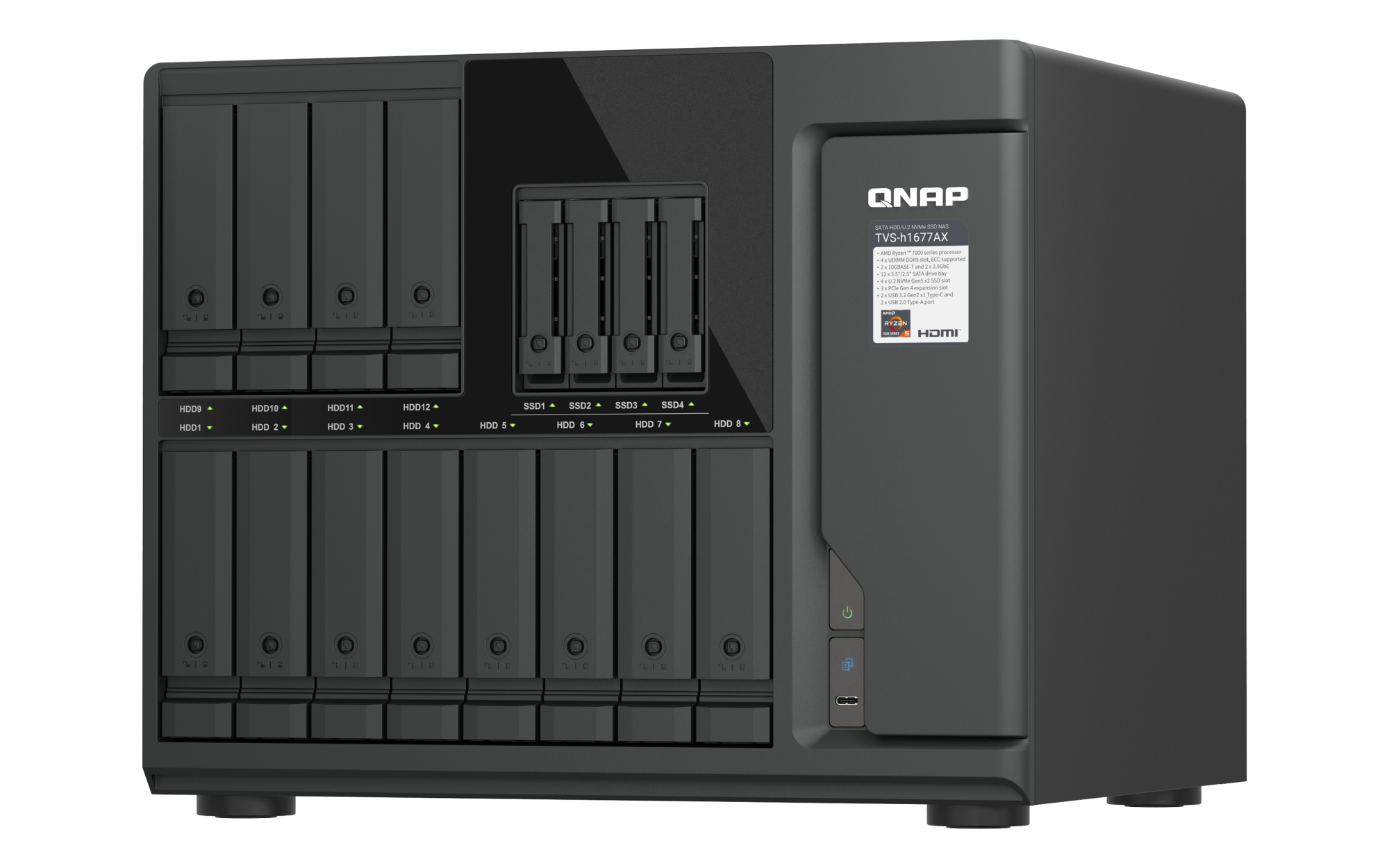 QNAP TVS h1677AX (Image © QNAP)
Hybrid Storage Management and ZFS Data Security
The series utilizes a hybrid storage architecture with dedicated U.2 PCIe Gen 4 x4 NVMe SSD slots to ensure high random IOPS. The systems run on the QuTS hero operating system, which is based on the ZFS file system.
A key feature of this implementation is Qtier, a technology that automatically migrates frequently accessed “hot” data to SSDs and moves infrequently accessed “cold” data to high-capacity hard drives. This automated tiering optimizes the return on investment for storage hardware. In addition, the ZFS foundation provides self-healing capabilities and immutable snapshots, which offer technical protection against ransomware and ensure long-term data integrity.
Enterprise-Class Features
The TVS-hx77AX series features several capabilities specifically designed for enterprise environments:
- AI-powered search: The systems integrate the Qsirch engine with Retrieval-Augmented Generation (RAG). When connected to local or cloud-based Large Language Models (LLMs), users can query vast NAS data repositories using natural language, effectively transforming the storage system into an enterprise-wide knowledge base.
- High Availability (HA): Using the High Availability Manager, two NAS systems can be combined into a cluster to ensure virtually uninterrupted operation and business continuity in the event of a hardware failure.
- GPU Passthrough: The PCIe Gen 4 slots support the installation of discrete graphics cards with a power consumption of up to 200 W, such as those in the NVIDIA RTX series. This allows virtual machines to offload computationally intensive graphics and AI tasks directly to the GPU.
- Warranty: Each unit comes with a standard 5-year warranty, reflecting the hardware’s classification as an enterprise-grade product.
Pricing and Availability
All three models are available now. Pricing is based on the number of drive bays:
- QNAP TVS-h1677AX (16 bays): €4,499
- QNAP TVS-h1277AX (12 bays): €3,999
- QNAP TVS-h877AX (8 bays): €3,599