
 Computer Forum
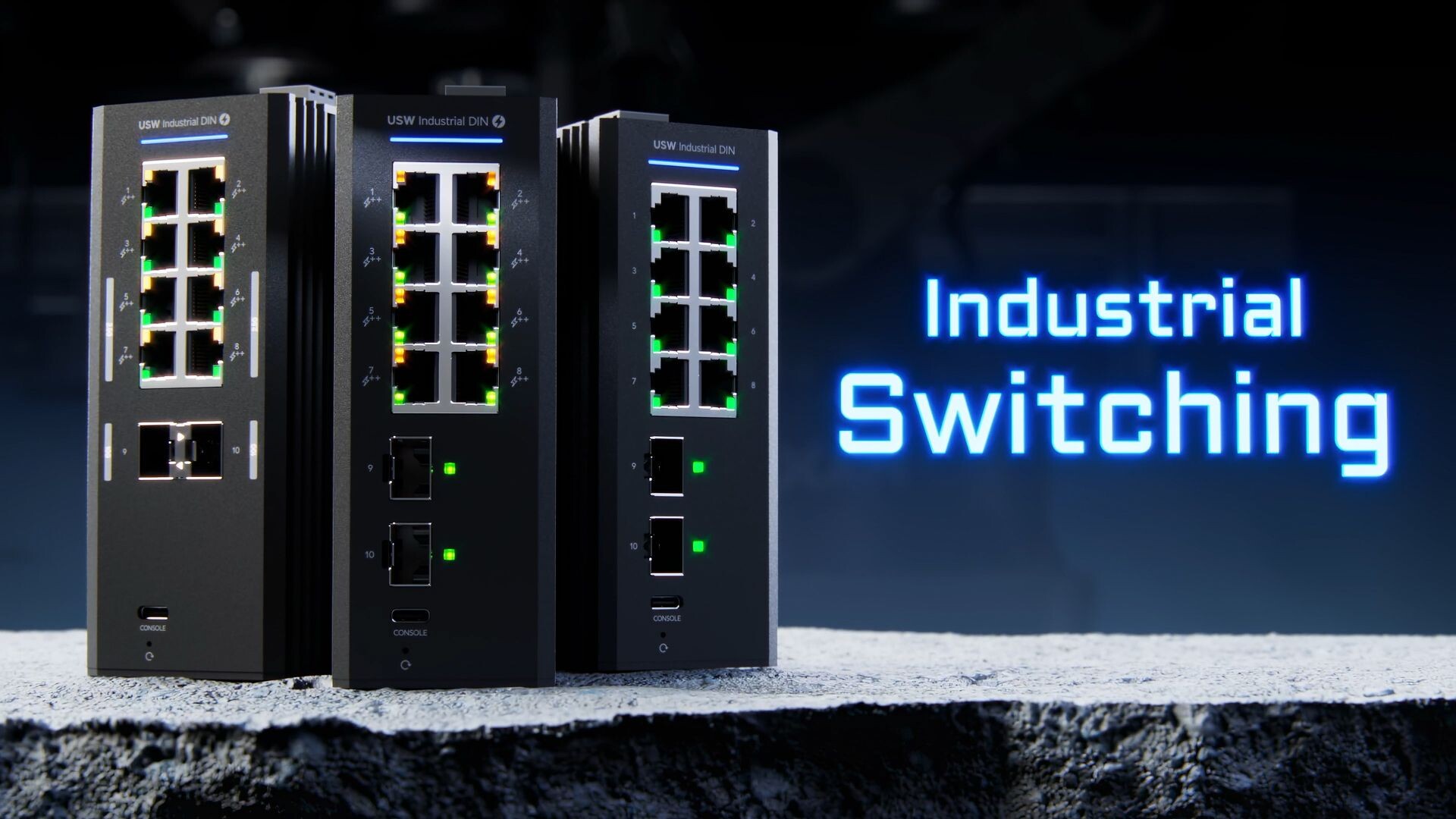 Ubiquiti UniFi Industrial Switche (Image © Ubiquiti)
The new series of industrial switches was specifically designed for DIN rail mounting, with a focus on mechanical robustness and thermal efficiency. The hardware features a rugged design consisting of an extruded aluminum housing and a die-cast metal backplate. This choice of materials ensures structural integrity in demanding operating environments.
To ensure reliability in uncontrolled environments, the switches operate across a wide temperature range and feature a completely fanless design. This eliminates a common cause of mechanical failure and prevents dust and contaminants from entering the internal circuitry. Depending on the model, these switches offer various configurations to meet different throughput and performance requirements, including support for 2.5-GbE speeds and Power-over-Ethernet (PoE) capabilities.
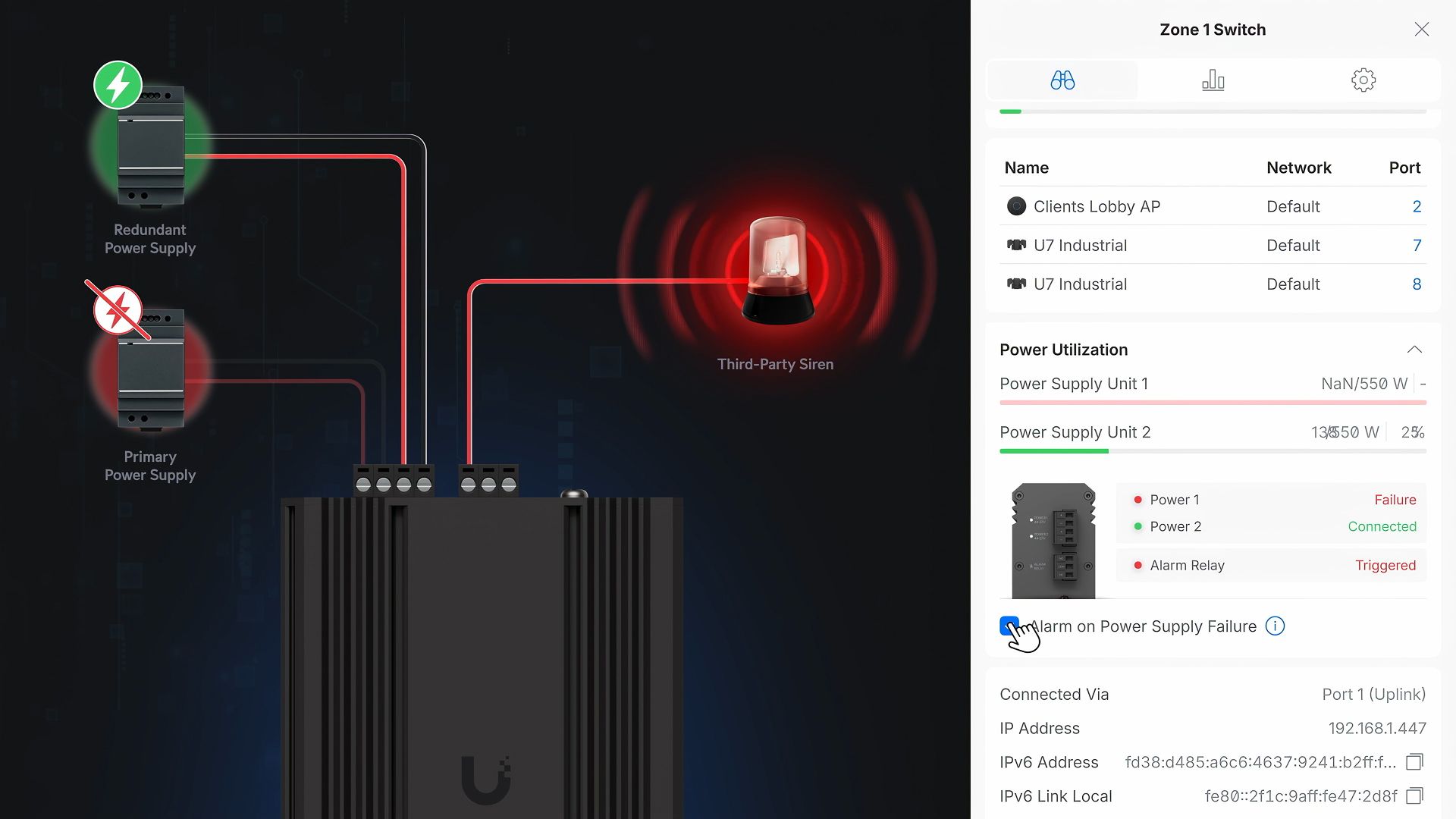 UniFi Industrial Stromversorgung (Image © Ubiquiti)
Power Redundancy and Infrastructure Monitoring
For business-critical infrastructures where downtime can lead to significant operational disruptions, these switches feature two DC power inputs. This redundancy allows administrators to set up secondary power sources, ensuring that the network remains active even if a primary power supply unit fails.
In addition, the hardware features a built-in alarm relay. This feature enables external monitoring of the power supplies and provides installers with a hardware-level notification system to detect and resolve power supply issues before they lead to a complete system failure. These features are specifically designed for long-term, unattended operation in remote or hard-to-reach locations.
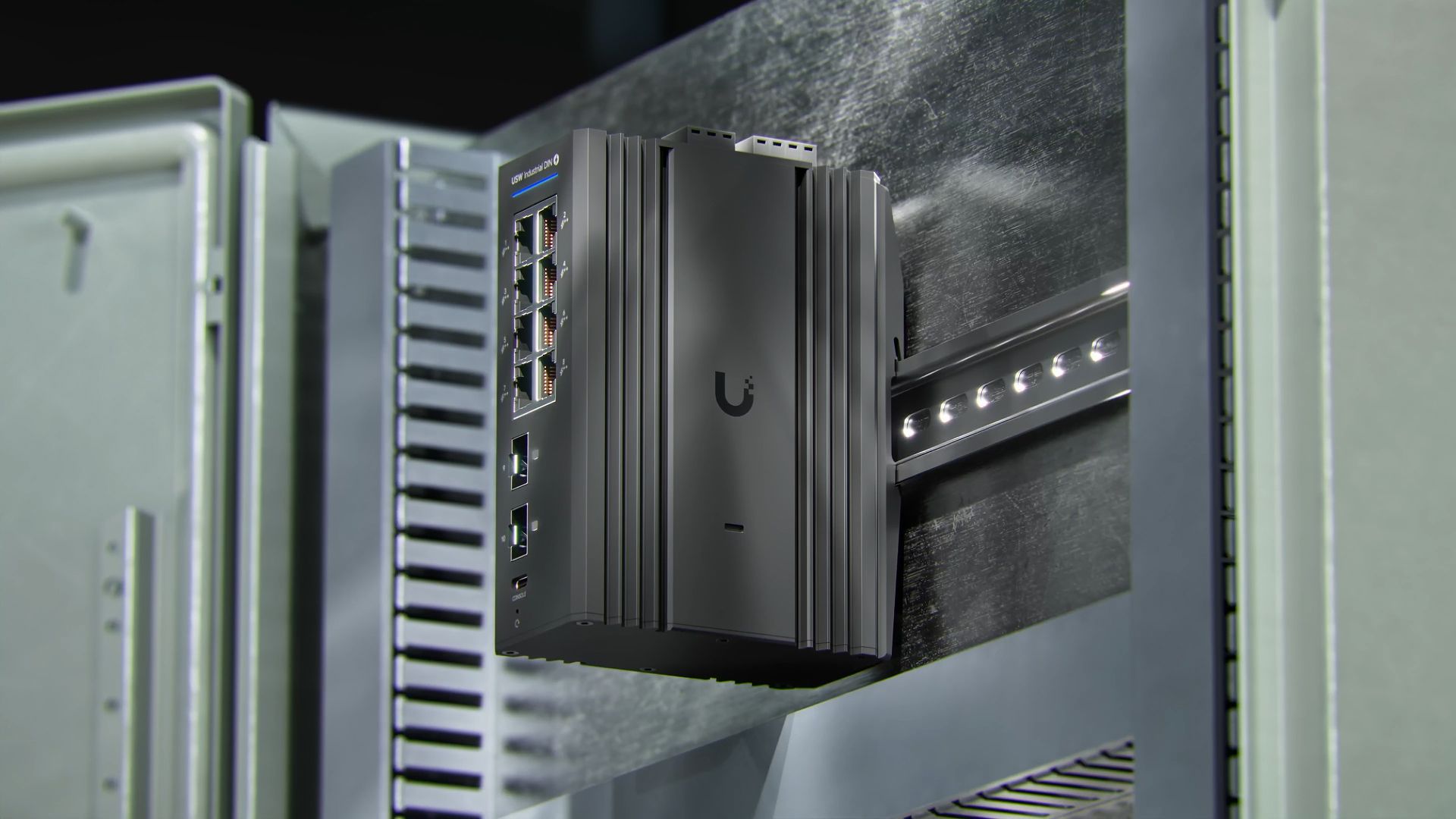 UniFi Industrial DIN Rails (Image © Ubiquiti)
Mounting and Cabinet Integration
Since space is often limited in industrial cabinets, the Switch product line offers flexible mounting options. The devices can be mounted on DIN rails from the left, right, or rear. This flexibility allows network technicians to optimize cable routing and device positioning within compact enclosures, thereby reducing cable strain and improving airflow within the cabinet.
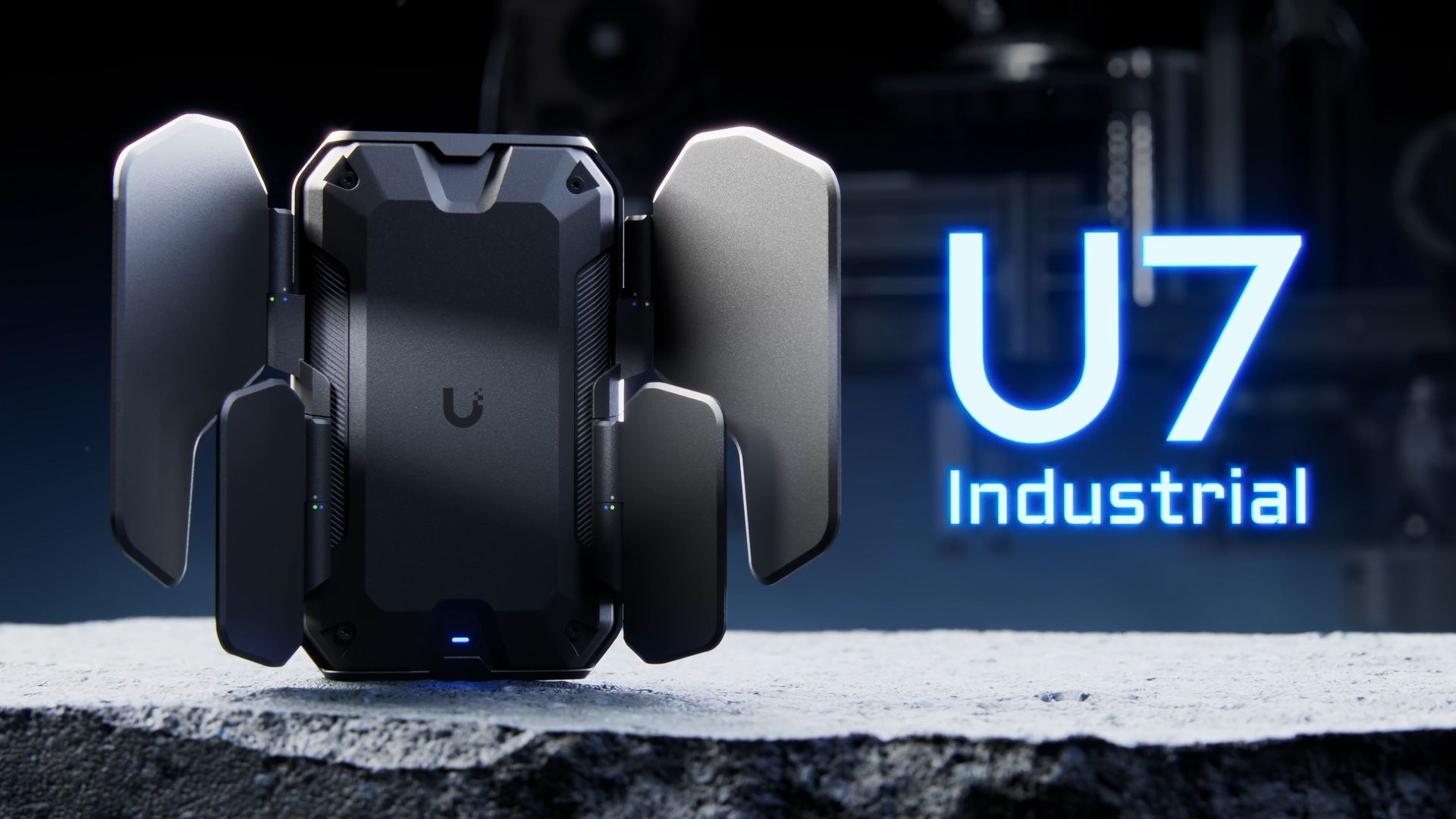 Ubiquiti UniFi U7 Industrial (Image © Ubiquiti)
U7 Industrial Wi-Fi Access Points
The U7 Industrial marks the first introduction of industrial-grade Wi-Fi connectivity into the UniFi ecosystem. To withstand extreme conditions, the access point is housed in a die-cast metal enclosure and features an IP67 rating, certifying its protection against dust and submersion in water. The device is based on a flexible RF platform, allowing it to be used in both demanding indoor environments and outdoor installations where weather conditions are a constant factor.
 UniFi Industrial 2 (Image © Ubiquiti)
RF Coverage and Antenna Configuration
The U7 Industrial offers versatile signal distribution through various antenna configurations:
-
- Directional antenna coverage: Out of the box, the device features a high-gain directional antenna that focuses the Wi-Fi signal on a specific area, thereby reducing signal loss and increasing range in a specific direction.
-
- Omnidirectional coverage: For scenarios requiring 360-degree connectivity, the platform supports external omnidirectional antennas.
-
- Third-party antenna integration: The architecture allows for the connection of custom third-party antennas to meet specific site requirements.
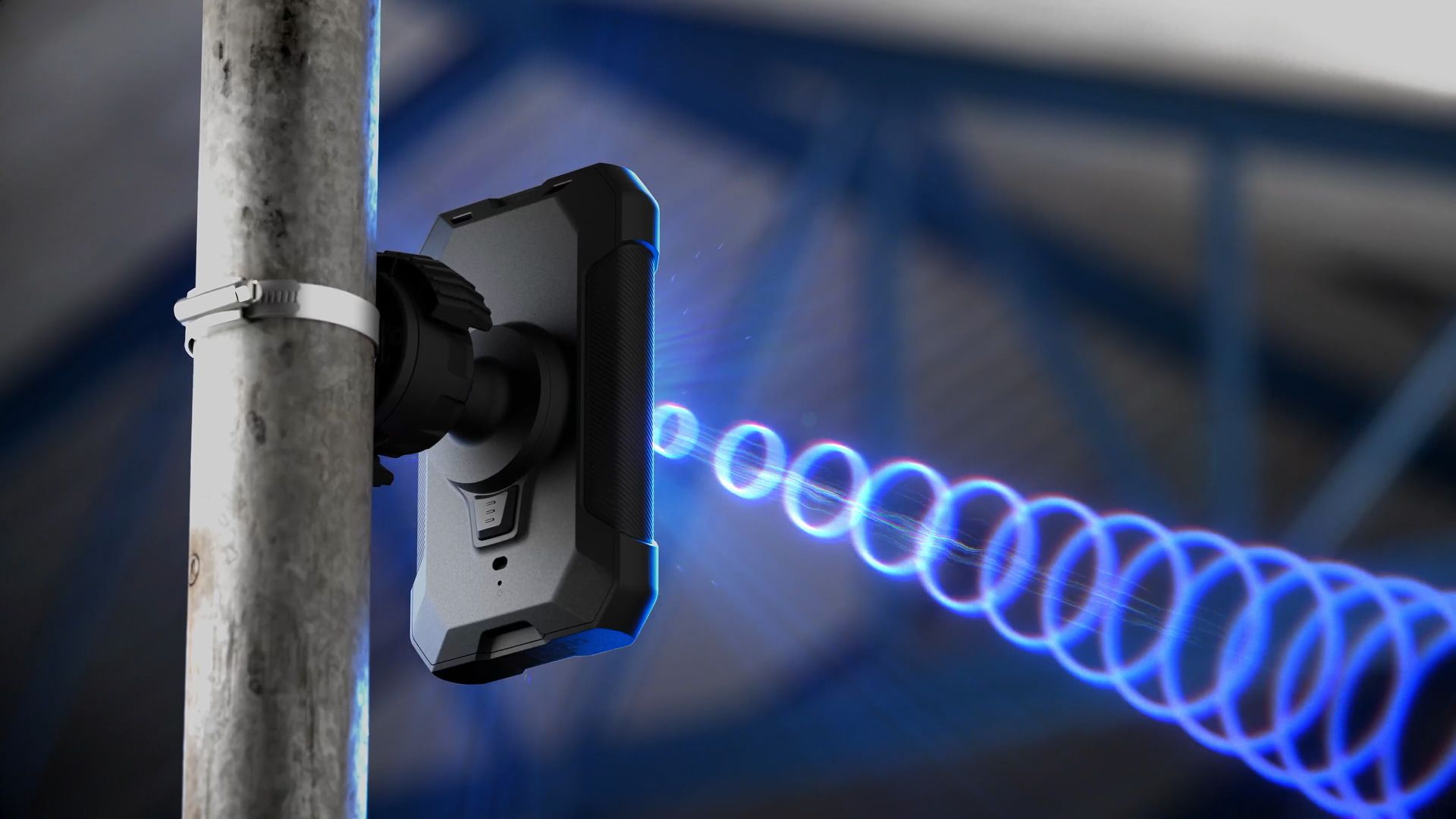 UniFi Industrial Flexible RF (Image © Ubiquiti)
Signal Isolation and Interference Suppression
In environments with heavy RF interference—such as on masts where multiple access points are housed together—the U7 Industrial supports a specially developed RF isolator. This hardware component is designed to protect the device from unwanted signals in the vicinity while focusing the desired signal.
The RF isolator features adjustable apertures that allow technicians to manually tune the Wi-Fi signal. By adjusting the width of these apertures, installers can either expand the coverage area or narrow the beam to improve range and filter out interference from neighboring sources. This level of control is designed to bring the consistency of wired networks to wireless networks in RF-intensive industrial environments.
Integrated Unified Management
All components of the industrial product family are managed through a single integrated platform. This allows administrators to monitor the industrial switches and Wi-Fi hardware alongside other network elements via a central interface.