
 Computer Forum
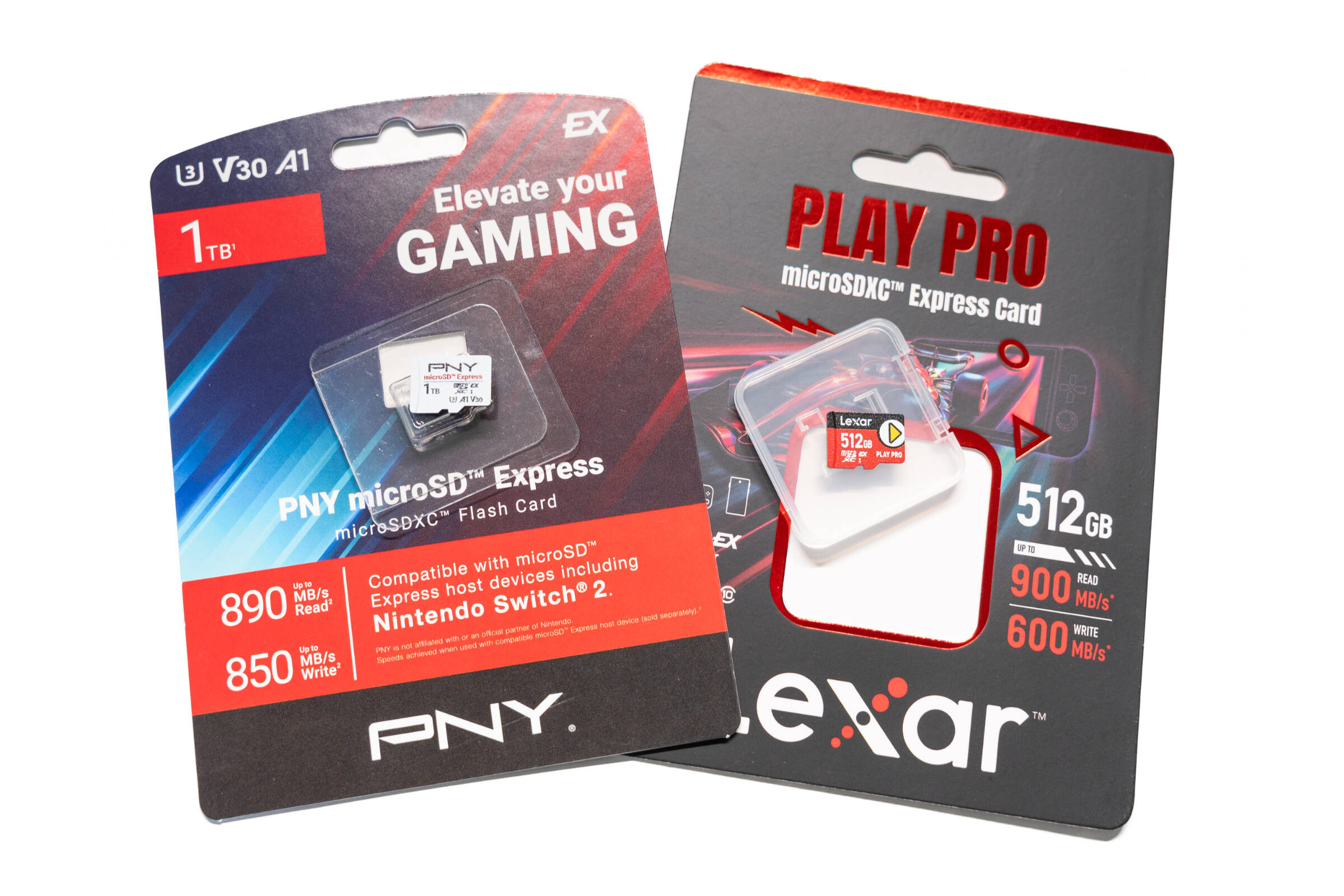 PNY Lexar microSDExpress Test Vergleich (Image © PCMasters.de)
The standard hasn't just been around since yesterday, but since 2019. However, surprisingly little has happened since then. Hardly any cards, hardly any compatible devices and therefore hardly any attention.
Only now does the topic seem to be slowly picking up speed again. New cards are coming onto the market and the first devices are also supporting the standard. The basic idea behind this is that, thanks to the PCIe connection, speeds are theoretically possible that are more reminiscent of SSDs than classic memory cards.
We have therefore taken a look at two current representatives of this format today, the PNY microSD Express and the Lexar PLAY PRO microSDXC Express. Both promise significantly better performance than conventional cards. But let's take a closer look at what really happens in the end.
What is microSD Express?
microSD Express is a further development of the classic microSD standard and was introduced by the SD Association back in 2019. Instead of working via the UHS interface as before, microSD Express uses a PCIe connection with NVMe protocol. In principle, this is the same technology used in modern SSDs. This is precisely what makes the significantly higher speeds possible, which we also see in our following test. Despite the promising technology, the standard has hardly caught on for a long time, as there has simply been a lack of compatible devices and cards. Only recently, with the Nintendo Switch 2 console to be precise, has the market started to move again and microSD Express is slowly becoming more relevant.
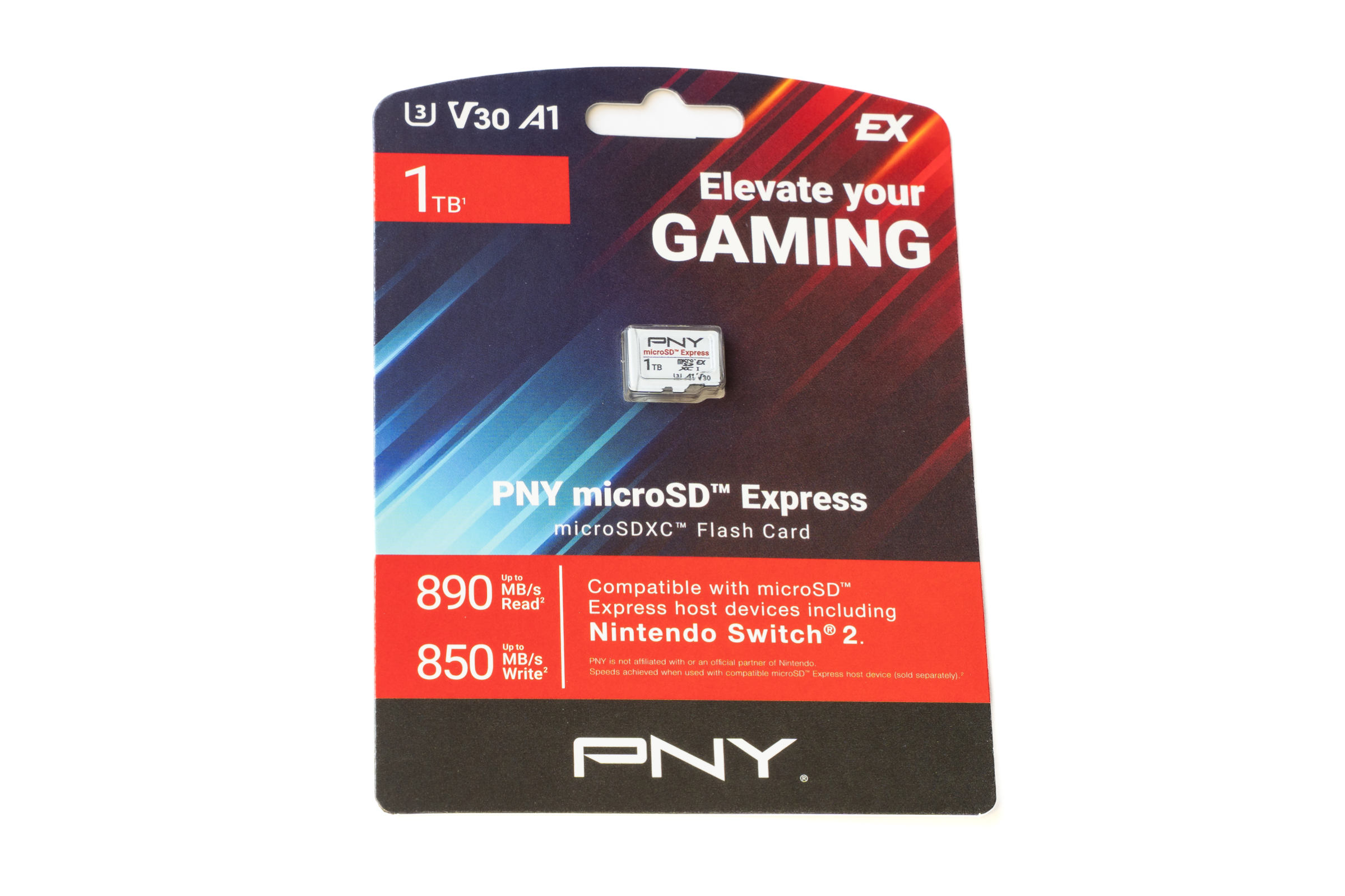 PNY microSDExpress Verpackung (Image © PCMasters.de)
Test candidates at a glance
PNY microSD Express (1 TB)
We start with the PNY microSD Express with a storage capacity of 1 TB. The card is based on the microSD Express standard and, according to the manufacturer, offers corresponding speeds. PNY specifies up to 890 MB/s for reading and up to 850 MB/s for writing. These are values that are significantly higher than what we are used to from classic microSD cards. The card also comes with the usual classifications such as U3, V30, Class 10 and A1 and is therefore aimed at both gaming and typical all-round applications such as apps or video recording. The Switch 2 console is explicitly stated as compatible here.
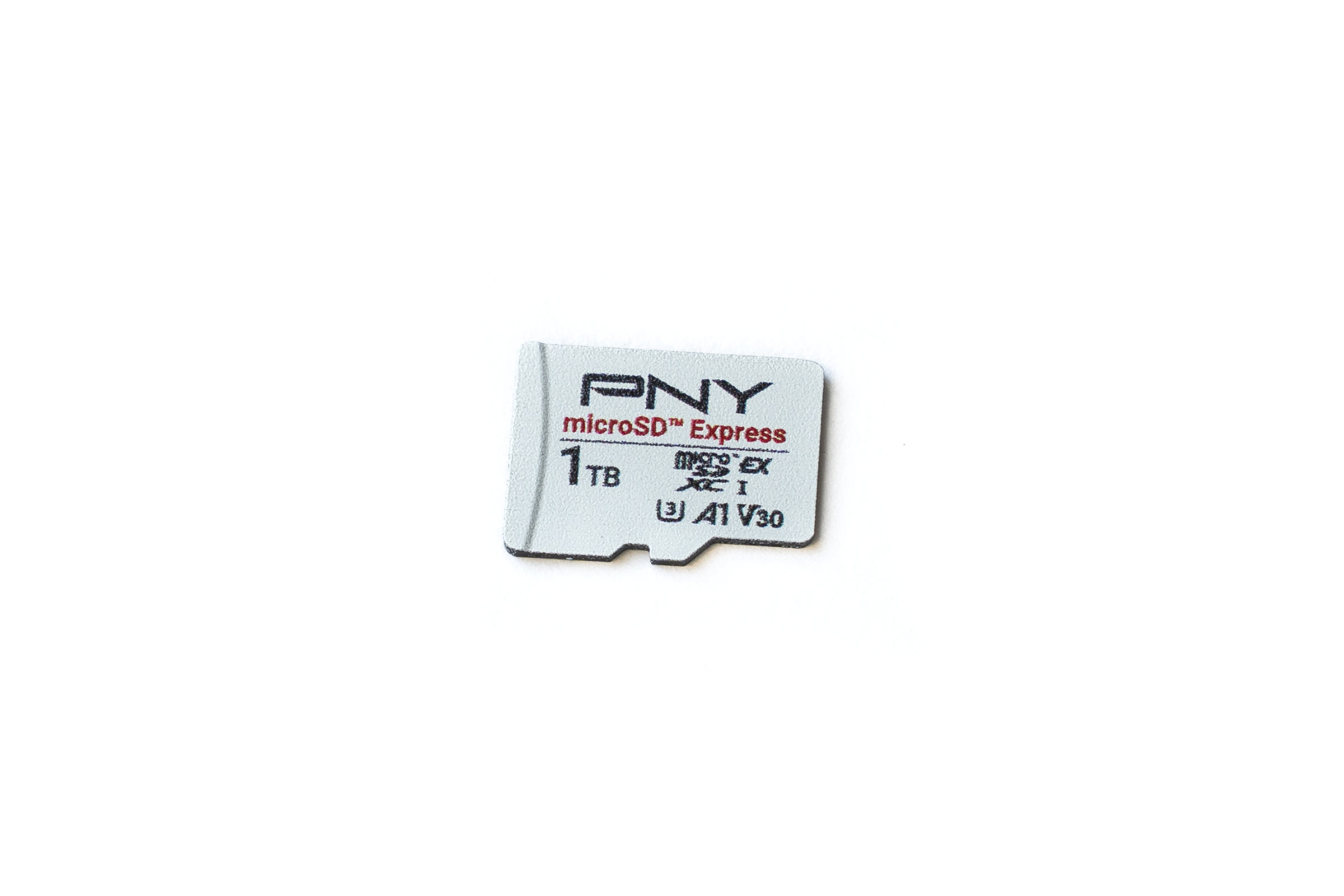 PNY microSDExpress Detail (Image © PCMasters.de)
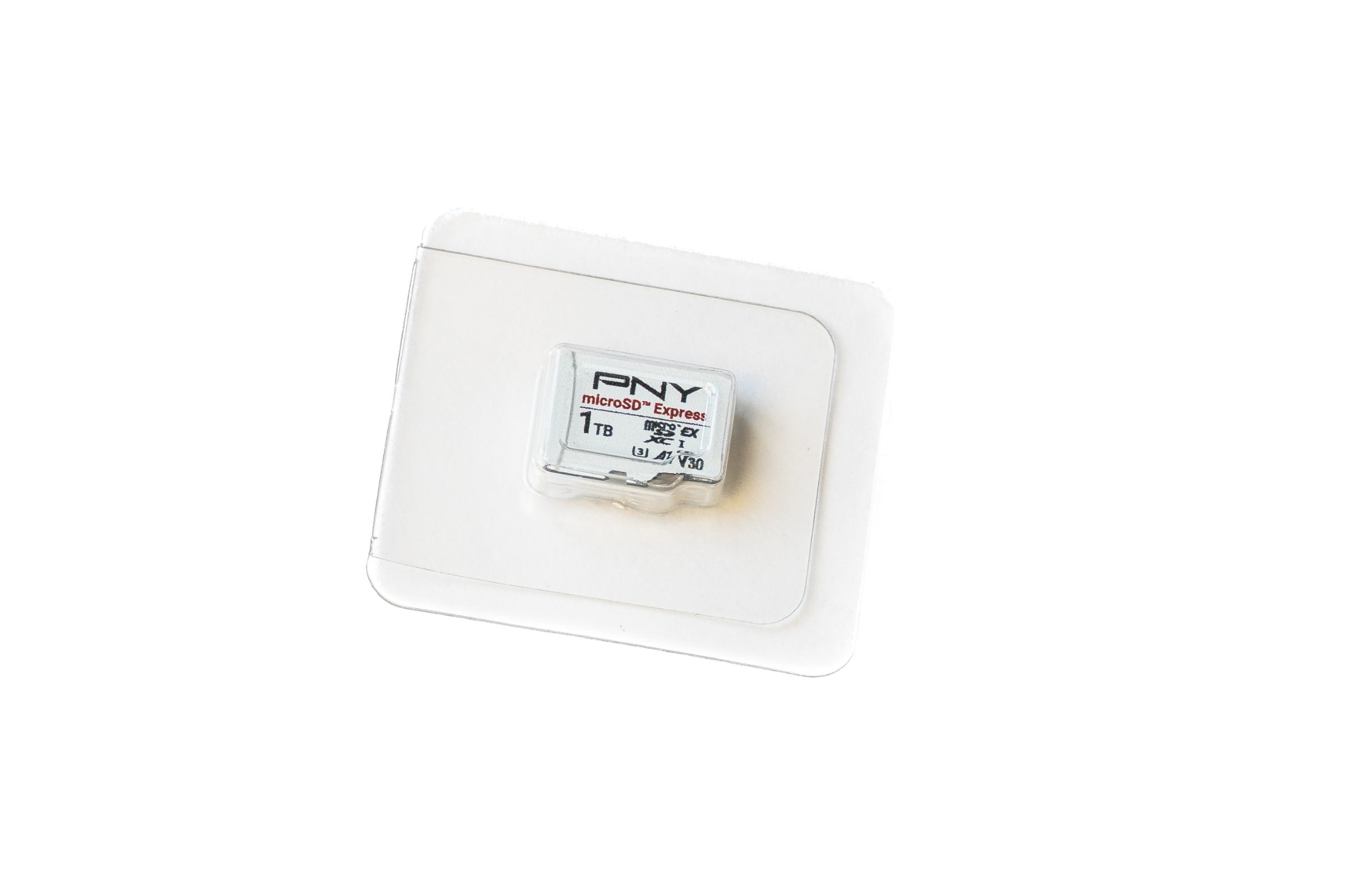 PNY microSDExpress Lieferumfang (Image © PCMasters.de)
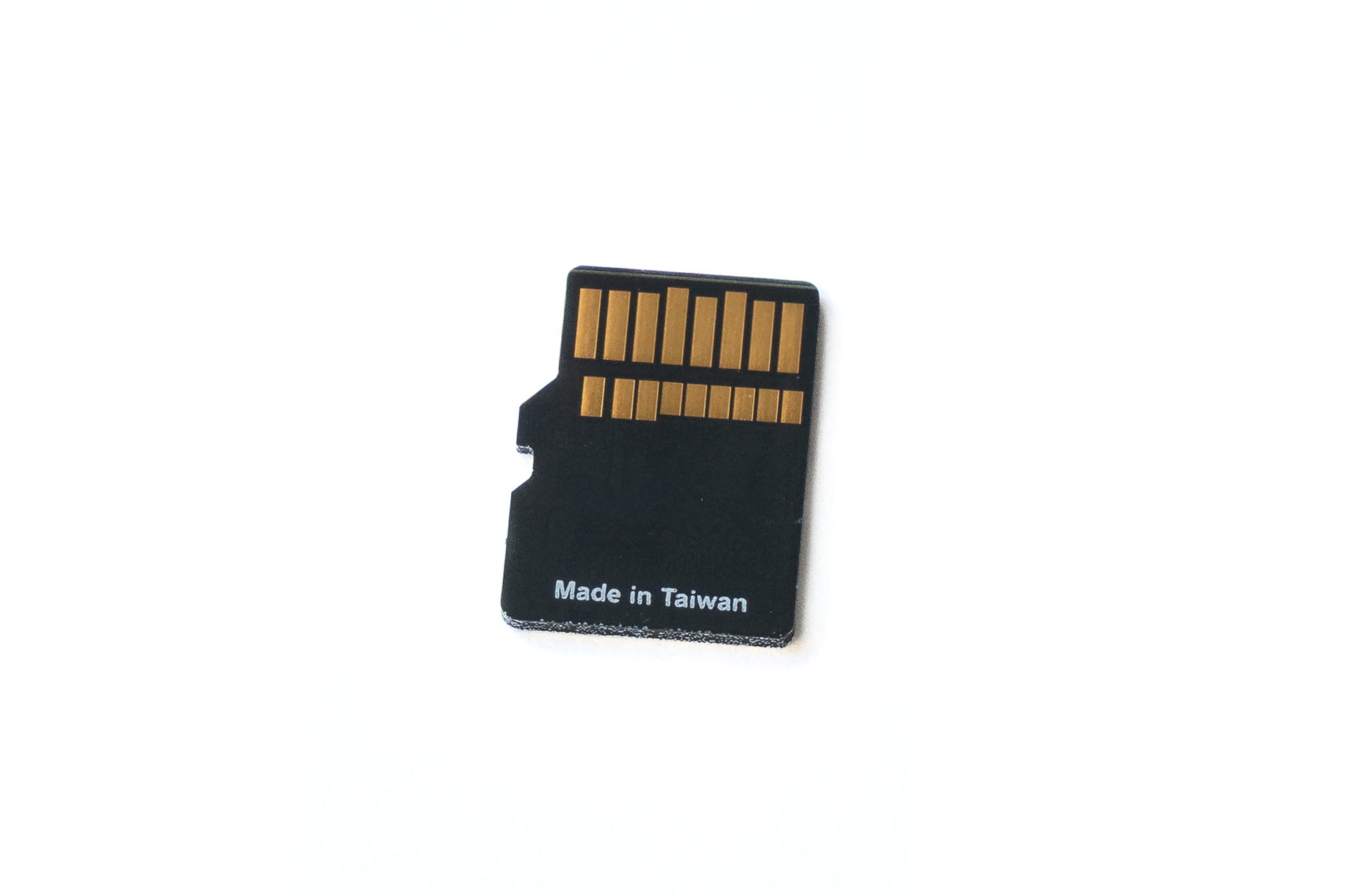 PNY microSDExpress Rückseite (Image © PCMasters.de)
PNY relies on classic blister packaging for the packaging, no big extras. As is typical for microSD cards, there is not much more included than the card itself. PNY does not include an SD adapter here.
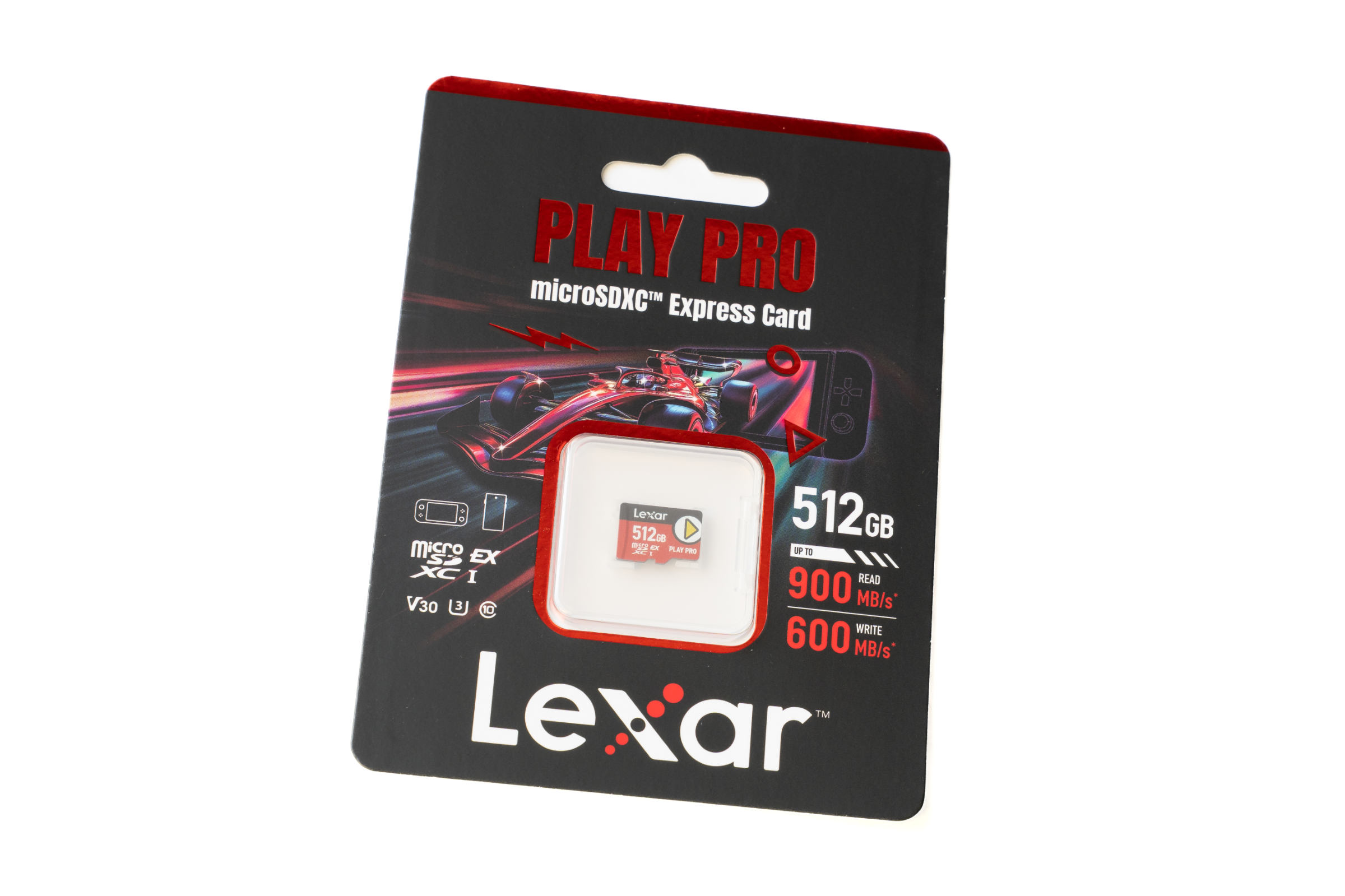 Lexar microSDExpress Verpackung (Image © PCMasters.de)
Lexar PLAY PRO microSDXC Express (512 GB)
The second candidate is the Lexar PLAY PRO microSDXC Express, the 512 GB version. Here too, the manufacturer relies on the microSD Express standard and advertises its suitability for gaming. According to Lexar, up to 900 MB/s is possible when reading and up to 600 MB/s when writing. This means that the card offers slightly higher speeds when reading, but is a good deal behind the PNY when writing, according to the data sheet. It has the classifications U3, V30 and Class 10, which means that the card is also designed for video and gaming applications.
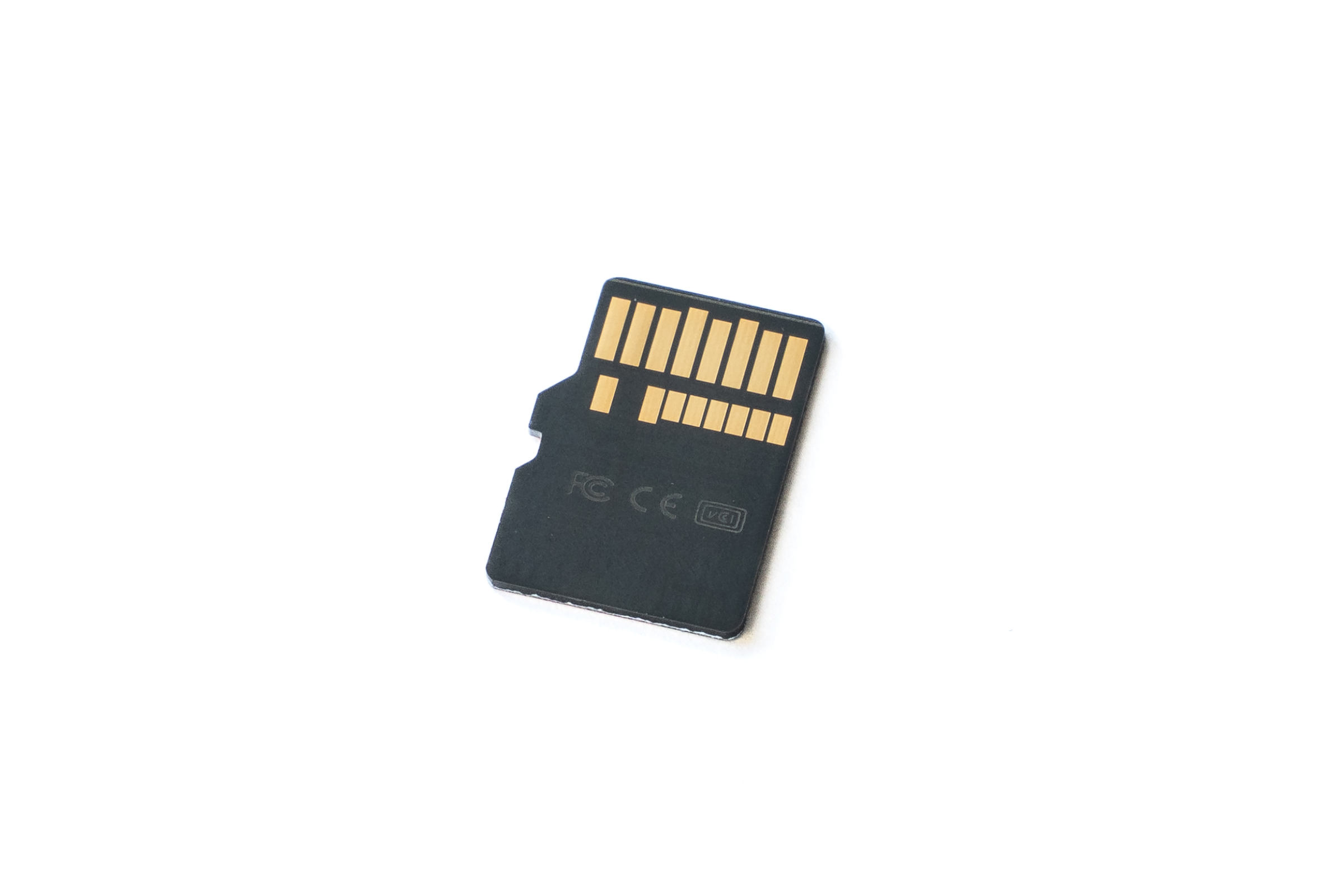 Lexar microSDExpress Rückseite (Image © PCMasters.de)
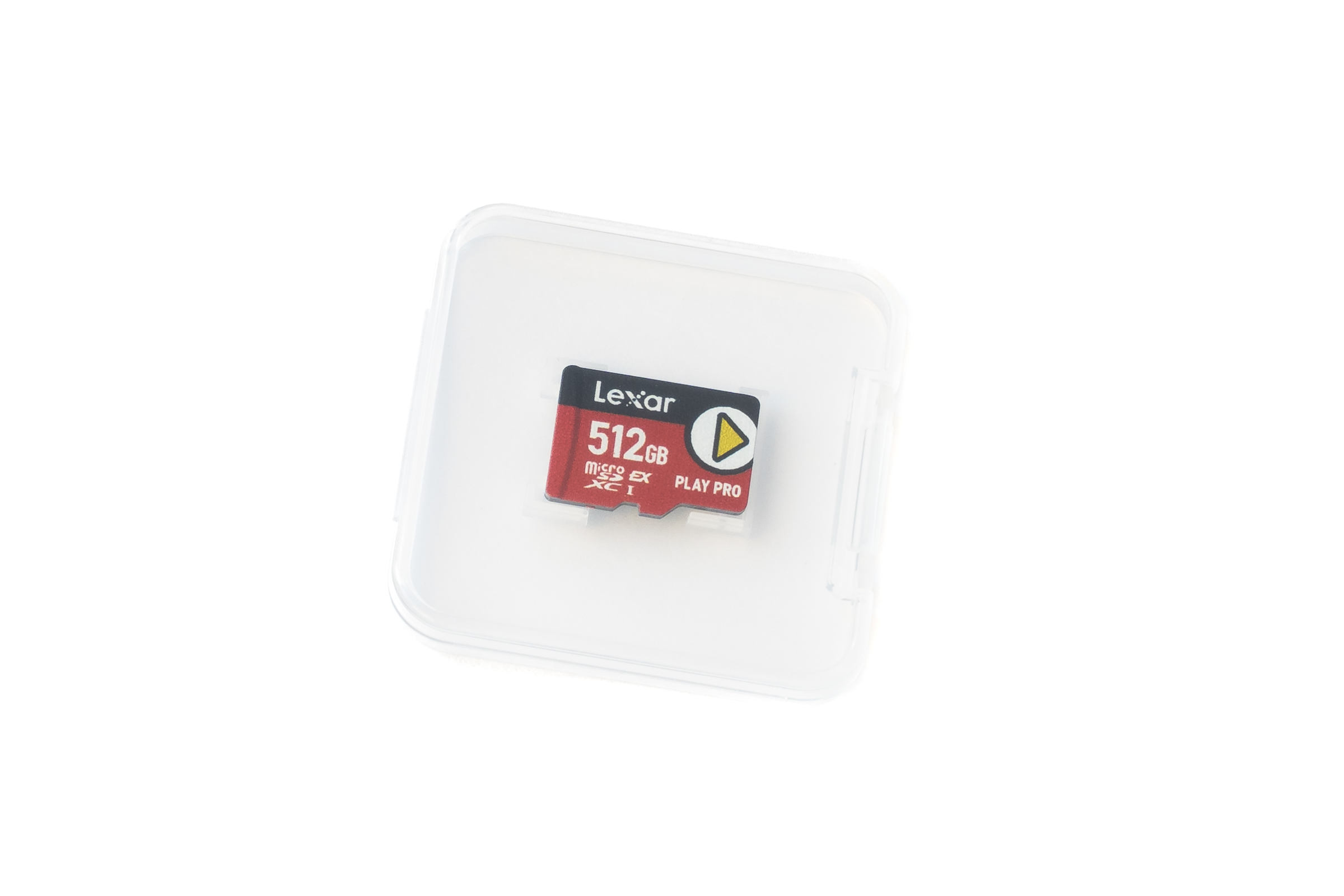 Lexar microSDExpress Lieferumfang (Image © PCMasters.de)
Lexar's packaging has a similar look to PNY and is clearly positioned towards gaming. In addition, the
manufacturer includes a hard plastic case, which PNY does not.
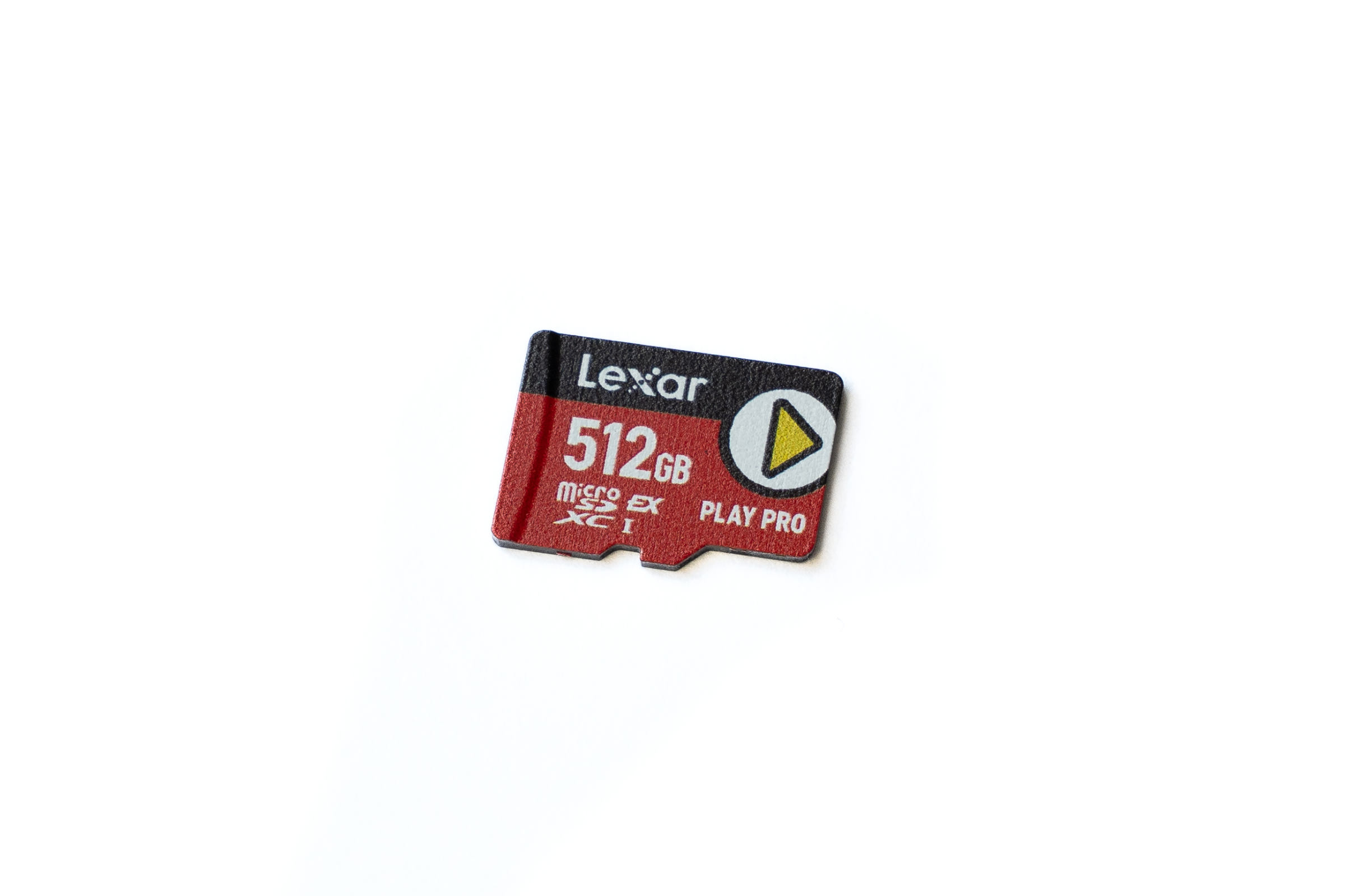 Lexar microSDExpress Detail (Image © PCMasters.de)
Technical data
| Lexar PLAY PRO Express 512 GB | PNY microSD Express 1 TB | |
|---|---|---|
| Type/Format | microSDXC Express | microSDXC Express |
| Capacity | 512 GB | 1 TB |
| Classification | Class 10, SD Express EX I (PCIe 3.0 x1, NVMe 1.3), UHS Video Speed Class 30 (V30) |
UHS-I U3, A1, Class 10, SD Express EX I (PCIe 3.0 x1, NVMe 1.3), UHS Video Speed Class 30 (V30) |
| Read throughput | 900MB/s | 890MB/s |
| Write throughput | 600MB/s | 810MB/s |
| Warranty | 10 years | 5 years |
Test setup
For our test, we rely on a system that has enough performance so that the memory cards, and not the computer, are the limiting factor. We use a MacBook Pro 14-inch from 2021 with M1 Pro. We use a Lexar microSD Express card reader (RW540) as the card reader. The whole thing is connected via Thunderbolt 4. The interface theoretically offers up to 40 Gbit/s and thus ensures that even fast card readers are not slowed down. This is precisely what is important for microSD Express, because significantly higher speeds are possible here than with classic cards. The operating system is macOS 26.4 Tahoe.
Our test system at a glance:
- MacBook Pro 14" (2021) with M1 Pro
- Thunderbolt 4 (up to 40 Gbit/s)
- macOS 26.4 Tahoe
- Card reader: Lexar microSD Express card reader (RW540)
Two cards compete against each other in the test:
- PNY microSD Express (1 TB)
- Lexar PLAY PRO microSD Express (512 GB)
For the measurement, we rely on two well-known tools that cover different areas of application. AmorphousDiskMark simulates typical everyday tasks with different access patterns and thus provides a good impression of practical performance. We also use the ATTO Disk Benchmark to measure performance during a short, clearly defined transfer. This gives us both practical values and a look at the behavior in more synthetic tests.
The procedure is divided into two steps:
1.AmorphousDiskMark (Version 4.0.1)
- Test size: 1 GiB
- 5 runs per test
2. ATTO Disk Benchmark (Version 1.01.0)
- Test size: 64 MiB
- I/O Size Range: 64 MiB
In the end, we get a very good overall picture of practical and rather synthetic measurements.
Test result speed measurement
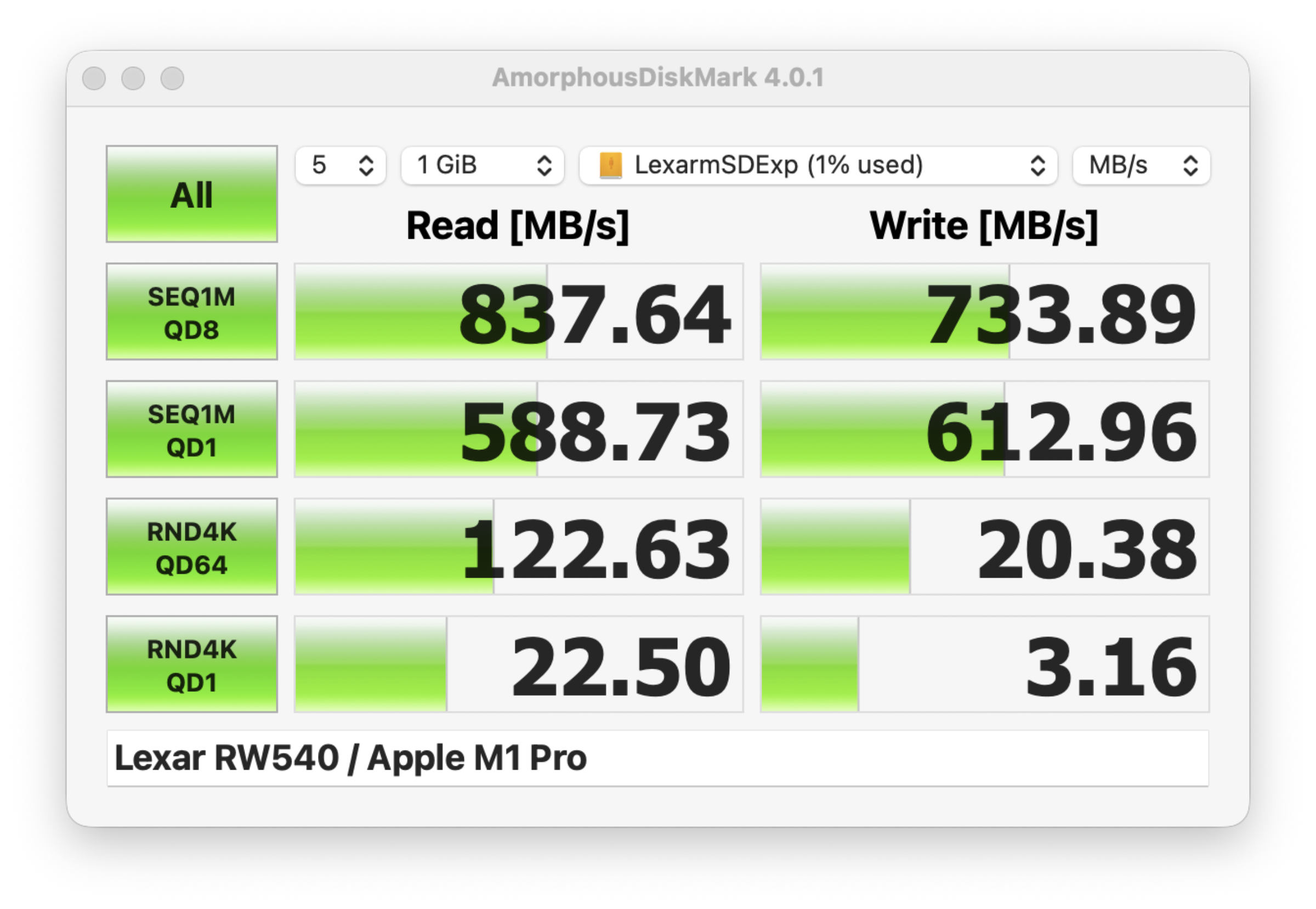
In our practical and benchmark tests, both cards show a high level of performance, with some noticeable differences. In AmorphousDiskMark, the PNY and Lexar achieve very similar peak values in sequential reading over large blocks, PNY just under 897 MB/s, Lexar around 838 MB/s. There are slight differences when writing, as PNY achieves around 833 MB/s, while Lexar only achieves 734 MB/s. Even with smaller access sizes, such as the random 4K tests, the differences are noticeable, especially when writing. PNY remains reasonably stable here, while Lexar slumps a little more with the smallest blocks. An effect that shows the influence of the controller and the cache.
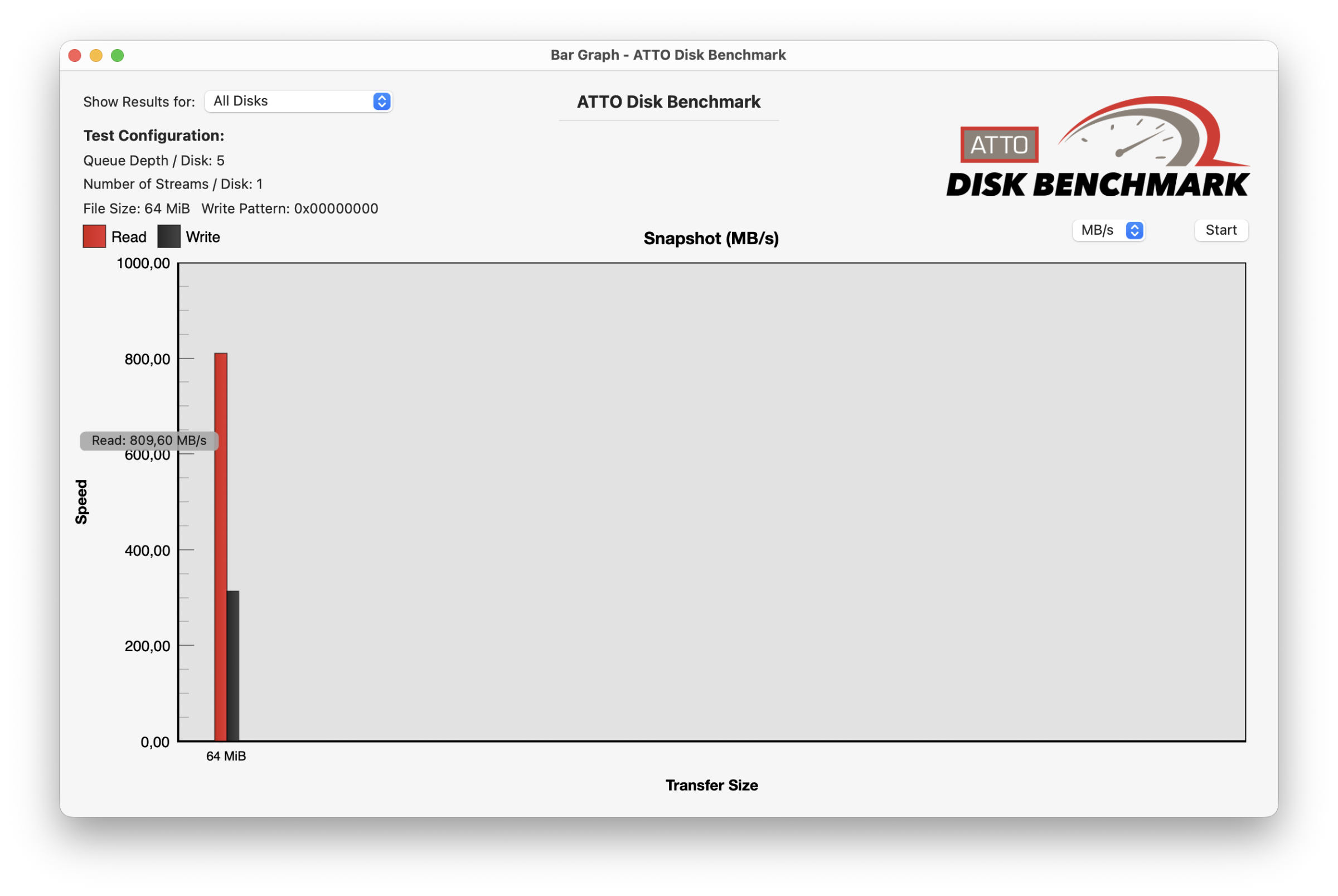
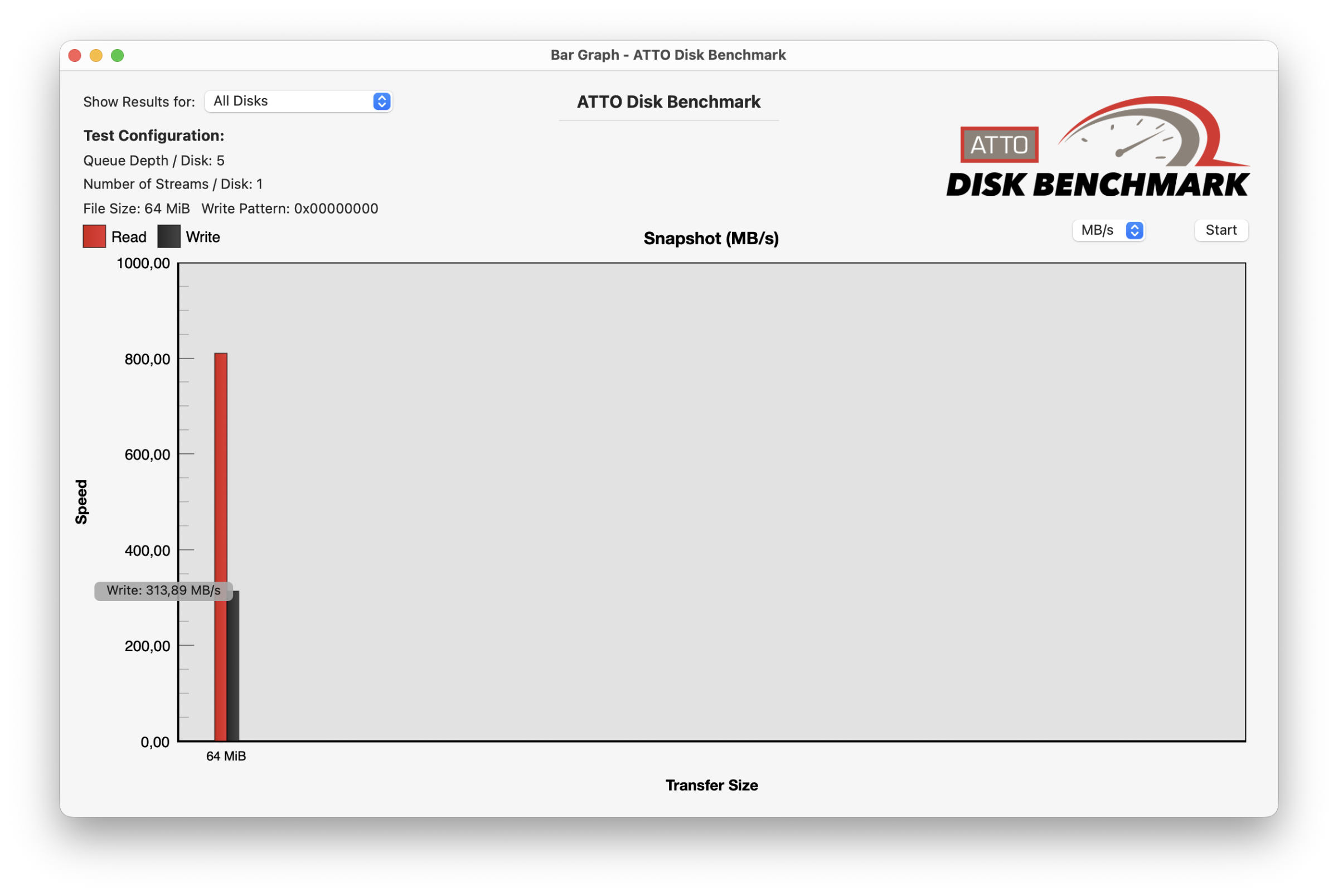
The results of the ATTO Disk Benchmark illustrate this effect once again. In the sequential transfers, PNY shows strong, constant values for both reading and writing, 897 MB/s read, 842 MB/s write. Lexar delivers a solid 810 MB/s when reading, but drops significantly to around 314 MB/s when writing. This difference is typical for synthetic short tests, as the card apparently cannot make optimum use of its cache during very short or unusual write processes, while longer, practical transfers run much better.
Overall, however, the measured values show a clear picture. Both cards deliver excellent performance in realistic scenarios, but there are differences in synthetic short tests, which are particularly noticeable when writing.
 AmorphousDiskMark Lexar microSDExpress (Image © PCMasters.de)
 ATTODiskBenchmark Lexar microSDExpress (Image © PCMasters.de)
 ATTODiskBenchmark Lexar microSDExpress1 (Image © PCMasters.de)
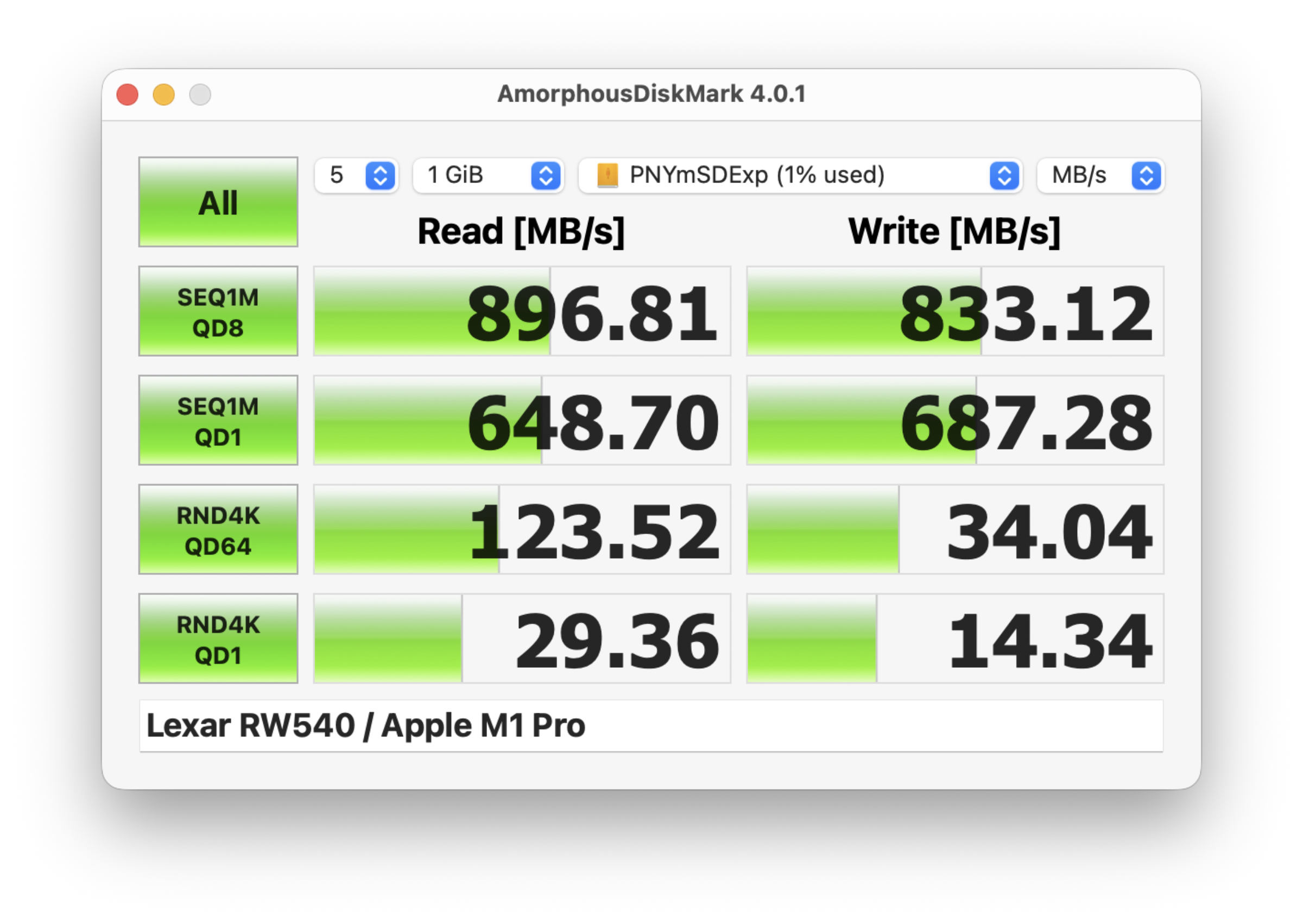 AmorphousDiskMark PNY microSDExpress (Image © PCMasters.de)
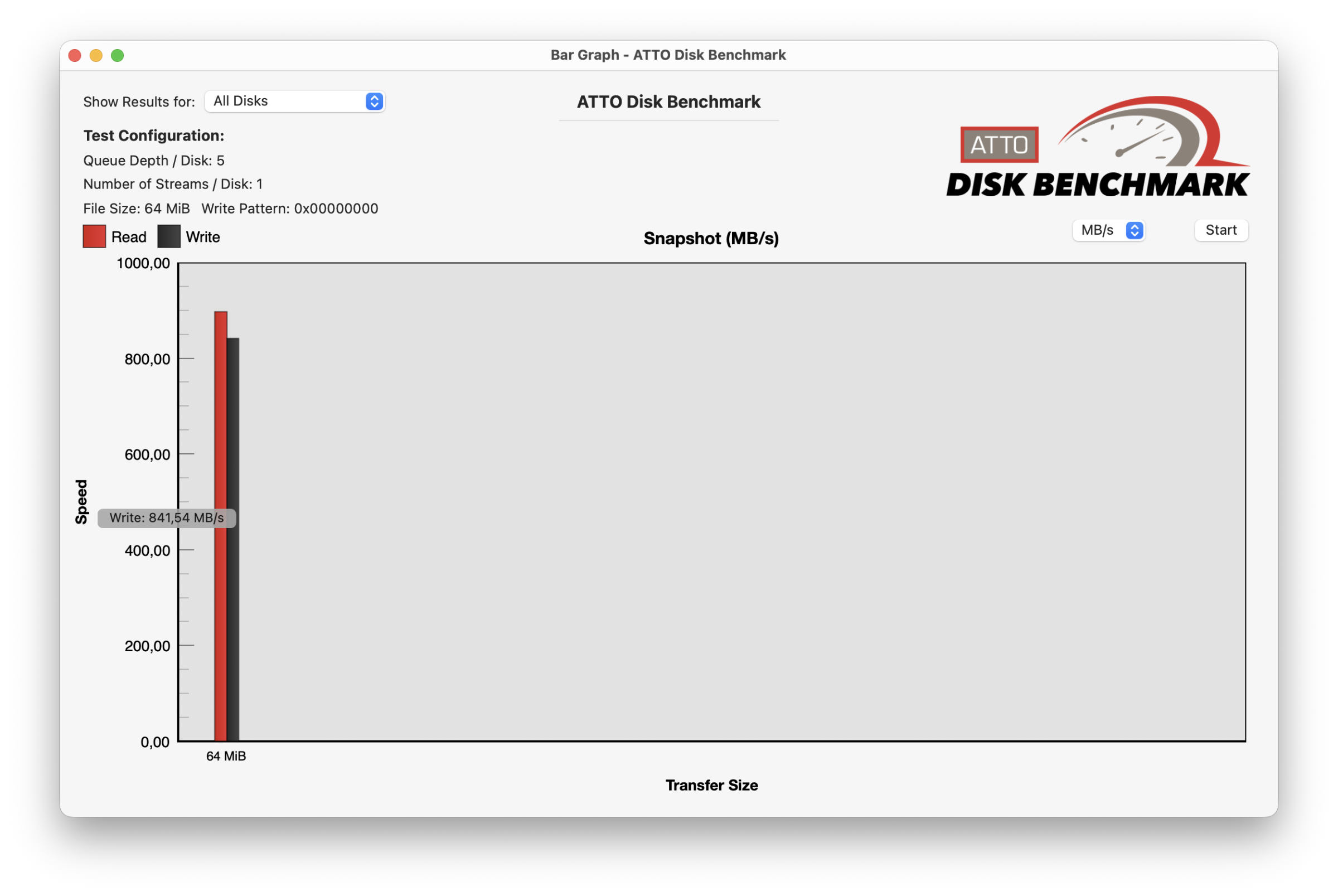 ATTODiskBenchmark PNY microSDExpress1 (Image © PCMasters.de)
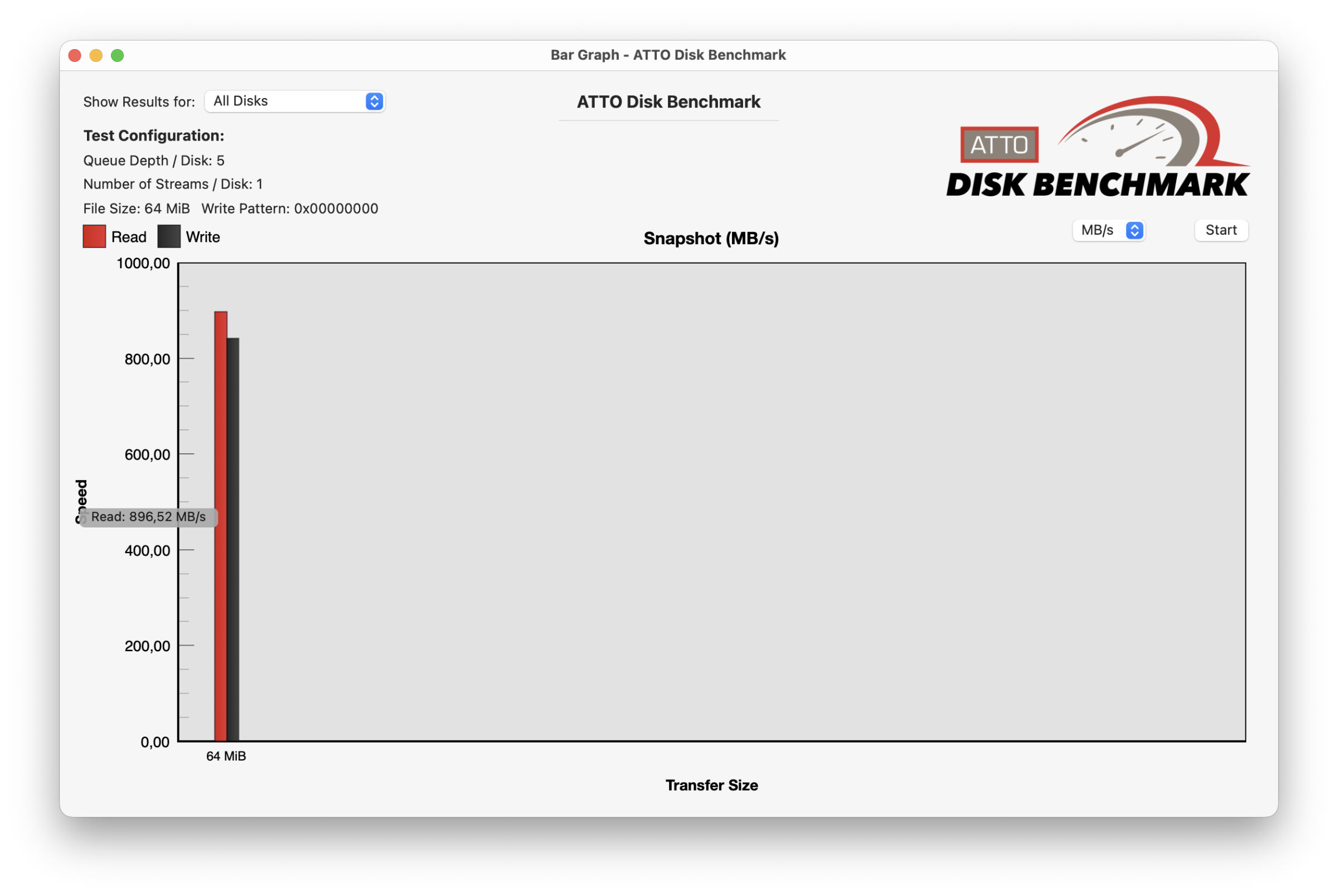 ATTODiskBenchmark PNY microSDExpress (Image © PCMasters.de)
Practical impression & robustness
As expected, the two microSD Express cards are similar in everyday use. They are thin, small and comparably sensitive, as we are used to from microSD cards. The design simply does not allow for massive protection, but the cards are easy to use in devices.
Both cards have an additional row of pins on the back, which is necessary for the Express standard, and feel clean on the outside, without rough plastic or sharp edges.
The manufacturer provides specific information on the robustness of the PNY microSD Express. According to PNY, the card should be waterproof, withstand shocks, withstand extreme temperatures and also be protected against external influences such as X-rays or moisture. This information indicates that PNY has at least paid attention to a certain level of everyday reliability in the design. A five-year warranty is also included in the price.
For the Lexar PLAY PRO microSDXC Express, there is also official manufacturer information on robustness. Among other things, the manufacturer specifies values for the temperature range (operation -25°C to 85°C, storage -40°C to 85°C), water resistance (IPX7), X-ray protection, vibration and shock resistance as well as drop protection and a high number of insertion cycles. Lexar even offers a lifetime guarantee.
In our own practical tests, both cards worked reliably. There were no dropouts, unexpected read errors or incompatibilities with our card reader when reading out, during longer transfers and also when removing and reinserting several times. In daily use, they appeared stable and solid overall, without us noticing any particular weaknesses. Nevertheless, it has to be said that a microSD card is still sensitive. You can easily crush them between your fingers and they can break under heavy pressure. Lexar also has a metal version of its normal SD cards in its range, which would definitely be interesting for such a small microSD card.
On the temperature side, both cards remain in the uncritical range during normal transfers and also during longer write operations, such as copying large amounts of data. The cards get warm, but not hot, which is of course also due to the actively cooled card reader. Overall, both cards make a reliable and unobtrusive impression in everyday use, which matches the manufacturer's specifications.
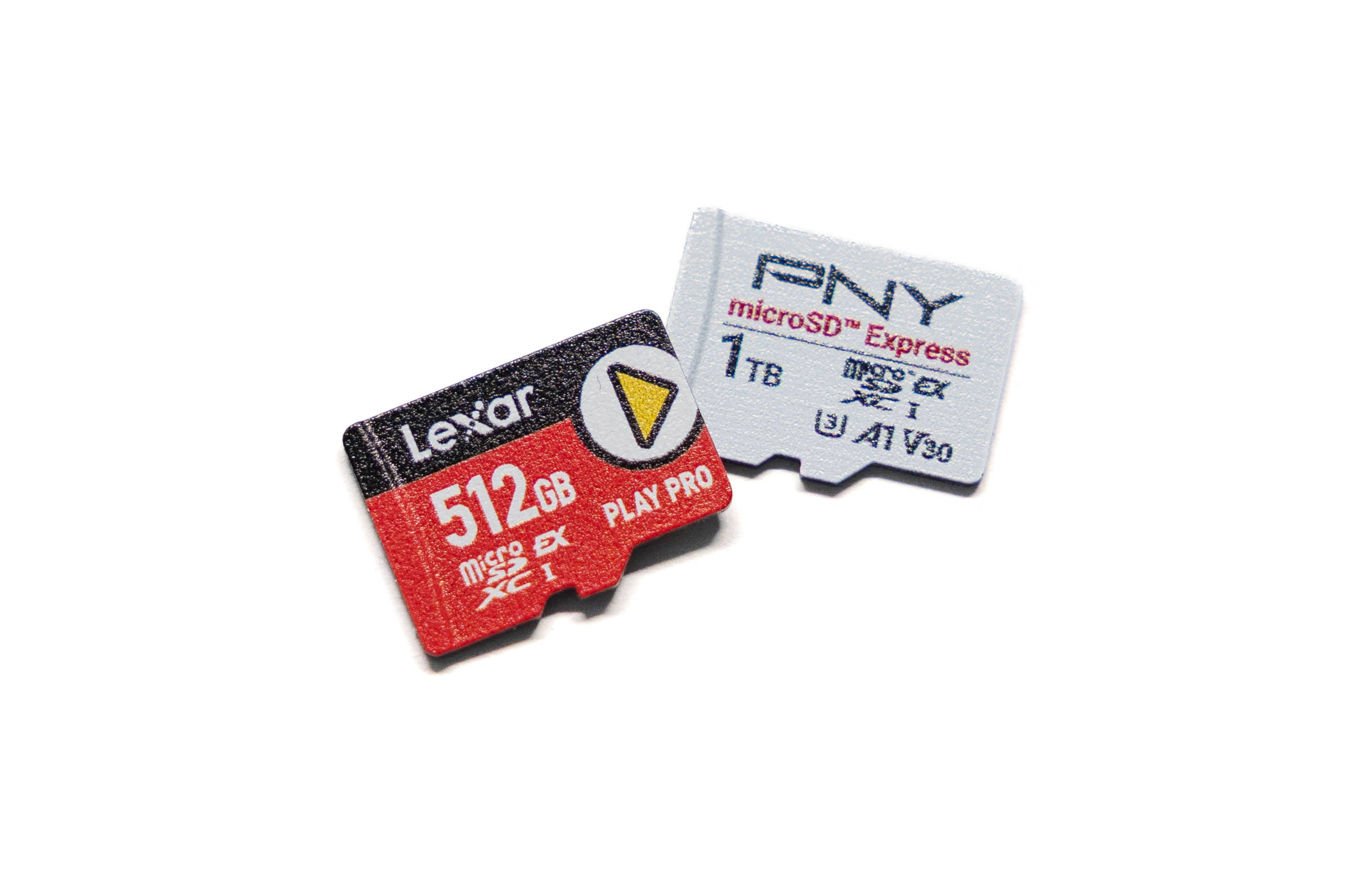 PNY Lexar microSDExpress Fazit (Image © PCMasters.de)
Conclusion
In a direct comparison, both microSD Express cards deliver outstanding performance, effortlessly mastering even demanding applications such as large downloads, games or 4K/8K recordings. In our practical tests, the PNY card is slightly ahead in all scenarios, especially during write operations in the benchmarks. In everyday use, however, the differences are hardly noticeable. In terms of price, the two cards do not differ much either, depending on the memory size selected.
It is important to know that without microSD Express support, the speed advantage quickly evaporates. Both on the computer and in the device, you need a compatible card reader or a device that supports the standard in order to take advantage of the full transfer rates. In classic microSD slots or older readers, the card will not be faster than conventional UHS-I/II cards.
Thanks to new generations of devices such as the Nintendo Switch 2, which requires a card of this type, microSD Express has been receiving more attention again since last year. After years of stagnation, the standard is finally gaining relevance again, which makes these fast cards even more interesting.
In the end, both cards are fast, suitable for everyday use and future-proof. The PNY scores slightly due to its lead in the benchmarks, but there are no real outliers with either model.