

 Computer Forum
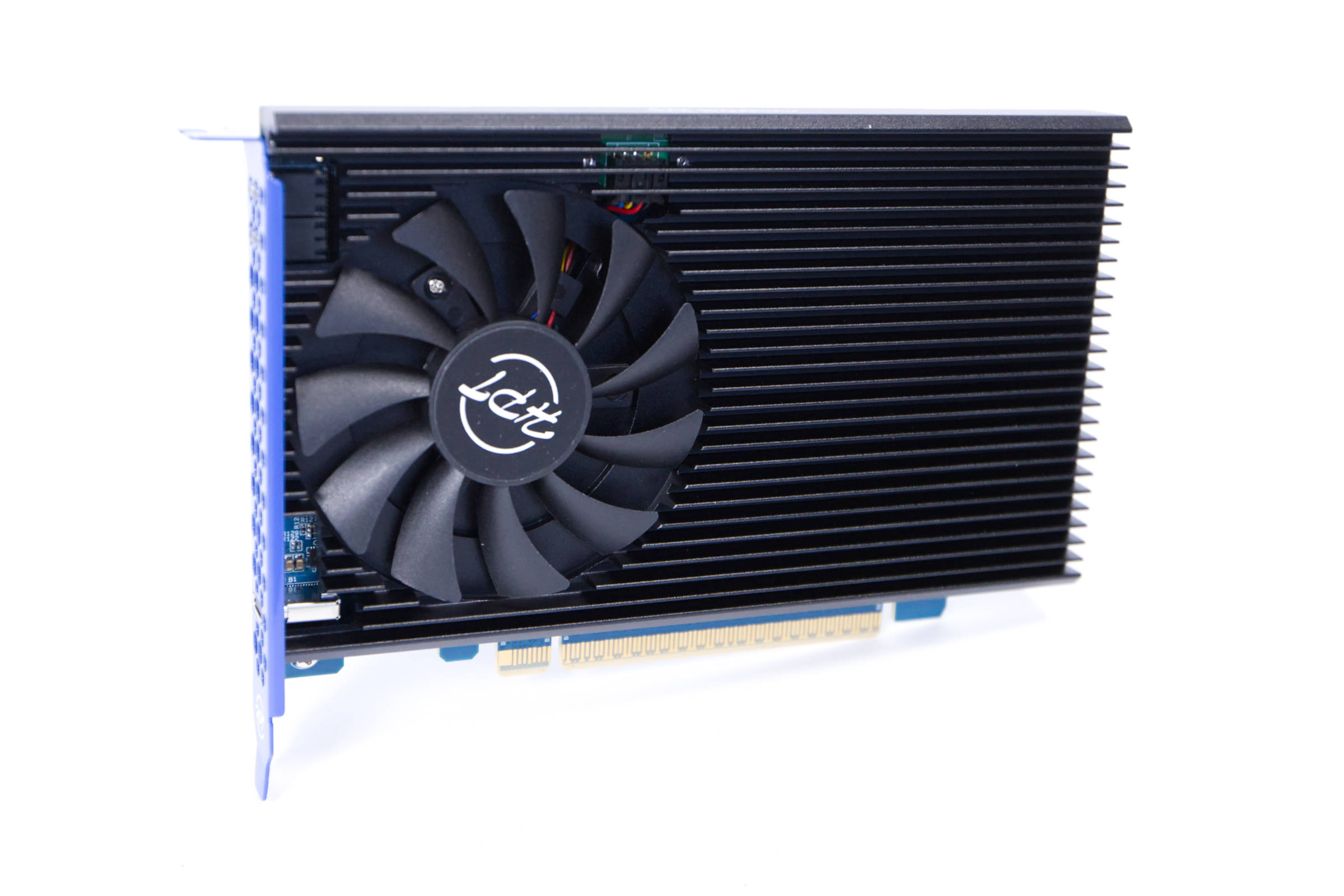 HighPoint Rocket 1604L Front (Bild © PCMasters.de)
HighPoint Rocket 1604L - NVMe Switch AIC for High-End Workstation
HighPoint has specialized in special add-in cards for servers and workstations and, as an official partner of the PCI-SIG, is one of the first manufacturers to offer CopprLink-compatible solutions.
HighPoint is also one of the first to offer PCIe 5.0 x16 expansion cards. With the Rocket 1604L, there is now an NVMe switch AIC card that can connect up to four NVMe SSDs via a PCI Express 5.0 x16 port. This is an advantage for use in a high-end workstation, as these have plenty of PCIe lanes, but often not enough M.2 NVMe ports on the board. You do not necessarily have to connect exactly the same NVMe SSDs, as this is not a RAID controller.
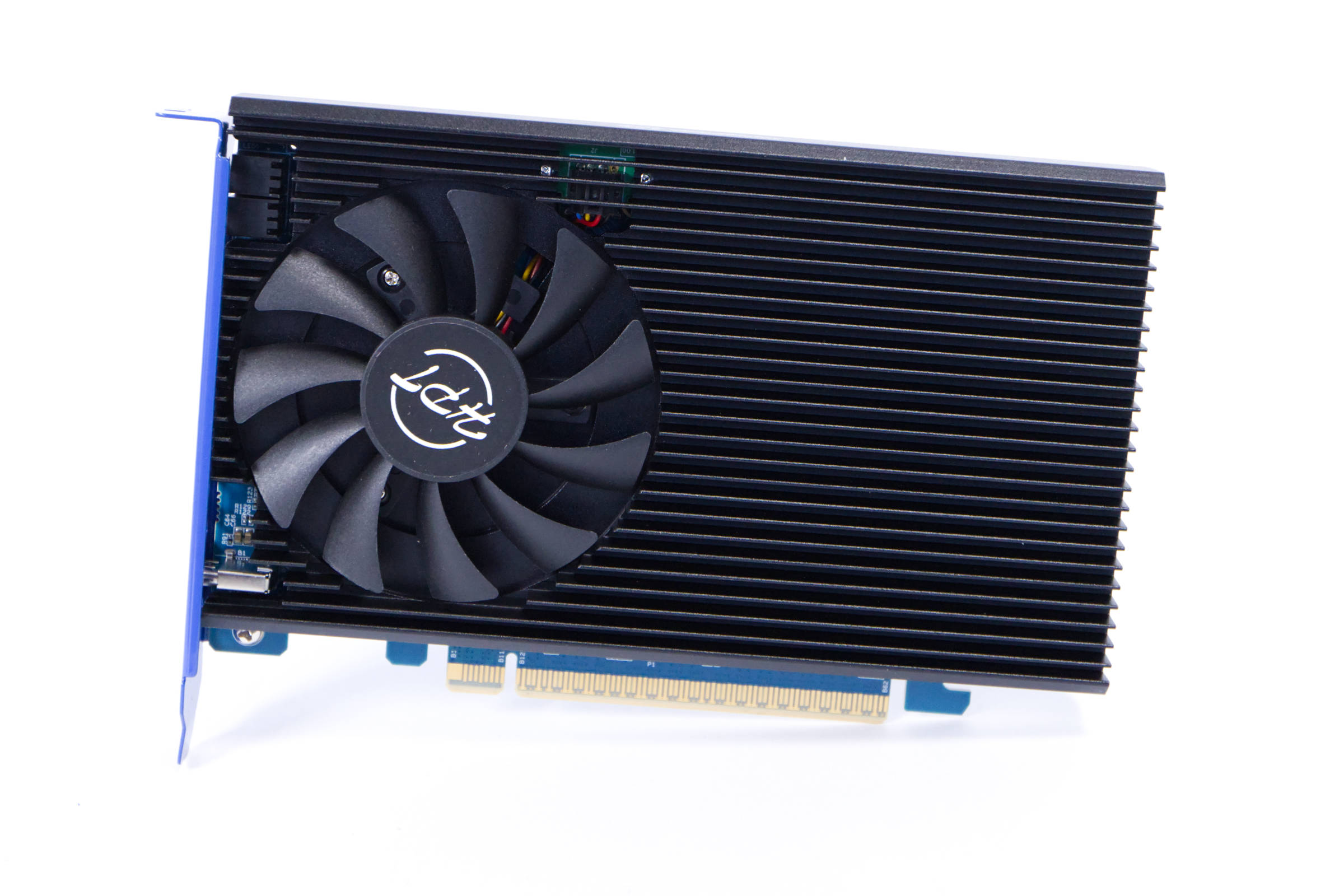 HighPoint 1604L Frontansicht (Bild © PCMasters.de)
The manufacturer also states that AI accelerators can be installed here, but we have not considered this scenario any further. The card uses the full PCI bracket height and is therefore not a low-profile card, which is suitable for workstations but can be a problem for some servers. On the other hand, with dimensions of 167 x 110 x 18 mm, it is rather short and only occupies one slot, which is very advantageous.
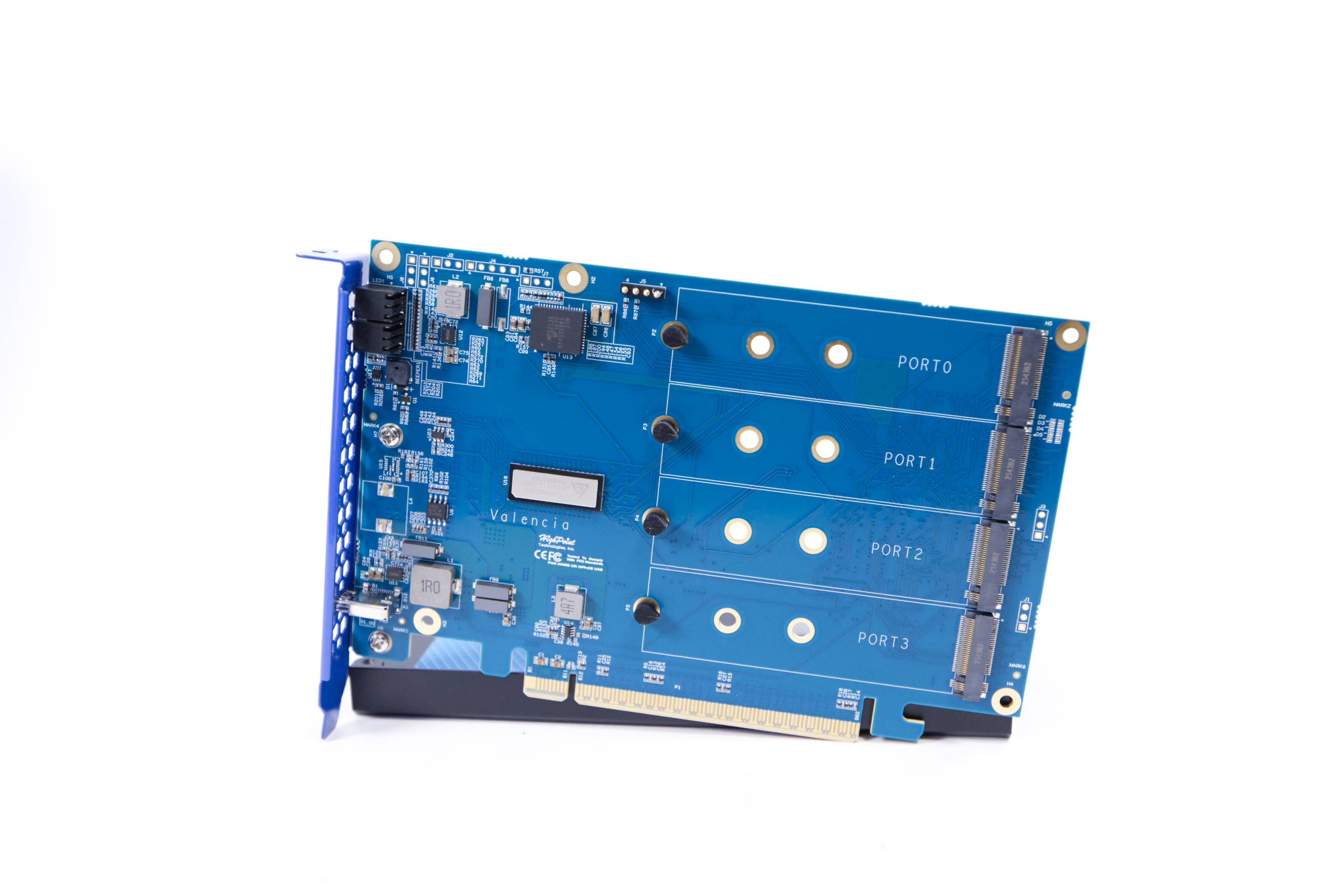 HighPoint Rocket 1604L Platine (Bild © PCMasters.de)
When the cooler block is removed, you can see the slots for the PCIe 5.0 NVMe SSDs. The slots are intended to be fitted with SSDs in the M.2 2280 form factor (long), but it is also possible to install SSDs in the M.2 2242 and 2260 format. In this case, the rubber holder must be moved.
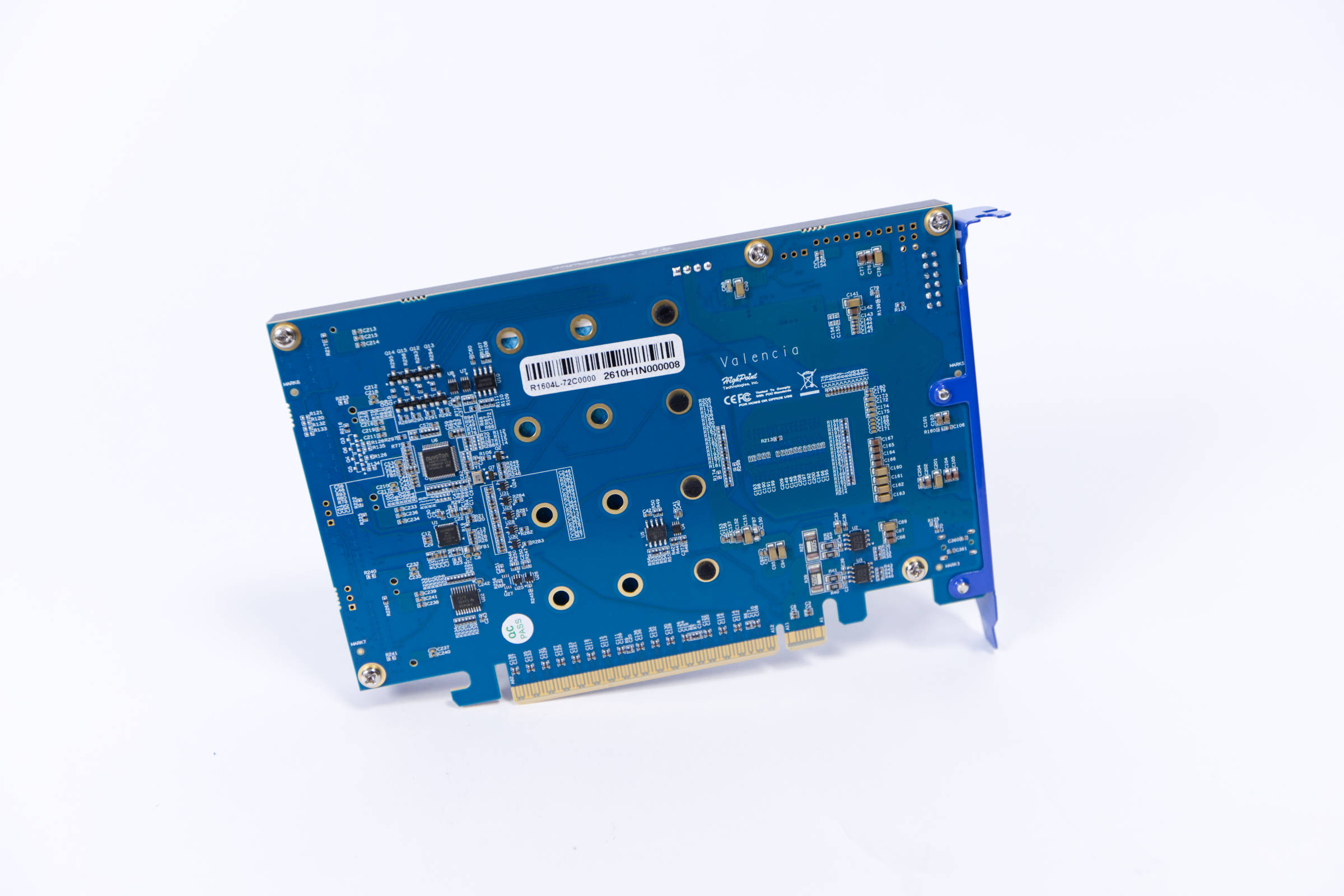 HighPoint Rocket 1604L Rückseite (Bild © PCMasters.de)
The PCB is really cleanly finished and there are no other defects to be found. The cooler is fixed in place with five screws from the rear. The middle screw is also used to press the fan pins on the cooler to the PCB. This means that HighPoint avoids having to lay any plug connections with cables, which is a very good solution.
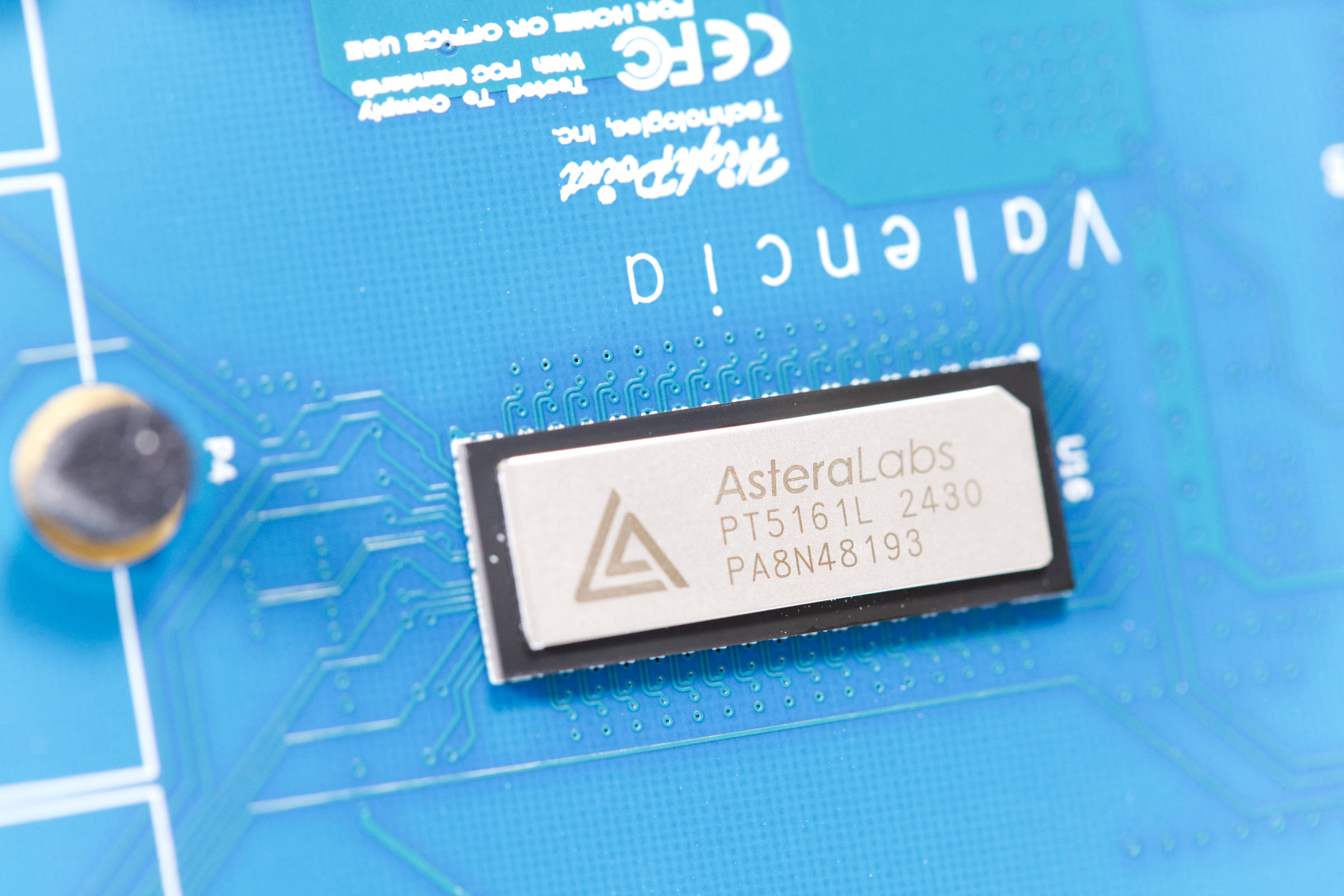 HighPoint Rocket 1604L AsteraLabs PT5161L (Bild © PCMasters.de)
AsteraLabs PT5161L
The retimer is mentioned as a special feature of the HighPoint Rocket 1604L. HighPoint relies on the PT5161L retimer from AsteraLabs. According to the data sheet, the focus is on reducing latency and increasing reliability. As the controller itself is transparent, it is not visible in the logs or as a stand-alone device. The SSDs are "passed through" and addressed directly.
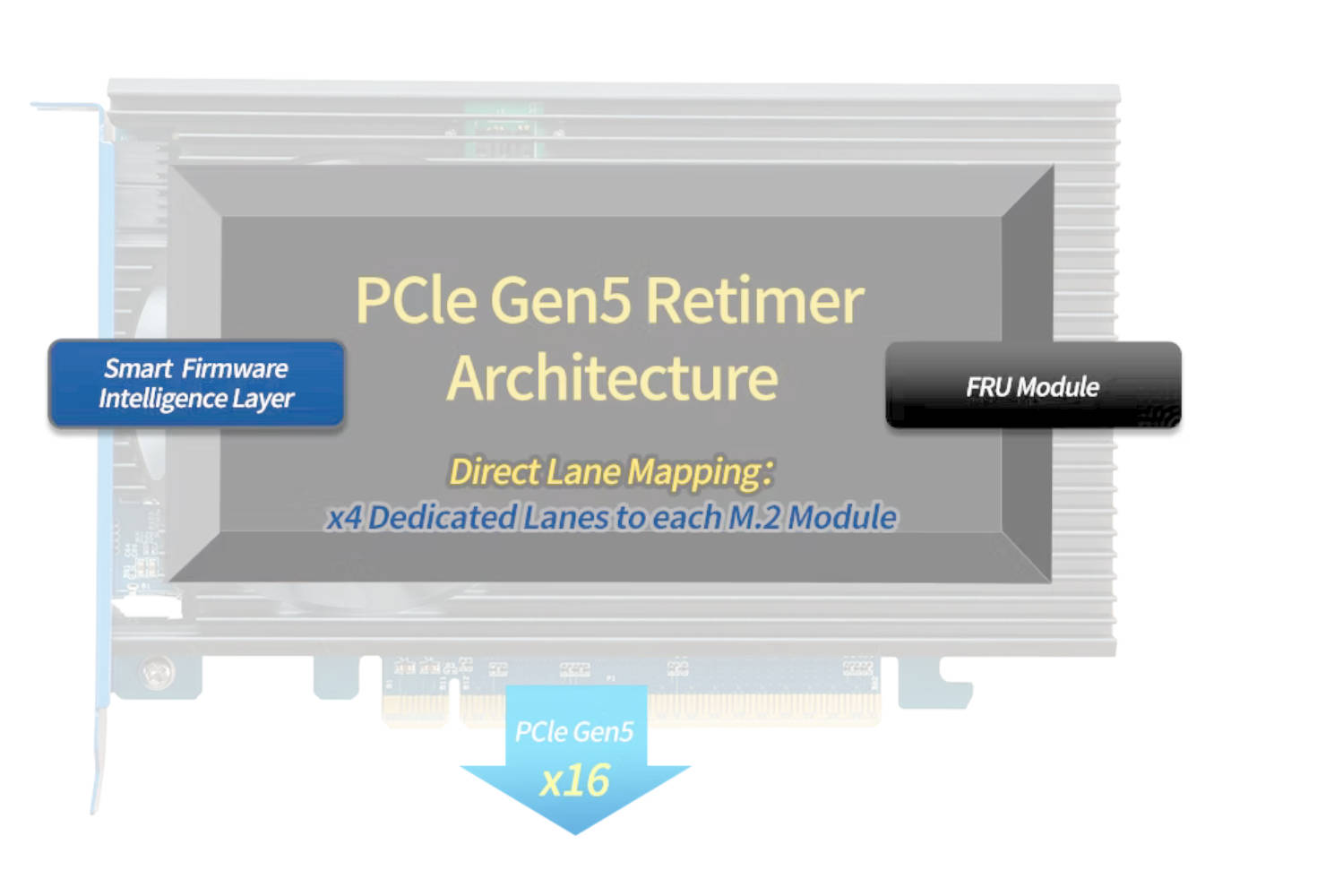 HighPoint Rocket 1604L Ohne Küh Retimer (Bild © HighPoint)
The PT5161L chip is actively cooled and is connected to the cooler via a thick thermal pad.
Bifurcation from x16 to four x4 lanes
Because the card internally splits the PCI Express slot between four dedicated NVMe SSDs, each SSD needs its own four lanes to achieve full performance with PCIe 5.0 bandwidth. On most motherboards, the BIOS will recognize the corresponding PCIe x16 slot as one slot and therefore only recognize and supply the first M.2 NVMe SSD. However, this means that x16 lanes are reserved for the first NVMe and the remaining SSDs are not recognized, which makes the 12 lanes unusable.
As the negotiation between controller and mainboard does not happen automatically, Bifurcation must be activated for the corresponding slot in the BIOS. Workstation and server mainboards have a suitable configuration option for this in Advanced CPU or PCIe settings. With Supermicro this was to be found under CPU. Instead of Auto, we had to switch to "x4/x4/x4/x4**". The system then understands that the one x16 slot operates four separate devices and addresses them accordingly. Only then will all four M.2 SSDs be found in the system.
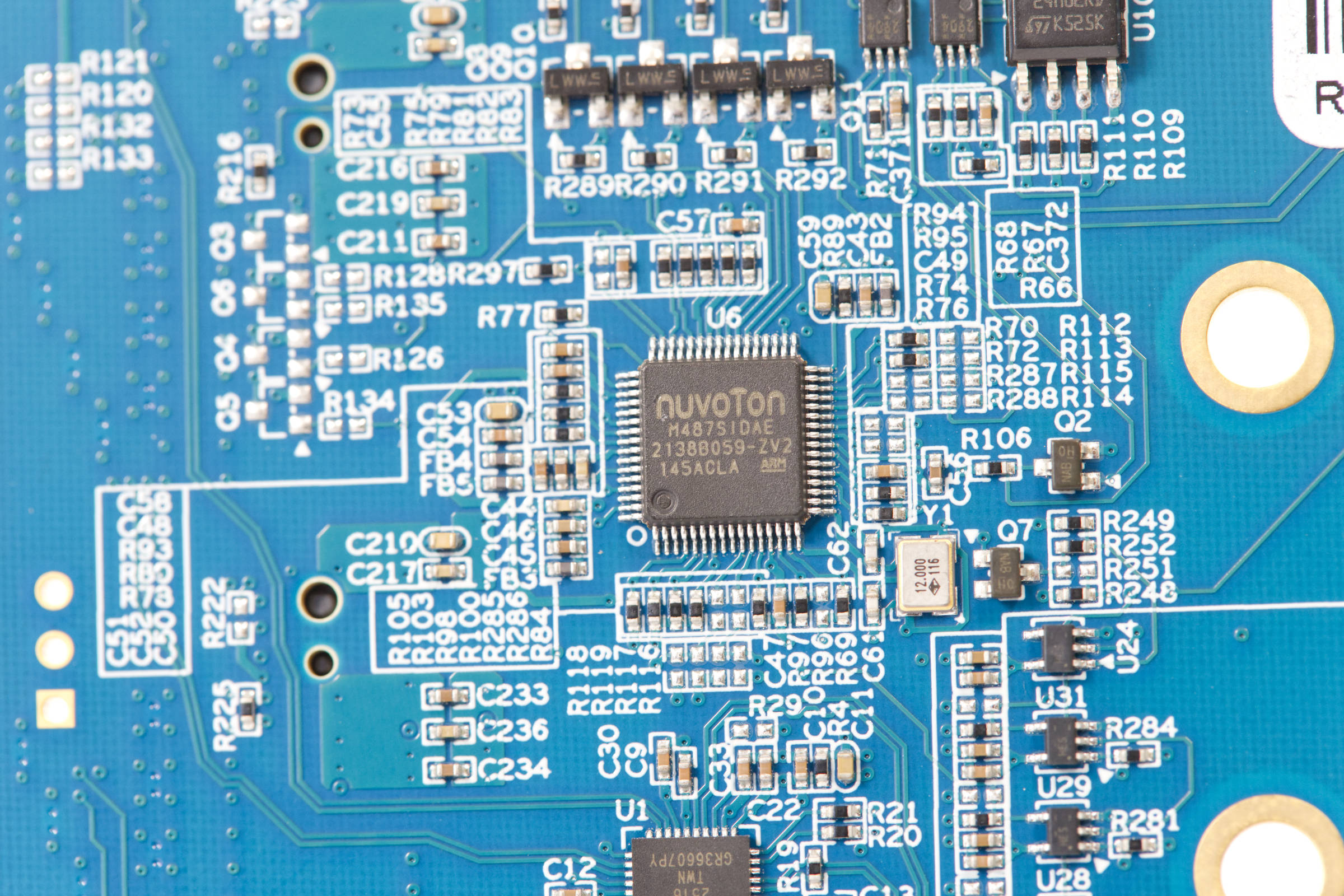 HighPoint Rocket 1604L nuvoTon M487SIDAE (Bild © PCMasters.de)
Nuvoton M487SIDAE
There is a Nuvoton M487SIDAE low-power microcontroller (MCU) on the back. According to documentation this is equipped with Arm Cortex-M4F cores and is used to provide cryptography accelerators for ECC, AES, DES/3DES, SHA but also as an interface for 10/100 Mbps Ethernet MAC via USB.
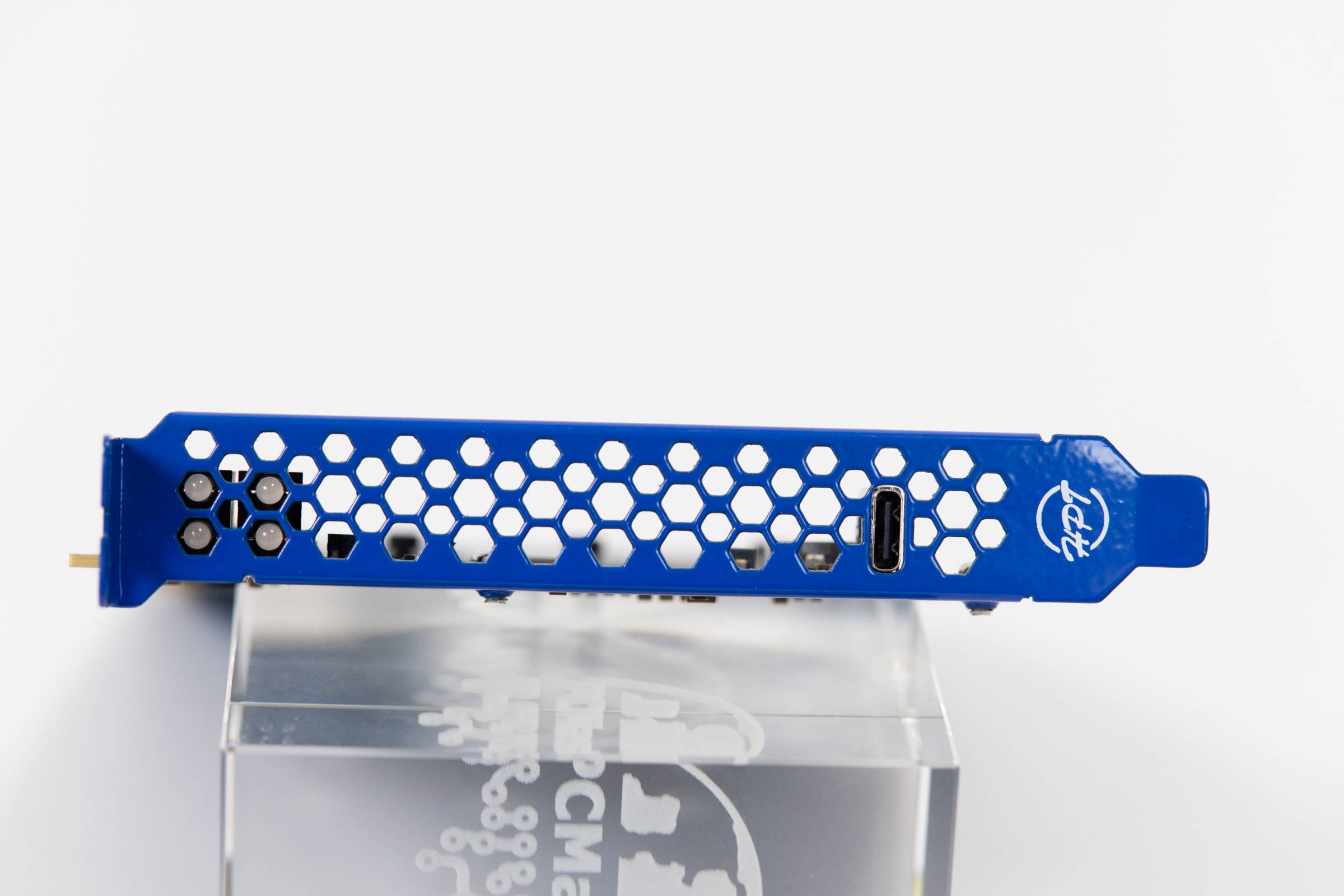 HighPoint Rocket 1604L Slotblende Nahaufnahme (Bild © PCMasters.de)
As far as we could identify, this is addressed via the USB-C port. This is therefore part of the Out-of-Bound (OOB) functions:
-
- SSD control functions: Supports SSD power on/off (SSD dependent) and drive reset
-
- advanced hardware telemetry: real-time monitoring of the temperature of the Retimer IC, the speed of the integrated fan and the power consumption of the AIC
-
- NVMe-MI support (subject to NVMe SSD support)
-
- firmware update for Retimer IC and MCU
-
- notification of the Retimer IC status: notification of the Retimer status
 HighPoint Rocket 1604L Verpackung (Bild © PCMasters.de)
Packaging and scope of delivery
Our specimen came in a gray box with the manufacturer's name and model listed on it. The box is simple and there is no design, as it is not a consumer product. However, the focus is on safe transportation and storage of the products. The Rocket R1604L is protected from external influences by foam.
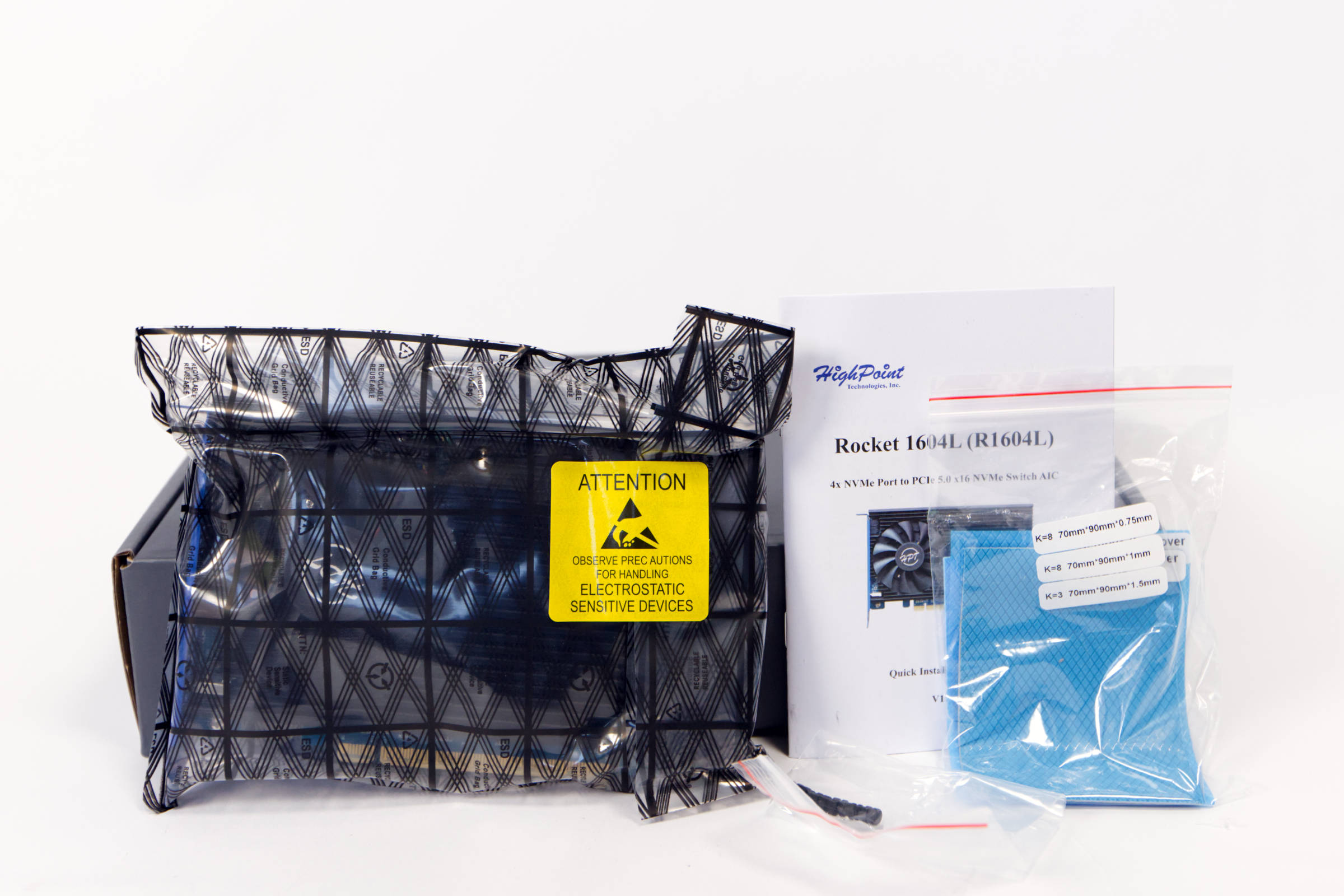 HighPoint Rocket 1604L Lieferumfang (Bild © PCMasters.de)
In addition to the Rocket 1604L-AIC card, the scope of delivery includes a manual, three thermal pads in different thicknesses and rubber brackets for the M.2 mount.
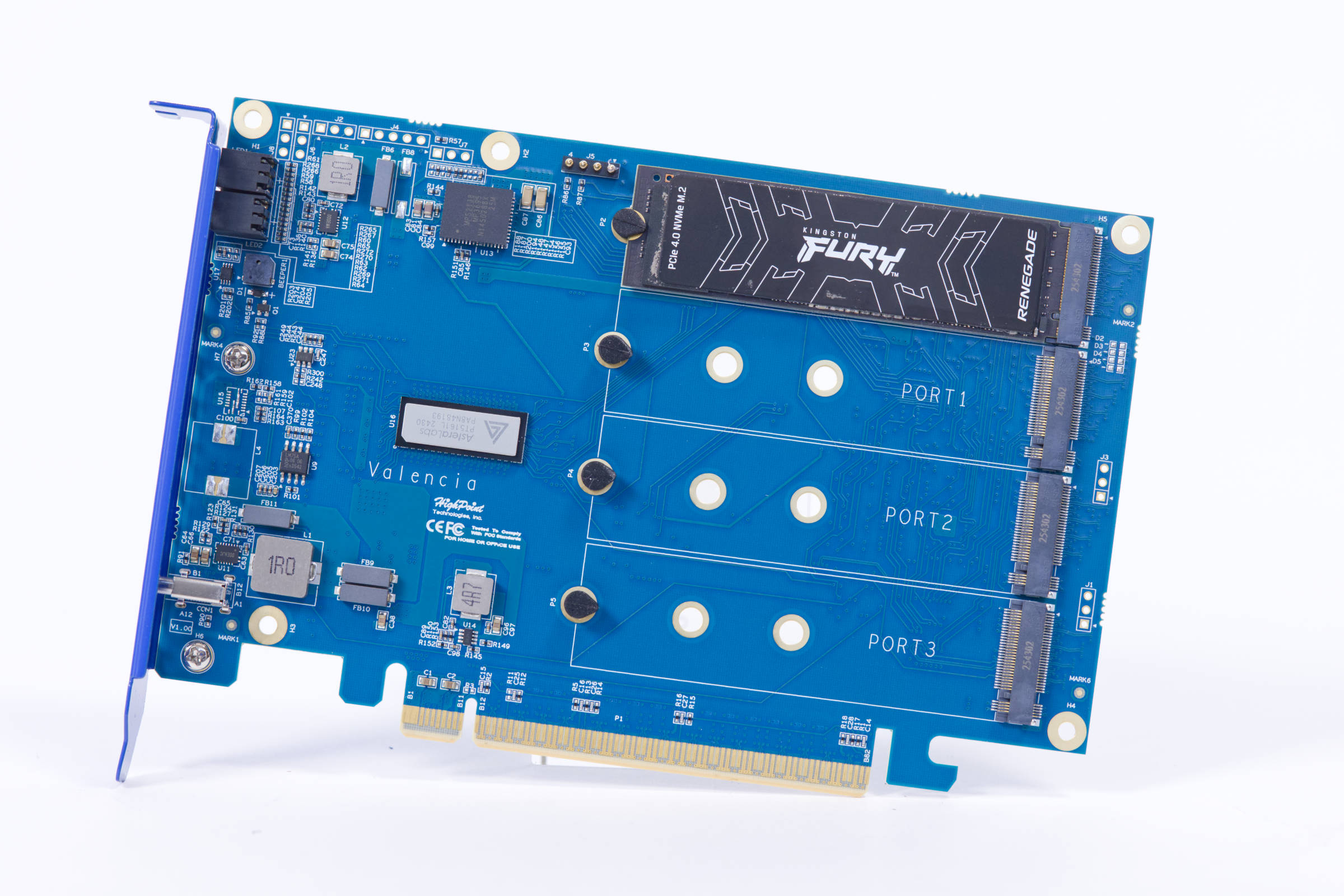 HighPoint Rocket 1604L mit NVMe installiert (Bild © PCMasters.de)
Installation
The actual installation is easy, as the card is plug-and-play ready. A driver is not required as the controller takes care of everything and acts as a transparent layer. A Phillips screwdriver is required to remove the cooler. The SSDs, on the other hand, are simply plugged in and connected to the cooler using a pre-attached thermal pad.
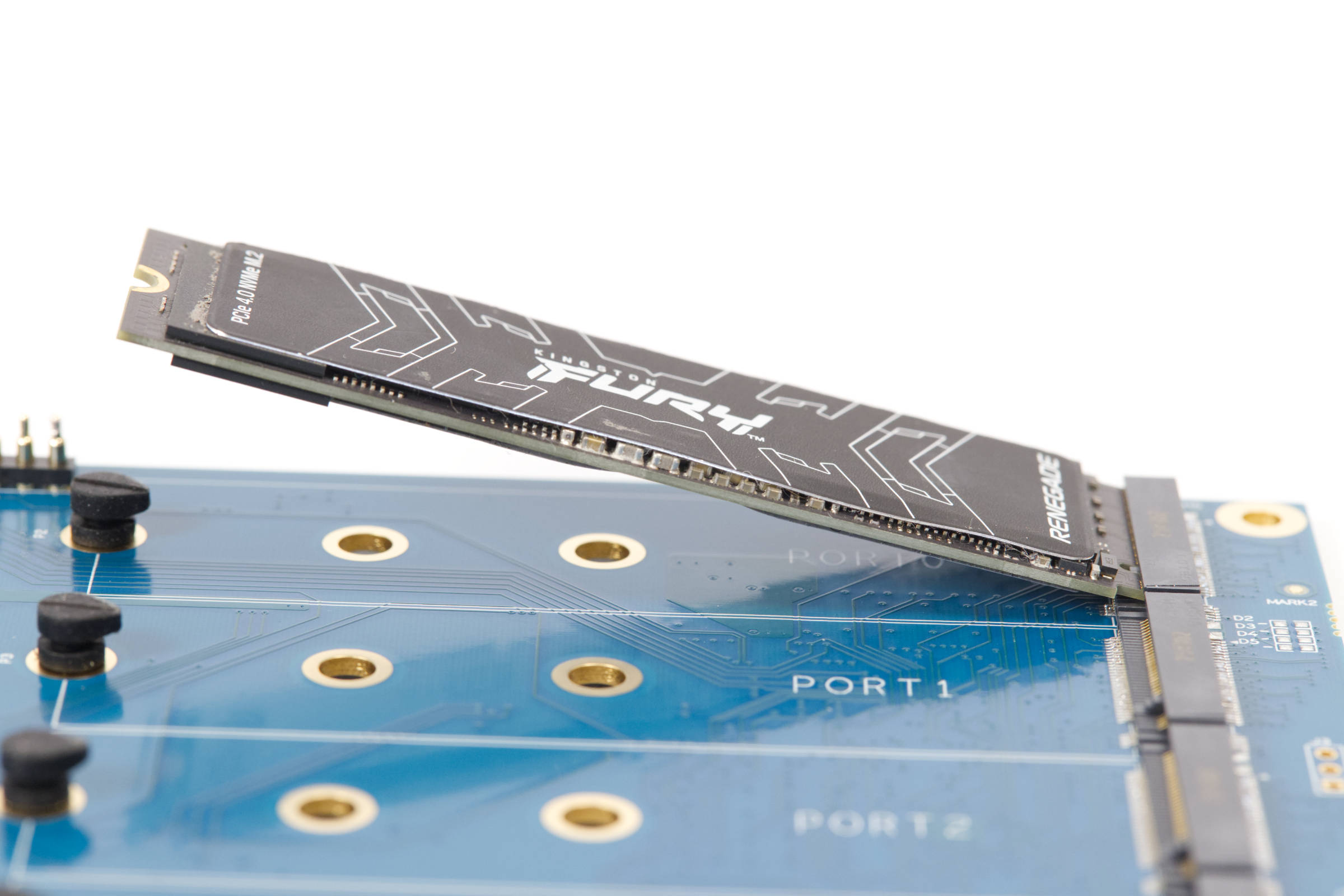 HighPoint Rocket 1604L NVMe Montage (Bild © PCMasters.de)
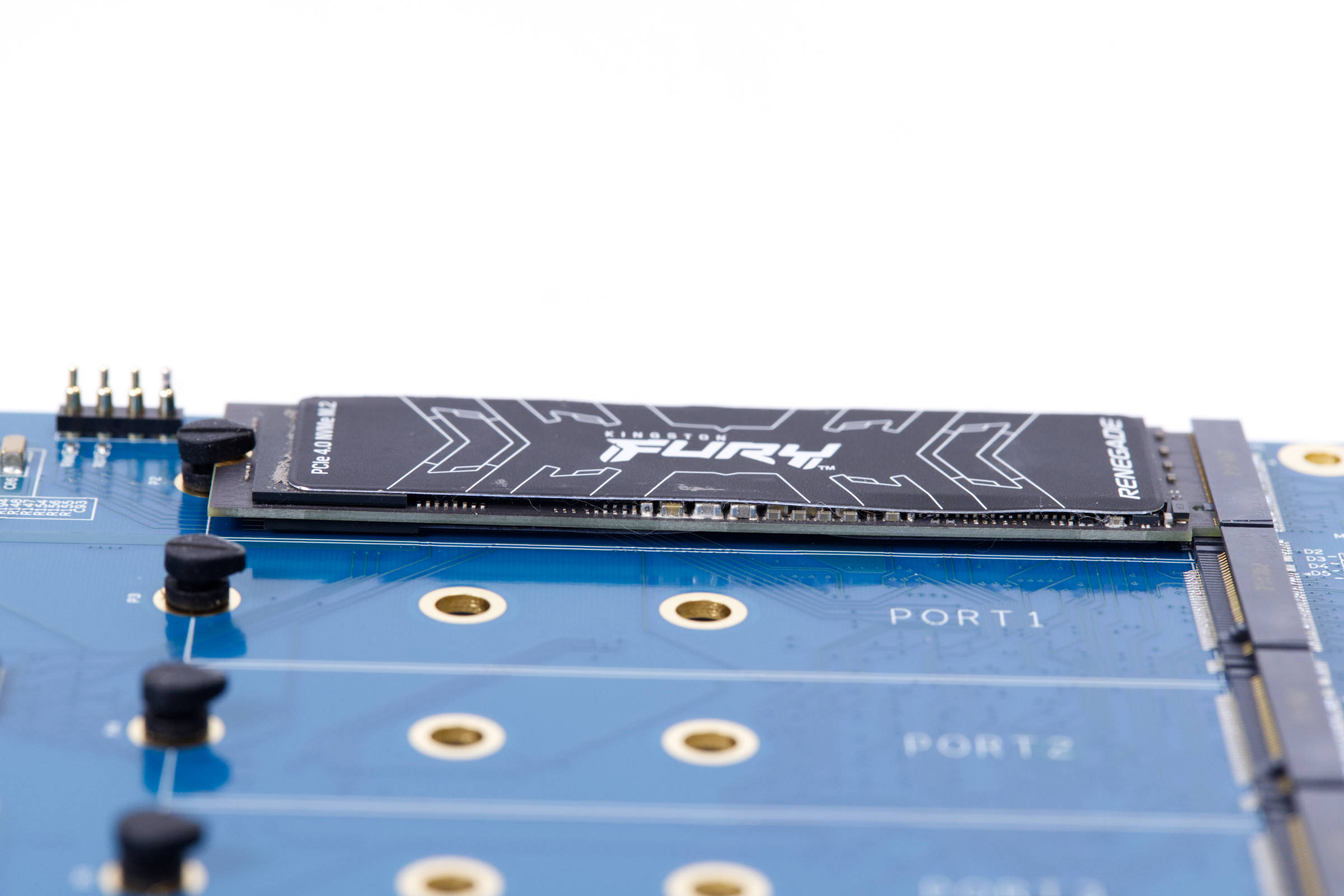 HighPoint Rocket 1604L NVMe installiert (Bild © PCMasters.de)
Compatibility
Bifurcation must be activated in the BIOS if you want to use more than one NVMe SSD. The manufacturer has a compatibility list in a PDF, which states that X670 and X870 motherboards are generally compatible, but the limitation of the lanes plays a negative role here, because the second PCIe slots on the boards do not provide the full x16 lanes. The AIC is much more likely to be used with AMD WRX80, WRX90 or TRX50 chipsets or Intel W790, C741 and C621A. Although Z890 boards are also mentioned, these are similarly limited to AMD consumer boards.
However, there are generally no problems with workstation and server boards. With some mainboards, you have to force the BIOS to operate the corresponding slot as PCIe GEN5 and no automatic negotiation between devices takes place.
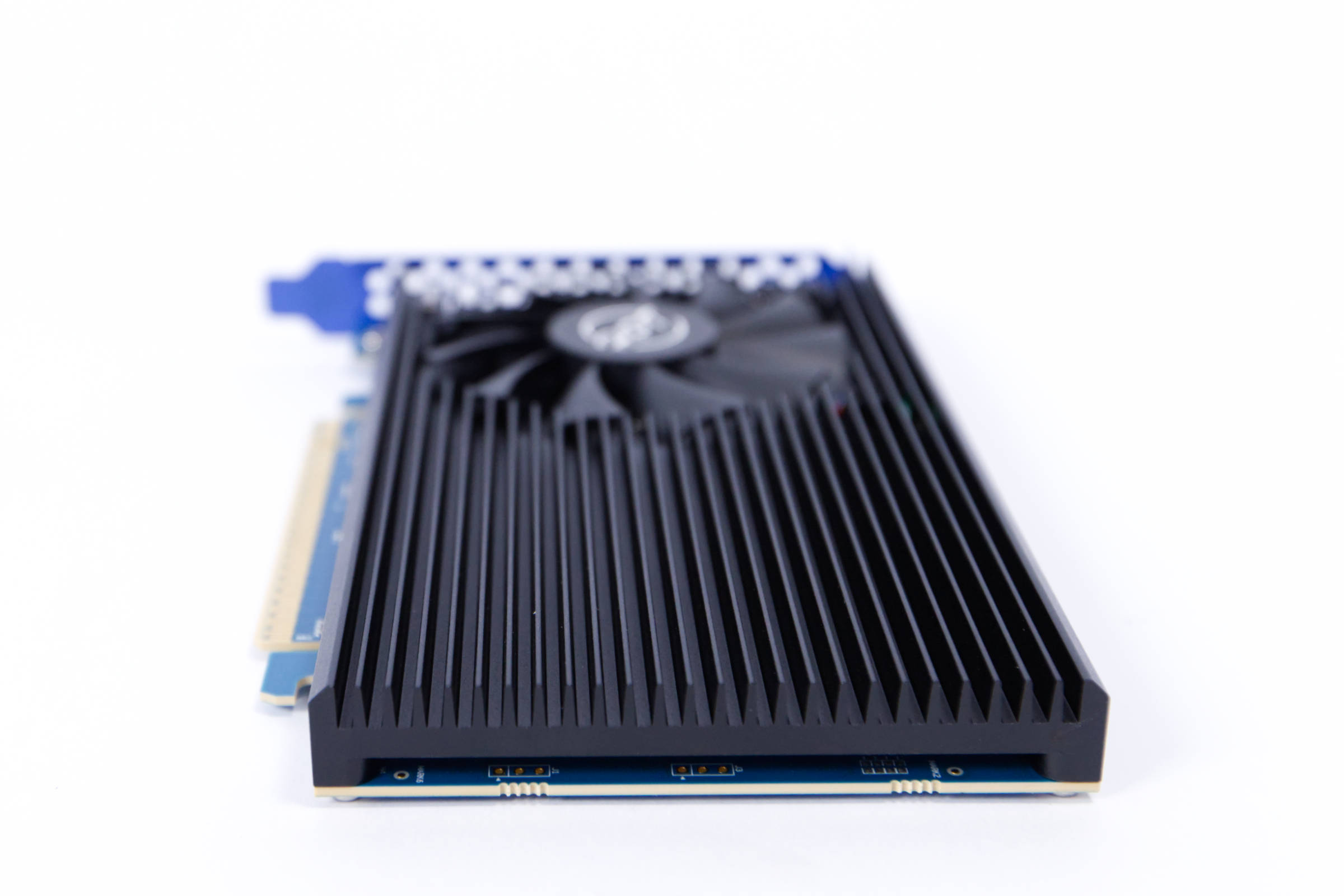 HighPoint Rocket 1604L Kühlerprofil (Bild © PCMasters.de)
Active cooling and volume
Modern NVMe SSDs based on the PCIe 5 standard get very hot under load, with a few exceptions. HighPoint is prepared for this and so the manufacturer equips the Rocket 1604L with a large aluminum cooler, in which a narrow fan is embedded. The fan draws in the air and pushes it through the fins of the aluminum block. This is intended to effectively prevent thermal throttling. It is worth noting that the fan control is not set to server volume at maximum speed. Under normal loads, the 1604L is very quiet and does not stand out from our test system.
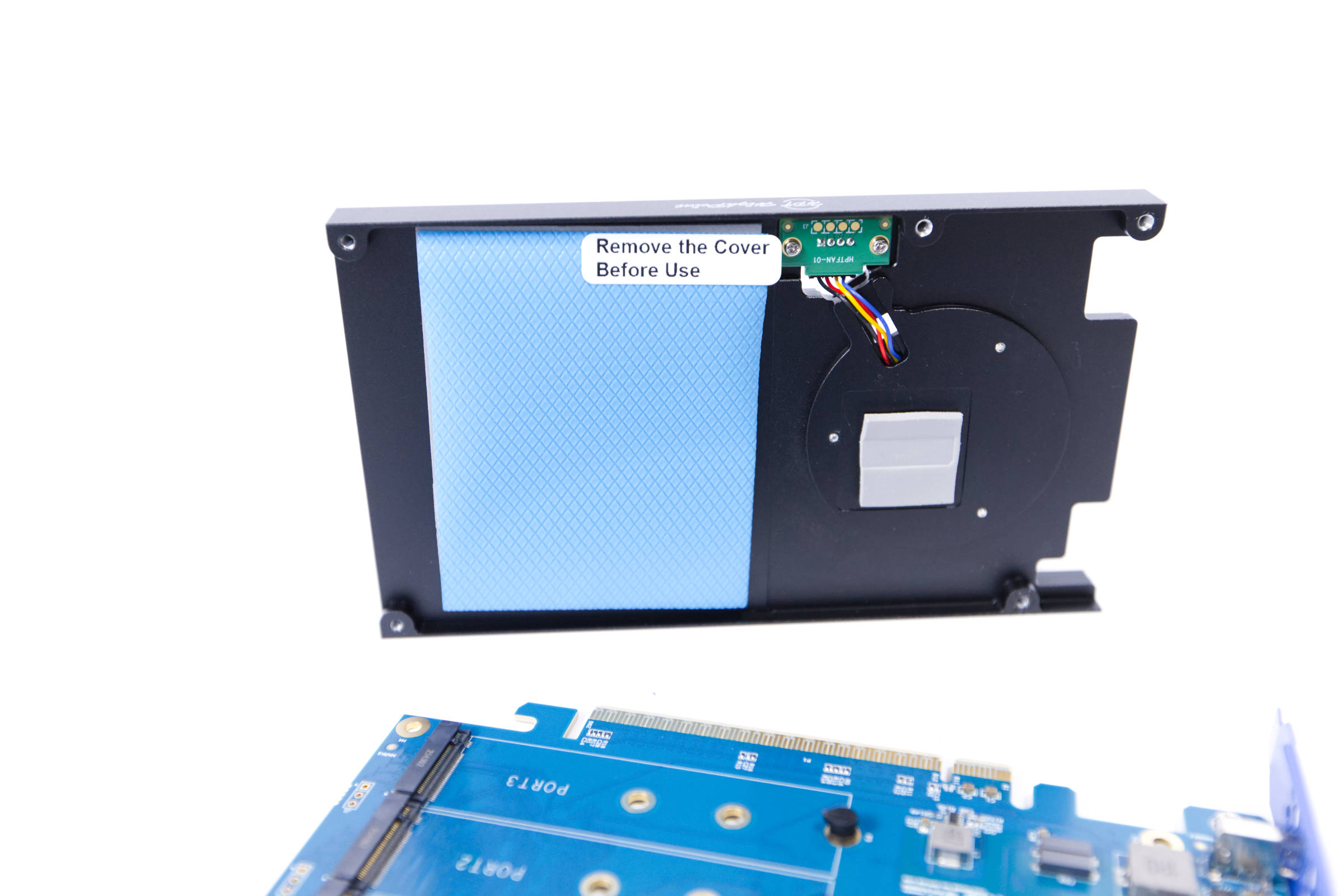 HighPoint Rocket 1604L Kühlerunterseite (Bild © PCMasters.de)
A heat conduction pad for the four M.2 NVMe slots is attached to the underside of the black anodized cooler. This is covered by a blue protective film, which must be removed beforehand. A suitable thermal pad is also attached for the PT5161L Retimer. If required, thinner thermal pads can also be used, which are included in the scope of delivery. For SSDs fitted on both sides, you can place a thermal pad on the PCB, because then the waste heat can at least be transferred to the PCB and the chips can dissipate their waste heat.
If you hold/stop the fan, an alarm sounds immediately, signaling that there is an error.
Temperature comparison
We ran the test several times and the PNY CS2150 once reached 70 °C, but the temperatures then dropped quickly. However, this outlier was only noticeable in one of the 8 or so runs, in the others the delta values were as follows.
Volume of the fan
The system is not set to ultimate silence at the time of testing, which is why the fan of the Rocket 1604L is slightly quieter than the rest of the system. With our measuring device, we measured a sound level of 39.9 dB(A) at a distance of 20 cm with the case open. With the case closed, the noise level then dropped to 39.5 dB(A) (but with the case fans).
Server/workstation system
- CPU**: AMD EPYC 9334
- CPU cooling: Alphacool ES Jet 2U
- Graphics card: Powercolor Radeon RX 7700 XT Hellhound
- Mainboard**: Supermicro H13SSL-N bulk
- RAM**: Micron 16GB DDR5-4800 RDIMM 1Rx8 CL40(MTC10F1084S1RC48BR)
-
Storage: 2TB **Lexar NM790 SSD
- Power supply**: BeQuiet! Pure Power 11 FM 1000W
- Case**: NZXT Cyberpunk 2077 H710i Special Edition
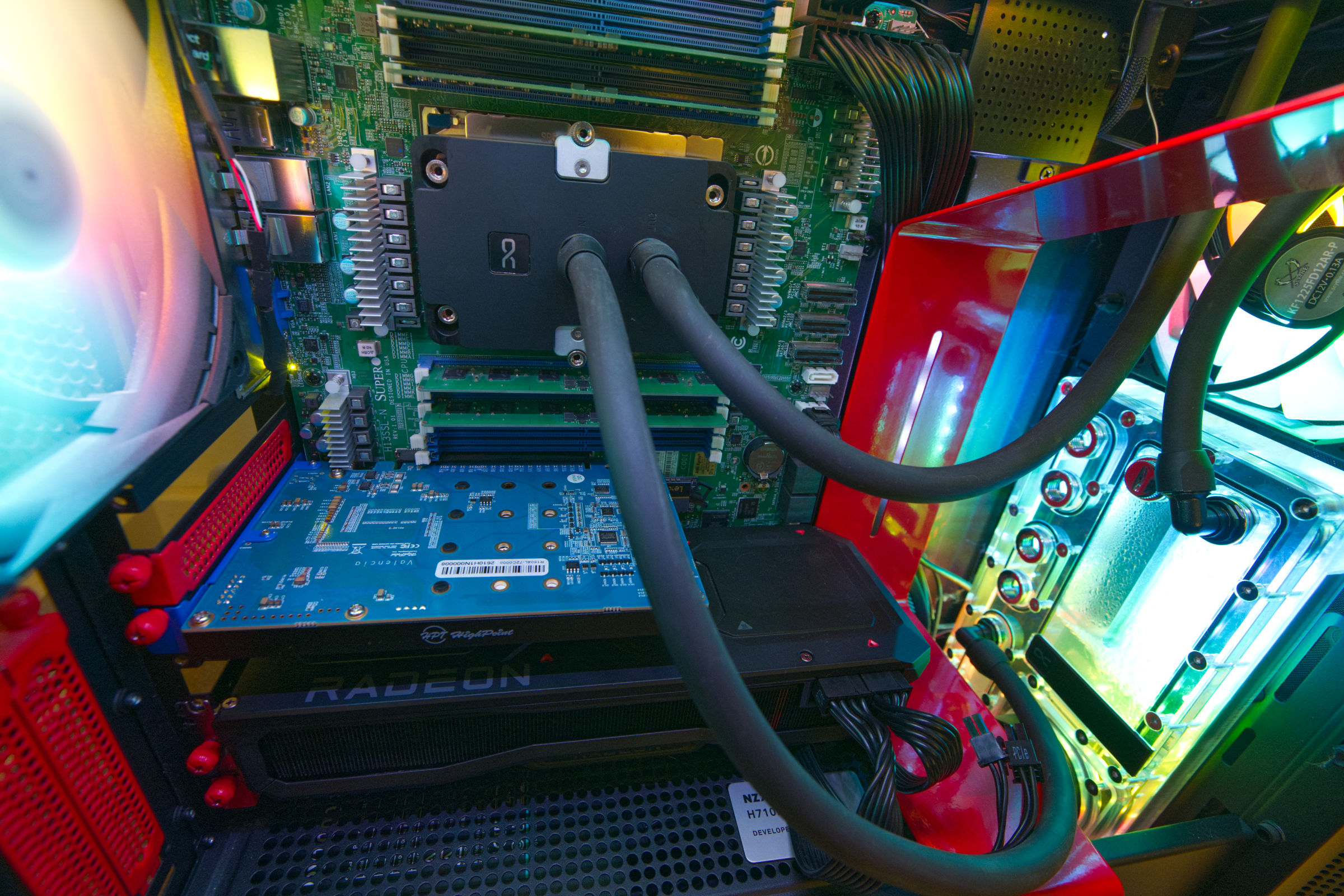 HighPoint Rocket 1604L eingebaut (Bild © PCMasters.de)
Benchmarks
For the test, we used the available data from our NVMe review database based on the AMD Ryzen 9 7950X on the Biostar X670E Valkyrie motherboard as a basis. These tests were carried out under Windows. We then added the new test data, for which we used a bash script based on Flexible I/O Tester (fio) under Ubuntu 24.04. Among other things, sequential read and write rates are determined, which should match those of CrystalDiskBenchmark. The benchmark also records the corresponding IOPS. The latency compared to Gen4 should be better, but we have not yet recorded this on the X870E board.
PCIe GEN5 M.2 NVMe SSDs used:
- PNY CS2150 1 TB SSD (test)
- ADATA XPG MARS 980 BLADE1 TB SSD (test)]9**
Below are the two charts to demonstrate the difference.
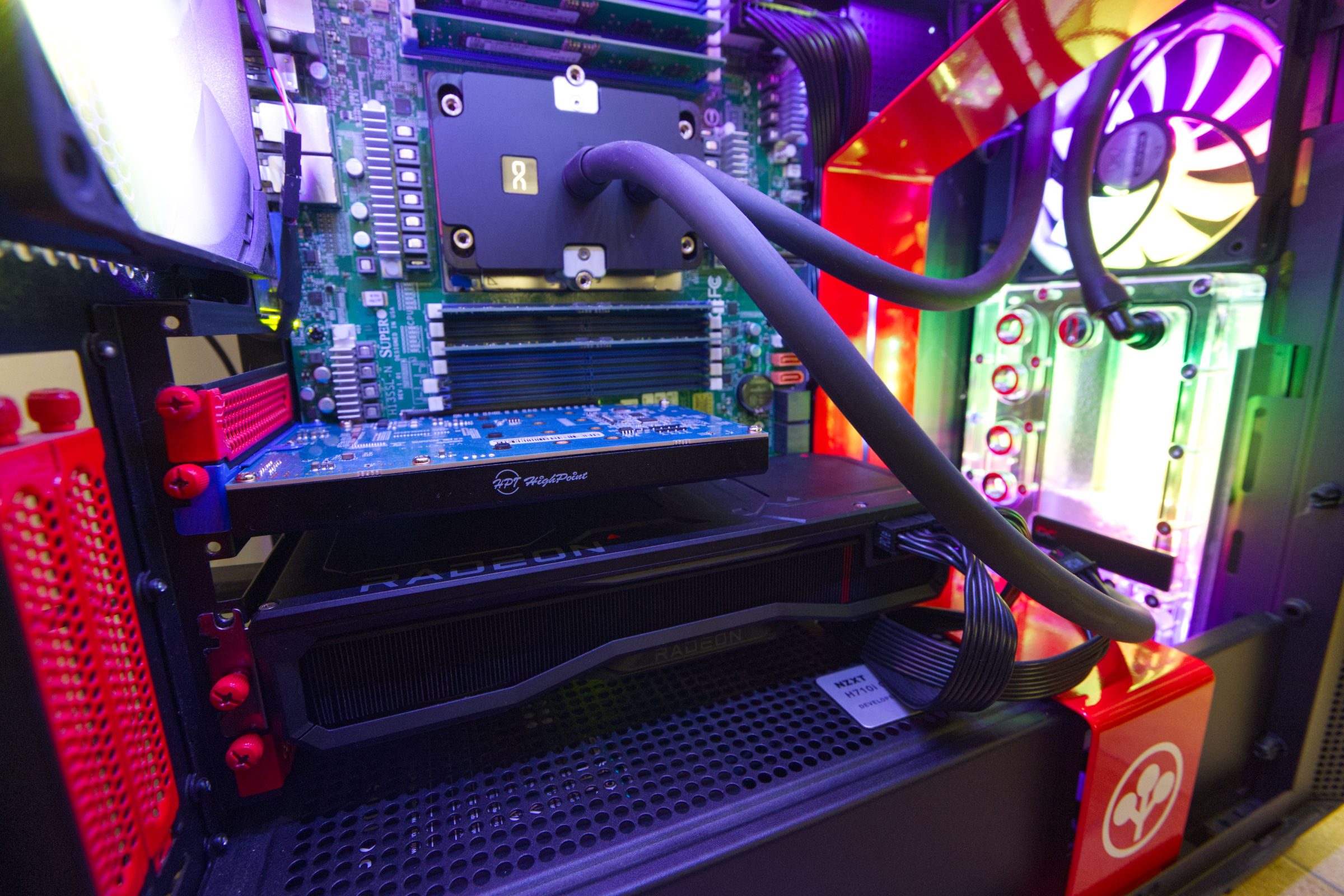 HighPoint Rocket 1604L Review (Bild © PCMasters.de)
Conclusion
The Rocket 1604L is a modern expansion card for up to four M.2 NVMe SSDs that offers high bandwidth thanks to PCI Express 5.0 support. Using bifurcation, the 16 lanes (~64 GB/s unidirectional / ~128 GB/s bidirectional) must be divided into four separate x4 lanes. On our Supermicro H13SSL-N, we only had to switch the slot from "Auto" to "x4/x4/x4/x4" in the BIOS. After that, each NVMe slot with the four lanes gets a maximum bandwidth of 15.7 GB/s and all four SSDs are also recognized by the system.
HighPoint installs the AsteraLabs PT5161L Retimer on the AIC, which should massively reduce latencies. The controller is transparent to the system and the SSDs are recognized directly. Each SSD can be switched on or off out-of-bounds via the USB-C port on the slot bracket. It can also be used to install a firmware update and read out the Retimer IC status
It is really praiseworthy that the built-in cooler has been really well optimized and the built-in fan is exemplary quiet for such an expansion card - considering that it is a workstation/server solution. The temperatures are also good, so that the hot PCIe GEN5 SSDs did not throttle. The included thermal pads are also helpful, as there are three more in different thicknesses in addition to the one attached.
The expansion card has only just come onto the market and has been listed at Alternate for €439 (Affiliate). It is one of the very first expansion cards to use PCI-Express 5.0 as an interface, which means that there is hardly any competition for this product. So if you are looking for a suitable card, the Rocket 1604L will give you the performance you expect.