
 Computer Forum
 Claude Fable 5 und Mythos 5 Release (Image © Anthropic)
Technical Benchmarks and Impact on Development
The new models demonstrate a significant increase in autonomy when handling complex, time-consuming tasks. In software development, the models have demonstrated the ability to perform migration-related tasks across the entire codebase in a fraction of the time it would take human teams. Tests on a 50-million-line Ruby codebase showed that work that normally requires months of manual effort could be completed within a single day.
In the realm of knowledge work, the models demonstrate a significant improvement in executive-level logical reasoning. This includes greater precision in analyzing financial documents, interpreting charts, and evaluating trading analyses, particularly with regard to cause-and-effect and expected-value analyses.
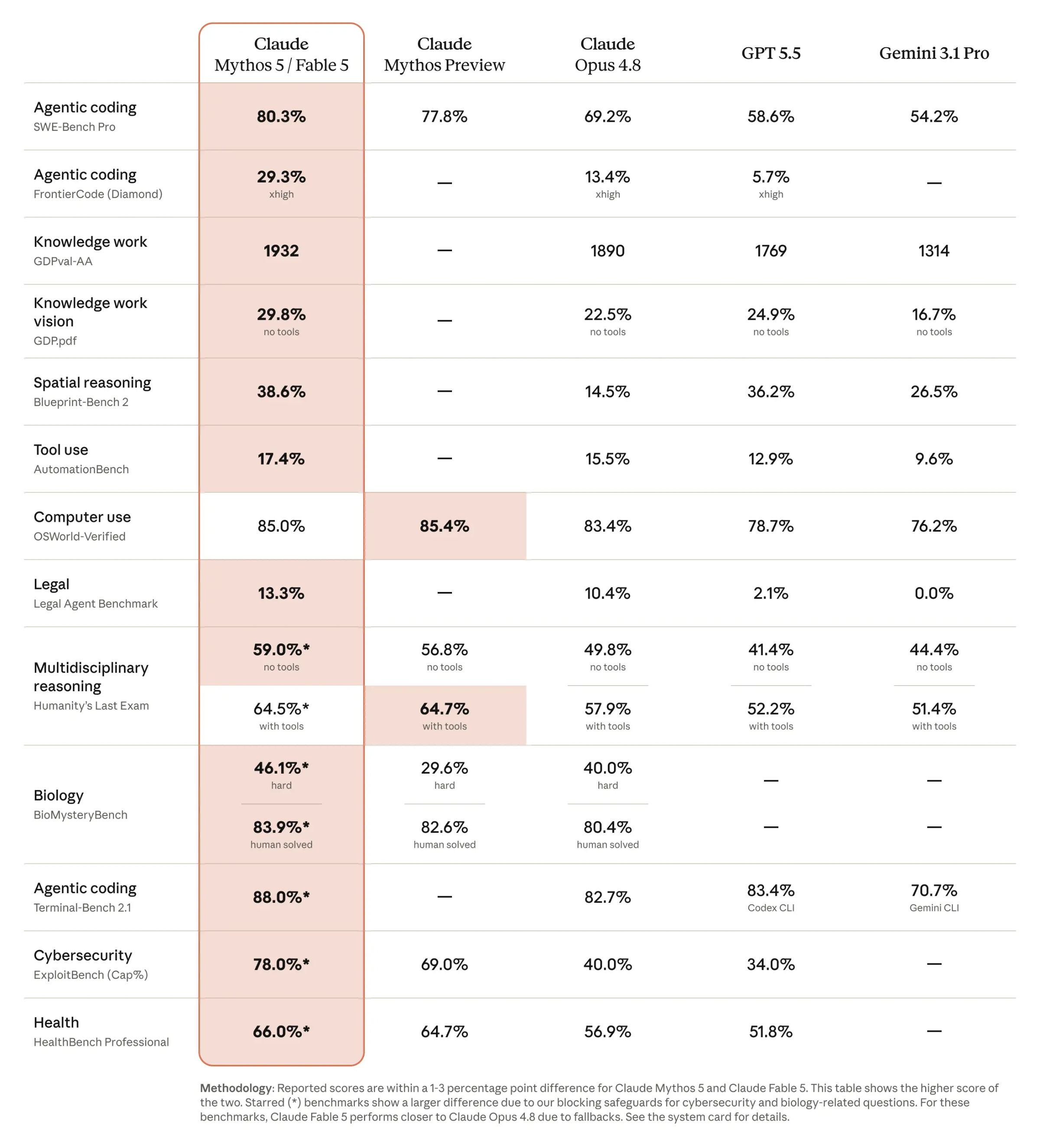 Claude Fable 5 und Mythos 5 Benchmark (Image © Anthropic)
Visual capabilities have also been updated. Fable 5 can now reconstruct the source code of web applications based solely on screenshots and extract precise data from scientific charts. The model also demonstrated its visual reasoning by completing the game Pokémon FireRed using raw screenshots without the aid of navigation tools or external save data.
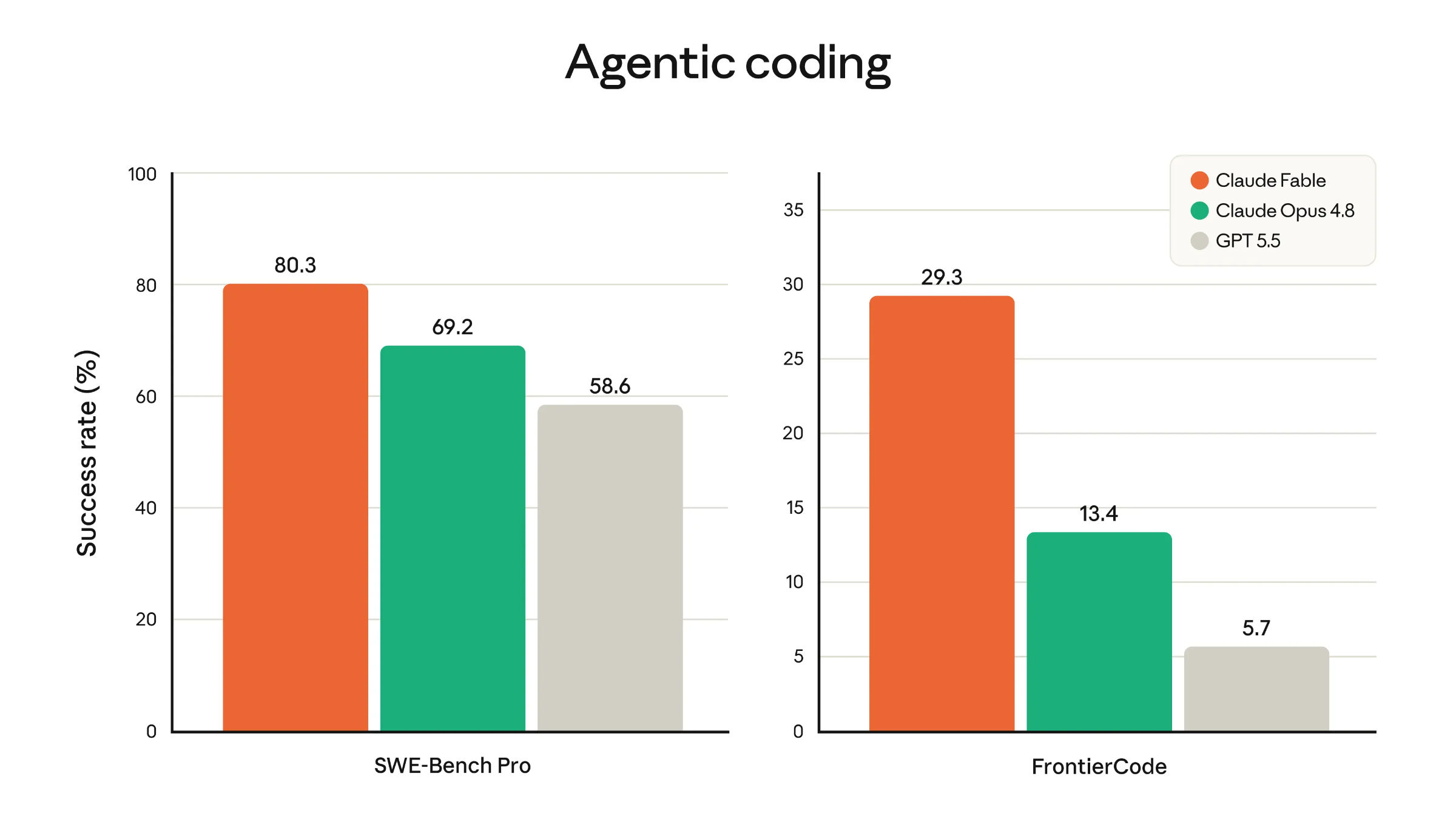 Claude Fable 5 und Mythos 5 Agentic coding (Image © Anthropic)
Breakthroughs in Life Sciences and Genomics
The specialized Mythos-5 model was deployed to accelerate drug design and molecular biology. Internal tests showed a tenfold increase in the speed of certain protein design processes. The model worked autonomously in selecting binding sites and managing bioinformatics tools, matching the performance of experienced human researchers on multiple protein targets.
Furthermore, the model has contributed to genomic research. By consolidating single-cell data from 138 animal species, the system developed a customized machine learning model to identify cellular functions across various organisms. This autonomous work resulted in a model that outperformed existing research findings published in the journal Science.
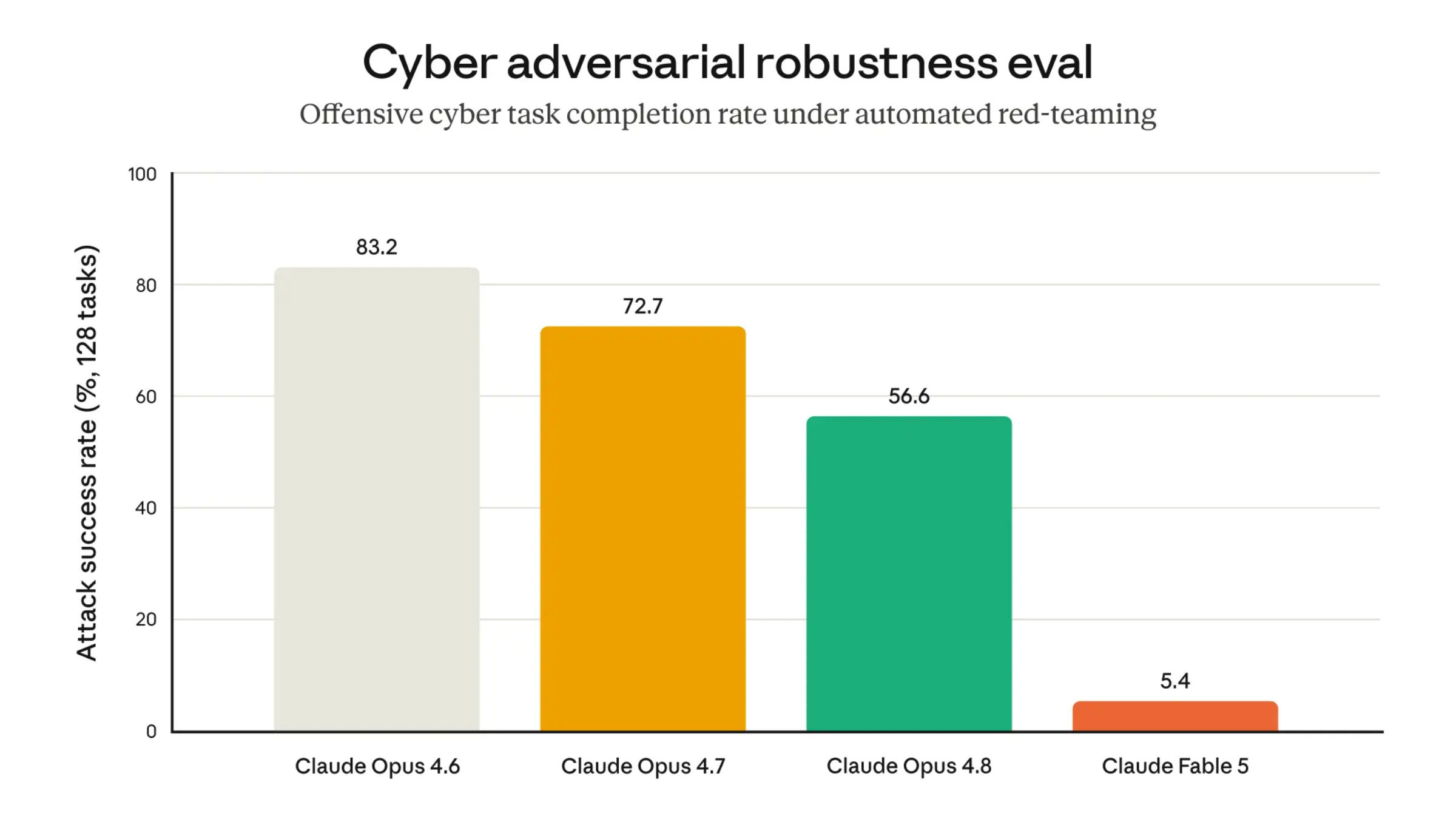 Claude Fable 5 und Mythos 5 Cyber adversarial robustness eval (Image © Anthropic)
Security Architecture and the Fallback System
To mitigate risks related to cybersecurity and biological research, Fable 5 employs a system of security classifiers. These independent AI systems detect potential misuse or attempts to circumvent security protocols.
Instead of issuing a standard rejection, the system uses a fallback mechanism. If a request related to chemistry, biology, or cybersecurity is flagged, the request is forwarded to Claude Opus 4.8. This ensures that users continue to receive a high-quality response while simultaneously preventing the most powerful model from providing potentially dangerous assistance to malicious actors.
To prevent the unauthorized extraction of model weights and capabilities, new classifiers have also been implemented to detect and block distillation attempts.
Data Management and Access Terms
A revised data retention policy now applies to all Mythos-class models. The company will maintain a 30-day retention period for all traffic to better defend against complex attacks and refine security classifiers. This data is not used for model training and is subject to strict deletion protocols.
Claude Fable 5 is now available via the API as well as in the Pro, Max, Team, and Enterprise subscription plans. For subscribers, the model is included at no additional cost through June 22; after that, usage may require credits depending on system capacity.
Pricing for Fable 5 and Mythos 5 is $10 per million input tokens and $50 per million output tokens. Access to Mythos 5 remains limited to Project Glasswing partners and a growing trusted access program for researchers in the fields of cybersecurity and biomedicine.