 Computer Forum
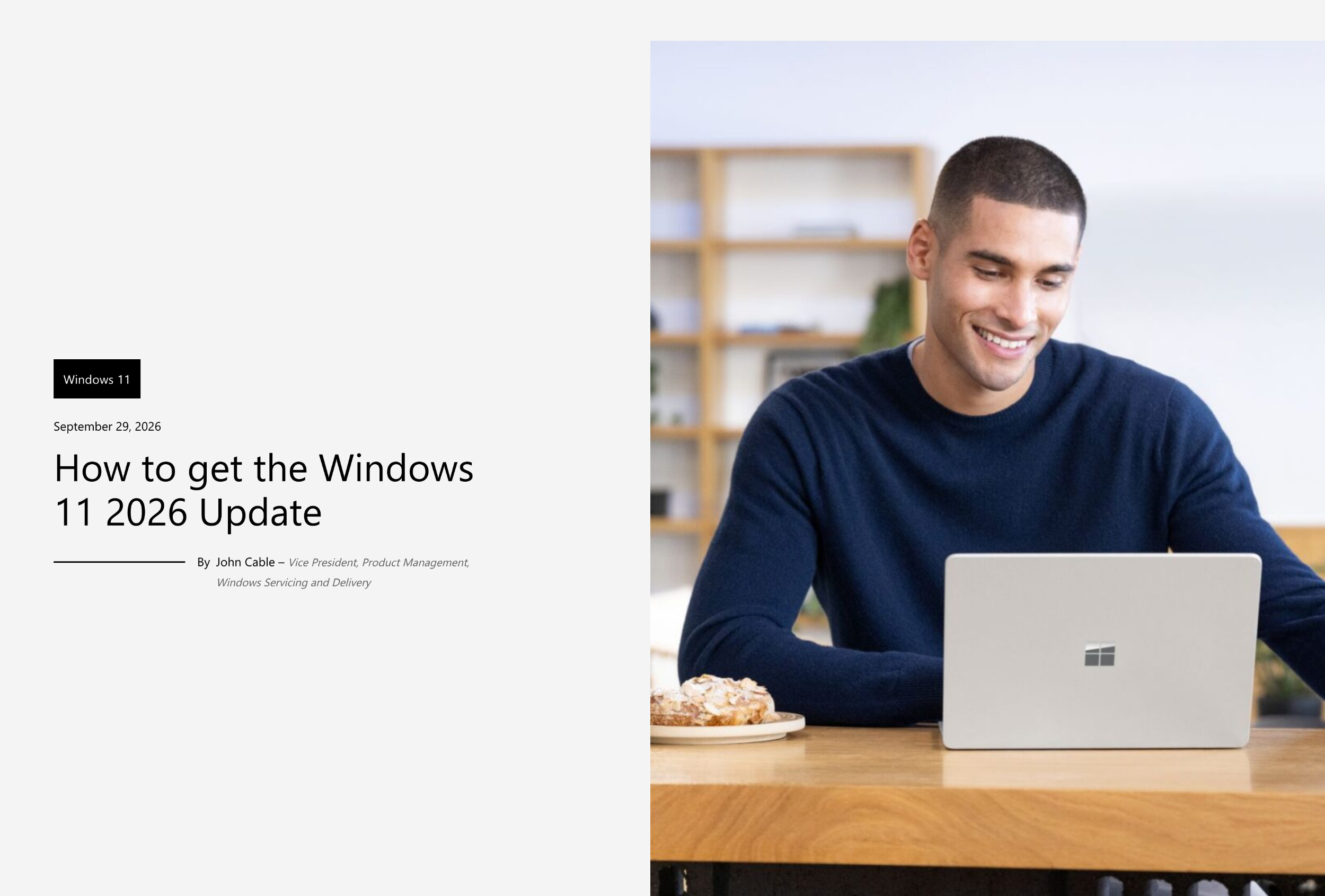 Windows 11 26H2 Update (Image © Microsoft)
Evolution of the Windows Release Cycle
In the past, Microsoft followed a pattern of releasing a new version of Windows every three to four years. This was clearly evident in the transition from Windows 7 in 2009 to Windows 8 in 2012 and subsequently to Windows 10 in 2015. In line with this schedule, industry expectations were that a new generation of software would be released five years after the launch of Windows 11. However, internal sources indicate that, instead of a new version, Microsoft is preparing the 27H2 update for the second half of 2027. This approach mirrors the strategy pursued in 2024 with the 24H2 update, which introduced extensive artificial intelligence integrations and transitioned the system to cumulative updates using checkpoints.
Stability and Hardware Compatibility for 2026
Throughout 2026, development efforts focused on refining the existing Windows 11 framework. The main goals were to improve system stability and overall performance. Additionally, adjustments were made to the user interface based on user feedback and a desire for greater clarity. These included the introduction of a resizable taskbar and a redesigned context menu. Furthermore, Microsoft worked to improve compatibility with lower-spec hardware, specifically optimizing the operating system for computers with up to 8 GB of RAM.
Windows 10 Market Share
The transition to newer software remains a challenge due to the continued prevalence of Windows 10. Data from Statcounter shows that about 25 percent of all Windows users continue to use Windows 10. This trend is reflected in the October 2026 Steam Hardware Survey, which indicates that 21 percent of gamers are still using the older operating system. This high adoption rate leads to a critical juncture in October 2027, when extended support for Windows 10 for home users is set to officially end. At that point, users will need to switch to a different operating system to ensure continued security and software support.
While Windows remains the dominant desktop platform, recent data suggests a slight decline in its overall market share. Steam user statistics show a growing trend of users switching to macOS and Linux platforms. This shift points to a diversifying landscape in the desktop sector, coinciding with the upcoming end of support for Windows 10.