
 Computer Forum
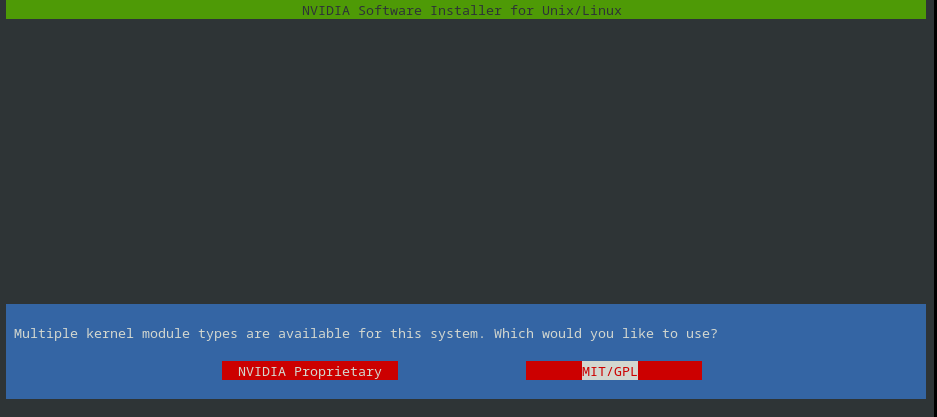 Nvidia open Source Treiber (Image © NVIDIA)
In May 2022, NVIDIA introduced the R515 driver and it was the first release of Linux GPU kernel modules as open source under the Dual GPL and MIT licensing. Initially, this release was targeted at data center compute GPUs, with alpha support for GeForce and workstation GPUs.
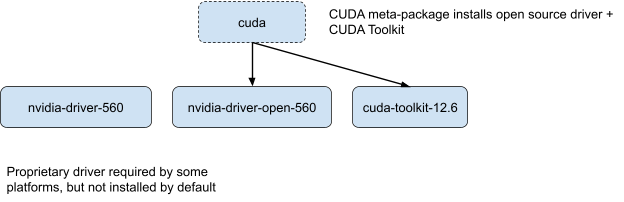 Nvidia open Source Treiber - Cuda Package Installation (Image © NVIDIA)
Since then, NVIDIA has worked to ensure that the open source modules meet or exceed the performance of their proprietary drivers. These efforts culminated in the decision to move entirely to open source GPU kernel modules in the upcoming driver release.
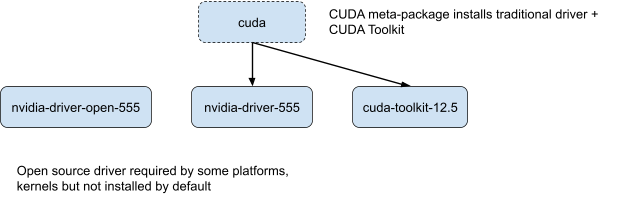 Nvidia open Source Treiber Cuda Installation vor dem 12.6 (Image © NVIDIA)
NVIDIA has integrated several new features into the open source GPU kernel modules:
- Heterogeneous Memory Management (HMM) support: Improves memory management across different memory types.
- Confidential Computing: Increases security for sensitive computations.
- Coherent Memory Architectures**: Optimized for the NVIDIA Grace platforms to ensure seamless memory management.
Supported graphics cards
The transition to open source modules will primarily support newer graphics card architectures:
- Supported: NVIDIA Grace Hopper, NVIDIA Blackwell, Turing, Ampere, Ada Lovelace and Hopper architectures.
- Not supported: Older GPUs of the Maxwell, Pascal or Volta architectures will continue to use the proprietary drivers.
Community and future prospects
NVIDIA's move to open source is expected to foster a more collaborative development environment within the Linux community. This change is also seen as a strategic move against competitor AMD, which has a strong presence in the Linux market. As the lead developer of the Nouveau project is now part of NVIDIA, future graphics cards could see improved support and performance from these open source drivers. The drivers will be shipped directly with distros and signed as kernel modules.
The upcoming release of the R560 driver will include detailed instructions for switching from proprietary to open source drivers to ensure a smooth migration for users.