 Computer Forum
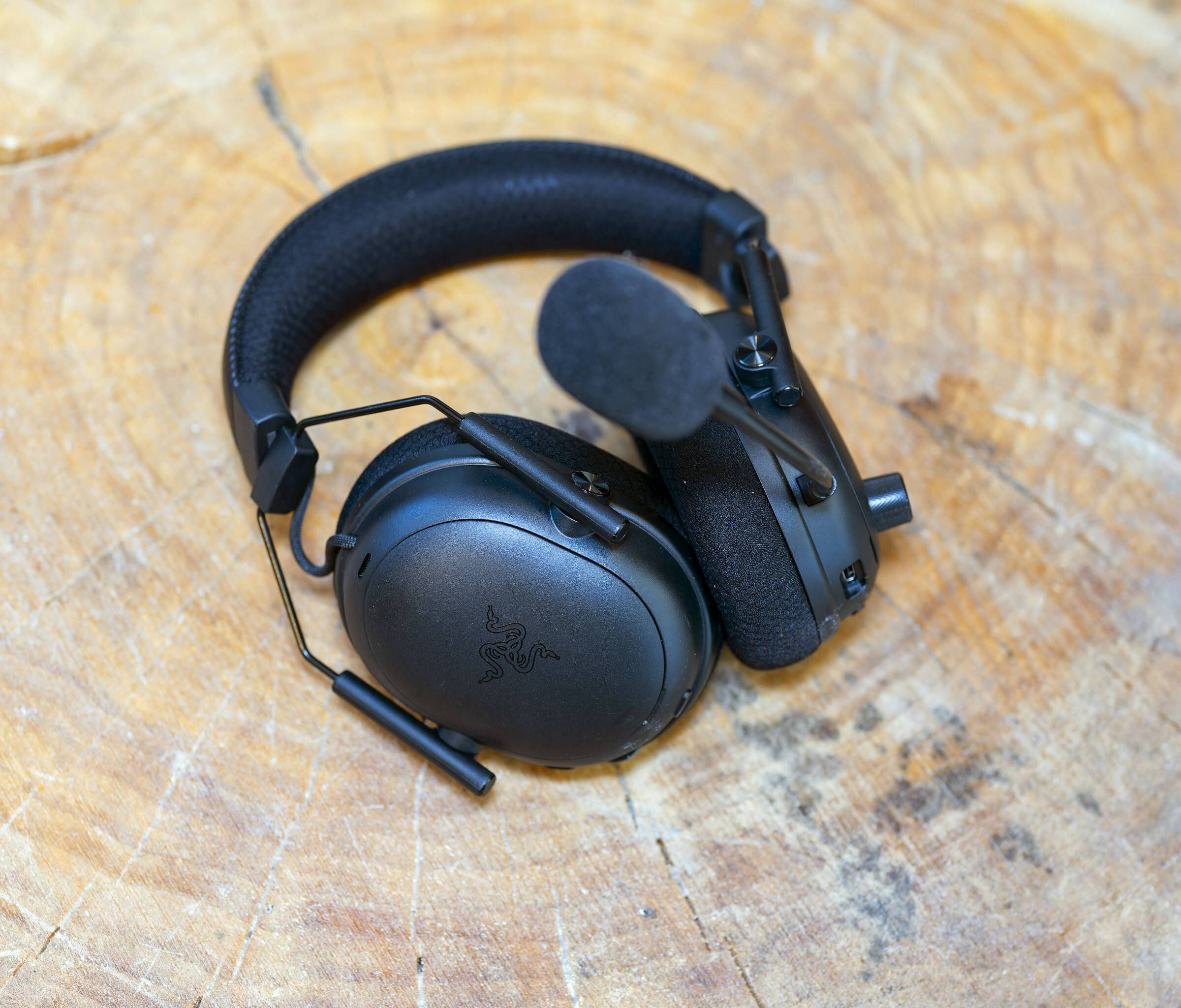 Razer BlackShark V3 Pro Test Review (Image © PCMasters.de)
But is this headset really worth its premium asking price? You can find the answer in our detailed test report.
Razer history
Razer was founded in 2005 by Min-Liang Tan and Robert Krakoff and quickly established itself as one of the most recognizable names in the gaming peripherals market. From the start, the company focused on products designed specifically for gamers, combining bold styling with performance-driven hardware and a strong brand identity.
Over the years, Razer expanded far beyond mice and keyboards, gradually building a broad ecosystem that now includes headsets, laptops, controllers, chairs, and software services. The company has been especially successful at blending gaming performance with lifestyle appeal, which helped it grow from a niche peripherals maker into a globally recognized brand.
This approach also shaped its headset lineup, where the BlackShark series became one of the most important names in the portfolio. The BlackShark V3 Pro continues that strategy by refining the formula instead of reinventing it, which is exactly what long-time Razer users are likely to appreciate.
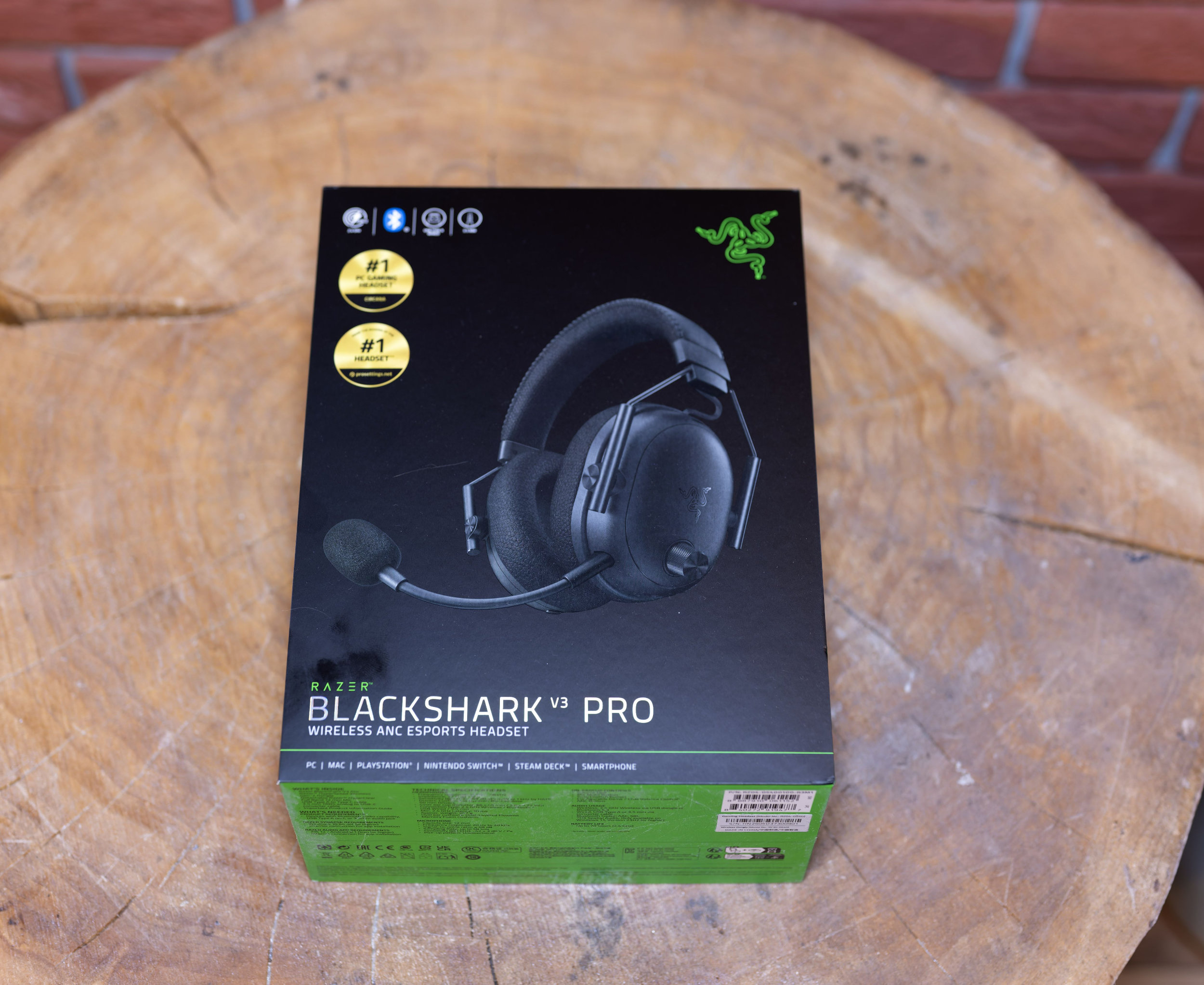 Razer BlackShark V3 Pro Package (Image © PCMasters.de)
Scope of delivery
Packaging
The Razer BlackShark V3 Pro arrives in premium gaming-headset packaging that follows Razer’s familiar black-and-green identity and clearly positions the product as a high-end model rather than an entry-level accessory. The box presentation is compact and functional, with the headset and accessories arranged securely for transport. The packaging also gives the impression that Razer wants the unboxing experience to feel polished and deliberate. It is not overly extravagant, but it does match the headset’s premium positioning well.
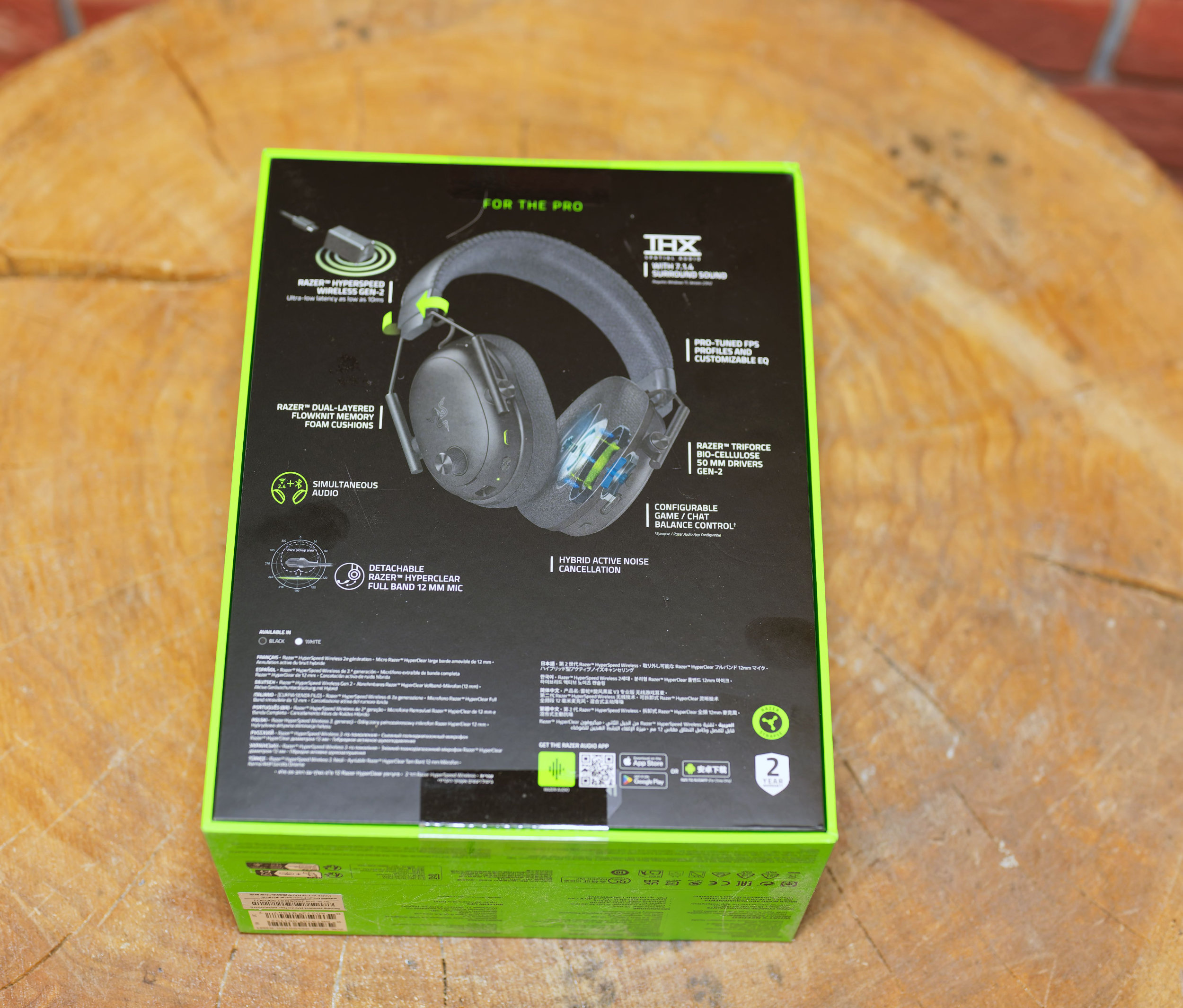 Razer BlackShark V3 Pro rear view of Package (Image © PCMasters.de)
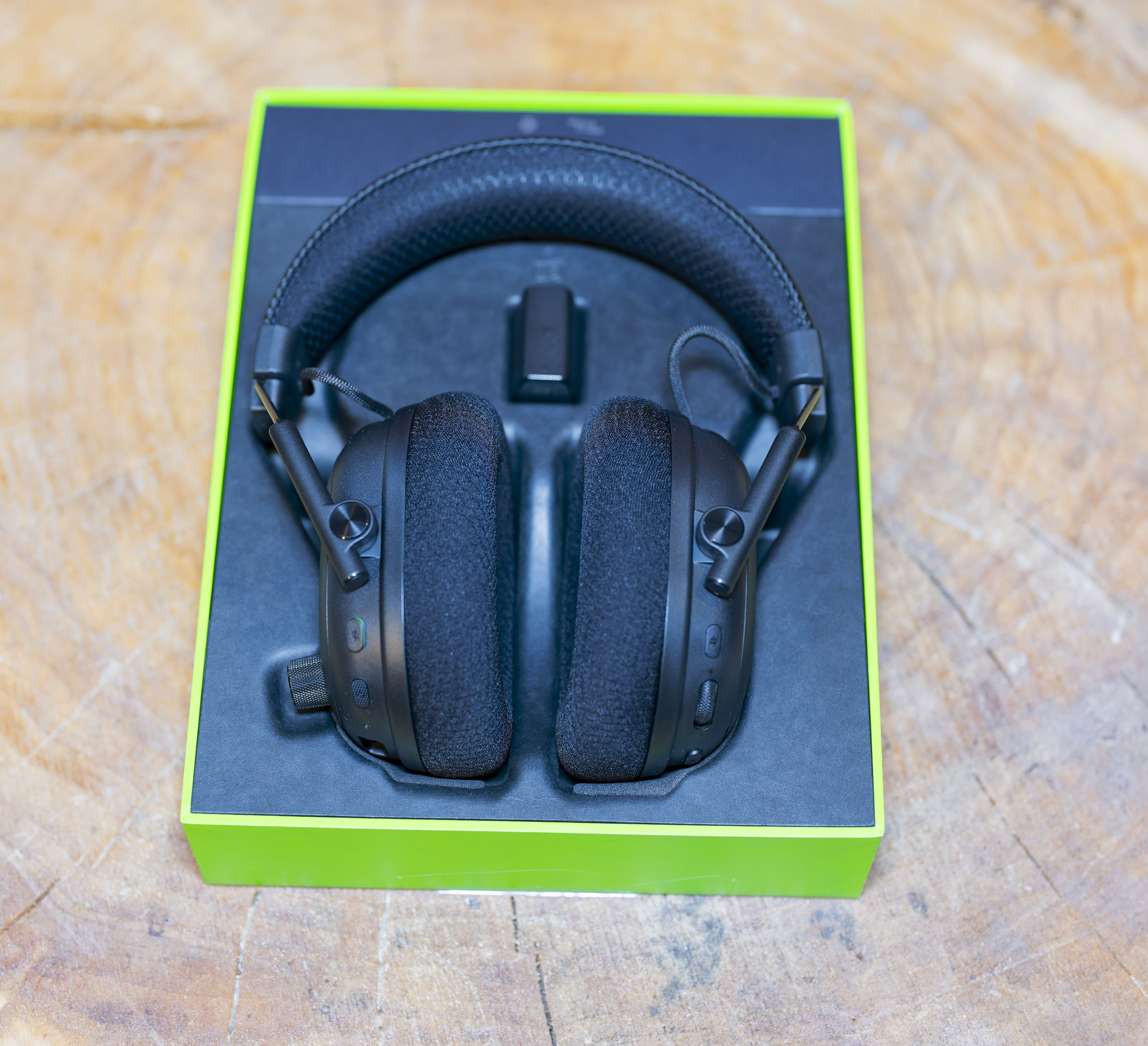 Razer BlackShark V3 Pro Unboxing 1 (Image © PCMasters.de)
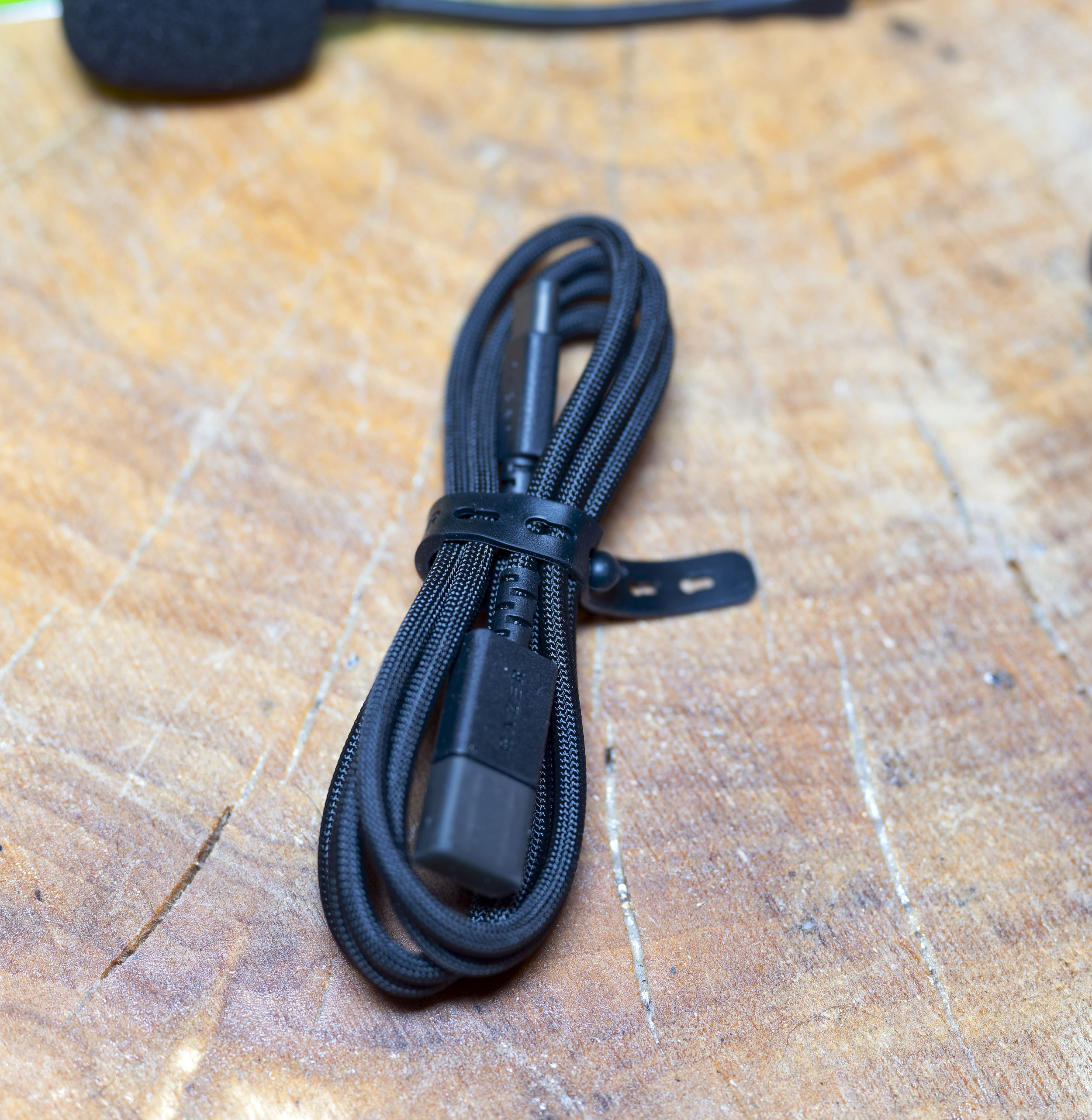 Razer BlackShark V3 Pro Cable 2 (Image © PCMasters.de)
Contents
Inside the box, buyers can expect the headset itself, a detachable microphone, a 2.4GHz wireless dongle (which plugs into your PC via a USB-C cable), a 1.5m USB-C to USB-A cable, and a 1.5m USB-C to 3.5mm (analog) jack. The included items cover everything most players will need on day one, so there is no immediate need to buy extra accessories. That said, the bundle is practical rather than luxurious, which fits Razer’s performance-first approach.
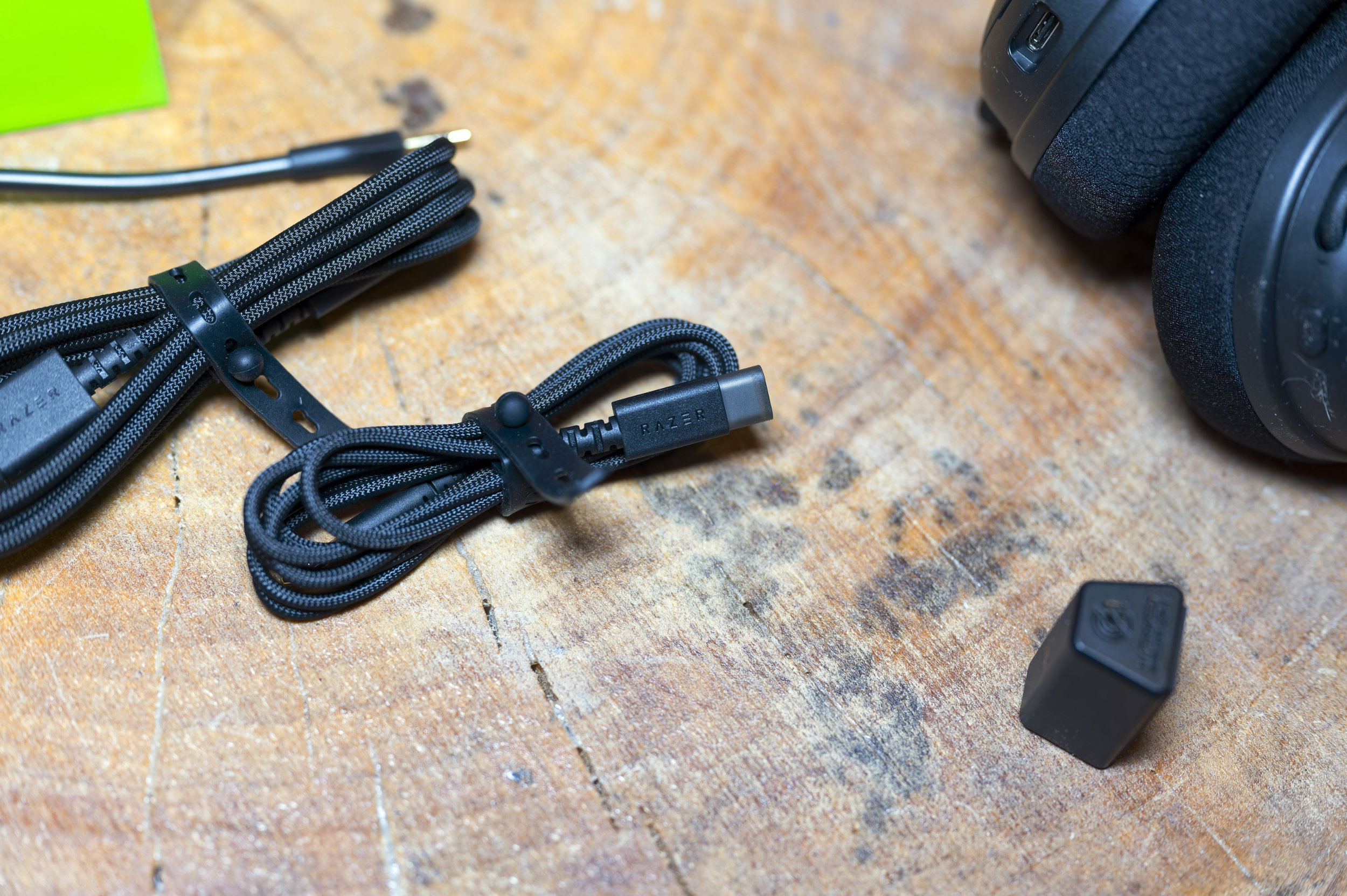 Razer BlackShark V3 Pro Cable (Image © PCMasters.de)
Documents
There’s no paper documentation in the box. This keeps the box clean and avoids overwhelming the user with printed information. At the same time, it assumes that most buyers are comfortable downloading and using companion software.
Technical data
| Razer BlackShark V3 Pro - Technical data | |
|---|---|
| Type | Wireless closed-back gaming headset |
| Drivers | 50 mm Razer TriForce Bio-Cellulose drivers |
| Connection | 2.4 GHz Wireless / Bluetooth / USB Wired / 3.5 mm |
| Microphone | Detachable 12 mm boom microphone |
| Battery life | Around 70 hours, depending on mode and variant |
| Weight | 367 g |
| Noise cancelling | Hybrid Active noise cancelling supported |
| Virtual Surround Encoding | THX Spatial Audio: Only available on Windows 11, Version 23H2 (or higher) |
| MSRP | 269.99 EUR |
| Compatibility | PC, PlayStation, Xbox, mobile, and other USB-capable devices depending on version |
The spec sheet makes it clear that Razer is aiming at the upper end of the wireless gaming market. The combination of low-latency wireless, Bluetooth support, and a detachable mic makes the headset unusually flexible for its category.
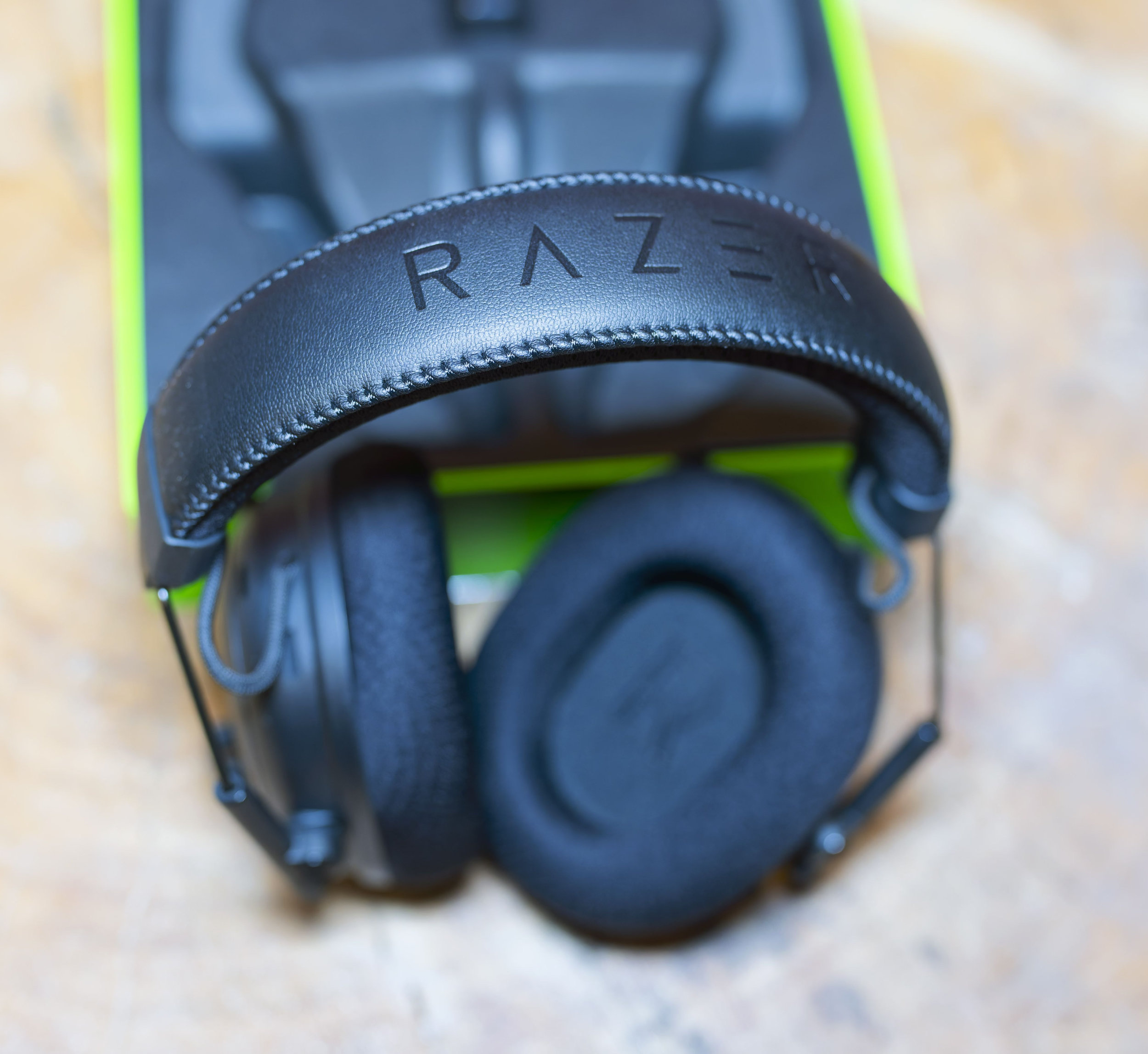 Razer BlackShark V3 Pro Design Top (Image © PCMasters.de)
Material quality and design
Razer keeps the BlackShark design language intact, so the headset still looks like a piece of aviation-inspired hardware rather than a flashy RGB showpiece. You get here the sturdy frame and premium feel, although the headset is undeniably large and heavier than many rivals. The design is practical first, with a strong focus on durability, acoustical isolation, and gaming use rather than portability. It looks serious and purposeful, which should appeal to players who prefer function over visual noise.
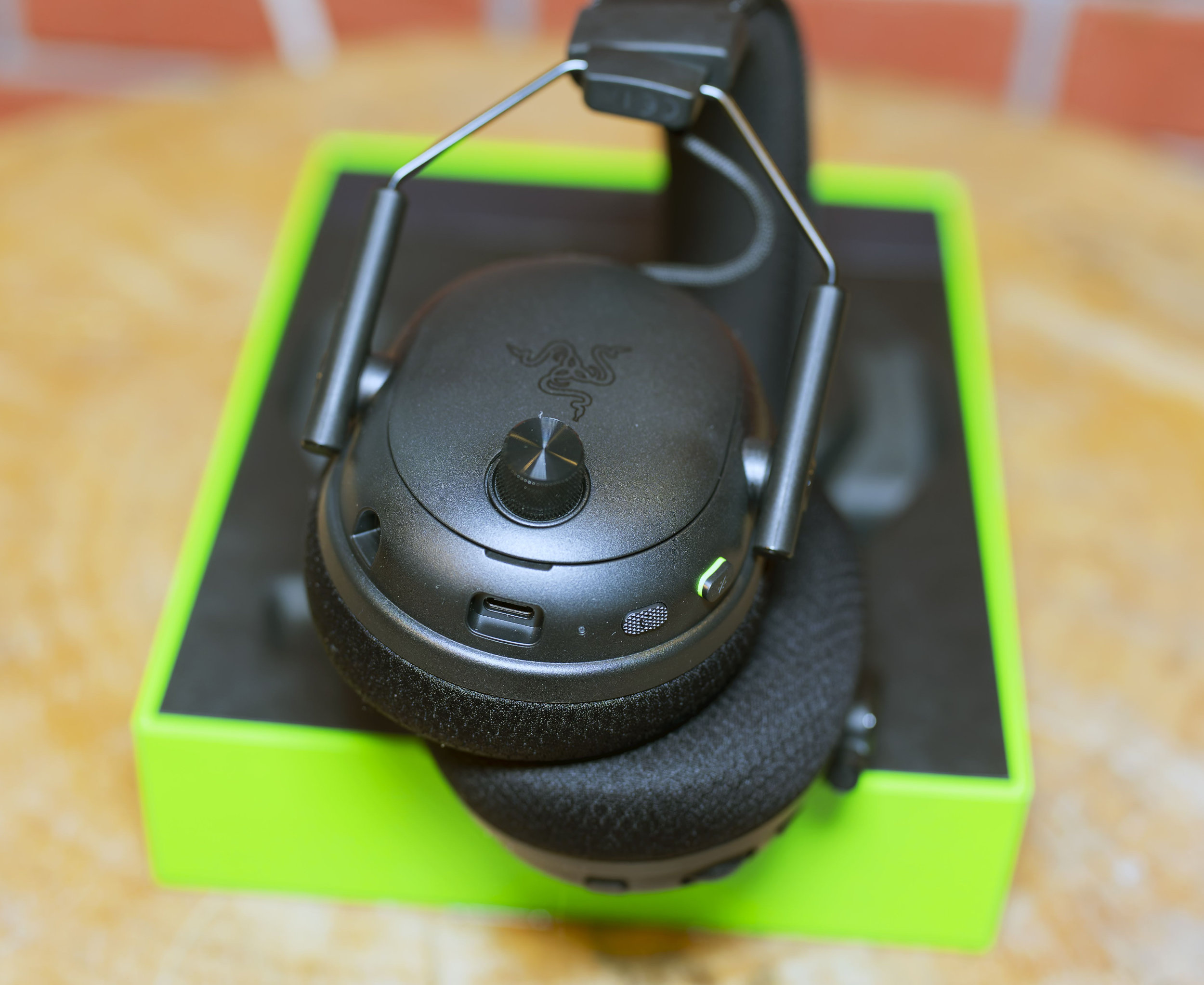 Razer BlackShark V3 Pro Design Knobs (Image © PCMasters.de)
Controls
The on-headset controls are one of the BlackShark V3 Pro’s strong points, because Razer has given the user a clear physical layout that is easy to learn quickly. One the left side, from front to back, you'll find a 3.5mm microphone jack, a USB-C charging port, a power button (textured to distinguish it from other buttons), and a physical mic mute switch. Along the side of the right earcup, from front to back, there's an ANC button, a configurable roller (by default, this adjusts the balance between your two wireless inputs), and a multi-function button that switches between EQ presets and acts as a pairing button for Bluetooth. This is the kind of control scheme that works especially well in multiplayer sessions, where fumbling through software menus would be annoying. The controls are placed in a way that allows fast adjustments without breaking concentration.
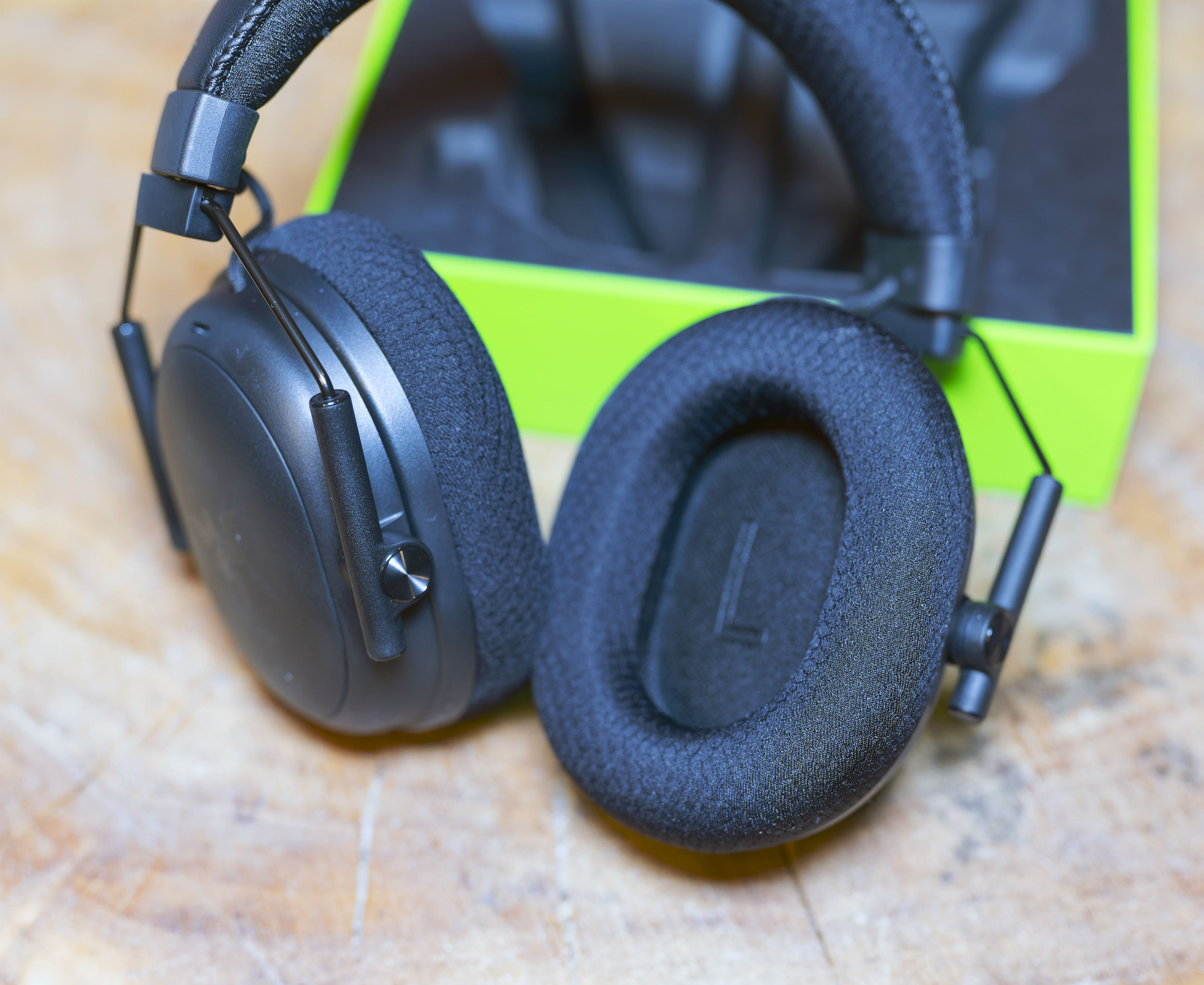 Razer BlackShark V3 Pro Design EarPads (Image © PCMasters.de)
Wearing comfort
Comfort is one of the reasons the BlackShark line remains popular, and the V3 Pro continues that tradition with soft cushions and a fit that stays usable for long sessions. On the headband you get the dual-layered flowknit memory foam cushions, with strong sound isolation of leatherette, layered with breathable, moisture-wicking fabric for long-lasting gaming comfort. That said, the added weight is noticeable, and the headset can feel less consistent in fit depending on head shape, glasses, or hair length. In short, it is comfortable for extended gaming, but it does not disappear on the head the way lighter competitors sometimes do. Adaptive 15° swivel joints provide a snug fit and optimal seal with earcups that conform to the angle of your ears. The result is a good balance between plushness and stability rather than pure lightness. Sound quality
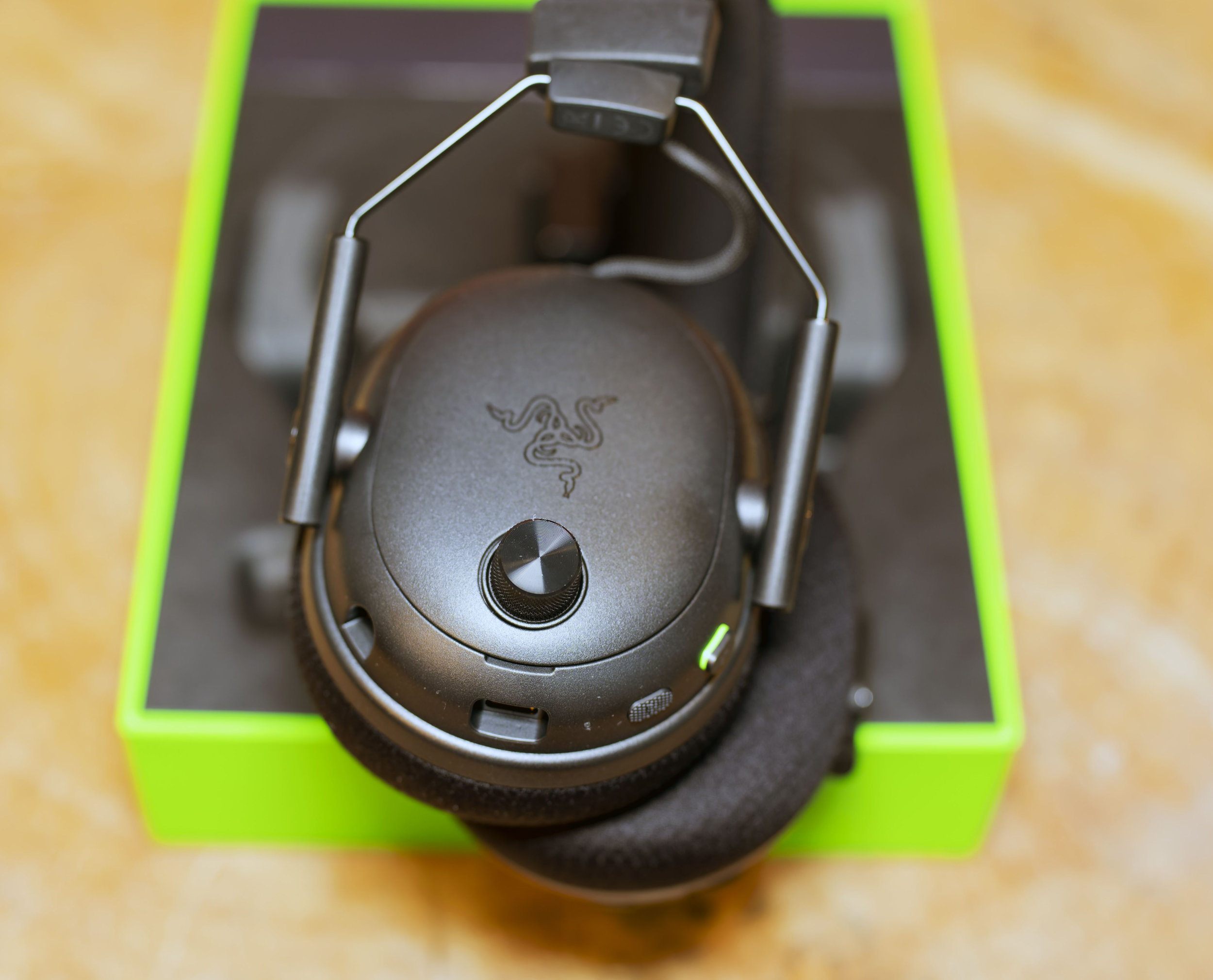 Razer BlackShark V3 Pro Design and Control (Image © PCMasters.de)
Hearing impression
Overall, the Razer BlackShark V3 Pro sounds like a headset built with competitive gaming in mind first and everything else second. The 50 mm drivers according to Razer are tuned for improved clarity and positional performance, the Gen-2 drivers feature a unique bio-cellulose diaphragm to deliver natural, powerful sound—hear every footstep with absolute precision.
It creates a lively, clear, and controlled presentation that works especially well in FPS and action games. Music playback is still respectable, but the headset really comes alive when it is asked to handle positional audio and fast in-game transitions. It performs very well in FPS titles, where positional cues and separation matter more than flat response. Bass has enough weight to make explosions and engines convincing, while dialogue and game effects stay intelligible even during busy scenes. That makes it especially effective for players who want both excitement and tactical awareness.
At the same time, this is not a headset that tries to behave like a neutral audiophile monitor. The sound can vary depending on fit and seal, especially for users with glasses or a larger head, which means the tonal balance is not perfectly consistent from one listener to another. For gaming, though, the tuning lands in the right place: engaging, controlled, and clearly aimed at competitive advantage. In short, the listening experience is confident, modern, and purpose-driven. Music playback is competent, but the headset is still most convincing when used for games.
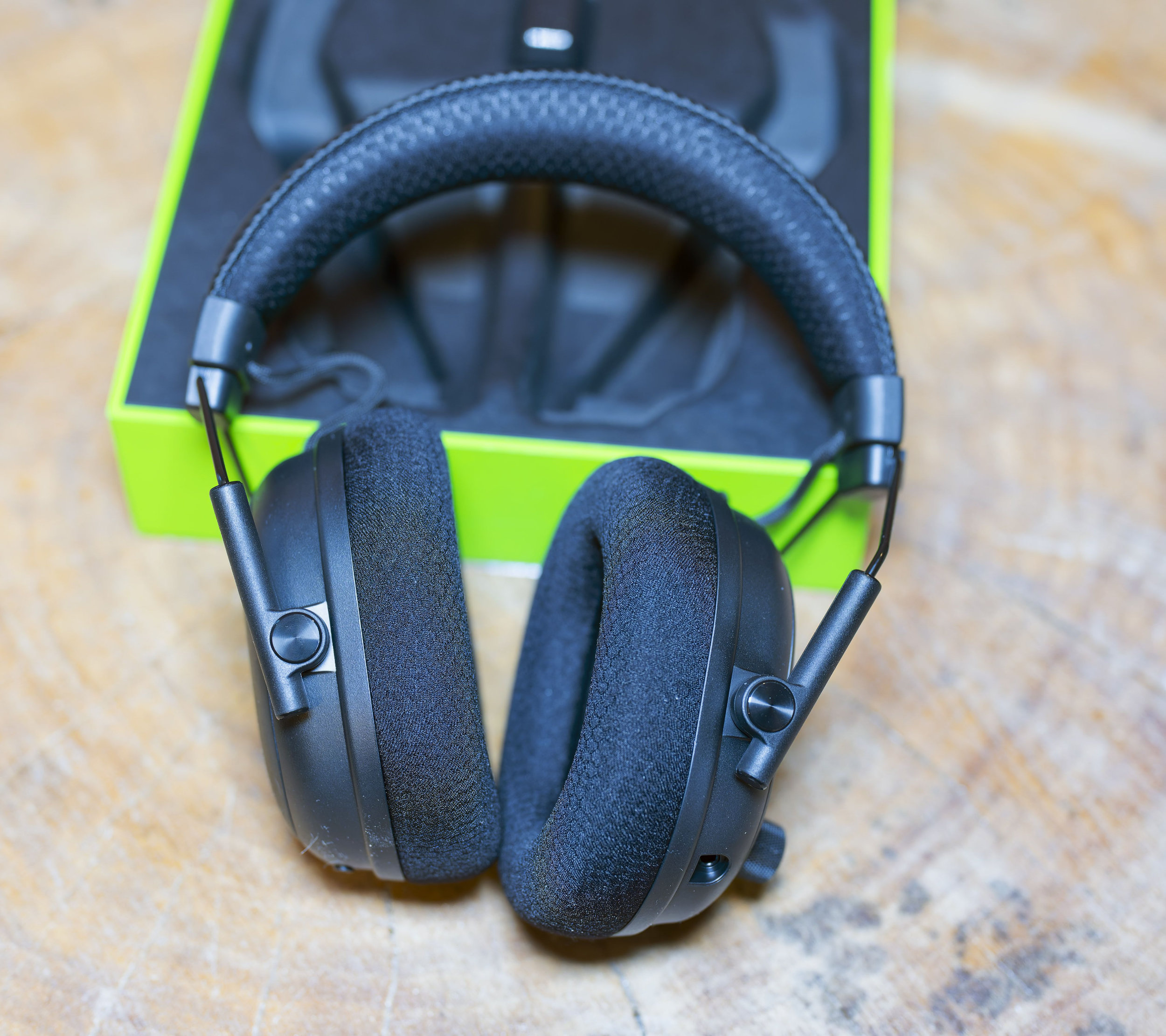 Razer BlackShark V3 Pro Design Side View (Image © PCMasters.de)
Bass
Bass output is energetic and punchy, which gives games and action-heavy content more physical impact. Explosions, engine sounds, and low-end effects come through with enough presence to feel exciting without becoming muddy. The tuning is clearly meant to keep the sound engaging rather than strictly neutral. As a result, bass fans will likely appreciate the headset’s presentation.
Midrange
The midrange is clean and sufficiently forward, which helps with voices, footsteps, and important in-game details. Dialogue stays understandable even when the scene becomes busy, and that is a major advantage in competitive titles. The headset does not overcomplicate the middle frequencies, instead keeping them organised and practical. That makes the overall sound easier to follow during long sessions.
Tweeter
Treble has enough energy to keep the sound lively and detailed, but it avoids becoming overly sharp in normal use. Small sound cues, ambient effects, and directional information are rendered with good precision, which supports the headset’s gaming focus. At higher volumes, some listeners may prefer a slightly softer top end, depending on sensitivity. Still, the overall treble balance is well judged for a headset of this type.
ANC
The active noise cancelling works well enough to make the headset more useful outside of pure gaming. It reduces low-frequency noise effectively, especially the kind of steady background hum you would expect from a PC, fan, or commuting environment. It is not the kind of ANC that completely isolates you from the world, but it adds a noticeable layer of focus. For a gaming headset, that is already a valuable addition.
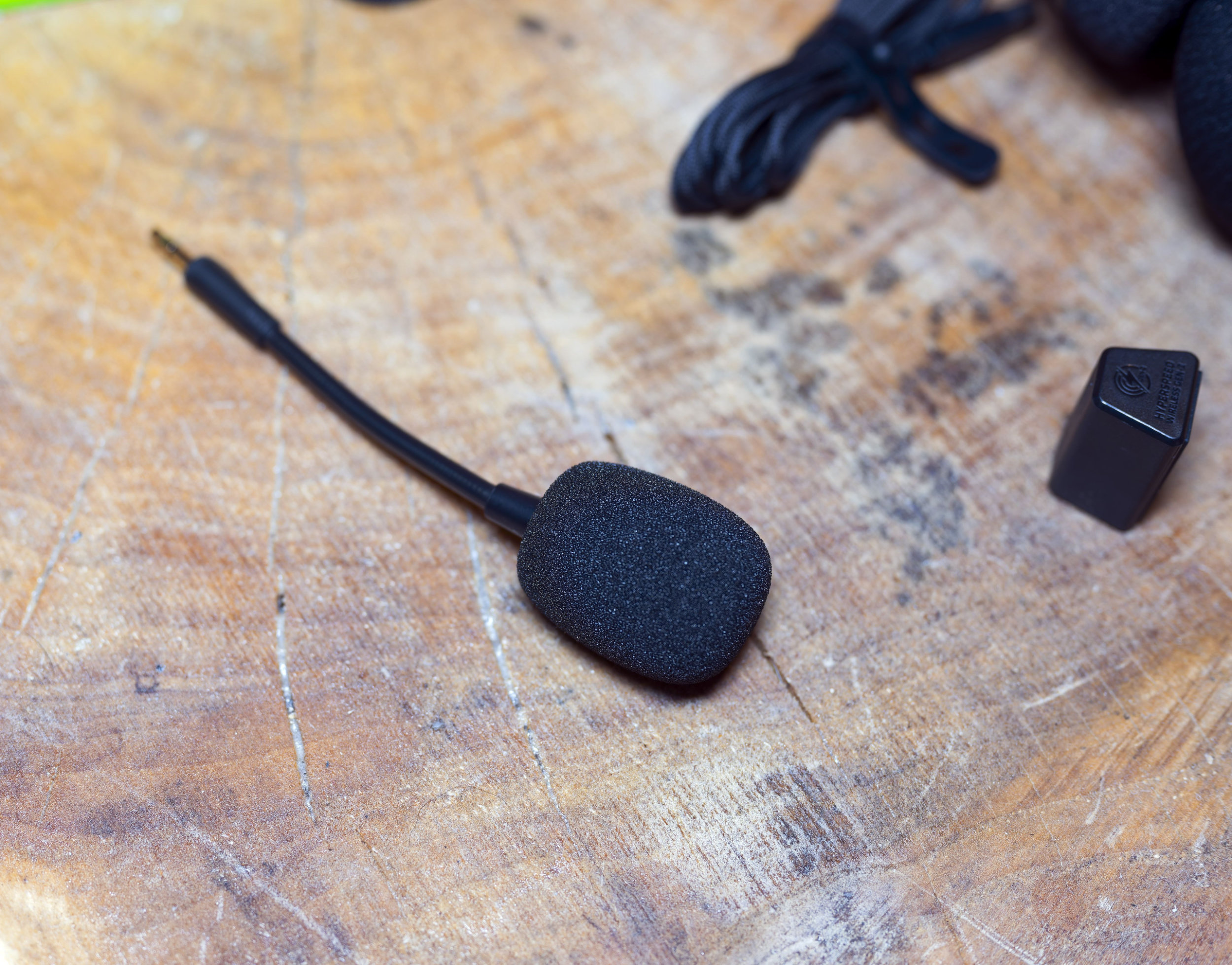 Razer BlackShark V3 Pro Mic closeup (Image © PCMasters.de)
Microphone
The microphone is one of the strongest parts of the package, as it is clear, natural, and unusually good at rejecting background noise for a gaming headset. The 12 mm boom mic is a meaningful step up in presence and intelligibility, especially for voice chat, Discord, and work calls. In practice, that makes the headset more versatile than many rivals that sound fine in games but only average on comms. It is also the kind of microphone that makes team communication easier without requiring much adjustment.
It is still a detachable boom mic, so it does not replace the convenience of a built-in travel microphone for casual use. Even so, within its category, the BlackShark V3 Pro earns strong marks because it keeps speech understandable while holding down room noise remarkably well. For streamers, team players, and office users alike, that is a serious advantage. It is one of the main reasons the headset stands out in a crowded premium segment.
This is the kind of mic performance that can genuinely replace a separate desktop microphone for casual use.
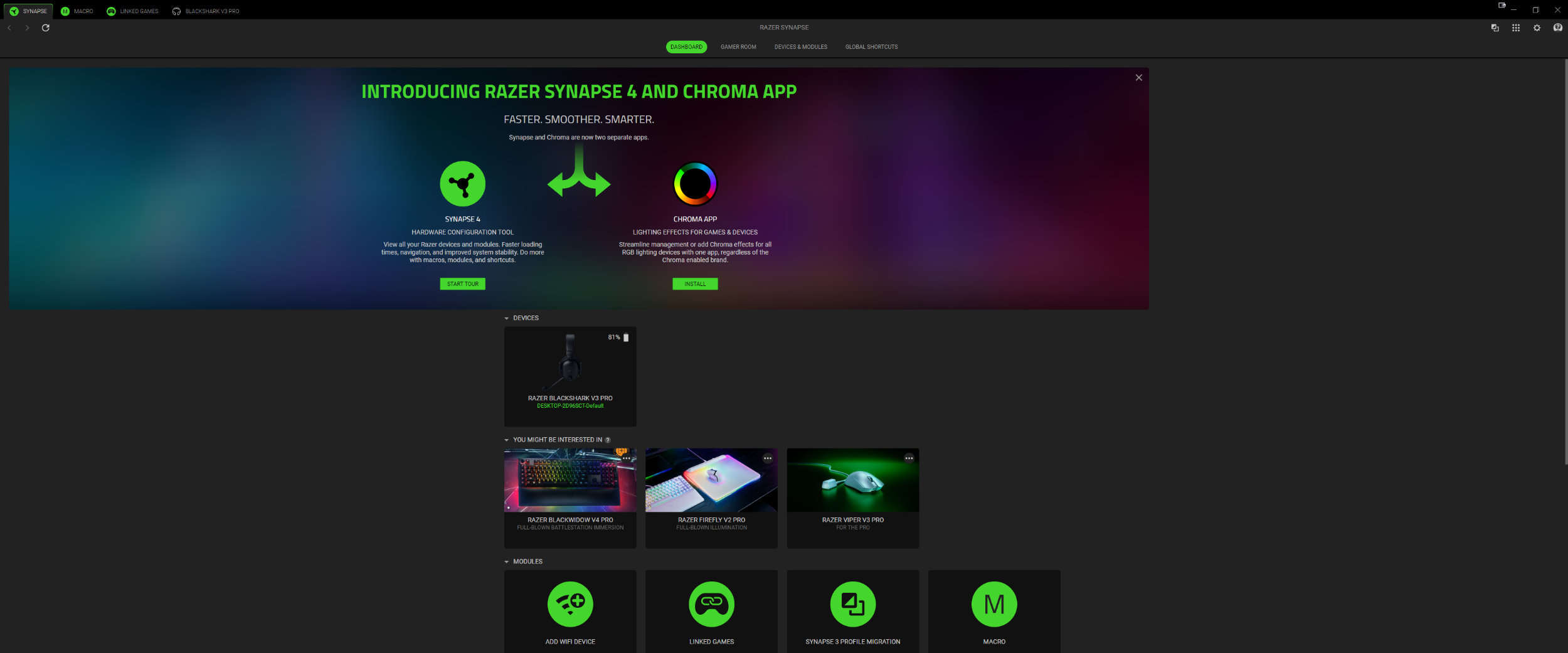 Razer BlackShark V3 Pro Synapse 1 (Image © PCMasters.de)
Software
Razer Synapse remains central to the experience, and that is both a strength and a weakness. The good part is that the software gives you useful control over EQ, ANC behaviour, mic settings, and other headset features, so the BlackShark V3 Pro can be tuned to your preferences. The app provide enough customisation to make the headset adaptable across different gaming scenarios. Once configured, it becomes a genuinely useful part of the product rather than a simple add-on.
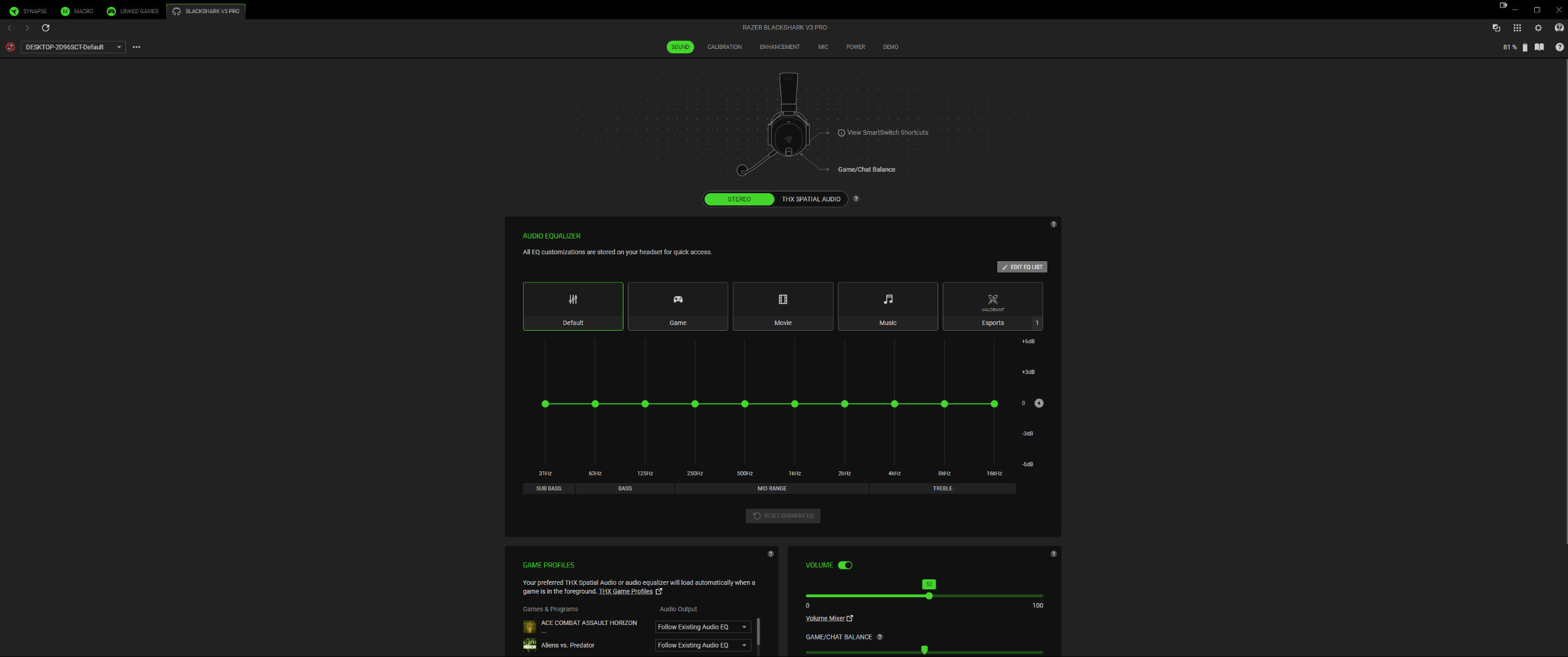 Razer BlackShark V3 Pro Synapse 2 (Image © PCMasters.de)
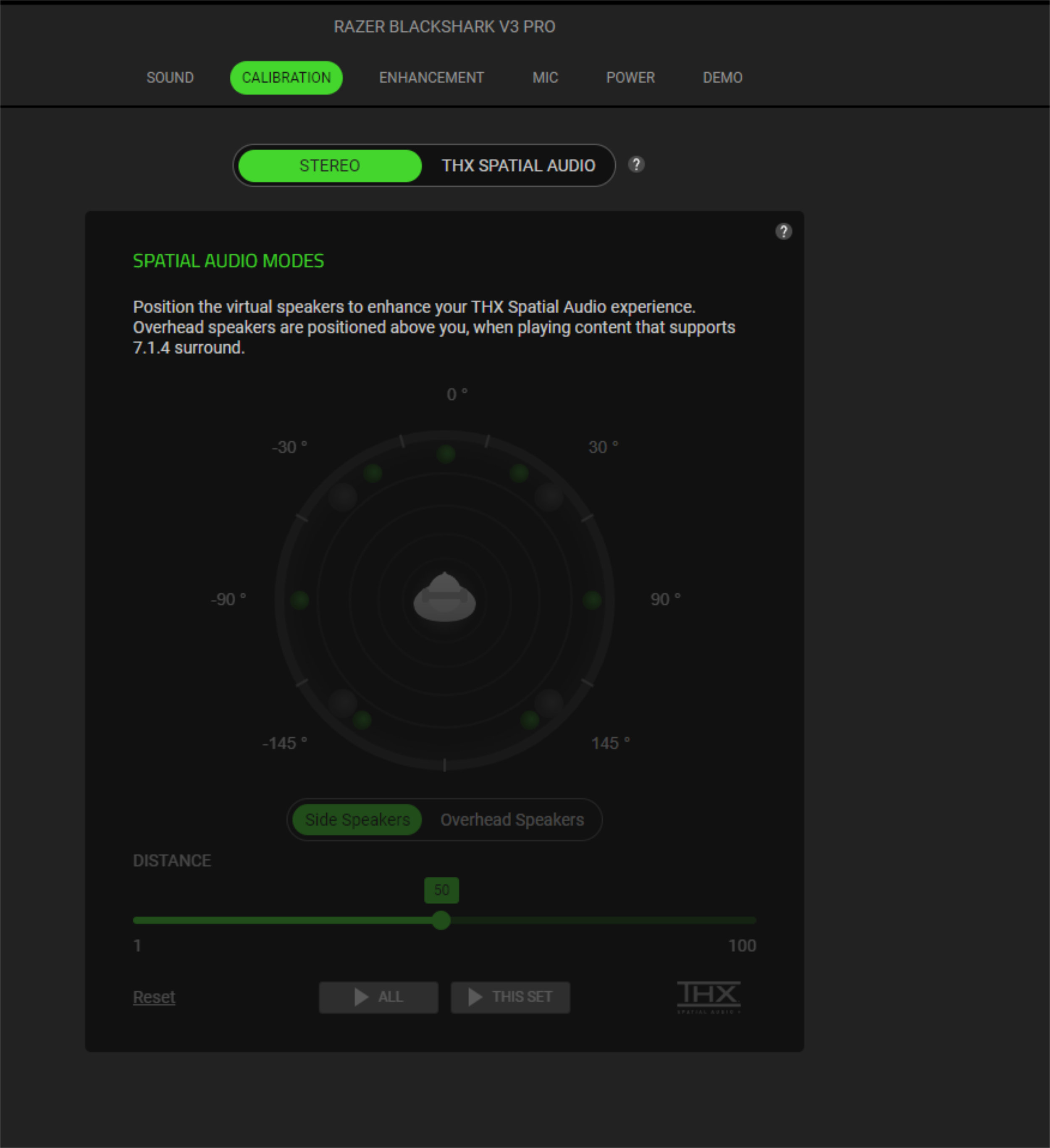 Razer BlackShark V3 Pro Synapse 3 (Image © PCMasters.de)
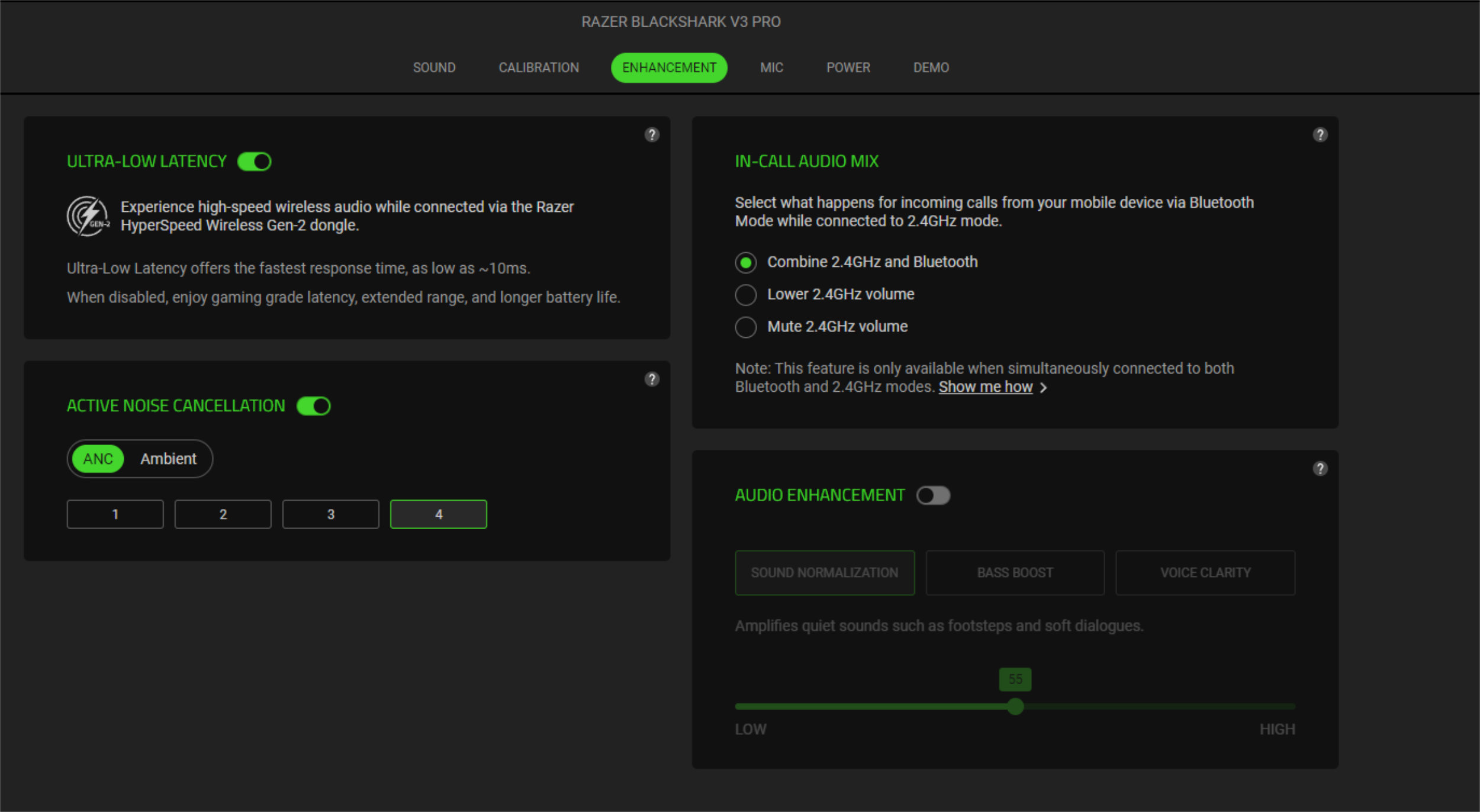 Razer BlackShark V3 Pro Synapse 4 (Image © PCMasters.de)
The software features a 10-band equalizer for tweaking the audio presets. There is the ability to set up game profiles for each of your game. The headset comes with five stored EQ presets out of the box: default, game, movie, music, and eSports (Valorant). If you want – you can store up to nine EQ presets on the headset (including up to five eSports presets), and you can switch through these presets using the multifunction/EQ button.
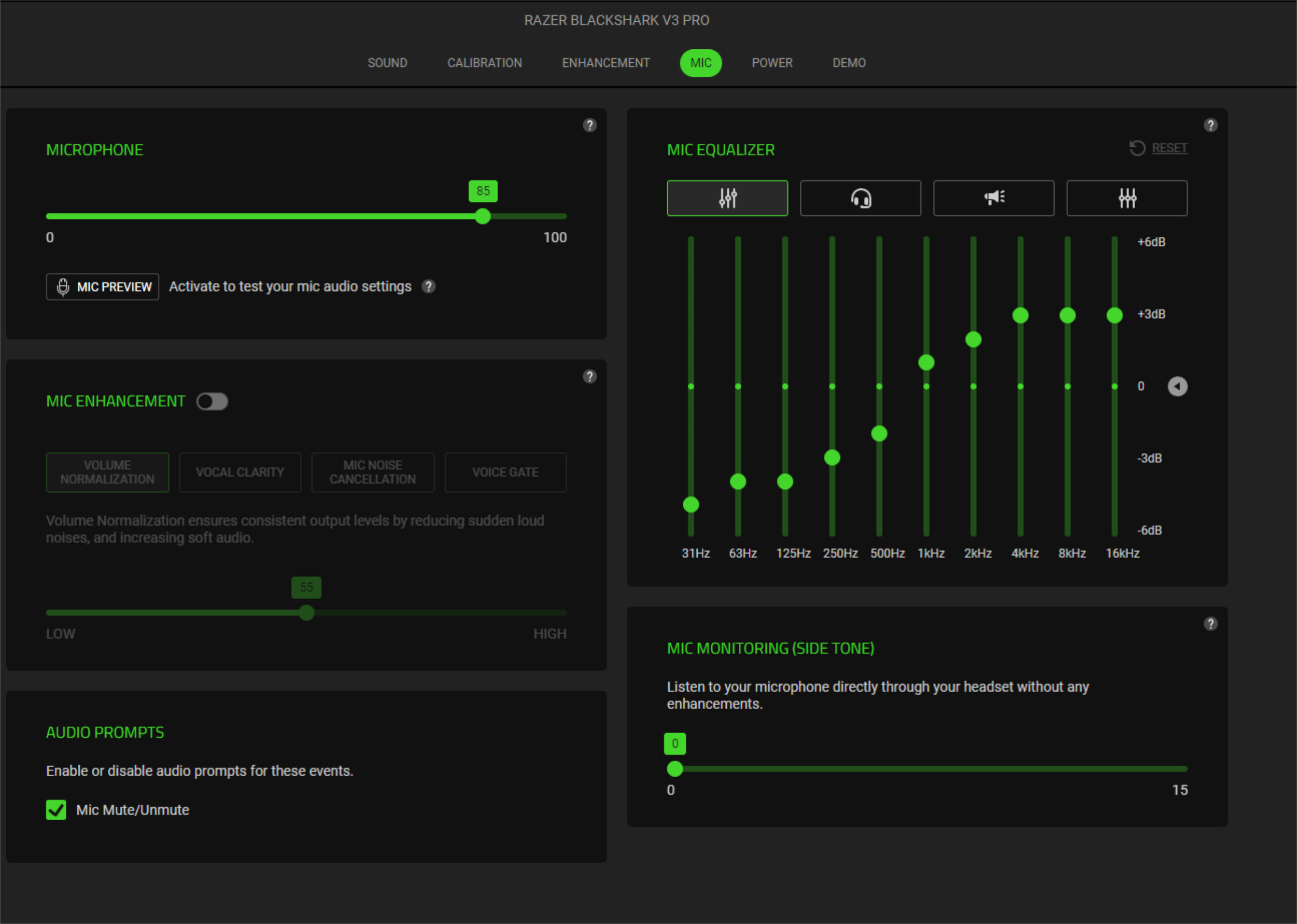 Razer BlackShark V3 Pro Synapse 5 (Image © PCMasters.de)
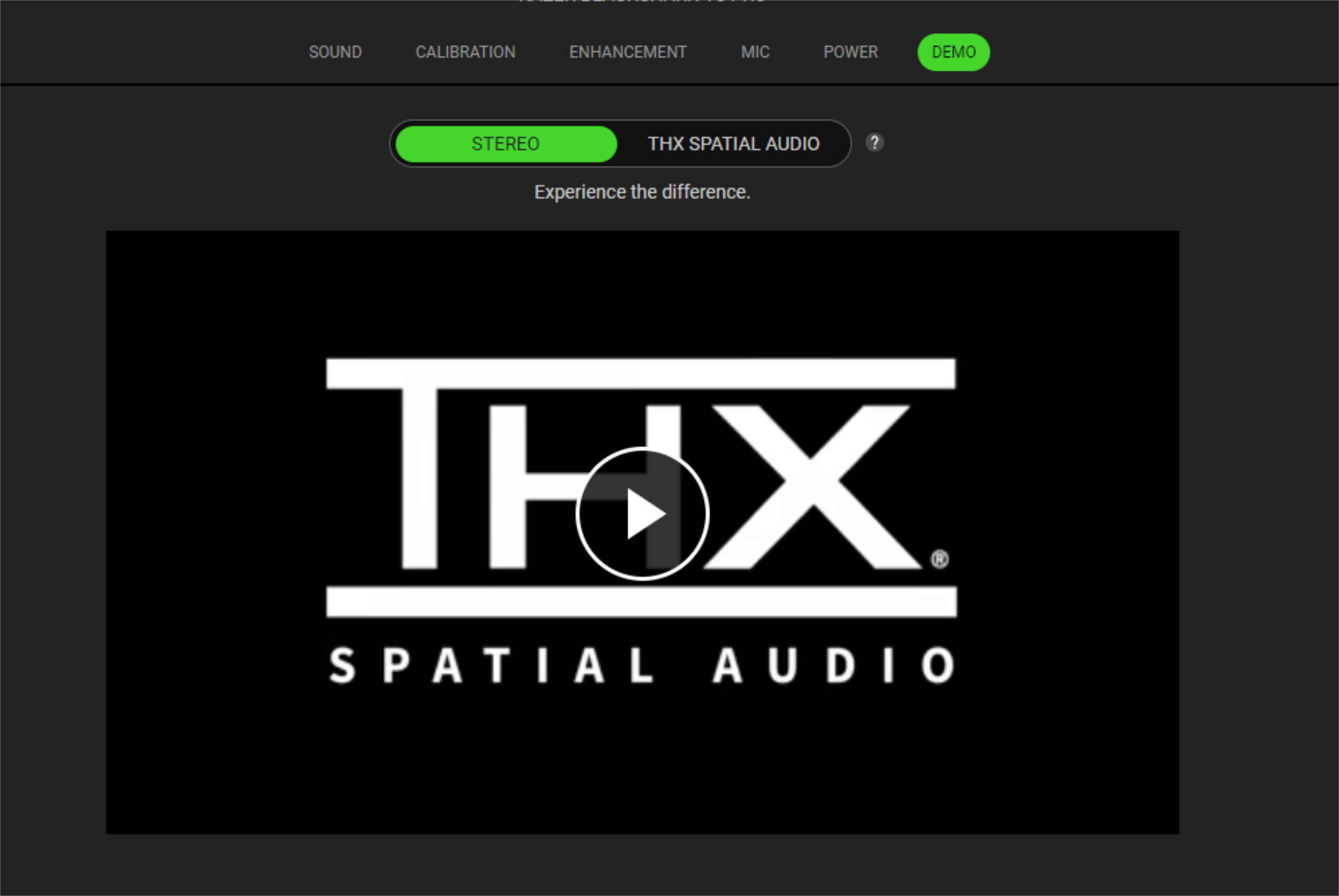 Razer BlackShark V3 Pro Synapse 7 (Image © PCMasters.de)
The less exciting part is that Razer’s software ecosystem can feel like an extra layer you must accept to unlock the headset’s full potential. Still, for users who like to fine-tune sound profiles and switch between gaming, music, and voice-chat use, the software support is a real plus. It gives the headset more personality and more flexibility than devices that rely on fixed tuning alone. That extra control will likely matter most to users who regularly switch between different genres and devices.
Battery Life
Battery life is one of the BlackShark V3 Pro’s real strengths, and in everyday use it should comfortably last through many long gaming sessions before needing a recharge. In practical terms, the headset is the kind of product that can easily survive several days of mixed play, chat, and media use for most users, especially if you are not running every feature at maximum intensity all the time.
What matters more than the headline number is that the battery life feels genuinely dependable rather than just impressive on paper. In reality – you can achieve about 50-60 hours (70h according to Razer), which still is great. Also, the 15 minutes of charging you get 6 hours of playing time, so that’s also a very positive feature. That makes the headset much easier to live with, because you do not have to think about charging it constantly, and it fits the premium wireless experience the product is aiming for.
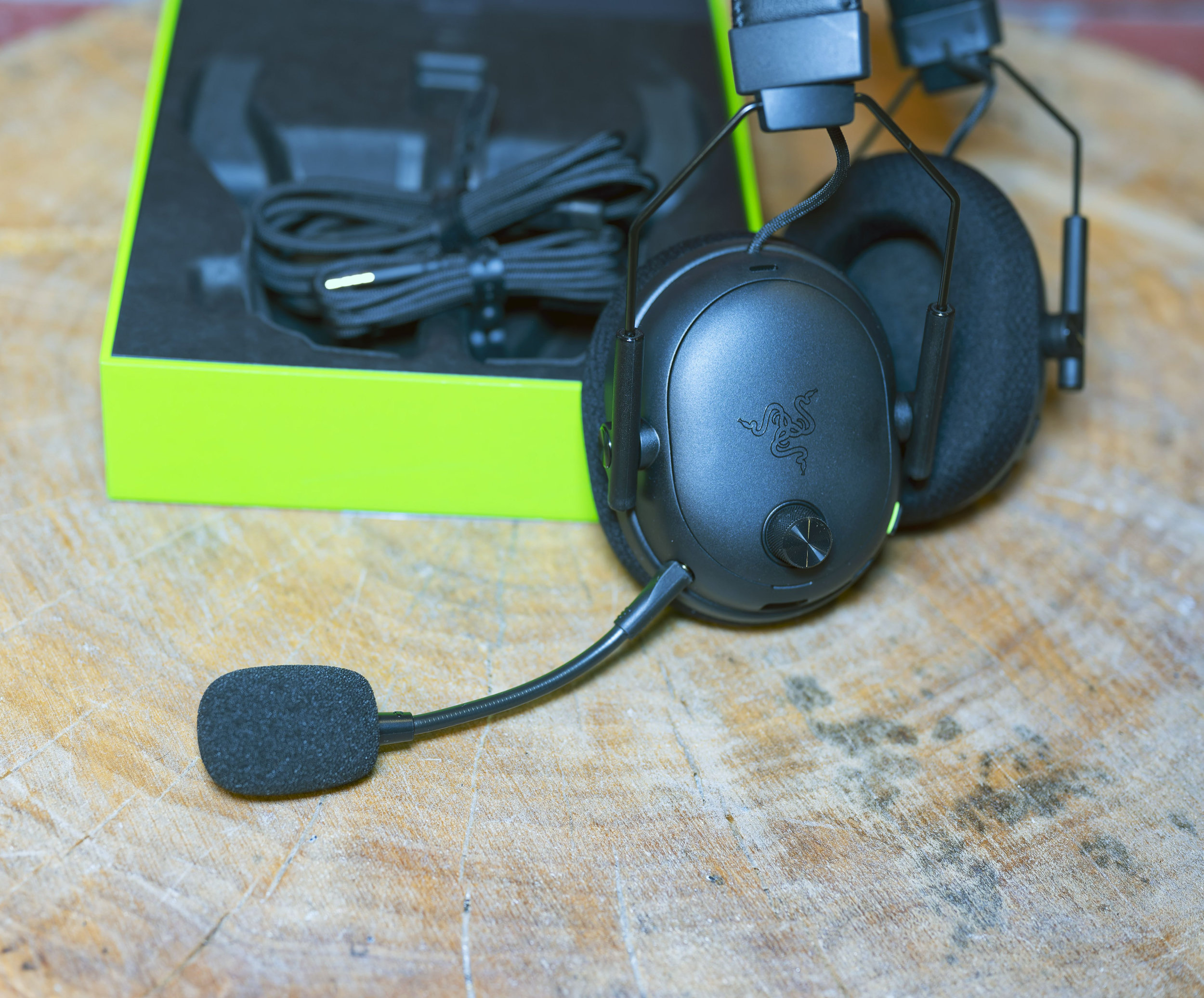 Razer BlackShark V3 Pro Mic (Image © PCMasters.de)
Conclusion
The Razer BlackShark V3 Pro is one of Razer’s most convincing premium gaming headsets in years, because it gets the fundamentals right and then adds features that genuinely matter. Its sound is tuned for gaming rather than neutrality, but that is exactly why it works so well in fast-paced titles, where timing, separation, and positioning are more important than absolute flatness. Add strong battery life, ANC, and a very capable microphone, and you get a headset that feels properly flagship-grade. It is a product that clearly knows who it is for.
What stands out most is how complete the package feels for competitive players. The physical controls are well placed, the wireless performance is low-latency, and the headset is flexible enough to cover PC, console, and communication use without feeling limited to one role. That makes it especially appealing if you want one headset to cover gaming, chat, and occasional music listening rather than buying separate devices for each task. The overall experience feels refined and mature, which is not something every gaming headset can claim.
There are still trade-offs, though, and they are hard to ignore at this price level. The headset is heavy, its comfort can vary depending on head shape, and ANC is good rather than class-leading. In other words, it is not the universal best choice for everyone, but it is a very strong choice for users who prioritize performance, feature set, and microphone quality over portability. Buyers who want something lighter or more minimalist may still prefer a different option.
For buyers who want a premium wireless gaming headset with excellent voice capture and a strong competitive sound profile, the BlackShark V3 Pro is easy to recommend. For users who care more about lightweight comfort, travel use, or the most natural sound tuning possible, there are alternatives that may fit better. Still, as an all-round gaming headset, Razer has built something impressive here, and it deserves to sit near the top of any serious shortlist. It is the kind of headset that feels designed to stay relevant for a long time.
Pro
- Excellent gaming-focused sound with strong positional performance.
- Very good microphone quality with effective noise rejection.
- Long battery life and useful ANC support.
- Solid physical controls and broad connectivity options.
Contra
- Heavier than many competing gaming headsets.
- Comfort and sound consistency can vary depending on fit, glasses, or hair.
- ANC is good, but not the best on the market.
- Requires software involvement to get the most from the headset