
 Computer Forum
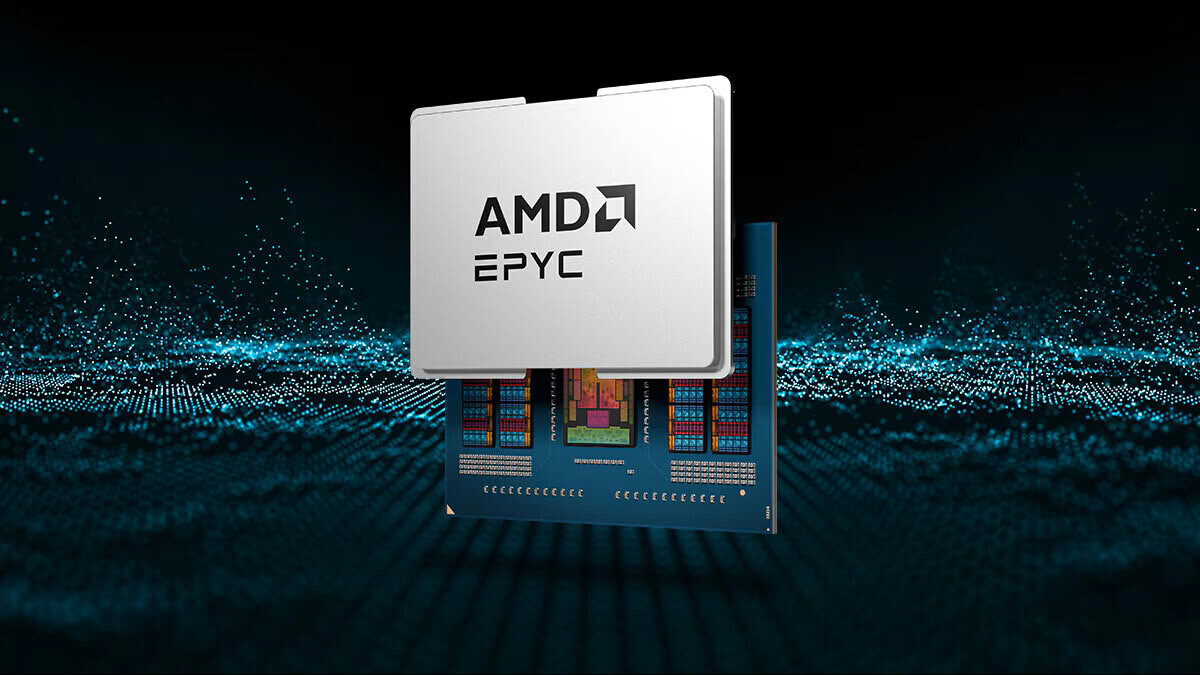 EPYC Venice Zen 6 Server CPUs (Image © AMD)
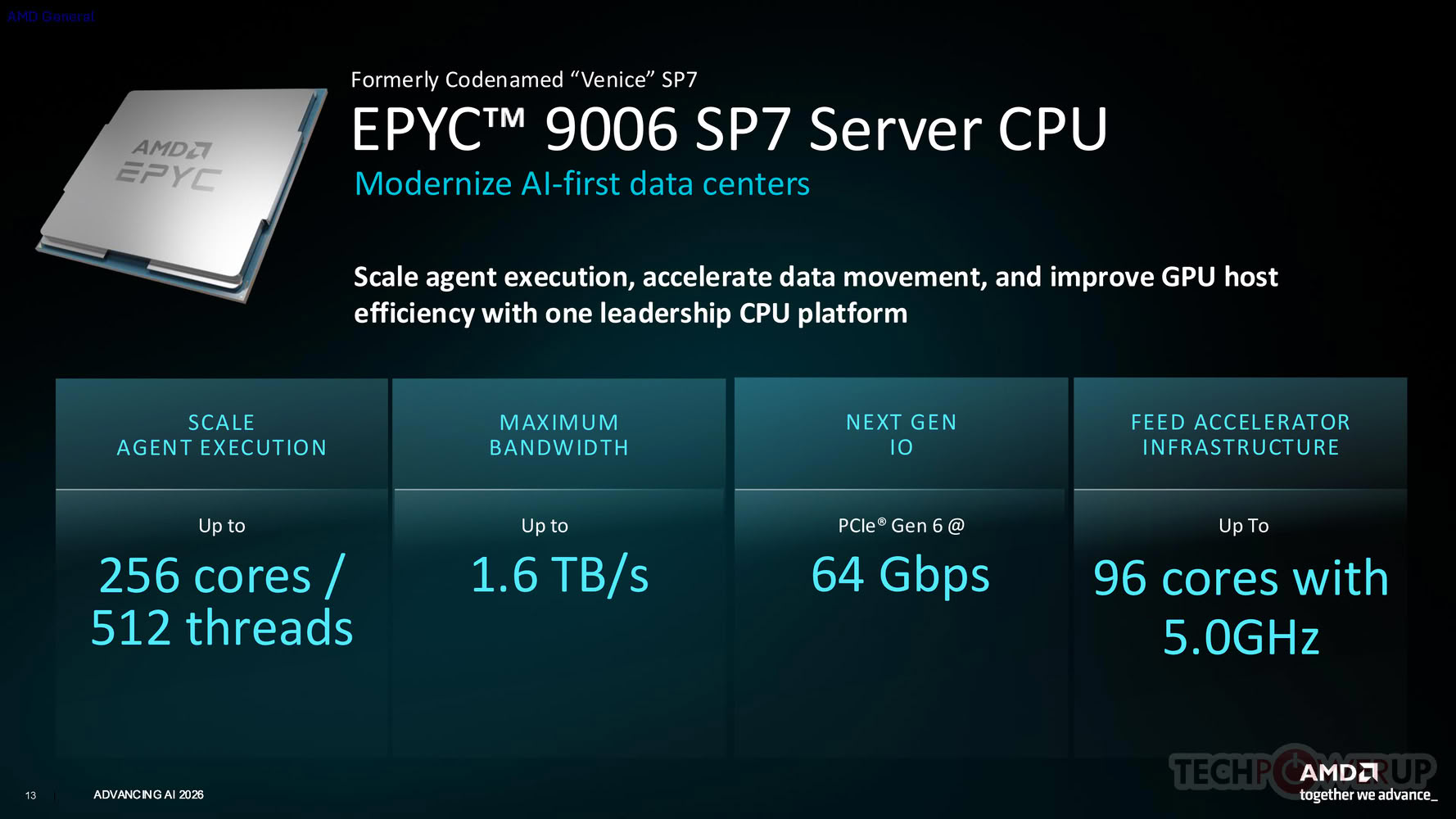
Core configurations vary depending on the chip type. Standard Zen 6 cores offer up to 96 cores and 192 threads, while those with compacted Zen 6c cores reach up to 256 cores and 512 threads. For HPC workloads, the Venice-X processors feature 3D V-Cache and offer up to 1,152 MB of L3 cache per socket. The memory subsystem has been redesigned for the SP7 socket, which now features a 16-channel DDR5 interface. This configuration natively supports DDR5-8000 RDIMMs and MRDIMMs with speeds up to DDR5-12800. Certain variants are equipped with 24-channel LPDDR5X interfaces that use field-replaceable SOCAMM2 modules.
In terms of the platform, EPYC Venice supports both 1P and 2P socket configurations. Each socket offers 128 PCI Express Gen 6 lanes and supports CXL 3.1 memory extensions as well as 5th-generation Infinity Fabric. The management tools have also been updated and now include Unified Power Provisioning (UPP), Utilization-Based Power Scaling (UBPS), and Frequency-Adaptive Spectrum Technology (FAST).
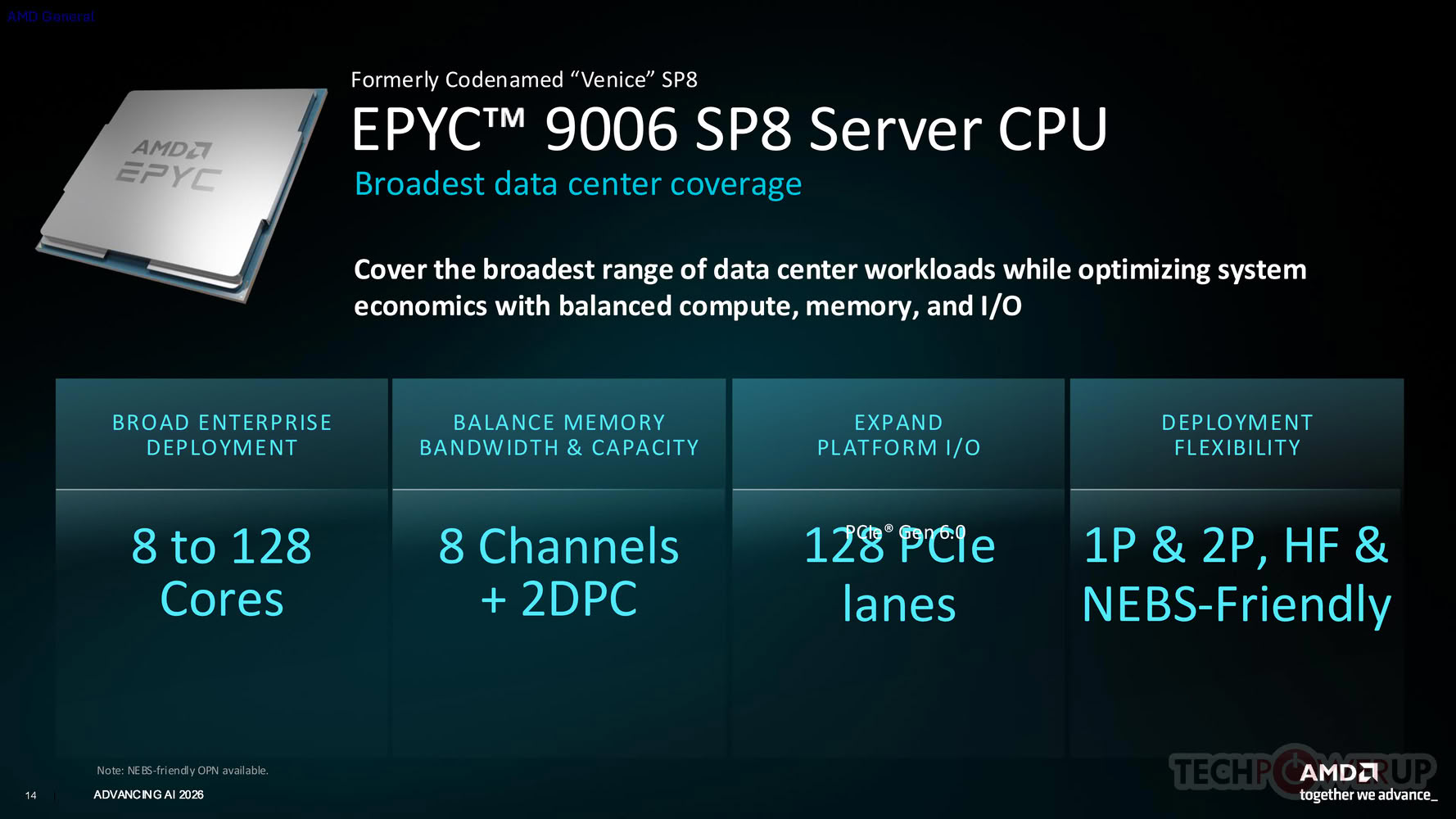 AMD EPYC 9006 SP8 Server CPU (Image © Techpowerup)
Security enhancements have been implemented at both the Zen 6 microarchitecture level and the sIOD level. These updates include RSA-4K encryption with support for post-quantum cryptography (PQC), an improved Root of Trust (RoT), and new safeguards against physical attacks and side-channel attacks.
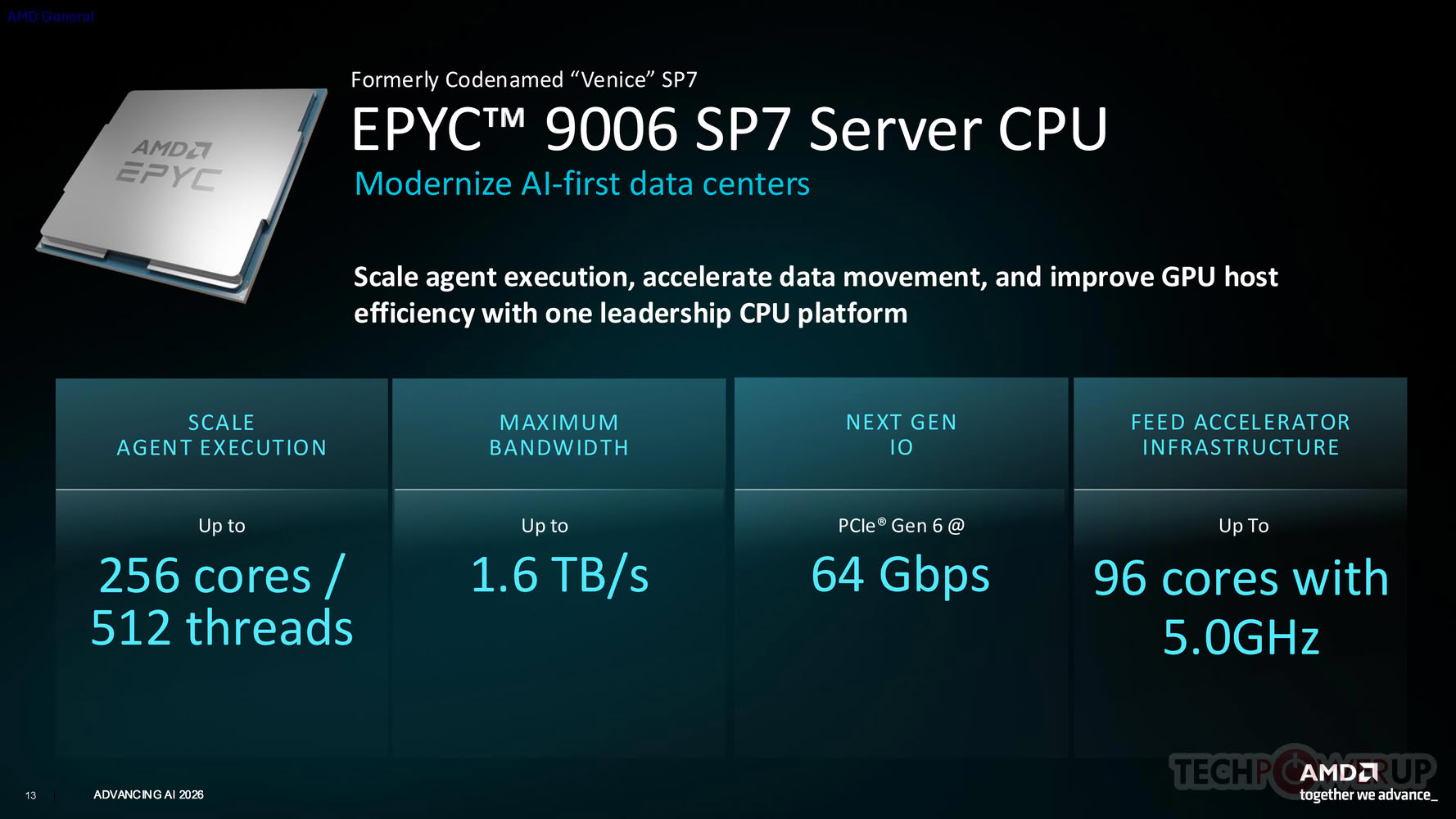 AMD EPYC 9006 SP7 Server CPU 2 (Image © Techpowerup)
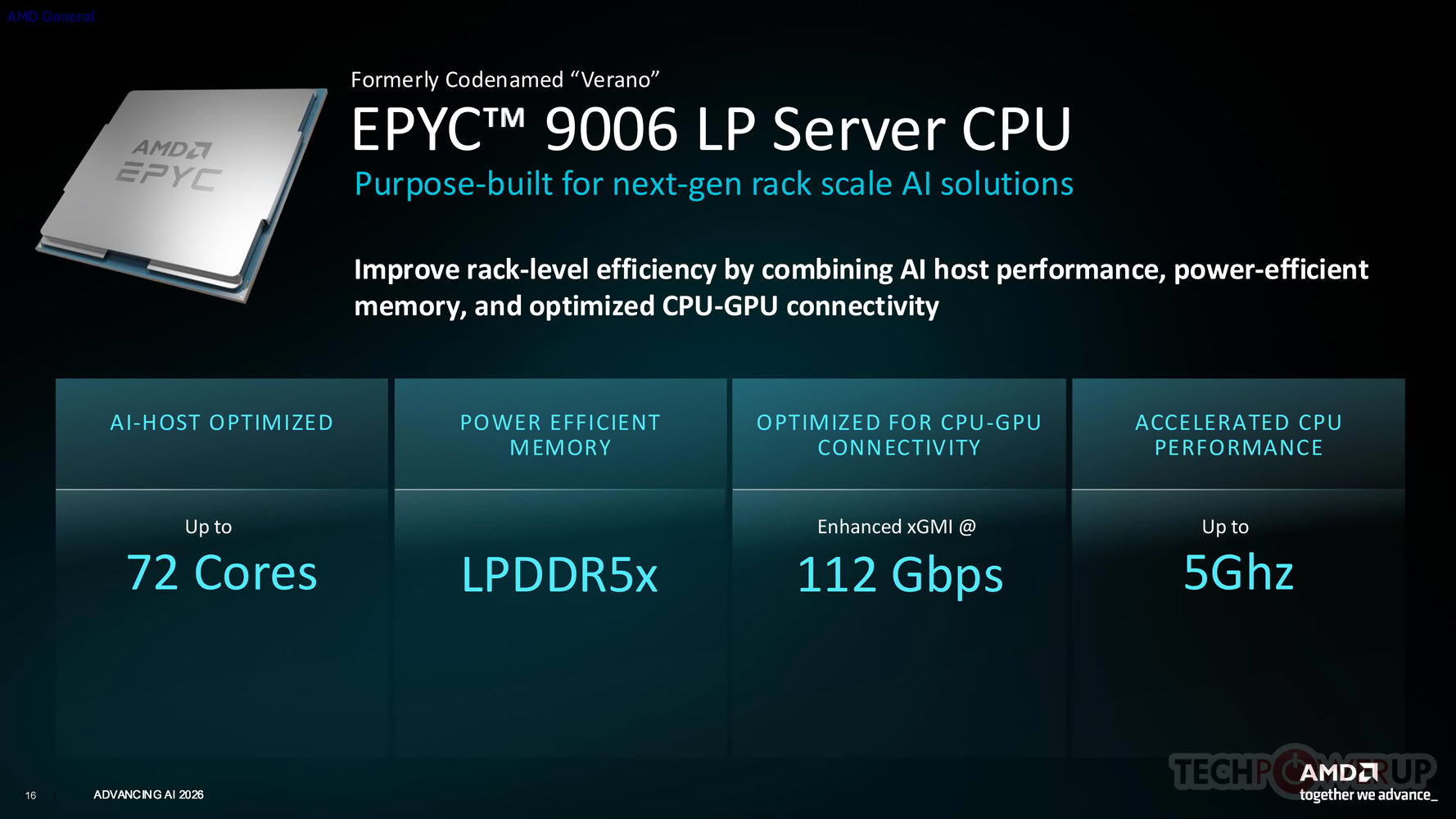 AMD EPYC 9006 LP Server CPU (Image © Techpowerup)
Production has already begun, with shipments rolling out in phases:
- EPYC 9006 SP7 Series: Q4 2026
- EPYC 9006 SP8 Series: First half of 2027
- EPYC 9006X SP7 Series: Second half of 2027
- EPYC 9006 LP Series: Second half of 2027
Internal tests by AMD show that the combination of Zen 6 IPC gains, wider memory interfaces, and DDR5-8000 support results in higher throughput than current alternatives from Intel and Arm. In the SPECrate 2026_int_base tests, Venice demonstrated up to 2.2 times higher throughput than NVIDIA Vera (88C) and 1.3 times higher performance per core than the Intel Xeon 6980P.
 AMD AMD EPYC 9006 Performance (Image © Techpowerup)
 AMD 6th Gen EPYC Venice Extends Agentic Era Leadership (Image © Techpowerup)
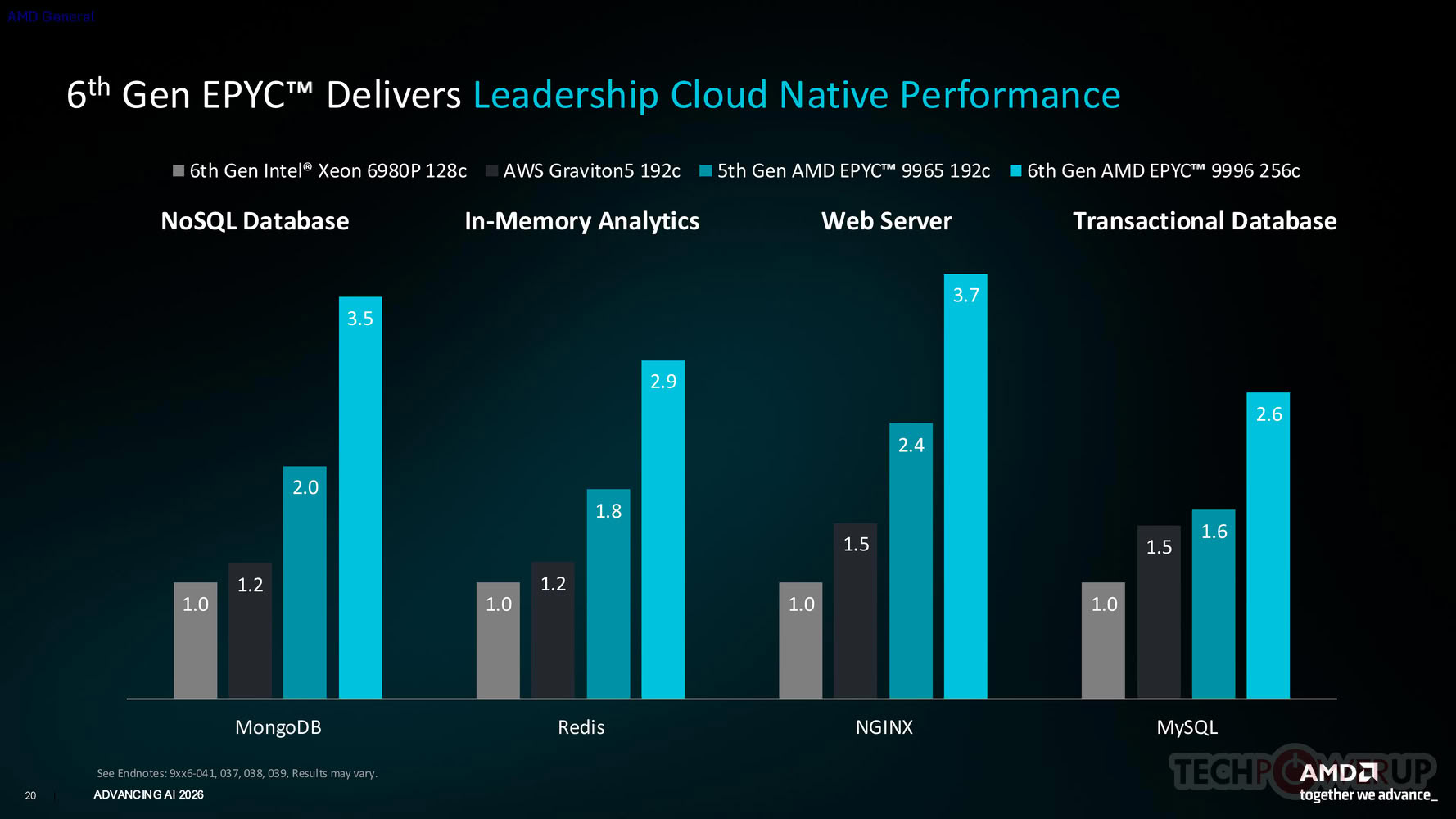
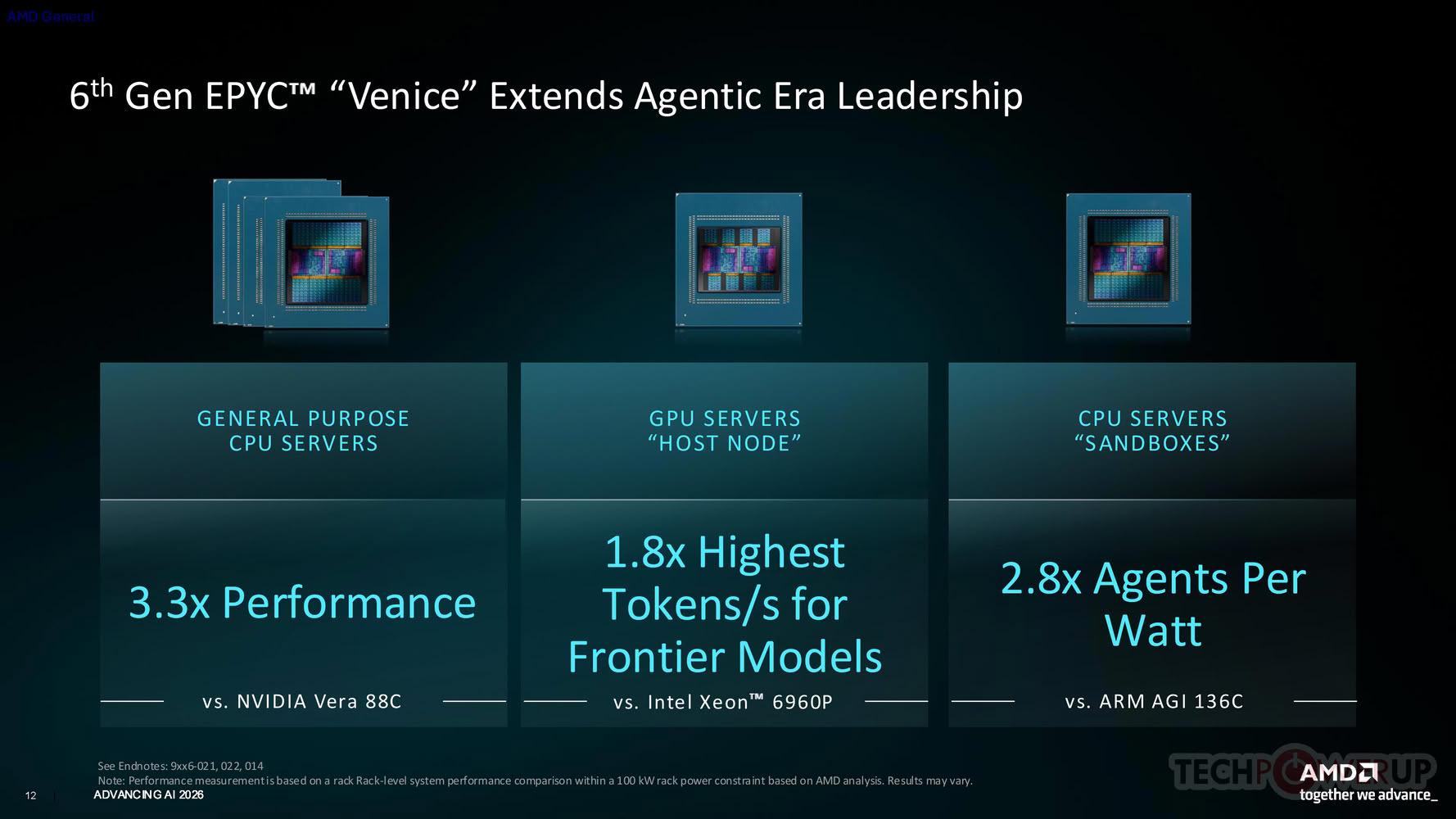
In cloud-native environments, these processors achieved performance gains ranging from 2.6x to 3.7x compared to 6th-generation Intel Xeon CPUs when running MongoDB, Redis, NGINX, and MySQL. For HPC applications such as GROMACS and WRF, the increase is up to 3.1x. Since PCIe Gen 6 also doubles the bandwidth between the CPU and GPU, host nodes running advanced AI models saw a 1.8-fold increase in tokens per second compared to 5th-generation EPYC processors (“Turin”).
 AMD EPYC 9006 SP7 Server CPU (Image © Techpowerup)
In terms of server consolidation, AMD claims that 82 dual-socket EPYC 9996 servers can replace 1,000 older dual-socket Intel Xeon Gold 6258R servers, reducing the total number of physical units by 92% and power consumption by up to 77%.