
 Computer Forum
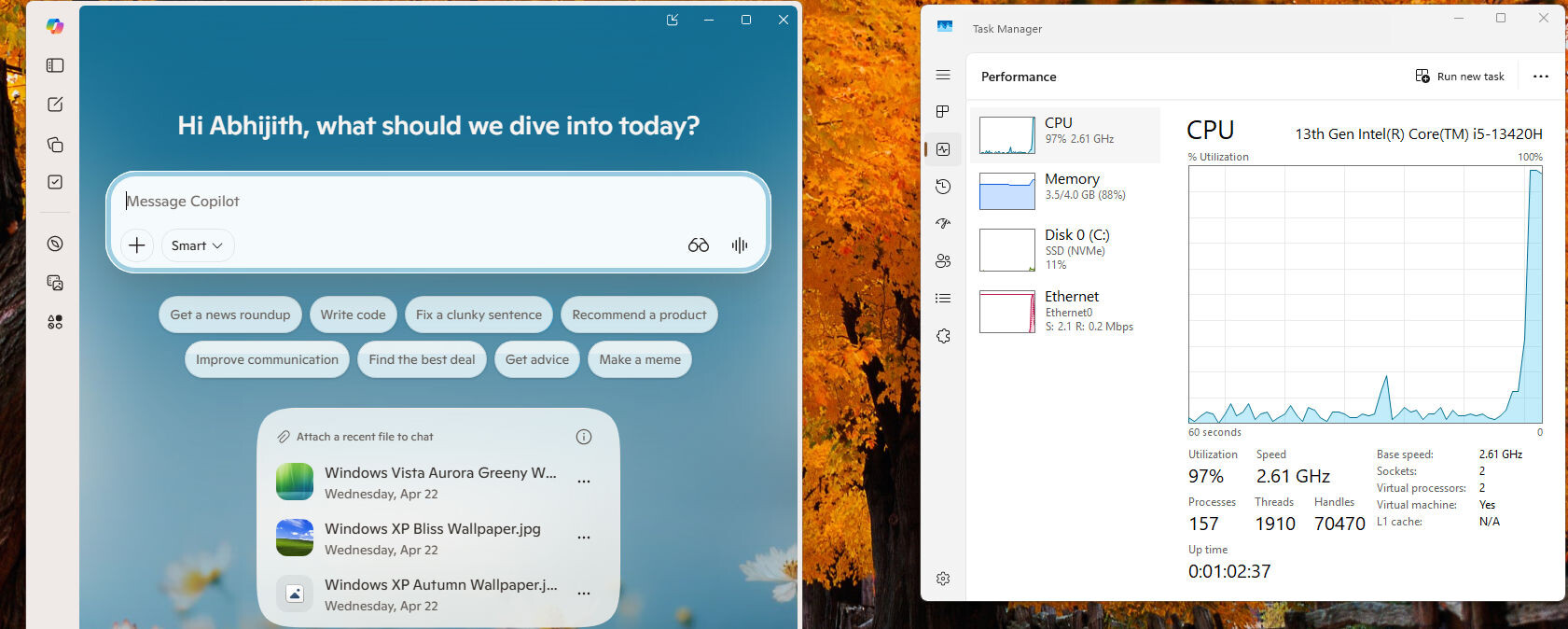 Win 11 Low Latency Profile LLP (Image © Windowslatest)
The Low Latency Profile ensures that the CPU is brought to its maximum frequency for a short period of time - usually between one and three seconds - exactly when an application is started. This targeted performance boost is intended to eliminate the delay that occurs during the transition from idle to high-performance mode.
The performance benefits are primarily focused on native Windows components. Users can expect around 40% faster startup times for pre-installed applications such as Outlook and Edge. In addition, system-level interface elements such as context menus and the Start menu can see response improvements of up to 70%. It is important to note that this feature does not affect third-party software or high-end games, as these programs use their own independent optimization protocols.
Installation and activation process
The feature is currently available as an optional update under package KB5089573 (Build 26200.8524). Users can access it by navigating to the advanced options in the “Windows Update” section of the system settings.
In contrast to standard updates, the LLP is provided via a Controlled Feature Rollout (CFR). In this model, the update is installed on the device, but the actual activation only occurs after the operating system has monitored the system and determined that it is ready for deployment. Therefore, some users may not notice an immediate change in performance after installation.
Impact on the system and development background
Because the feature increases CPU frequency on tasks that are normally categorized as light, there is a possibility of slightly increased overall system temperatures. Microsoft has come to the conclusion that the benefits in terms of smoothness and speed outweigh these thermal concerns.
The move to short-term CPU boosts represents a change in strategy from Microsoft's previous experiments. Previous attempts focused on preloading File Explorer and other applications into memory at startup to reduce lag. However, these methods yielded only negligible improvements, prompting the company to implement the current frequency boost at the hardware level instead.