 Computer Forum
 XPG MARS 980 Blade NVMe SSD Test Review (Image © PCMasters.de)
ADATA XPG MARS 980 BLADE in detail
XPG is a sub-brand of ADATA and supplies components designed to appeal to gamers. In XPG's portfolio, we find high-end NVMe SSDs in addition to more affordable models. The XPG MARS 980 BLADE is part of the high-end portfolio and is based on the super-fast PCI Express 5.0 interface. This makes it a direct competitor to flagship models such as the T705 from Crucial and the FireCuda 540 from Seagate as well as the Lexar Professional NM1090. XPG offers a wide range of Mars 980 Blade SSDs, as they are available in capacities of 1 TB, 2 TB and even 4 TB. The manufacturer has left out the particularly inexpensive models with 512 GB, which makes perfect sense in 2026.
The example of the MARS 980 BLADE provided to us has a capacity of 1 TB. The specifications vary slightly depending on the storage capacity. The SSD we tested has a maximum sequential read throughput of 14,000 MB/s and a write throughput of 10,000 MB/s on paper. The 2 TB variant, on the other hand, has a significantly higher write throughput of 13,000 MB/s. This means that the write operations on the SSD are significantly slower than the read operations.
 XPG MARS 980 Blade SSD Rückseite (Image © PCMasters.de)
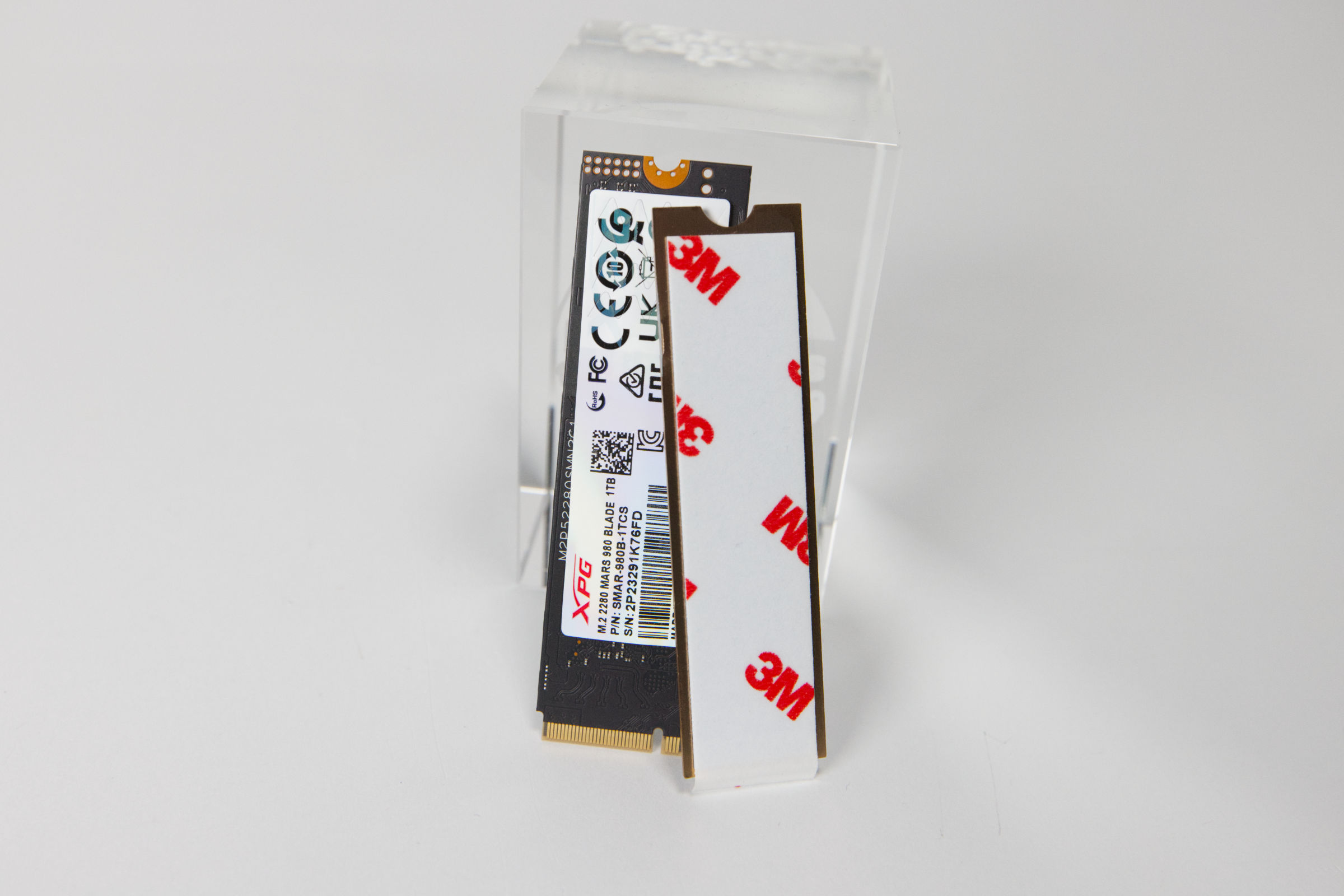
As usual, the SSD is installed in a free M.2/M key with a 2280 form factor. In terms of service life, the MARS 980 BLADE is designed to withstand 740 TB and is rated for 2 million hours (MTBF). The manufacturer also offers buyers a very long warranty of 5 years.
 XPG MARS 980 Blade SSD mit Kühlplatte (Image © PCMasters.de)
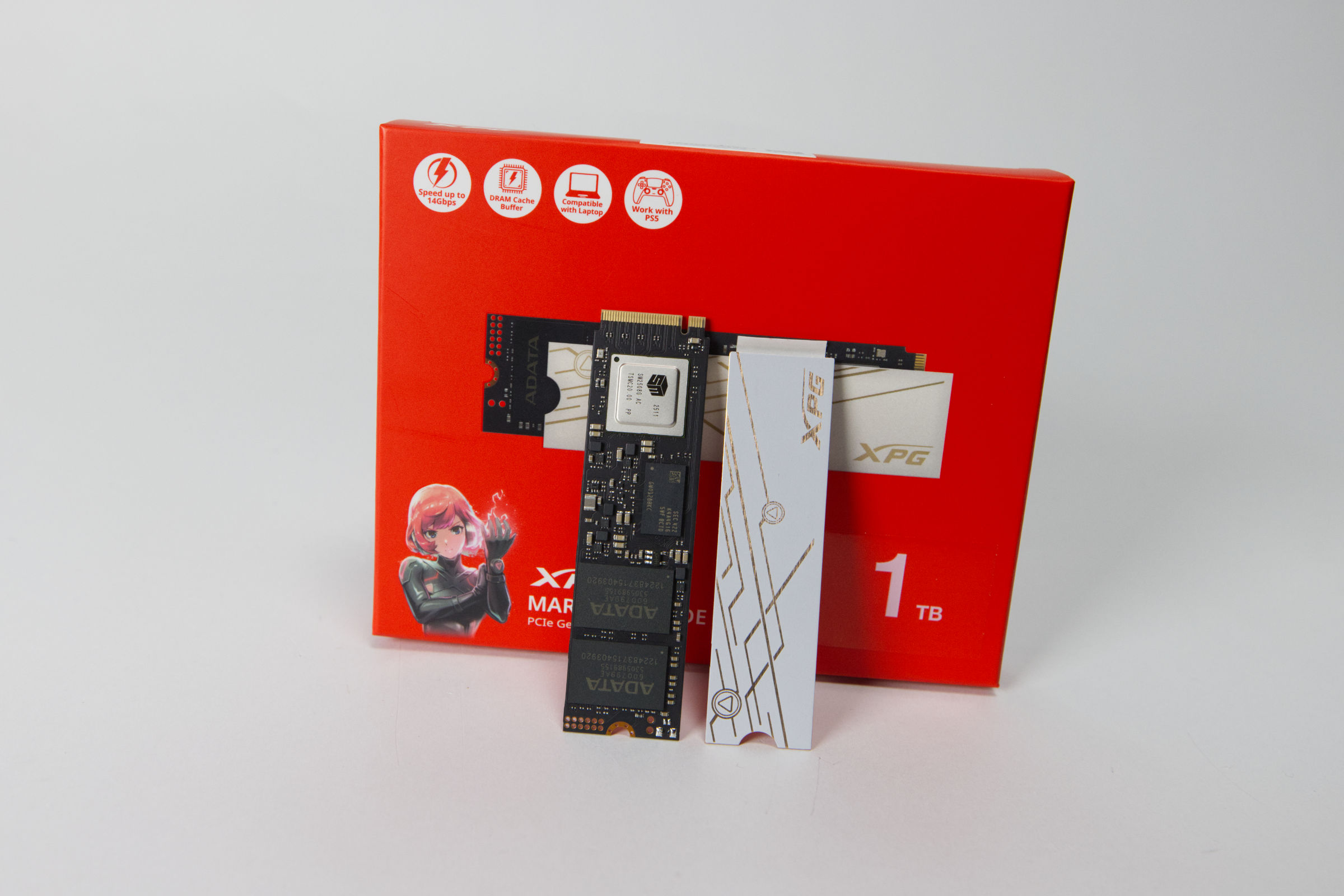
A special feature of the MARS 980 BLADE is that it is supplied with a separate copper cooling plate. This is fitted with a self-adhesive heat conducting pad on one side. On the outside, it is covered with a very stylish white and gold print, which makes the SSD look very classy. In most cases, this cooling plate will not be fitted to high-end boards, as large mainboard coolers are used here, which are significantly more powerful and are the better choice for a PCIe Gen 5 SSD.
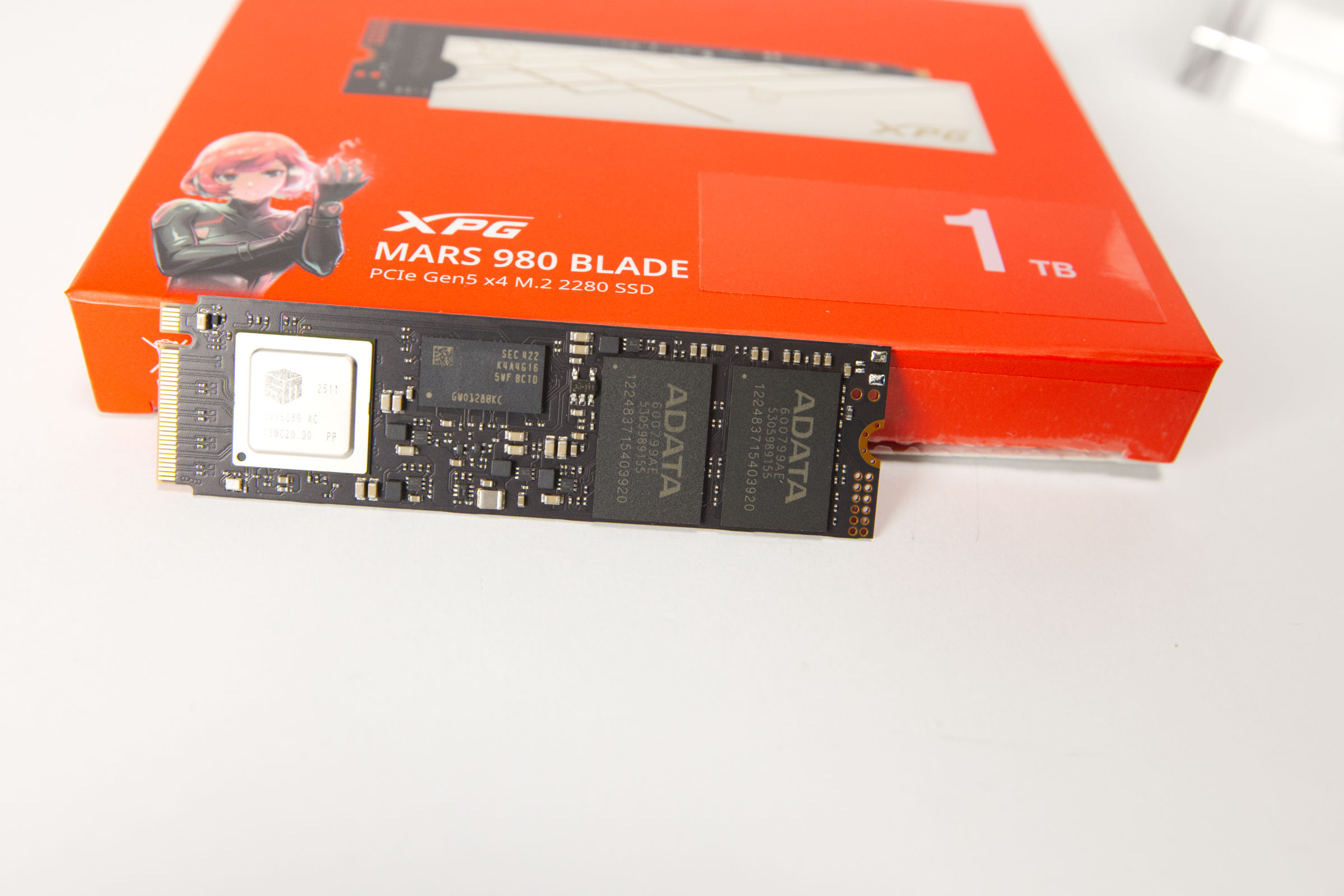
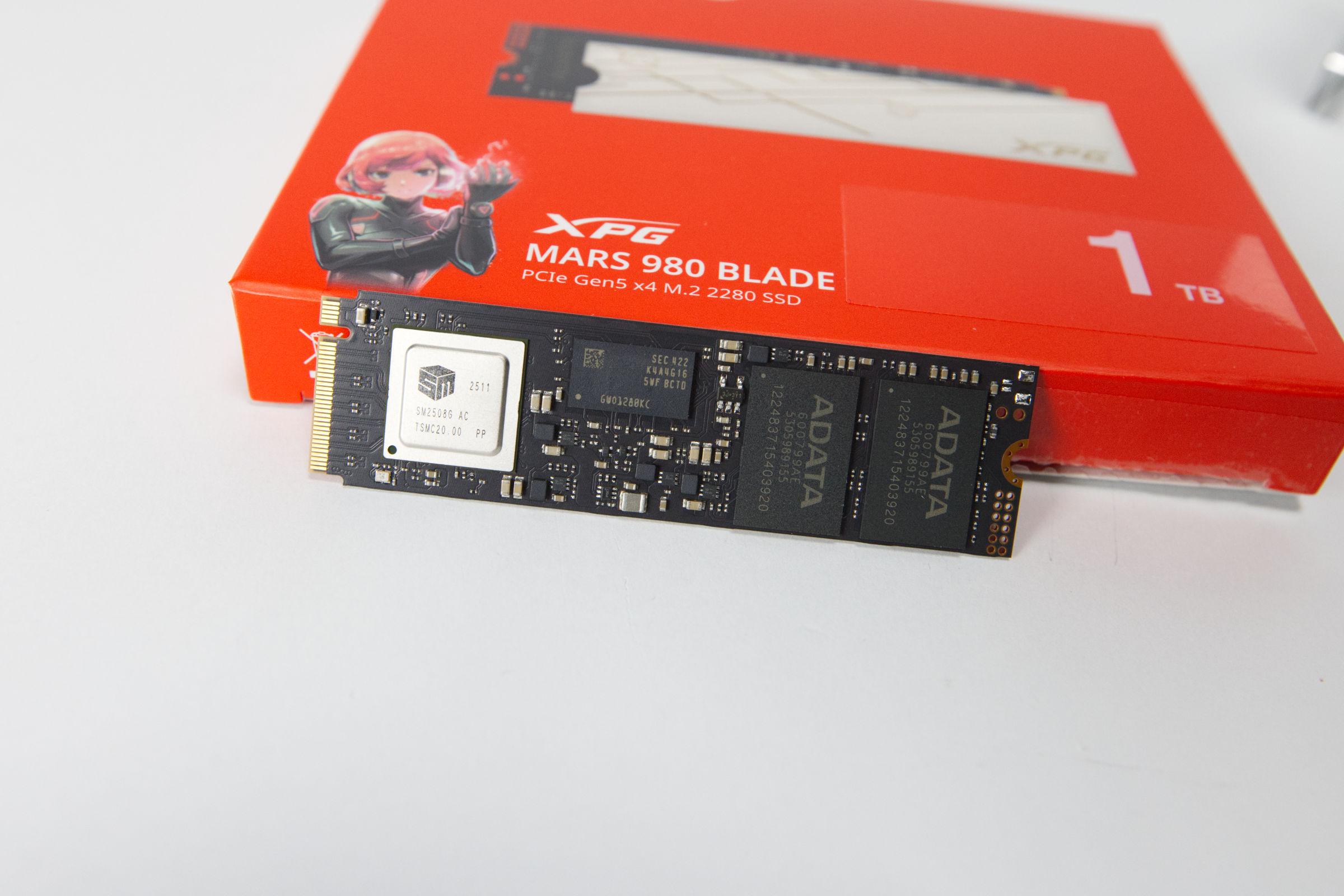 XPG MARS 980 Blade SM2508G AC Controller (Image © PCMasters.de)
SM2508G controller
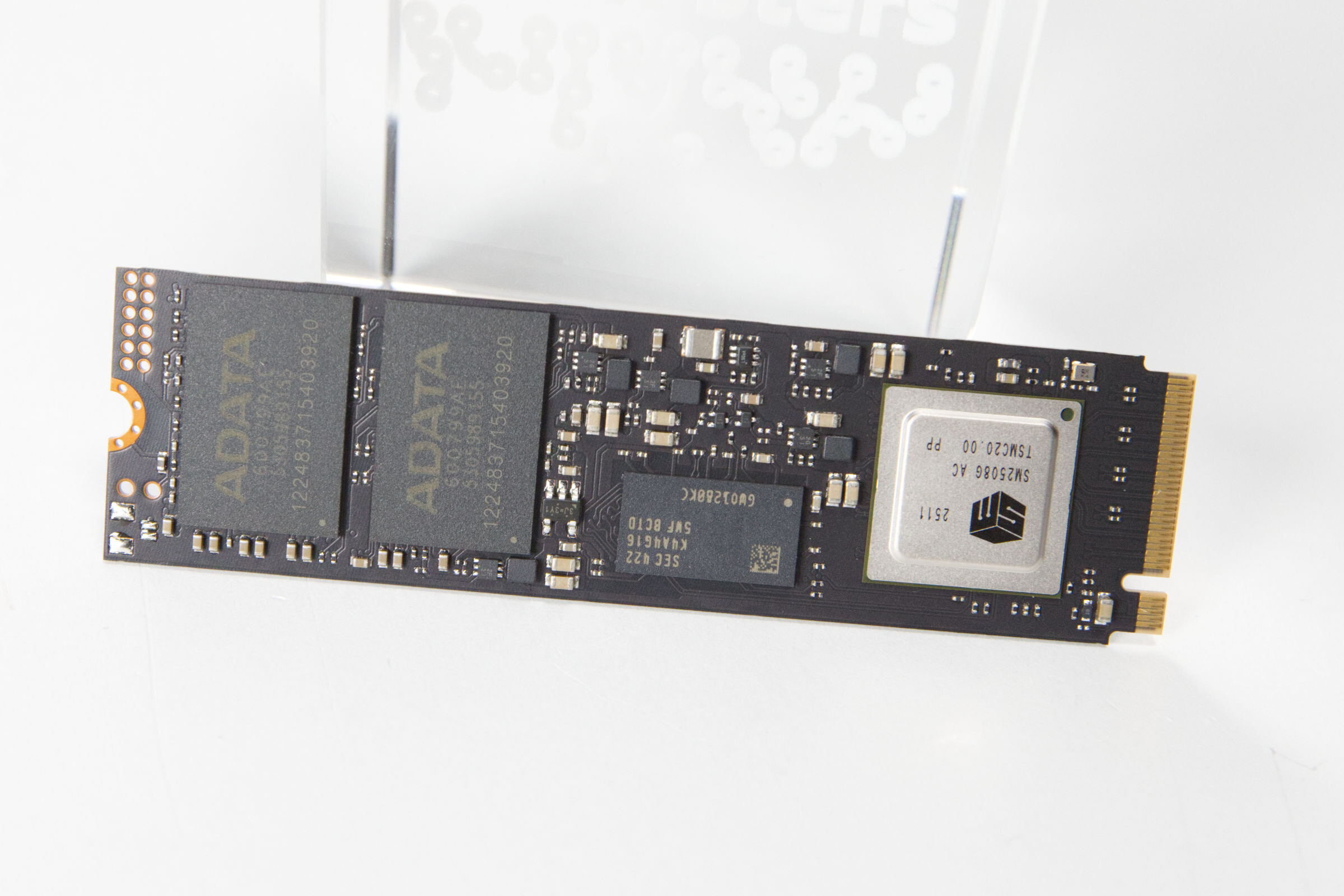
The heart of the NVMe SSD is the SM2508G controller from Silicon Motion. This is manufactured by TSMC in a 6 nm process and houses a quad-core Arm Cortex R8 processor, which is responsible for the actual computing power. The controller is designed for four PCIe Gen 5 lanes, each with 32Gb/s data transfer rates. It is capable of handling up to eight NAND channels with up to 3,600 MT/s per channel.
Silicon Motion is positioning its SM2508 as a high-performance model in its portfolio. The controller is designed for a maximum transfer rate of 14.5 GB/s for sequential reads and 14 GB/s for sequential writes. These values are therefore higher than those specified by XPG for this SSD. Silicon Motion also specifies 2.5 million and 2.5 million IOPS for random read/write respectively.
The controller also supports DDR4 and LPDDR4 memory. On the PCB we find the matching DRAM memory with the identifier SEC 422 K4A4616. This is a Samsung DDR4 SDRAM chip with 4 Gb (gigabit) density. According to the specification, it should operate at 1.2 V and be in the 2nd generation revision ("A" in K4A4616).
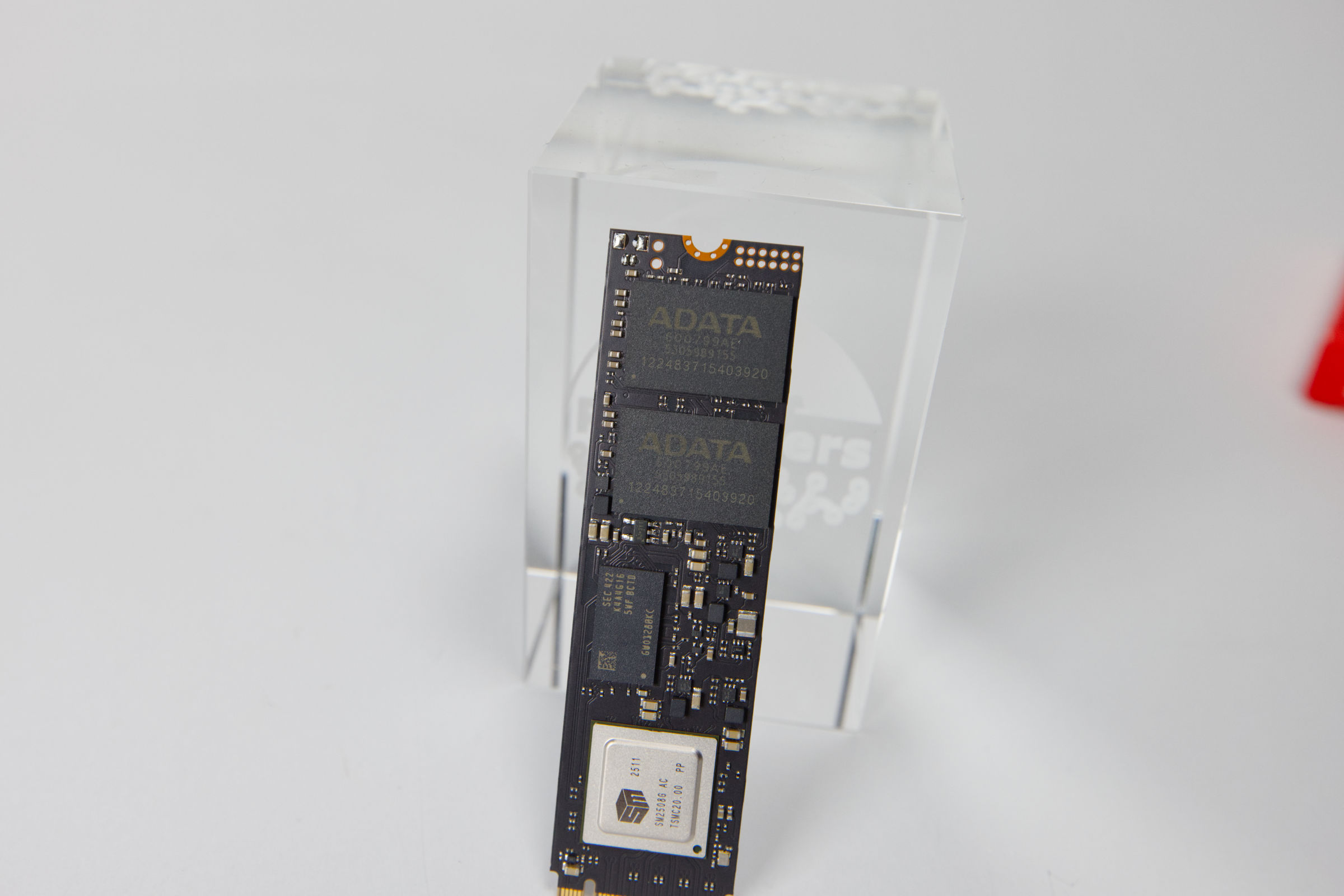 XPG MARS 980 Blade SSD ADATA NAND (Image © PCMasters.de)
ADATA 3D NAND
For the actual, non-volatile memory, XPG relies on NAND from ADATA, which will probably still be purchased. The identifier is 600799AE 6305989155. Nothing can be found about the flash at ADATA. According to Geizhals, it is supposed to be 3D NAND TLC flash with 232 layers (B58R).
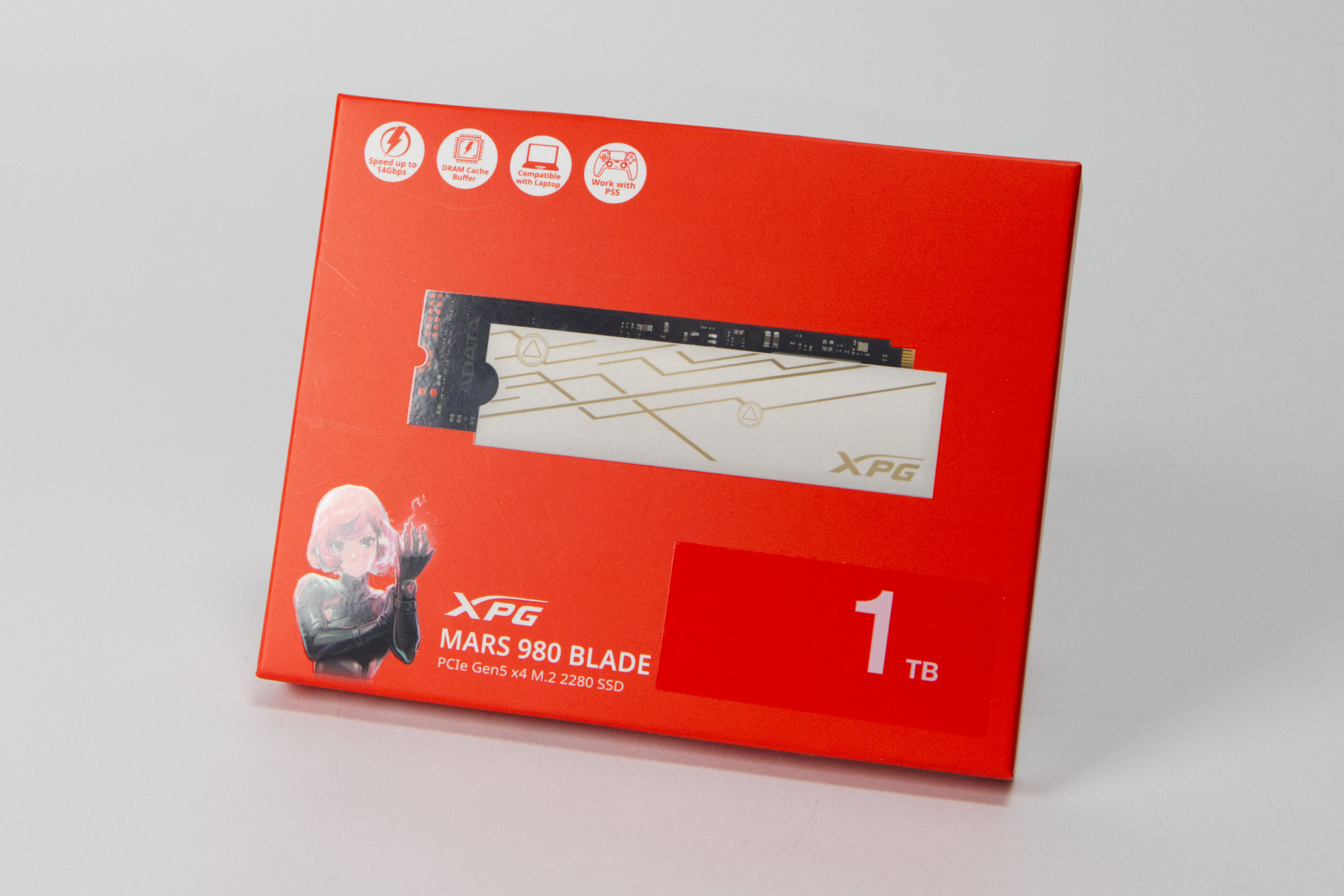
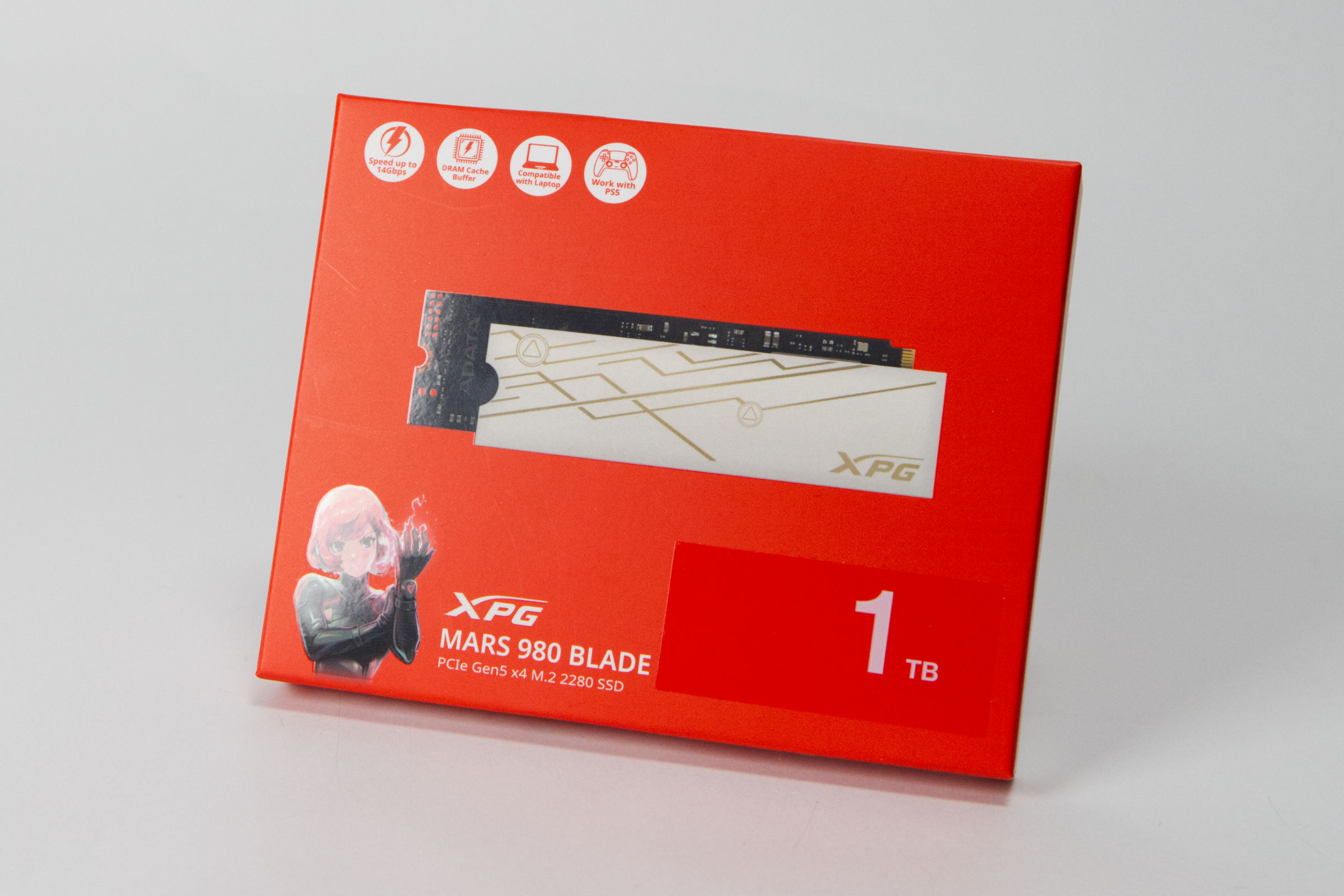 XPG MARS 980 Blade SSD Verpackung (Image © PCMasters.de)
XPG MARS 980 BLADE packaging and scope of delivery
XPG's packaging focuses on a strong red color and uses a female character to appeal to gamers. This works particularly well in Asia and gives the MARS 980 BLADE packaging a nice touch. It is commendable that the packaging is made of cardboard on both the outside and inside, making it particularly environmentally friendly.
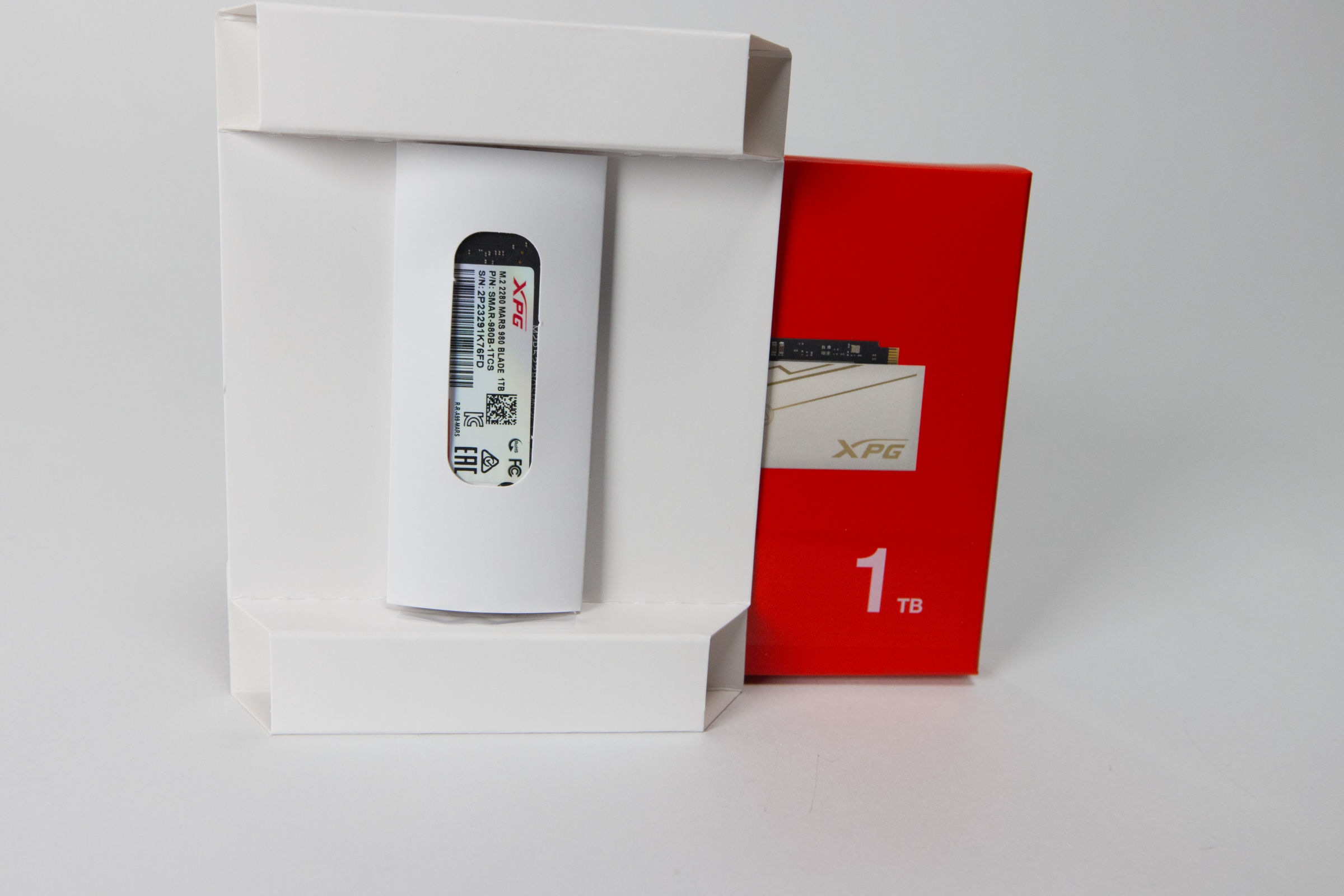 XPG MARS 980 Blade SSD Verpackungsinnere (Image © PCMasters.de)
The NVMe SSD is held in the middle by cardboard to protect it during transportation. The cooling plate is also packed together with the SSD in a plastic bag. Nothing else is included in the packaging.
Test system
We used our tried-and-tested system with Ryzen 9 7950X and the Biostar X670E Valkyrie as our test system. This ensures that the performance is not limited by PCIe 4, as we are testing in the PCie 5 slot.
Ryzen 7000 test setup
- CPU**: AMD Ryzen 9 7950X
- Mainboard: Biostar X670E Valkyrie
- Graphics card: MSI GeForce GT 730
- RAM**: Kingston FURY Beast DIMM Kit 32GB, DDR5-5200, CL40-40-40 (KF552C40BBK2-32)
- Power supply**: be quiet Pure Power 11 FM 1,000 W
- Case**: HYTE Y60/Open Testbench
- Operating system**: Windows 11 21H2
XPG MARS 980 BLADE in benchmarks
We have expanded our benchmark course for the NVMe SSD comparison test. For a more realistic test that also delivers repeatable results, we now also use the 3DMark Storage benchmark, which tests different scenarios such as gaming behavior and the copying of game data.
We have also included PCMark, which again looks at the system as a whole and determines the average values when copying.
CrystalDiskMark Storage Benchmark
3DMark Storage Benchmark
PCMark Drive Performance Consistancy
PCMark relies on a very long load when writing, which is applied constantly and over a longer period of time. This is why the peak values are simply lower, because the SSD and the cache are pushed to their limits. This is how the use of a power user should be simulated.
ATTO Disk Benchmark (64 MB)
Benchmark rating
The average results show that the XPG MARS 980 BLADE can land in fourth place in the ranking. The SSD did not throttle under load and was able to deliver constant performance. However, as it offers a lower write throughput, it lands in sixth place in the comparison of write values. This should make it a solid and reliable SSD in any system.
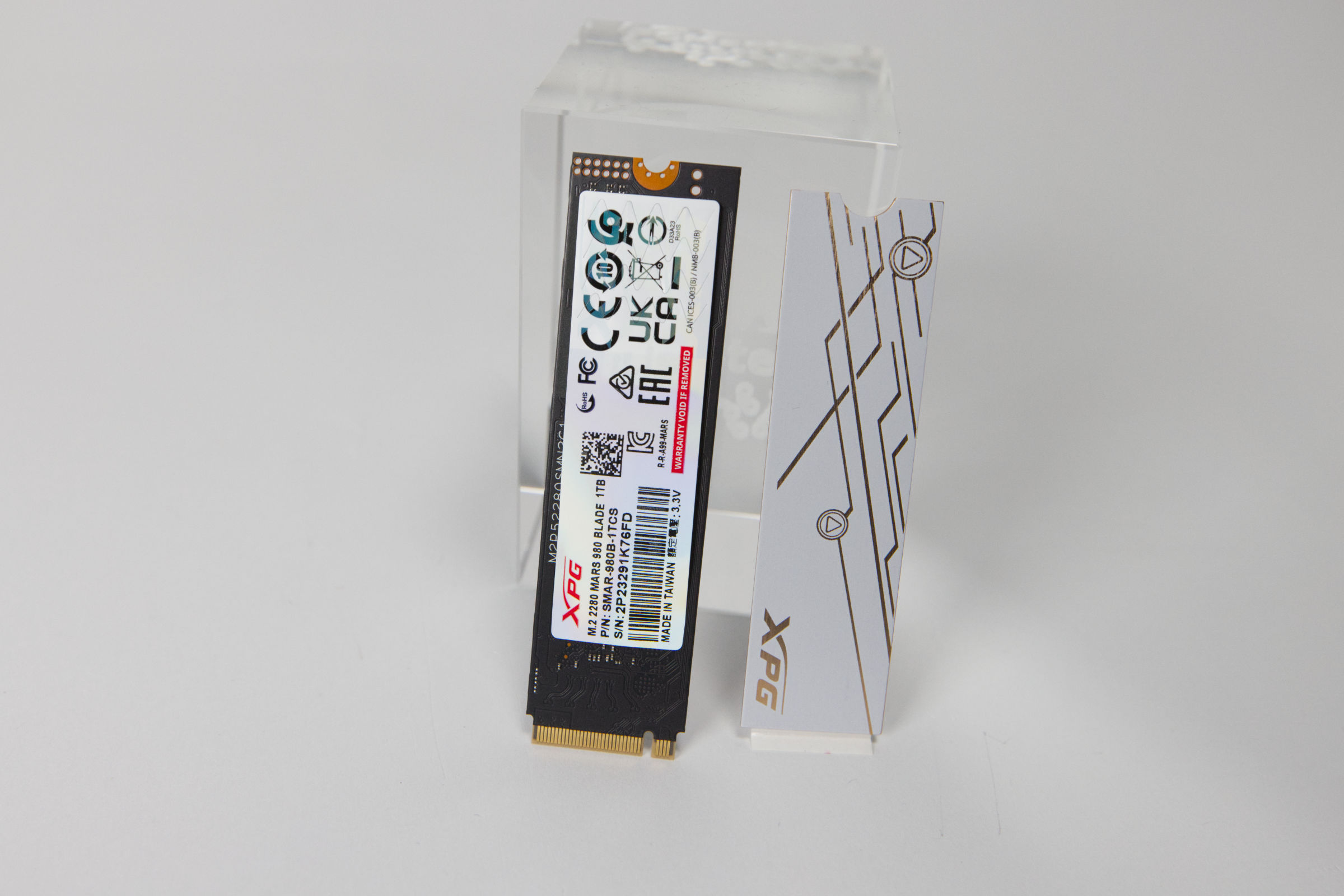 XPG MARS 980 Blade SSD Rückseite mit Kühler (Image © PCMasters.de)
XPG MARS 980 BLADE Cooler and temperature measurements
The SSD is packaged without a pre-installed cooler, even though it is included. We have not looked at the cooler separately, but it offers a larger cooling surface and dissipates the waste heat from the chips and the controller. Especially if you don't have a mainboard cooler, you should stick this on.
For this comparison test, we used the large aluminum cooler of the Biostar X670E Valkyrie motherboard in NVMe slot 2. This is not directly blocked by the graphics card and is not actively cooled in this test. Some models come with a pre-installed cooler. In this case, we also used this directly. We have placed corresponding notes in the diagram: If an integrated cooler was used, an "IK" (for integrated cooler) is appended after the name.
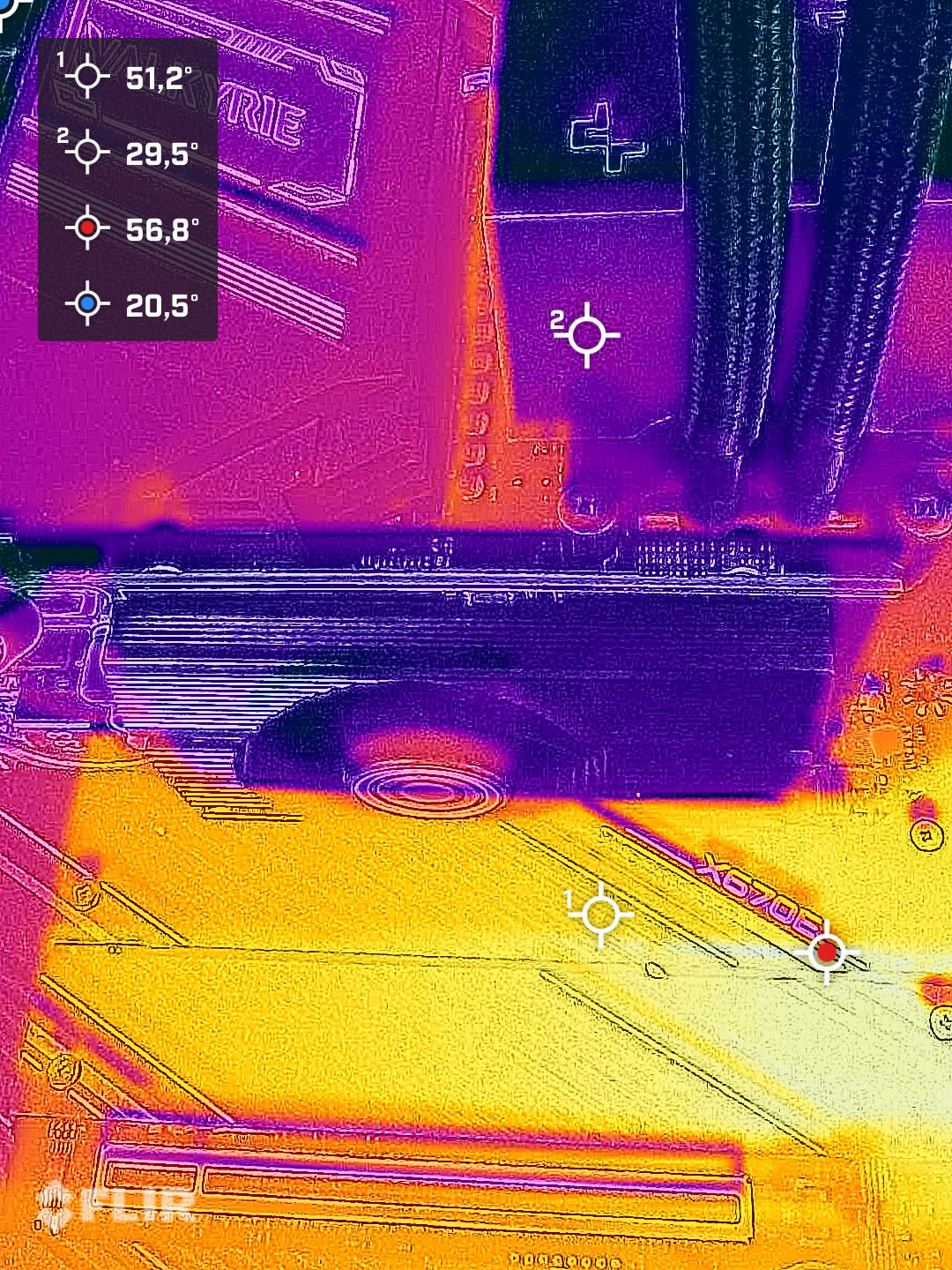 XPG MARS 980 Blade Wärmebildaufnahme (Image © PCMasters.de)
XPG MARS 980 BLADE thermal images
The thermal images show that the cooler above the SSD has reached around 56 °C and the SSD below is even hotter. This is why we recommend ensuring proper airflow in the housing so that the waste heat can be transported more quickly. It did not throttle and we measured full performance throughout the test.
 XPG MARS 980 Blade SSD Fazit (Image © PCMasters.de)
Conclusion on the XPG MARS 980 BLADE
In our NVMe test with comparison, the XPG MARS 980 BLADE has positioned itself well and is high up in the rankings. In our benchmarks, the SSD slightly exceeds the data specified on the manufacturer's website for sequential reads with 14,397 MB/s and significantly exceeds it for sequential writes with 11,352 MB/s. The MARS 980 BLADE NVMe SSD does not reach the possible maximum of PCI-Express Gen 5 with 4 lanes, but it works efficiently and does not get too hot. Even though XPG supplies a stylish copper cooling plate that can be attached using the self-adhesive thermal pad, we would advise buyers to use larger coolers (as a general recommendation for PCIe Gen 5 NVMe SSDs).
The build quality of the MARS 980 BLADE is outstanding. The elaborately designed cardboard packaging and the minimal use of plastic are also worthy of praise. The manufacturer's warranty of 5 years is by no means too short and is positive. With the general price development of the last few months, all SSDs have risen in price and so it is not surprising that the price has risen from approx. 115 € to 222 € (Affiliate). This makes it somewhat difficult to assess the price, as they still fluctuate greatly and are higher than usual.
Pro
- PCIe 5.0 interface
- Efficient SM2508G controller from Silicon Motion
- Good performance
- Efficient and therefore cool (does not throttle performance)
- Cooling plate included in the scope of delivery
- High-quality workmanship
- Minimalist packaging with little waste
- 5-year manufacturer's warranty
Contra
- Write throughput lower than read throughput
- price