
 Computer Forum
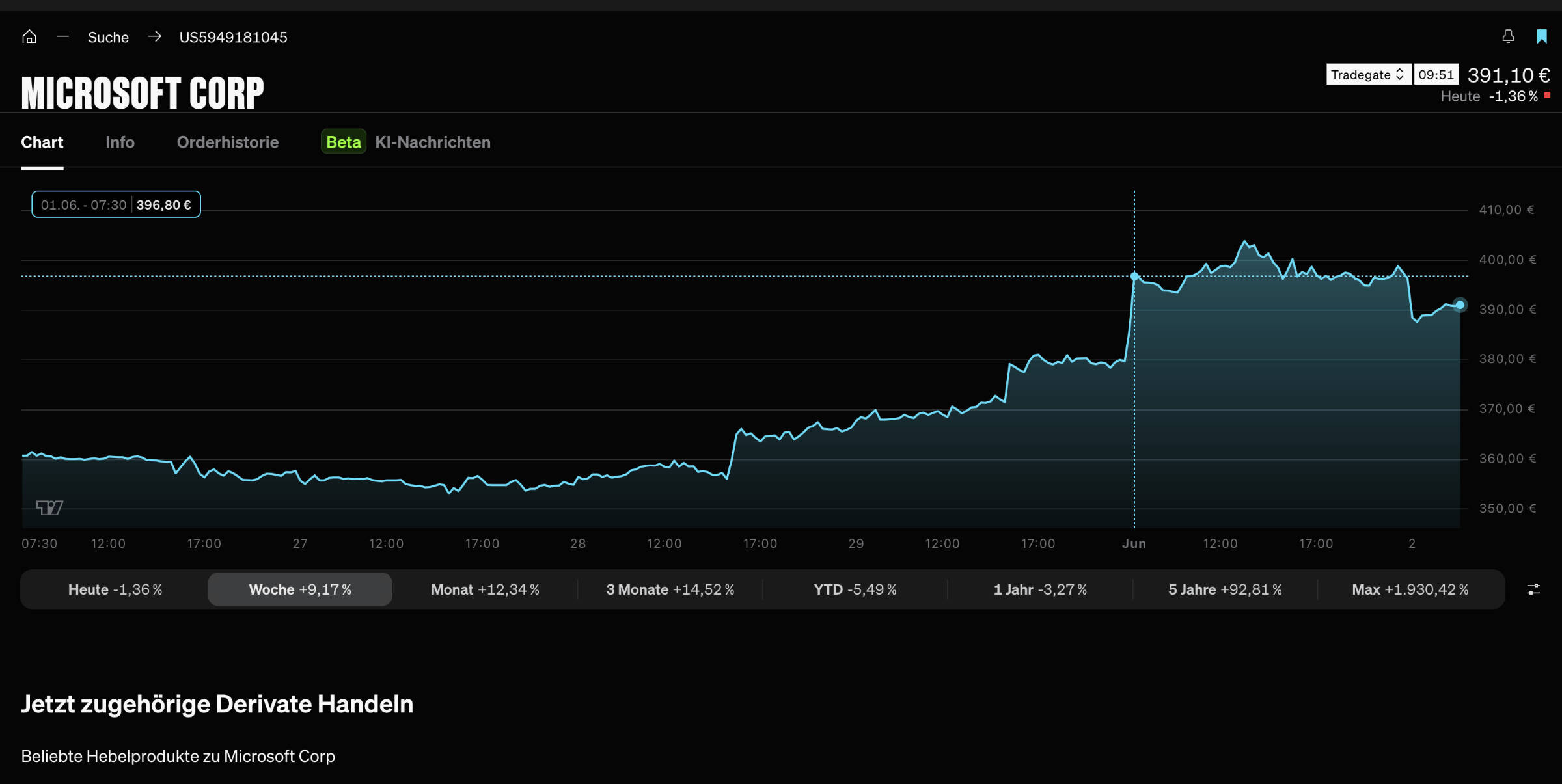 Microsoft Aktie (Image © Smartbroker)
Hardware Integration and the Surface Ultra
The first implementation of this technology will be seen in the Surface Ultra, a new Windows PC powered by an NVIDIA main processor. The system utilizes RTX Spark technology and can be configured with up to 128 GB of unified memory. These hardware specifications enable the device to run complex AI models with up to 120 billion parameters locally, reducing reliance on cloud connections for computationally intensive tasks.
Beyond Microsoft’s own hardware, this processor architecture is expected to be integrated into devices from other leading manufacturers, including Dell, HP, Lenovo, and Asus. The new chips are set to hit the market this fall.
The push into the local AI hardware space comes at a time when Microsoft’s financial segments are diverging significantly. Recent quarterly data shows a strong reliance on cloud services: Microsoft Cloud revenue reached $54.5 billion, representing a 29% increase. Specifically, Azure and other cloud-related services grew by 40% and contributed to the company’s total revenue of $82.9 billion.
In contrast, the “More Personal Computing” division saw a slight decline, with revenue falling by 1% to $13.2 billion. Specifically, the Windows OEM and Devices segment declined by 2%. The launch of AI PCs featuring NVIDIA technology is seen as a strategic attempt to stabilize and revitalize the hardware segment by creating a second revenue pillar alongside the Azure cloud business.
Impact on the Market and Investors
The announcement triggered a positive reaction in the stock markets. Microsoft stock rose to $460.52, while NVIDIA saw its share price climb by more than 6%. The semiconductor sector showed mixed results; while Micron stock surpassed the $1,000 mark for the first time, competitors such as Intel and Qualcomm suffered price losses.
Microsoft’s current market capitalization stands at approximately $3.43 trillion, with a price-to-earnings ratio of around 27.4. Investors are now watching to see whether the shift toward on-device AI will lead to a noticeable increase in Windows hardware sales and a recovery in the PC division.