
 Computer Forum
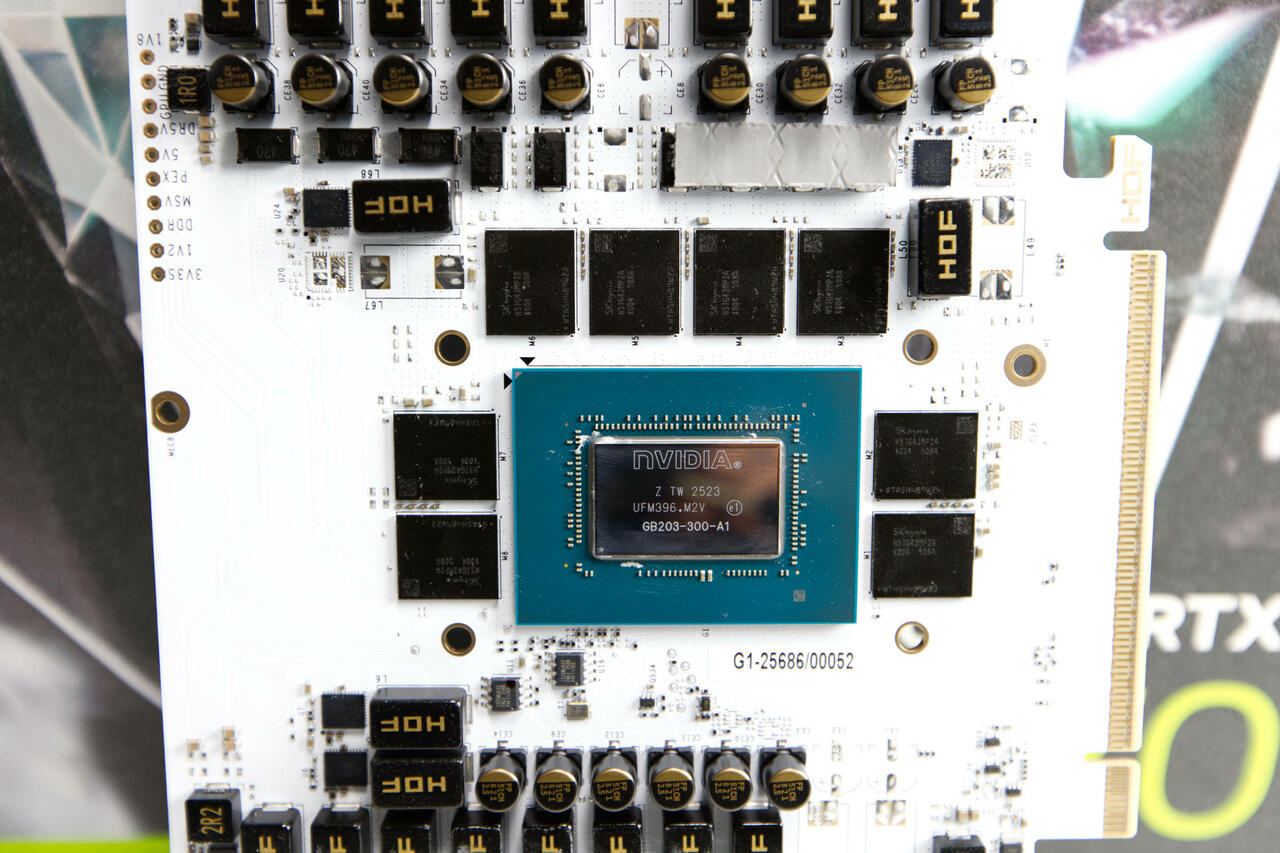 KFA2 GeForce RTX 5070 Ti HOF GB203 300 A1 (Image © PCMasters.de)
What was originally expected to launch in late 2025 has turned into a series of delays. Rumors initially pointed to CES 2026, then shifted to late 2026. Some reports even suggest that we might not see the card until early 2027. It’s a chaotic timeline. Nevertheless, recent listings from Seasonic for power supply calculators still list the card with a power draw of 350 W, suggesting that the project is still underway behind the scenes.
Technical Specifications and Memory Expansion
The RTX 5070 Ti SUPER is not a complete redesign. It uses the GB203 GPU and retains the same 8,960 CUDA cores as the standard RTX 5070 Ti. The real innovation lies in the memory. NVIDIA is increasing the GDDR7 VRAM capacity from 16 GB to 24 GB. This represents a 50% increase.
It’s important to note that this does not result in a speed increase. The memory continues to run at 28 Gbps on a 256-bit bus, meaning the bandwidth remains at 896 GB/s. You get more space for data, but not necessarily faster data. To support these changes and potentially higher clock speeds, NVIDIA has increased the card’s total power consumption to 350 W. That’s an increase of 50 W compared to the previous model.
Impact on Real-World Performance
In gaming, there won’t be a massive jump in frames per second. Since the chip itself remains largely unchanged, the baseline performance gain will be modest. However, this changes when you increase the resolution and settings. At 4K with ultra textures or complex ray tracing, the 24 GB of VRAM prevents the stuttering that occurs when a graphics card runs out of memory.
The biggest winners here aren’t gamers. They’re AI developers and creatives. When performing local inference on large language models (LLMs) or handling complex 3D rendering, the difference between 16 GB and 24 GB is often the deciding factor between a project running smoothly or crashing completely. This makes the card a viable tool for professional workflows that typically require much more expensive hardware.
Pricing and Market Position
There is no official price yet. The original RTX 5070 Ti launched at $749, but it’s unrealistic to assume the SUPER version will cost the same. Memory isn’t cheap, especially with supply constraints. NVIDIA faces a difficult balancing act here. If the price is set too high, it will overlap with the RTX 5080 SUPER. If it’s kept too low, the GDDR7 shortage could wipe out profit margins. Given the current market situation, a moderate premium is likely. Buyers should expect a price increase that reflects the additional VRAM and the volatility of the memory market.