
 Computer Forum
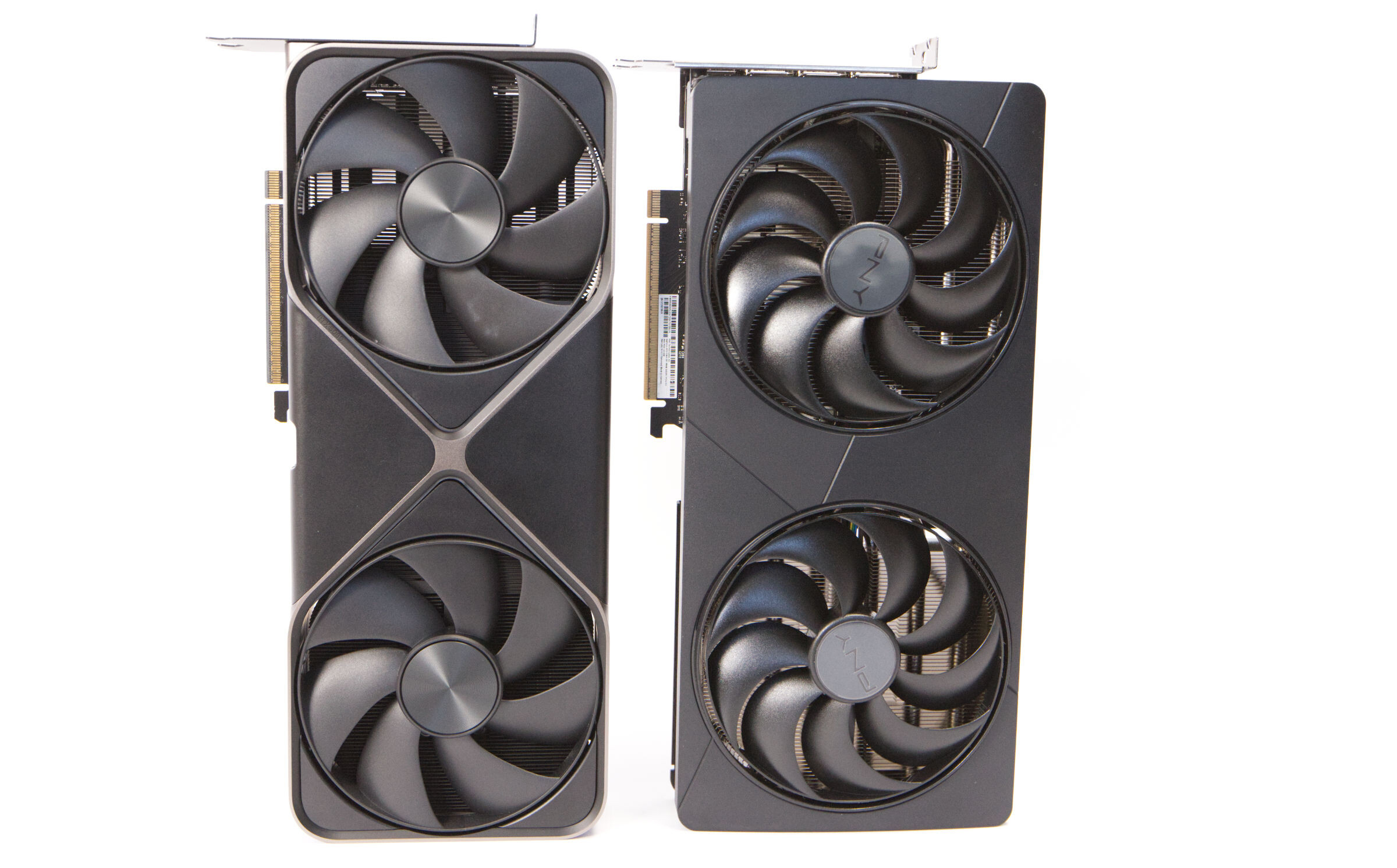 PNY GeForce RTX 5080 SLIM OC vs 5080 Founders Edition (Image © PCMasters.de)
The shortage of 3-GB GDDR7 modules stems from a shift in production priorities toward the field of artificial intelligence. NVIDIA and its chip suppliers (SK Hynix, Micron, Samsung) are increasingly focusing on AI GPUs, such as those used in the Blackwell and Rubin CPX, because they generate absurdly high profits. These models use precisely these high-capacity memory chips. Since demand for AI infrastructure exceeds the demand for consumer GPUs, the available supply is being diverted away from gaming hardware. As a result, the standard RTX 50 series continues to use the more readily available 2-GB GDDR7 modules, while the SUPER variants remain in limbo.
Planned Memory Upgrades
The planned switch to 3-GB modules would significantly increase the memory capacity of several models compared to their base versions:
- GeForce RTX 5070 SUPER: It is expected to be upgraded to 18 GB of VRAM.
- GeForce RTX 5070 Ti SUPER: The target is 24 GB of VRAM.
- GeForce RTX 5080 SUPER: The target is 24 GB of VRAM.
Aside from these increases in memory capacity, the core specifications are expected to largely align with the existing architecture.
Increased Power Requirements and TGP
Data from a Seasonic power supply calculator suggests that the higher memory density is accompanied by an increase in Total Graphics Power (TGP). The leaked figures show that the upgraded modules and potential clock speed increases require more power to operate. The GeForce RTX 5080 SUPER is rated at 415 W, which represents a 55 W increase over the standard RTX 5080’s 360 W. The situation is similar for the RTX 5070 Ti SUPER, whose rated power has risen from 300 W to 350 W. For the RTX 5070 SUPER, the increase is smaller: from 250 W to 275 W. These power increases are likely necessary to ensure stability given the denser memory modules and slight improvements in clock speeds.