
 Computer Forum
Practical tests conducted in Cyberpunk 2077 at a resolution of 3440x1440 demonstrated the impact of these updates. Frame rates increased from about 30 FPS in earlier versions to around 50 FPS when using Alpha 0.4.0. Further optimizations were introduced in Alpha 0.4.1, resulting in an additional 8% increase in overall performance and a 9% increase in high-load gameplay scenarios.
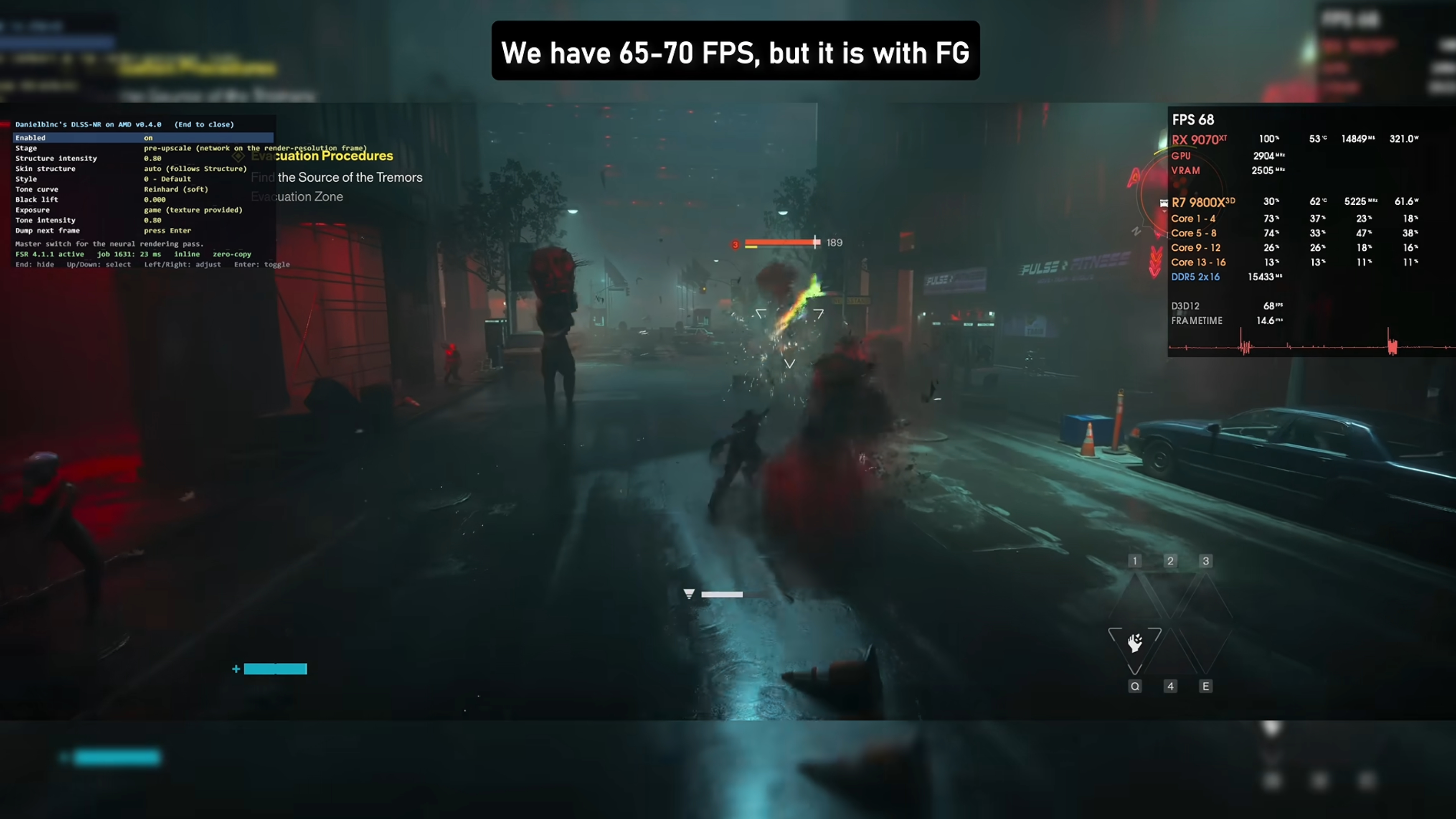 DLSS 5 auf AMD Radeon Grafikakrten (Image © Ancient Gameplays)
Technical Mechanism and Hardware Compatibility
The “DLSS-NR-on-AMD” tool utilizes the NVIDIA DLSS 5 dynamic link library (DLL). The software intercepts the function calls expected by the DLL and forwards the neural computations to the AMD hardware. This process is technically possible because the RDNA 4 architecture supports FP8 (8-bit floating-point) math—a fundamental requirement for the neural rendering processes used in DLSS 5.
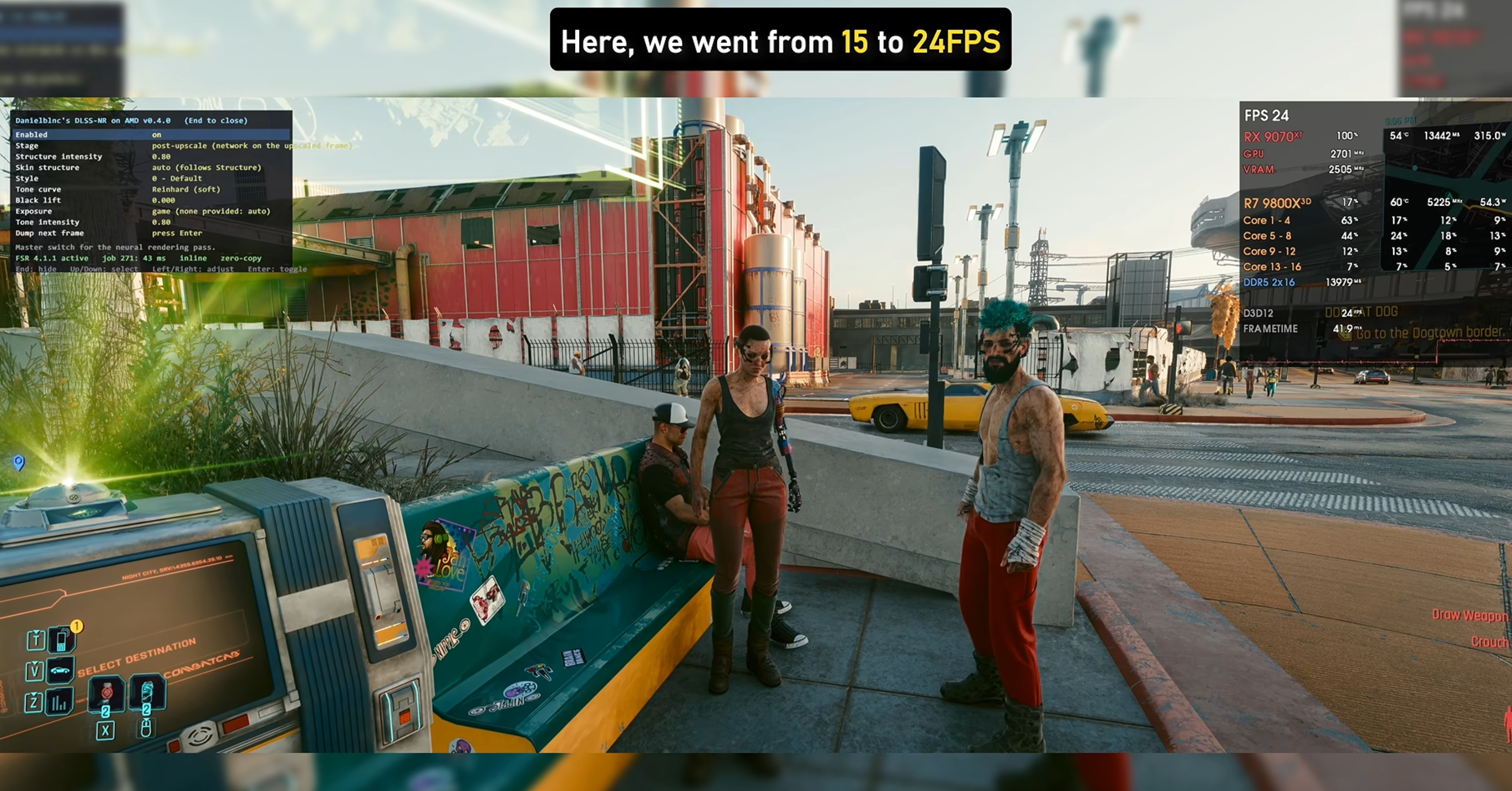 DLSS 5 auf AMD Radeon Grafikakrten 1 (Image © Ancient Gameplays)
The tool is primarily designed for the Radeon RX 9000 series, but reports indicate it is also compatible with the RX 7000 series. By forwarding the specific neural rendering instructions to the AMD GPU’s compute units, the mod enables the hardware to simulate the behavior of the original technology.
Usability and Installation
Earlier versions of the mod required manual intervention, forcing users to navigate complex file paths to implement the workaround. With the release of Alpha 0.3.3, the developer introduced a graphical installer. This update includes a built-in settings editor and overlay controls, simplifying the deployment and configuration process for end users.
Origins and Industry Context
Development of this tool was accelerated by the leak of the DLSS 5 DLL via the NBA 2K27 game. This leak provided the modding community with the necessary binaries to begin porting the technology to various hardware platforms. As a result, similar implementations have emerged for NVIDIA RTX 20-, 30-, and 40-series graphics cards, as well as for integrated Intel graphics. Given the short time since the project began, the AMD implementation represents a significant technical milestone.