
 Computer Forum
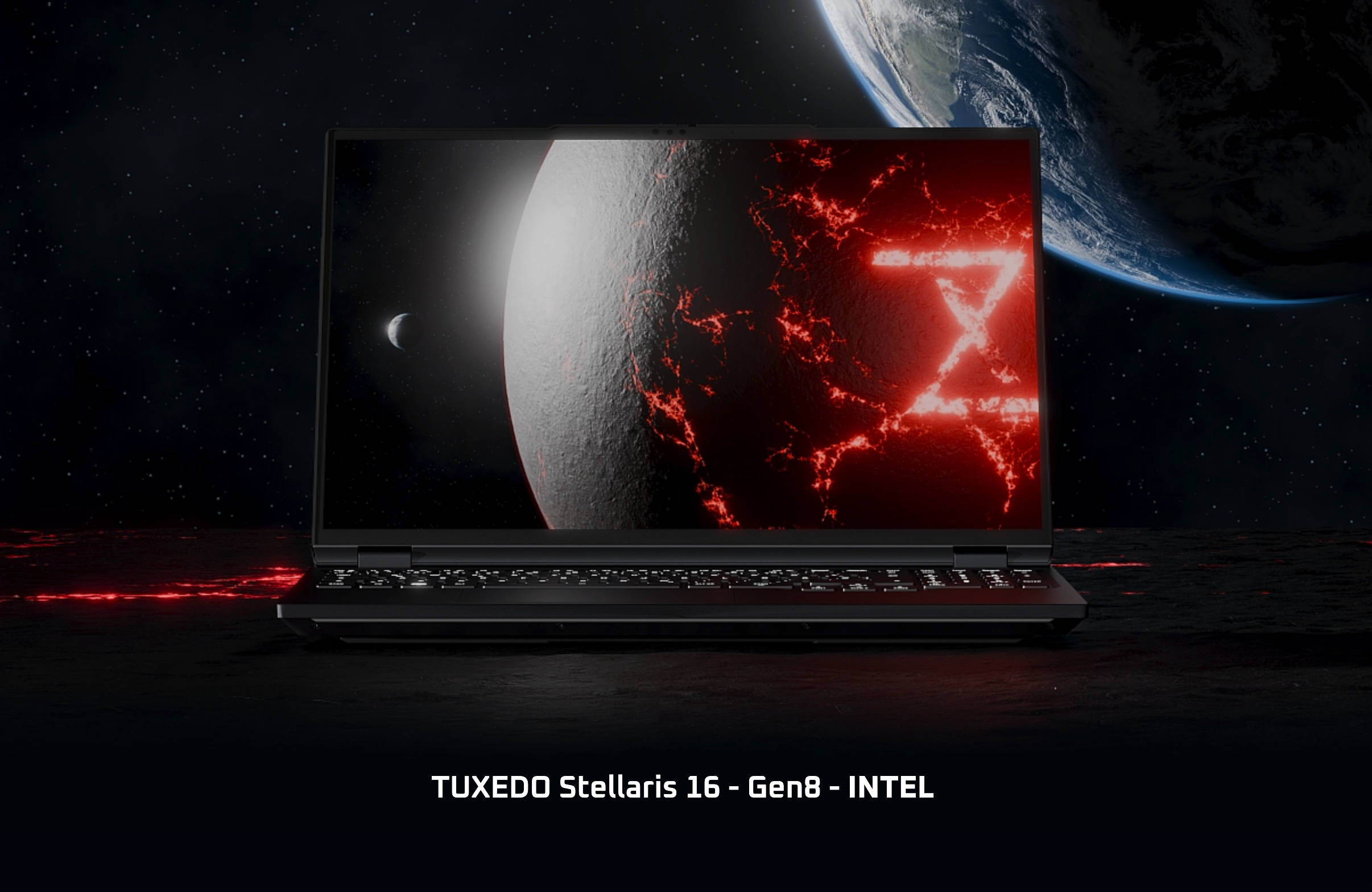 TUXEDO Stellaris 16 (Image © TUXEDO)
The Stellaris 16 is equipped with the Intel Core Ultra 9 290HX Plus processor. This CPU features a 24-core architecture, consisting of 8 performance cores and 16 efficiency cores, with clock speeds of up to 5.5 GHz. This configuration is designed for demanding multitasking, professional video editing, and extensive code compilation.
Graphics Processing Unit (GPU) Options
The laptop offers three tiers of NVIDIA GeForce RTX graphics cards, each providing different amounts of VRAM and performance for AI and rendering applications:
- GeForce RTX 5070 Ti: Features 12 GB of GDDR7 graphics memory. It is suitable for smaller local AI models and high-end games.
- GeForce RTX 5080: Features 16 GB of GDDR7 graphics memory. This model is about 15% faster than the 5070 Ti and is therefore suitable for medium-sized AI models and professional video rendering.
- GeForce RTX 5090: Features 24 GB of graphics memory. This top-of-the-line option offers a further 15% performance boost over the 5080 and is designed for 4K gaming and memory-intensive AI applications.
The power delivery for these GPUs can be adjusted via the TUXEDO Control Center to strike a balance between performance and noise levels:
- GeForce RTX 5070 Ti: 65 to 140 watts
- GeForce RTX 5080: 80 to 175 watts
- GeForce RTX 5090: 95 to 175 watts
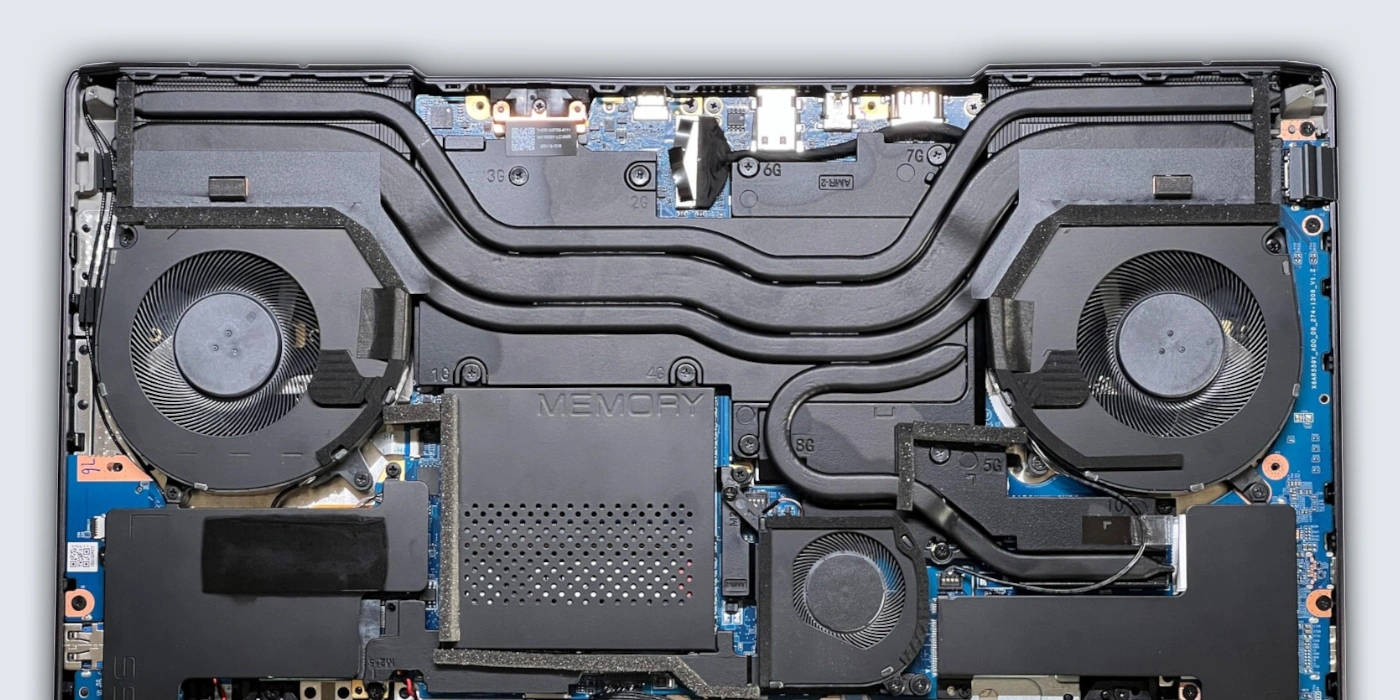 TUXEDO Stellaris 16 Kühlung (Image © TUXEDO)
To manage the heat generated by the CPU and GPU—whose combined power consumption can reach up to 240 watts—the Stellaris 16 employs a cooling system with three fans. This system utilizes the full width of the chassis and includes two large 80x12-mm fans, supplemented by a dedicated fan for the RAM.
The Stellaris 16 is designed as a portable desktop replacement with high-capacity internal components:
- RAM: Supports up to 96 GB of DDR5-6400 or 128 GB of DDR5-5600.
- Storage: Features two M.2 slots, one of which supports PCIe 5.0 and the other PCIe 4.0.
- Battery: A 99-Wh battery is integrated into the system and supports fast charging via USB-C.
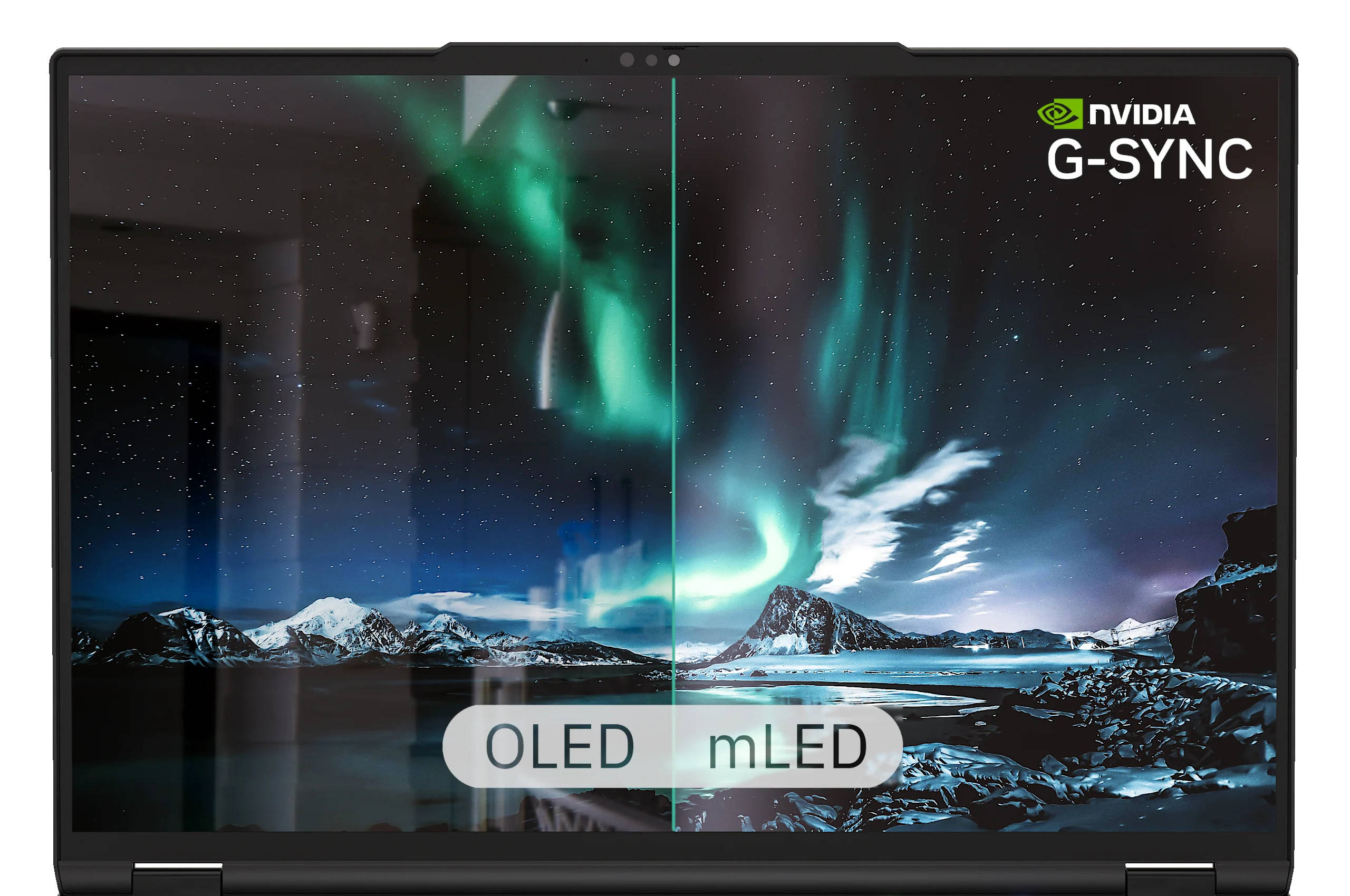 TUXEDO Stellaris 16 mLED OLED (Image © TUXEDO)
Display Technologies
The Stellaris 16 is available with three different display options to meet various professional and environmental requirements:
- 1. LED Display: A matte panel with a resolution of 2560 x 1600 pixels, a refresh rate of 300 Hz, and a brightness of 500 nits. It covers the DCI-P3 color space.
- 2. Mini-LED display: Supports a refresh rate of 300 Hz and offers higher brightness levels of up to 750 nits (SDR) and up to 1000 nits (HDR). It supports NVIDIA G-SYNC and Advanced Optimus for high-performance gaming.
- 3. OLED Display: This panel uses self-illuminating pixels for high contrast and true black. It offers 500 nits (SDR) and up to 1,000 nits (HDR) and, due to its glossy surface, is primarily designed for indoor use.
Chassis and Ergonomics
The chassis is made entirely of aluminum, measures 357 x 260 x 28 mm, and weighs between 2.6 and 2.8 kg. The build quality allows it to be opened with just one hand. The input interface consists of a full-size keyboard with concave keycaps, a four-column numeric keypad, and staggered arrow keys. To facilitate cable management, the main power and monitor ports are located on the back of the device.
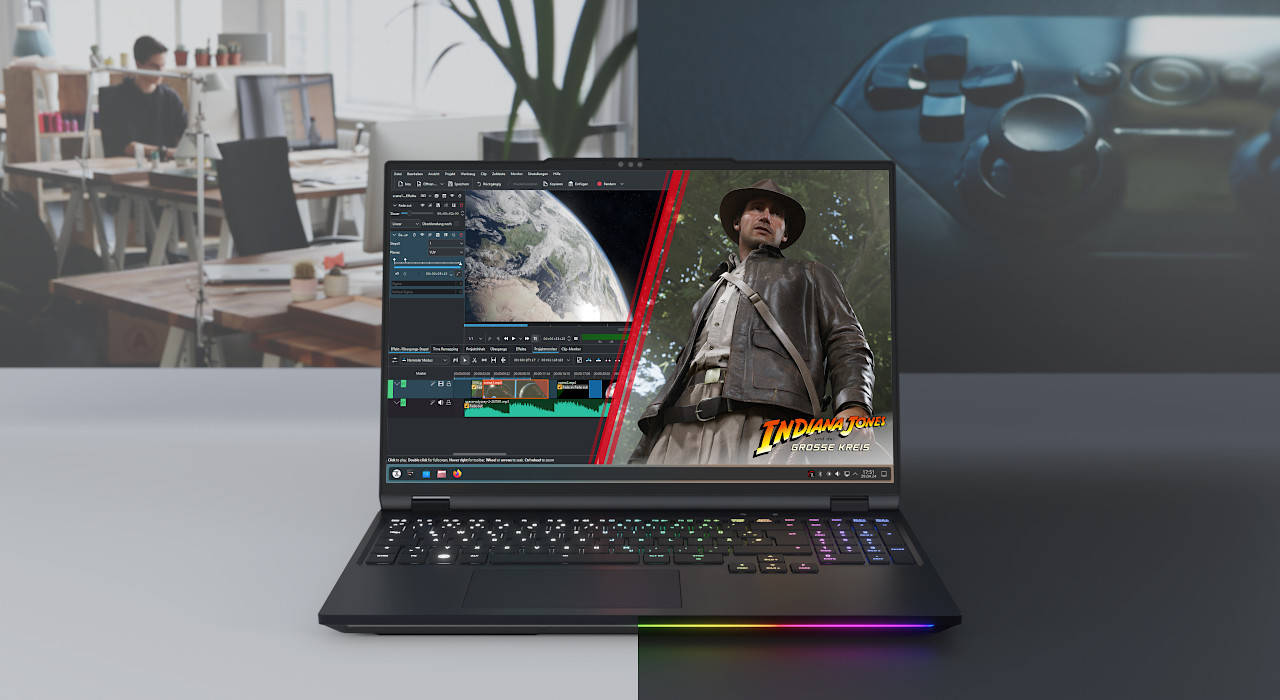 TUXEDO Stellaris 16 Gaming (Image © TUXEDO)
Ports and I/O
The ports on the back include:
- HDMI 2.1, Mini DisplayPort, and two USB-C ports, which can connect up to four high-resolution monitors.
- Thunderbolt 4, which supports docking stations and USB-C charging at up to 140 watts.
- Three USB-A ports for compatibility with peripherals.
Prices
Pre-orders are currently available, with shipping set to begin in early November. The base configuration, featuring an Intel Core Ultra 9 290HX Plus, GeForce RTX 5070 Ti, 500-nit LED display, 16 GB of RAM, a 500 GB SSD, and TUXEDO OS, is expected to be available for 2,795 €.