
 Computer Forum
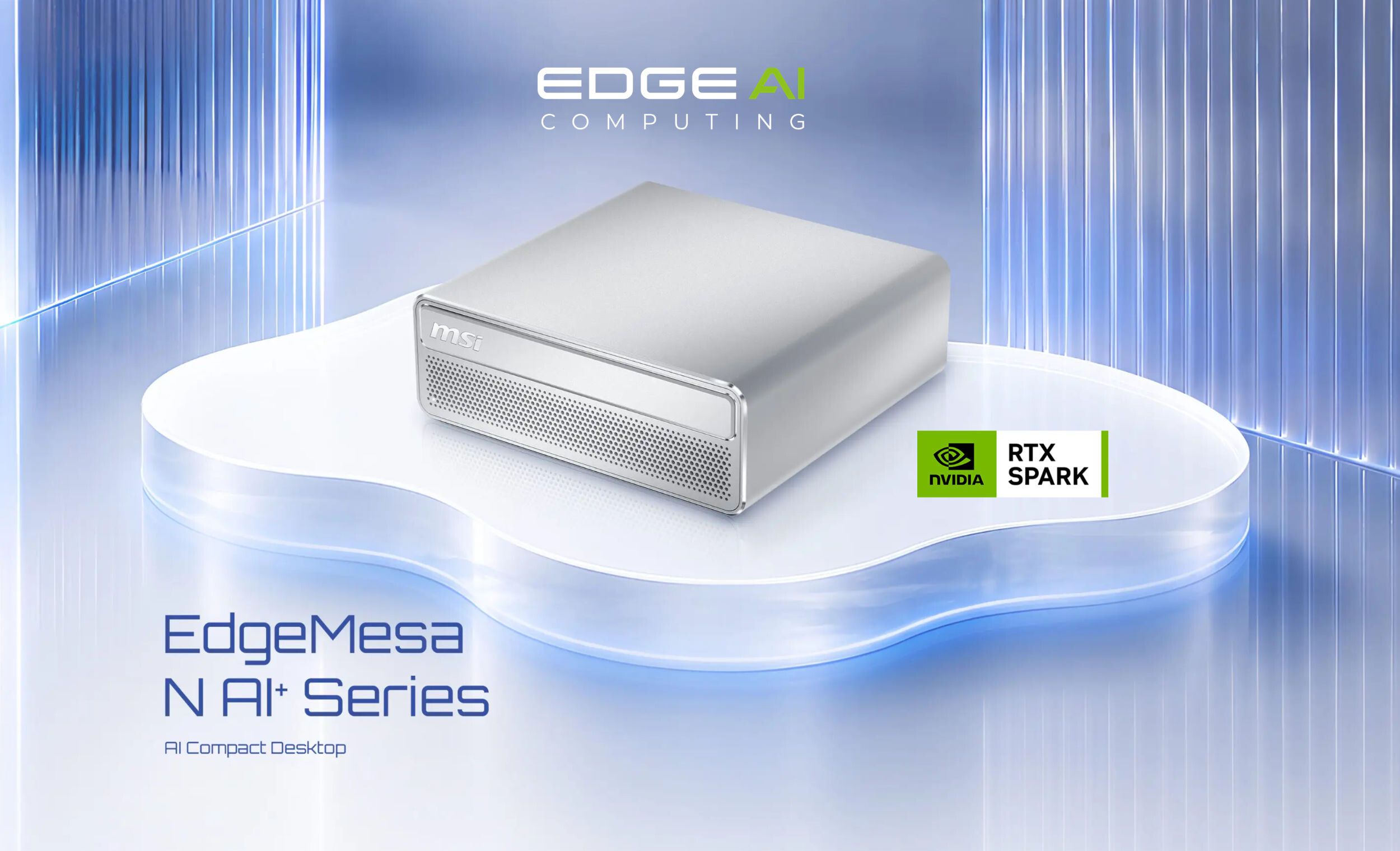 MSI EdgeMesa N AI Mini Workstations (Image © MSI)
The EdgeMesa N AI+ system is equipped with the [NVIDIA RTX Spark N1X chip][1]. The architecture integrates a high-performance GPU and CPU on a single platform and uses a unified memory system to optimize data transfer between the computing units.
- GPU: NVIDIA Blackwell RTX GPU with 6,144 cores.
- CPU: NVIDIA Grace CPU with 20 cores.
- AI Computing Power: The system achieves a peak AI performance of up to 1 petaflop (FP4).
- Memory: Up to 128 GB of LPDDR5X unified memory, enabling the system to process larger AI models that typically exceed the capacity of standard consumer GPUs.
Specifications
- Operating System: Windows 11
- Processor: NVIDIA RTX Spark N1X
- GPU: NVIDIA Blackwell RTX (up to 6,144 cores)
- CPU: NVIDIA Grace (up to 20 cores)
- AI Performance: Up to 1 petaflop (FP4)
- Memory: Up to 128 GB LPDDR5X Unified Memory
- Storage: 1x M.2 NVMe slot
- Network: 10-GbE LAN / Wi-Fi 7 / Bluetooth 5.4
- Rear Ports: 4x USB-C (20 Gbit/s; 3x DP Alt Mode 2.1, 1x Power Delivery), 1x HDMI 2.1, 1x RJ45 (10 GbE)
- Security: TPM 2.0
- Power Supply: 240-W power supply
- Cooling: Vapor chamber with fan cooling
- Weight: 0.55 kg (net) / 1.55 kg (gross)
This configuration is thus similar in design to AMD’s Strix Halo systems and also competes with Apple’s Mac Studio.
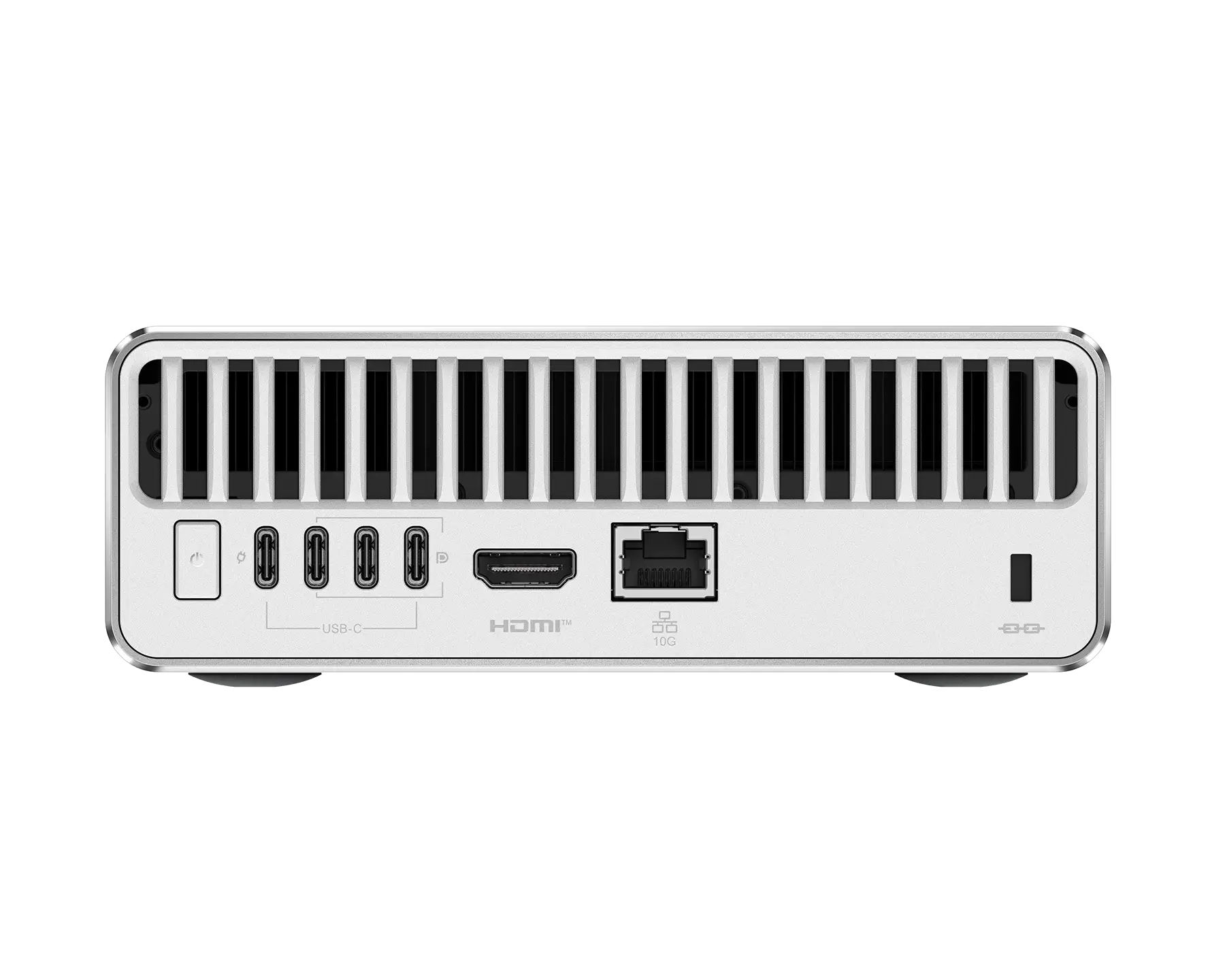 MSI EdgeMesa N AI Mini Workstations Rear (Image © MSI)
To ensure stability during sustained AI workloads, MSI has introduced the “AI Pulse Cooling System.” This cooling solution uses a vapor chamber in combination with two turbo fans to handle a thermal design power (TDP) of 140 watts. The system is housed in a 1.3-liter aluminum chassis. The exterior features a fingerprint-resistant coating, allowing the hardware to maintain a professional appearance in a desktop environment while taking up minimal space.
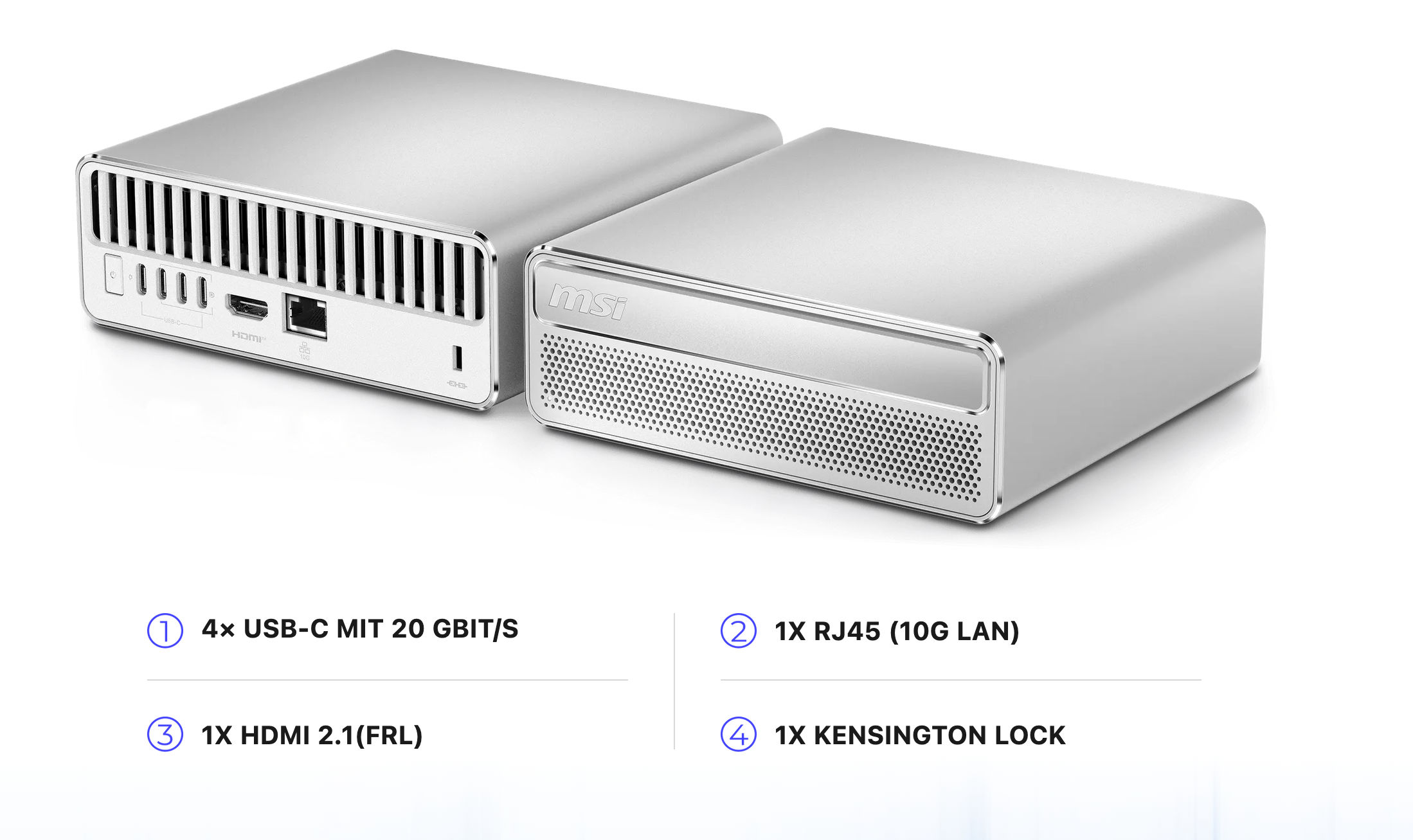 MSI EdgeMesa N AI Mini Workstations Ports (Image © MSI)
Connectivity
The EdgeMesa N AI+ is equipped with high-bandwidth interfaces to facilitate the transfer of large data sets and the integration of multiple peripheral devices:
- Network: 10-Gigabit LAN and Wi-Fi 7 (with Bluetooth 5.4) for fast data transfer and network stability.
- External Ports: Four USB Type-C ports with a transfer rate of 20 Gbit/s. Three of these ports support DisplayPort Alt Mode 2.1, while one is designated for power delivery. An HDMI 2.1 port (FRL) is also included.
- Display Connectivity: The system can drive up to four independent displays simultaneously.
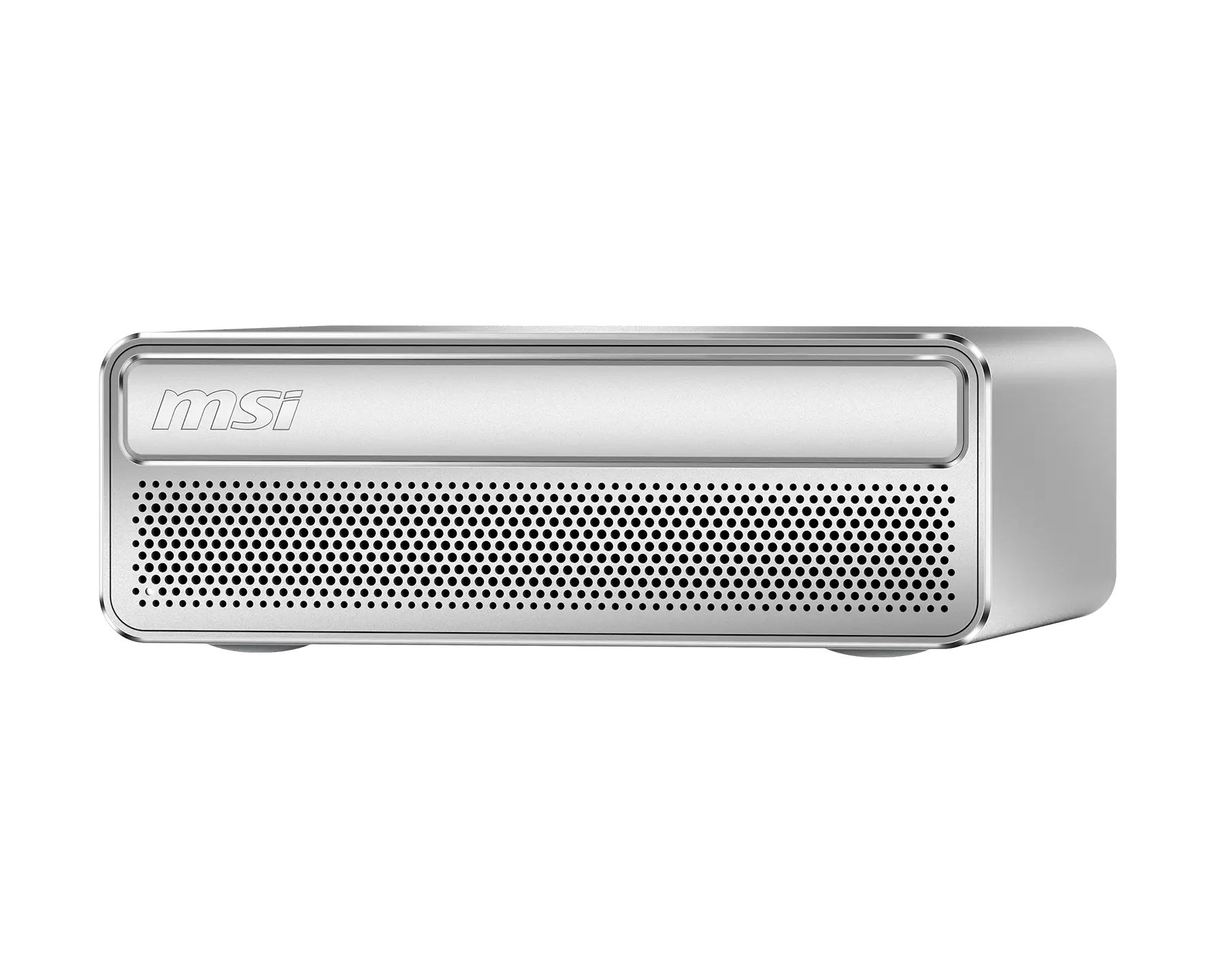 MSI EdgeMesa N AI Mini Workstations Front (Image © MSI)
For resource allocation, the system features Personal AI Router (PAIR) technology. This allows compatible local devices to form a computing cluster that intelligently distributes AI requests across available hardware to optimize resource utilization.
Among the configurations, there is a 64 GB RAM version, which should be sufficient for some less demanding models; however, the more interesting LLMs require 128 to 512 GB of memory. This means that only the significantly more expensive 128 GB RAM variant is a viable option if you want to purchase such a system. However, for this configuration, there is the AMD Strix Halo platform, which is used, for example, in the [ACEMAGIC M1A PRO Mini-PC (Review)][2] and costs significantly less than the NVIDIA DGX solution.
[1]: https://www.pcmasters.net/server/133716845-nvidia-rtx-spark-dgx-spark-and-dgx-station-these-are-the-alleged-powerhouses.html
[2]: https://www.pcmasters.net/review/133716977-acemagic-m1a-pro-mini-pc-review-featuring-ryzen-ai-max-plus-395-and-128-gb-of-ram.html