 Computer Forum
 PNY CS3250 1TB SSD Review (Image © PCMasters.de)
PNY CS3250 in Detail
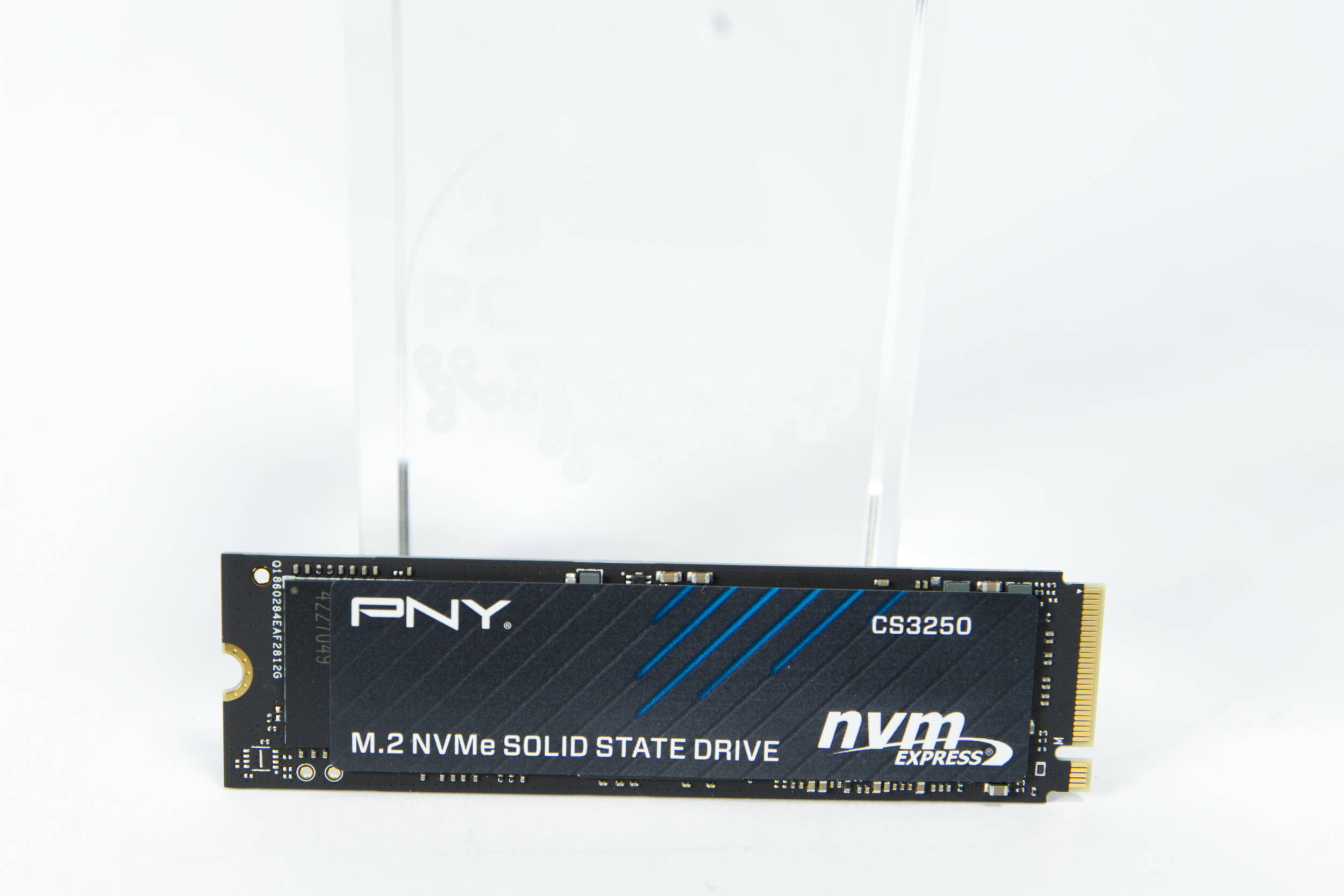
The PNY CS3250 is positioned in the high-end segment and will particularly appeal to enthusiasts and gamers who have the budget for it. In our test, we compared this solid-state drive to other high-end NVMe SSDs. The CS3250 ensures high bandwidth by utilizing the currently fastest PCI Express 5.0 interface. The specifications underscore that the SSD competes at the very top against other flagship models such as the Crucial T705, the Seagate FireCuda 540, and the Lexar Professional NM1090. When it comes to capacity options, we see the usual choices here: 1 TB, 2 TB, and even 4 TB are available. Given the current storage shortage, an affordable 512-GB version would be desirable. Furthermore, availability is poor at the time of testing, as the SSD cannot be found at any of the listed partners. We have previously tested the PNY CS2150 and are including this SSD in our comparison.
 PNY CS3250 1TB Label (Image © PCMasters.de)
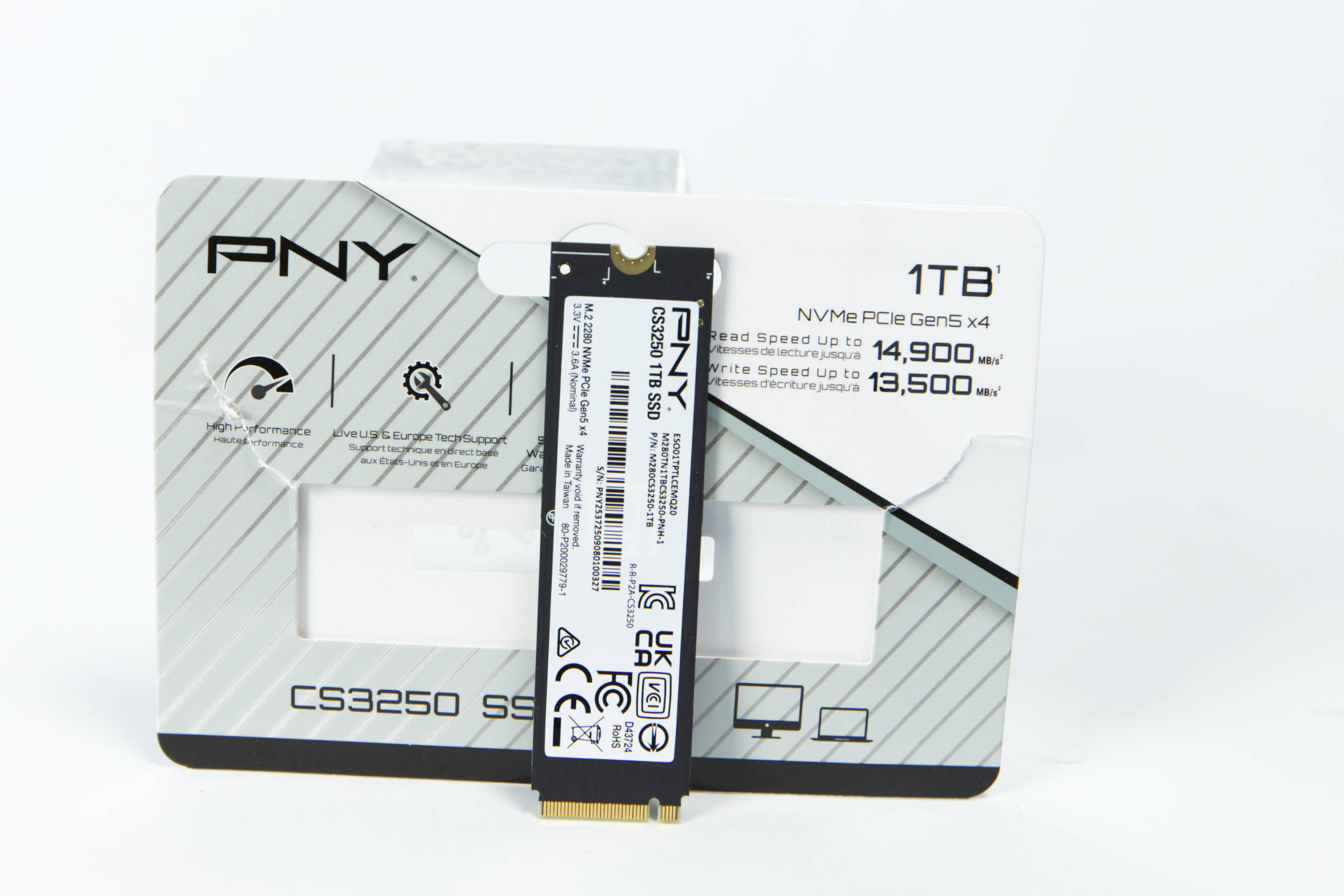
The manufacturer’s website is sparse on information, as there are very few details about the product. In addition to the aforementioned PCIe Gen 5 interface with four lanes, PNY also states that the maximum sequential read performance is 14,900 MB/s and the maximum sequential write performance is 13,500 MB/s. Users are also informed that PNY offers a limited manufacturer’s warranty valid for 5 years or until the TBW limit is reached. Meanwhile, the MTBF (Mean Time Between Failures) is 1.5 million hours. These figures are hardly surprising and represent the bare minimum of information one would expect to find in the specifications on a manufacturer’s website. Often, you’ll also find a temperature range within which the SSD can be operated safely, but that’s not the case here. All components are packaged onto a single module in the M.2 2280 form factor, which is the most widely used.
 PNY CS3250 1TB Phison PS5028 E28 86 Controller (Image © PCMasters.de)
Phison PS5028 E28 Controller
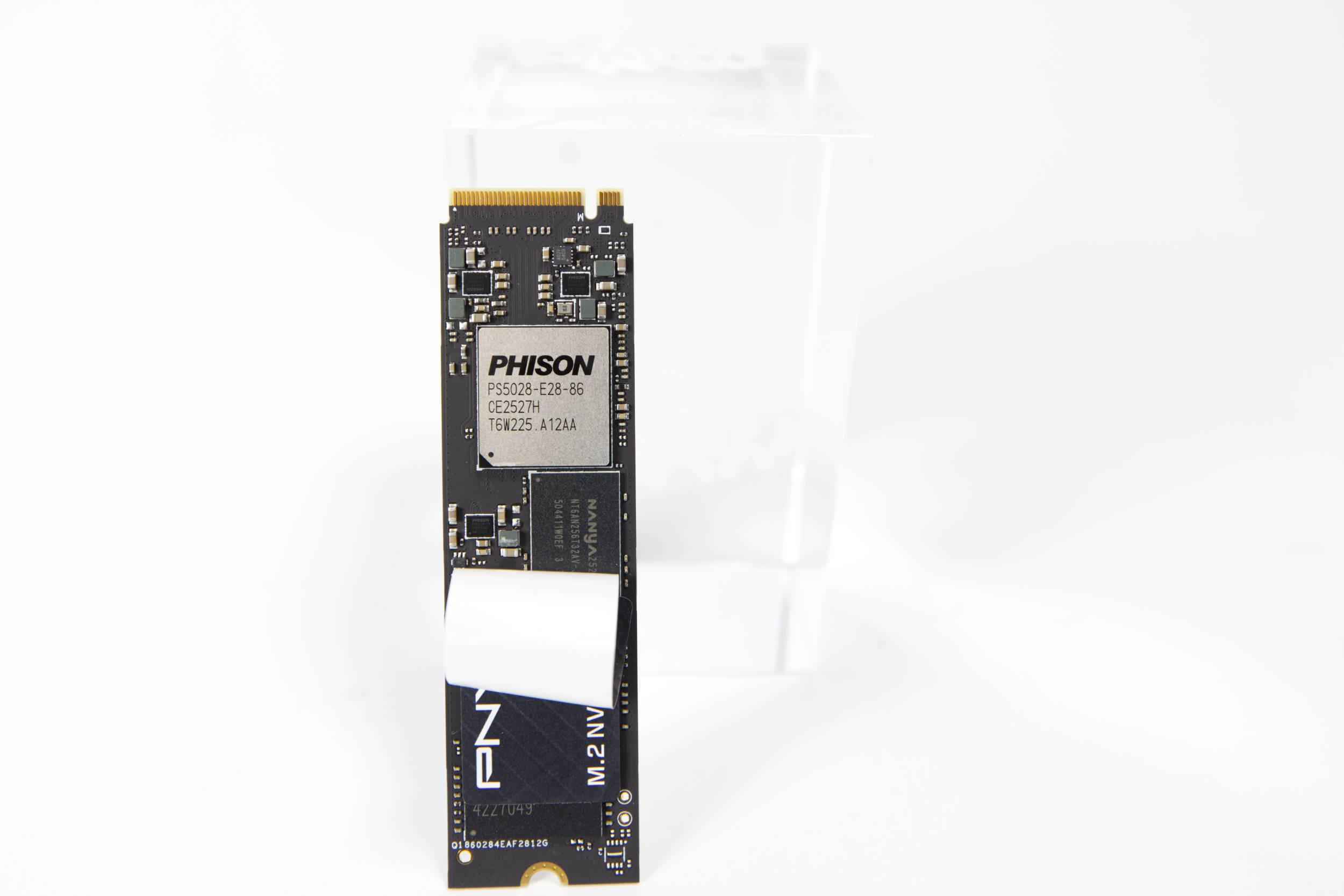
Under the sticker, we find the actual components that make up the NVMe SSD, foremost among them the PS5028-E28 controller from Phison. Phison boasts on its own website that it is the world’s fastest controller, and the results of our test confirm exactly that for the CS3250 SSD: it is the fastest SSD we’ve tested to date. The controller even supports the PCIe 5.1 standard, not just 5.0. It also implements the NVMe 2.0 standard as its foundation, like most of the SSDs we’ve tested. It is manufactured by TSMC using a 6-nm process and is based on a quad-core 32-bit microcontroller, which isn’t specifically named—it’s usually an Arm Cortex variant. The specifications also list the following features:
- Up to 8 channels with 32 Chip Enable (CE) counts
- Flash transfer rate up to 4CH@4200MT/s; 8CH@3200MT/s
- Capacity up to 32TB
- Support for 3D TLC and QLC NAND flash memory
- Compliance with Toggle 5.2 and ONFi 5.2
- Flash I/O operating voltage supply: 1.2V
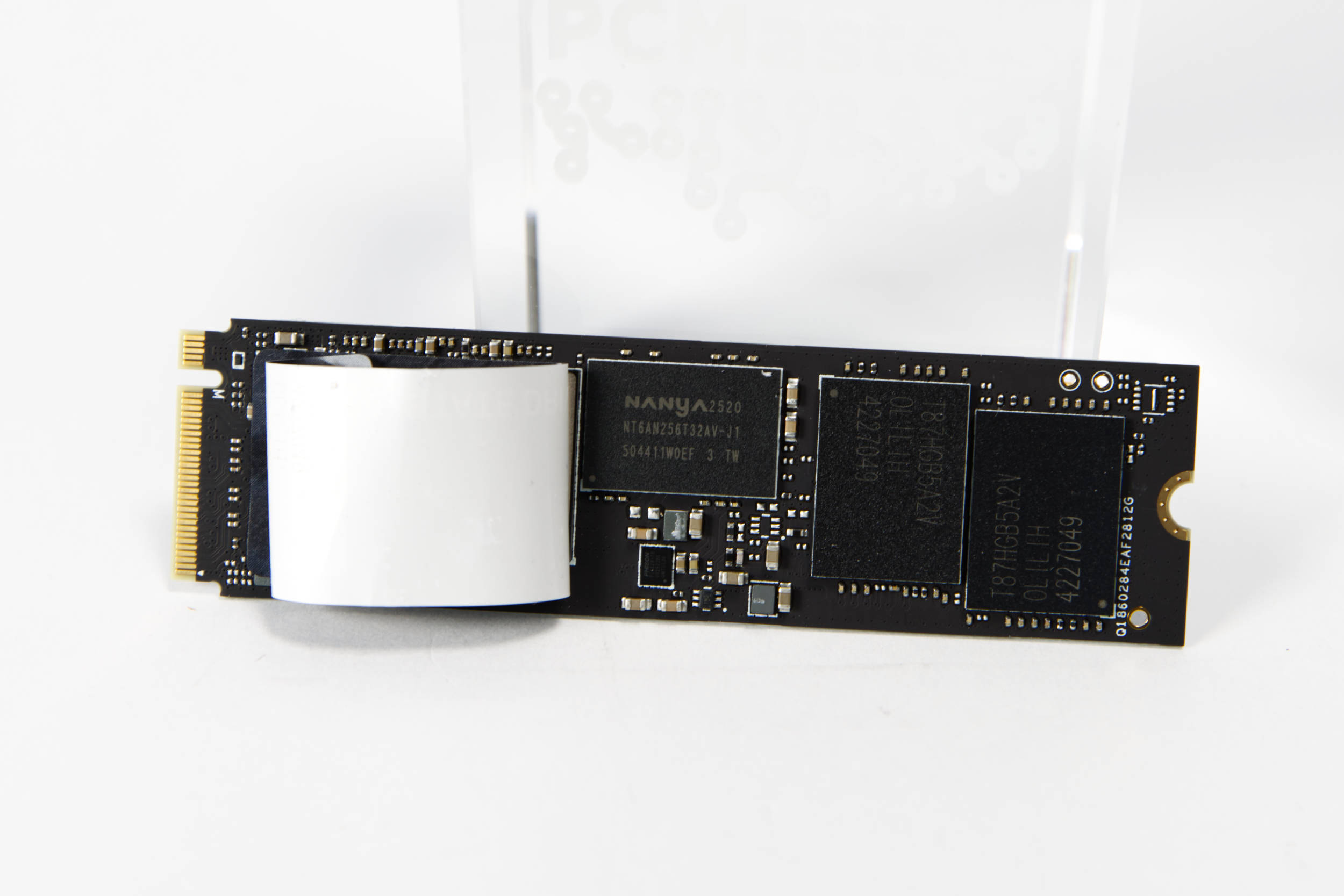 PNY CS3250 1TB Nanya SRAM (Image © PCMasters.de)
A controller is often combined with a cache or SRAM. The PS5028 E28 specification specifies that the controller can be paired with both LPDDR4/4X and LPDDR5/5X, with a maximum operating speed of 5,600 Mbp/s. On the PCB next to the controller, we find a matching chip manufactured by Nanya with the part number NT6AN256T32AV-J1. Fortunately, the manufacturer also provides a datasheet in case anyone wants to dig deeper. The chip has a capacity of 1 GB (8 Gb) and operates at 4,267 Mbps. It is the fastest chip in its series.
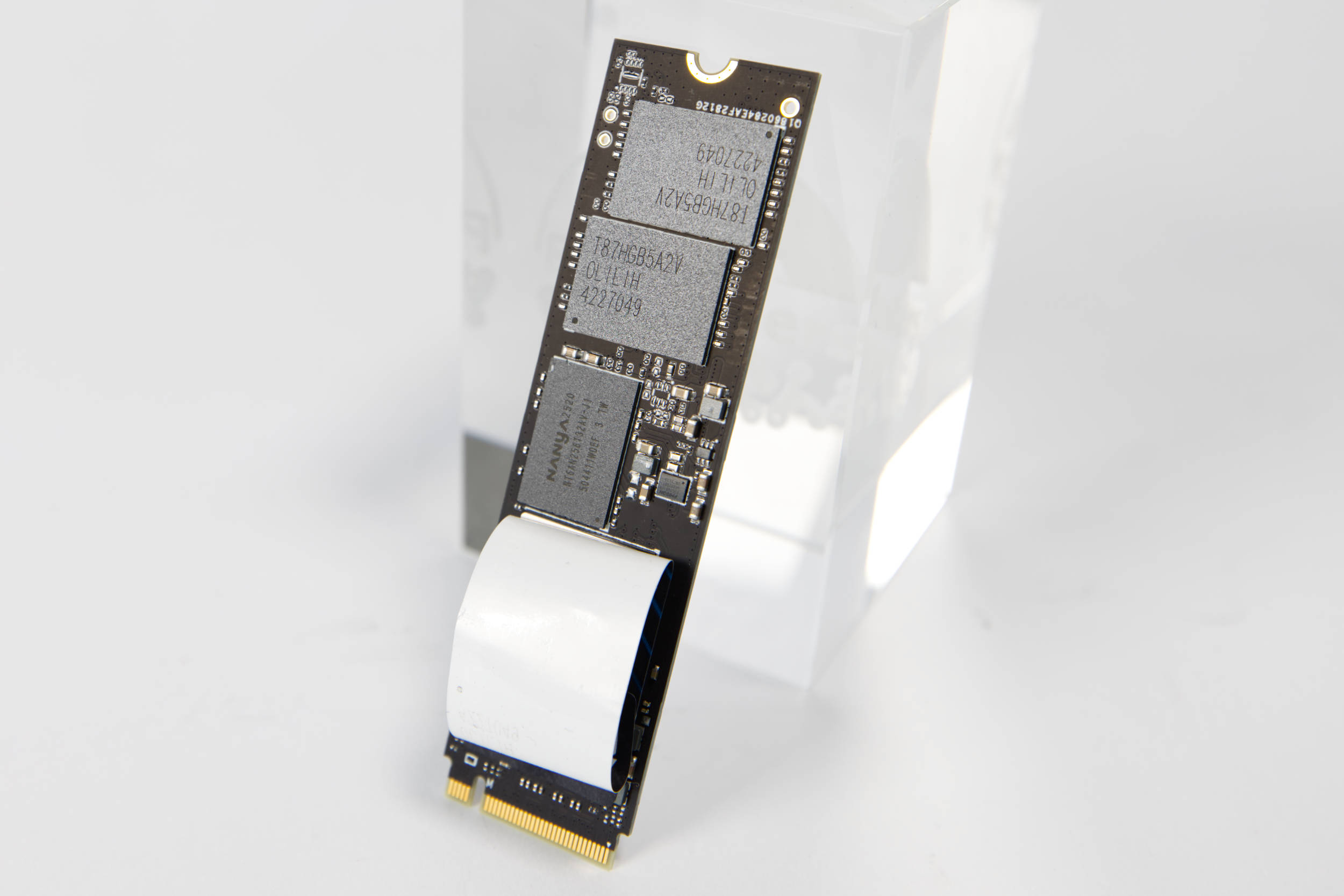 PNY CS3250 1TB NAND Flash (Image © PCMasters.de)
Micron 3D NAND
For the actual storage of data, there are two NAND flash memory chips on the module. These bear the part number T87HGB5A2V, though it is used exclusively in PNY SSDs. According to Geizhals, these are likely manufactured by Micron, which has been a direct competitor to all of them in recent years, as it has also sold SSDs itself. Micron has since discontinued its own Crucial brand. The chips in our 1 TB model likely have a capacity of 512 GB each and are based on 218-layer BiCS8 NAND. We were unable to find out any more details.
The Phison specifications for the PS5028-E28 controller provide the following performance figures:
- Sequential read speeds of up to 14,900 MB/s
- Sequential write speeds of up to 14,500 MB/s
- 4K random read of up to 3,000K IOPS
- 4K random write of up to 3,000K IOPS
This means PNY comes very close to these specifications.
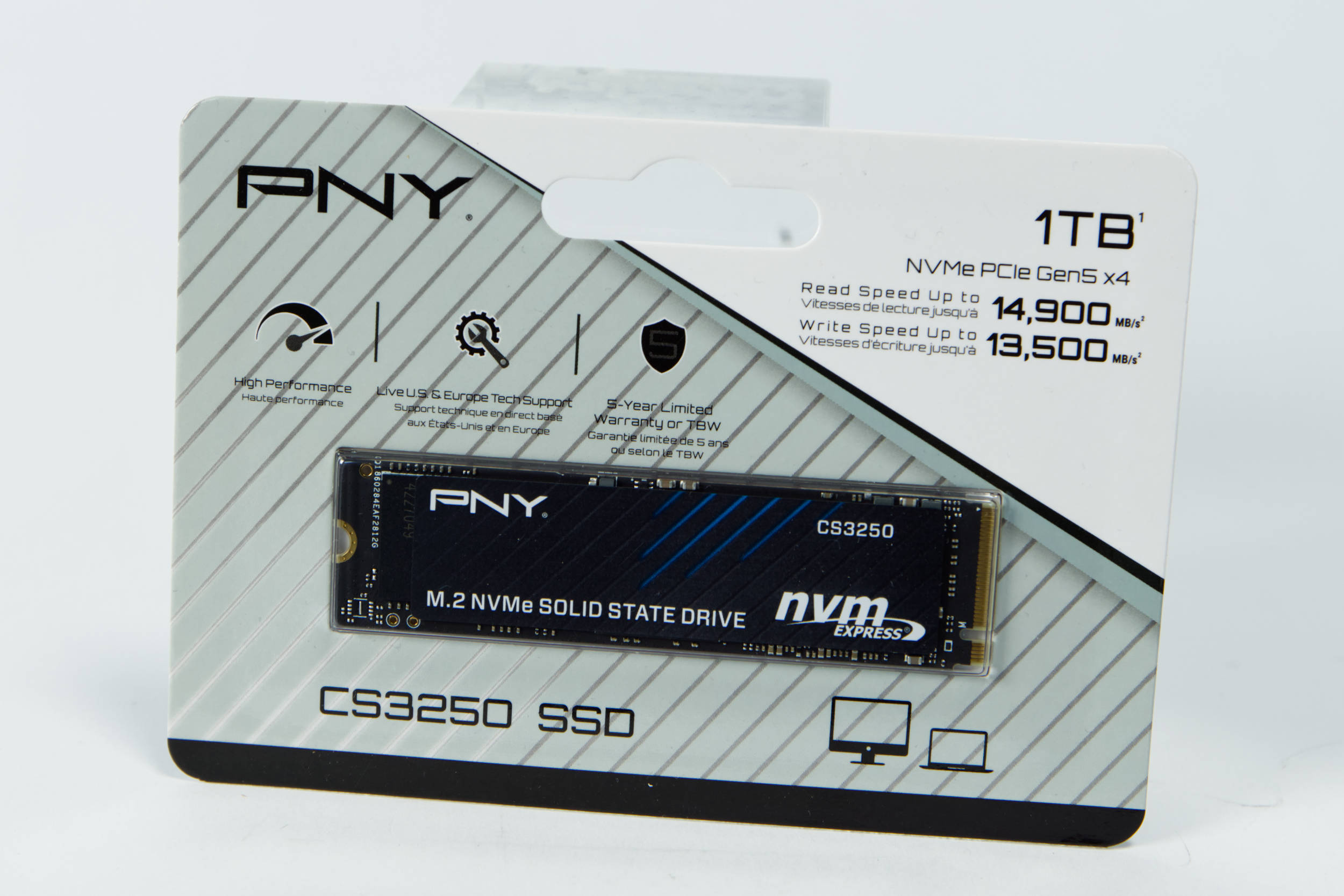 PNY CS3250 1TB Packaging (Image © PCMasters.de)
PNY CS3250 Packaging and Package Contents
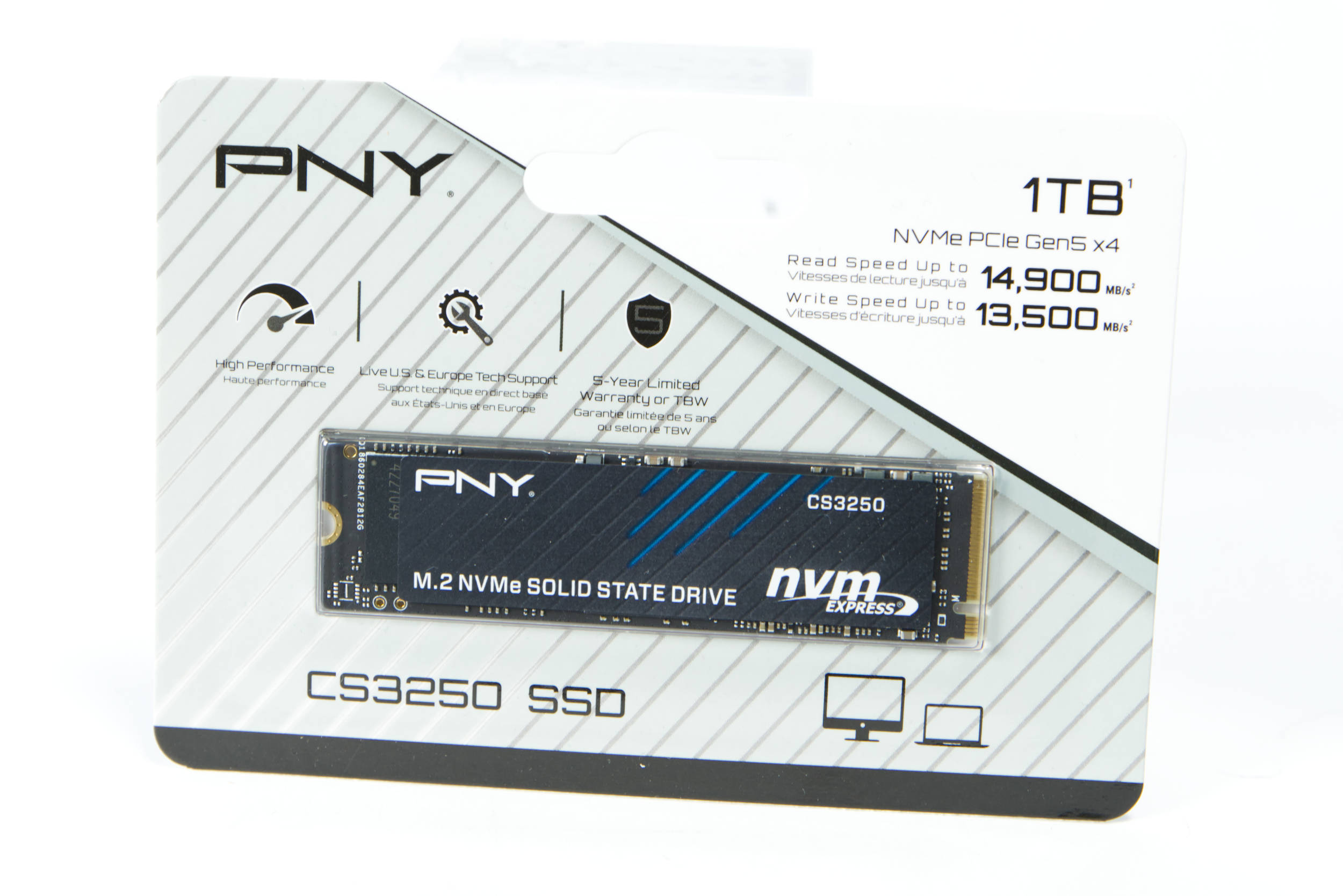
The CS3250’s packaging is very simple: it’s gray and white and lists the standard specifications. Instead of an illustration, the actual SSD is visible right on the front. It’s encased in a blister pack designed to protect it from damage. You have to tear open the packaging to access the SSD, as it’s sealed between the two layers of cardboard.
This ensures that no one has opened it beforehand.
Other than the SSD itself, nothing else is included in the package.
Test System
For our test setup, we used our tried-and-true system featuring a Ryzen 9 7950X paired with the Biostar X670E Valkyrie. This ensures that performance isn’t limited by PCIe 4, since we’re testing in a PCIe 5 slot.
Ryzen 7000 Test Setup
-
CPU: AMD Ryzen 9 7950X
- Motherboard: Biostar X670E Valkyrie
- Graphics Card: MSI GeForce GT 730
-
RAM: Kingston FURY Beast DIMM Kit 32GB, DDR5-5200, CL40-40-40 (KF552C40BBK2-32)
- Power Supply: be quiet! Pure Power 11 FM 1,000 W
- Case: HYTE Y60/Open Testbench
- Operating System: Windows 11 21H2
PNY CS3250 in Benchmarks
For the NVMe SSD comparison test, we’ve expanded our benchmark suite. To ensure a more realistic test that also delivers repeatable results, we’ve recently started using the 3DMark Storage Benchmark as well, which tests various scenarios such as gaming behavior and copying game data.
We’ve also included PCMark, which evaluates the system as a whole and calculates average values during copy operations.
CrystalDiskMark Storage Benchmark
3DMark Storage Benchmark
PCMark Drive Performance Consistency
PCMark relies on a very long write load that is applied constantly over an extended period. That’s why the peak values are simply lower—because the SSD and the cache are pushed to their limits. This is intended to simulate use by a power user.
ATTO Disk Benchmark (64 MB)
Benchmark Rating
On average, the results show that the PNY CS3250 delivers top performance, as it took first place in the rankings. The SSD did not throttle under load and was able to maintain consistent performance. It is notable that it, too, exhibits a slightly lower write throughput, though on average this is still better than that of its competitors.
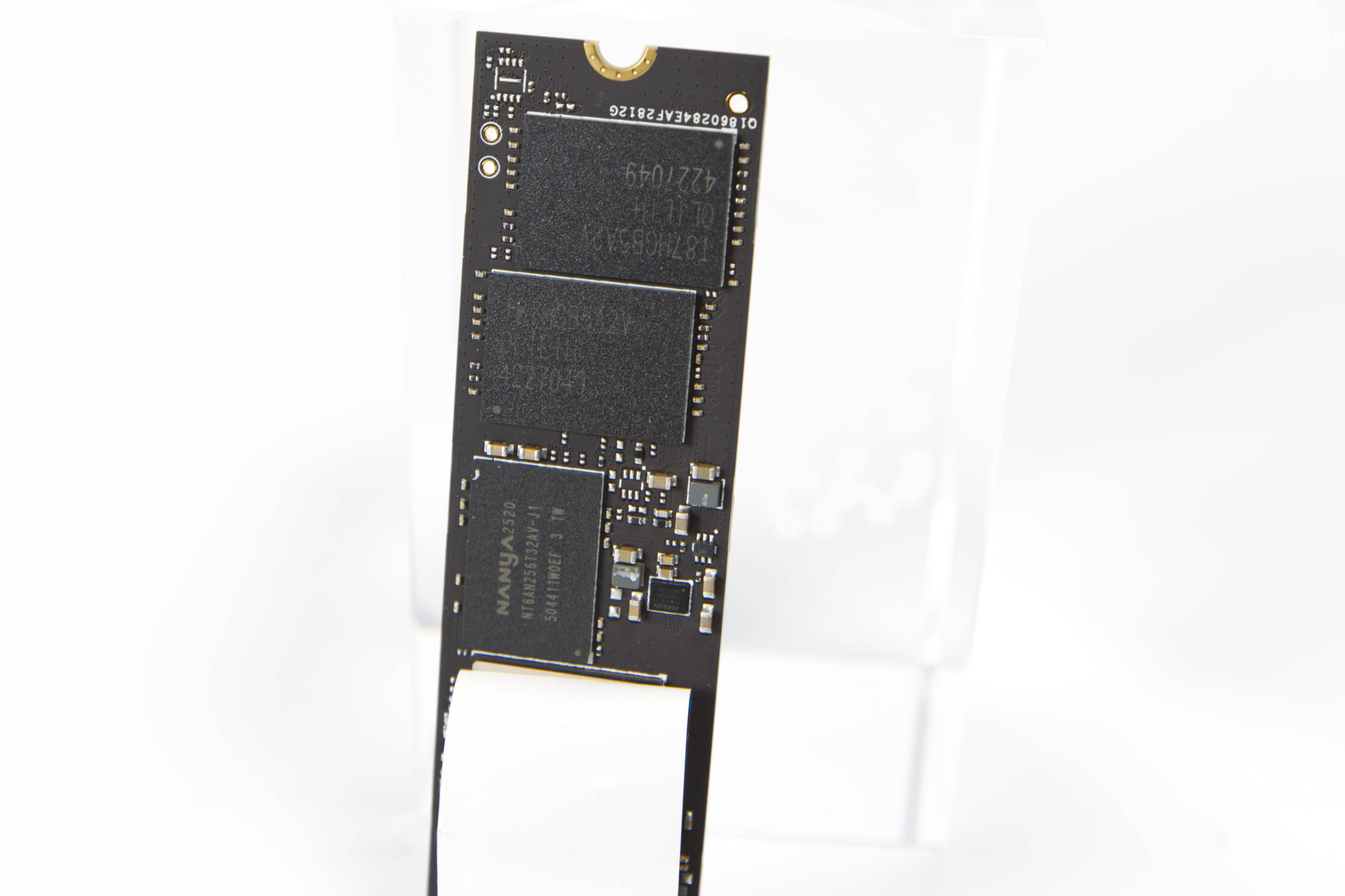 PNY CS3250 1TB Design (Image © PCMasters.de)
PNY CS3250 Heatsink and Temperature Measurements
The SSD is sold without a pre-installed heatsink; however, as with all PCIe 5.0 SSDs, you should equip it with a proper heatsink if you want to maintain consistently good performance over the long term. The CS3250 didn’t get excessively hot and remained within reasonable limits for a PCIe Gen 5 SSD. It’s definitely advisable to ensure there’s sufficient airflow over the motherboard so that heat can be dissipated from the components.
For this comparison test, we used the large aluminum heatsink from the Biostar X670E Valkyrie motherboard in NVMe Slot 2. This slot is not directly blocked by the graphics card and is not actively cooled in this test. Some models came with a pre-installed heatsink. In those cases, we used it as is. We’ve included corresponding notes in the chart: If an integrated heatsink was used, an "IK" (for integrated heatsink) is appended after the name.
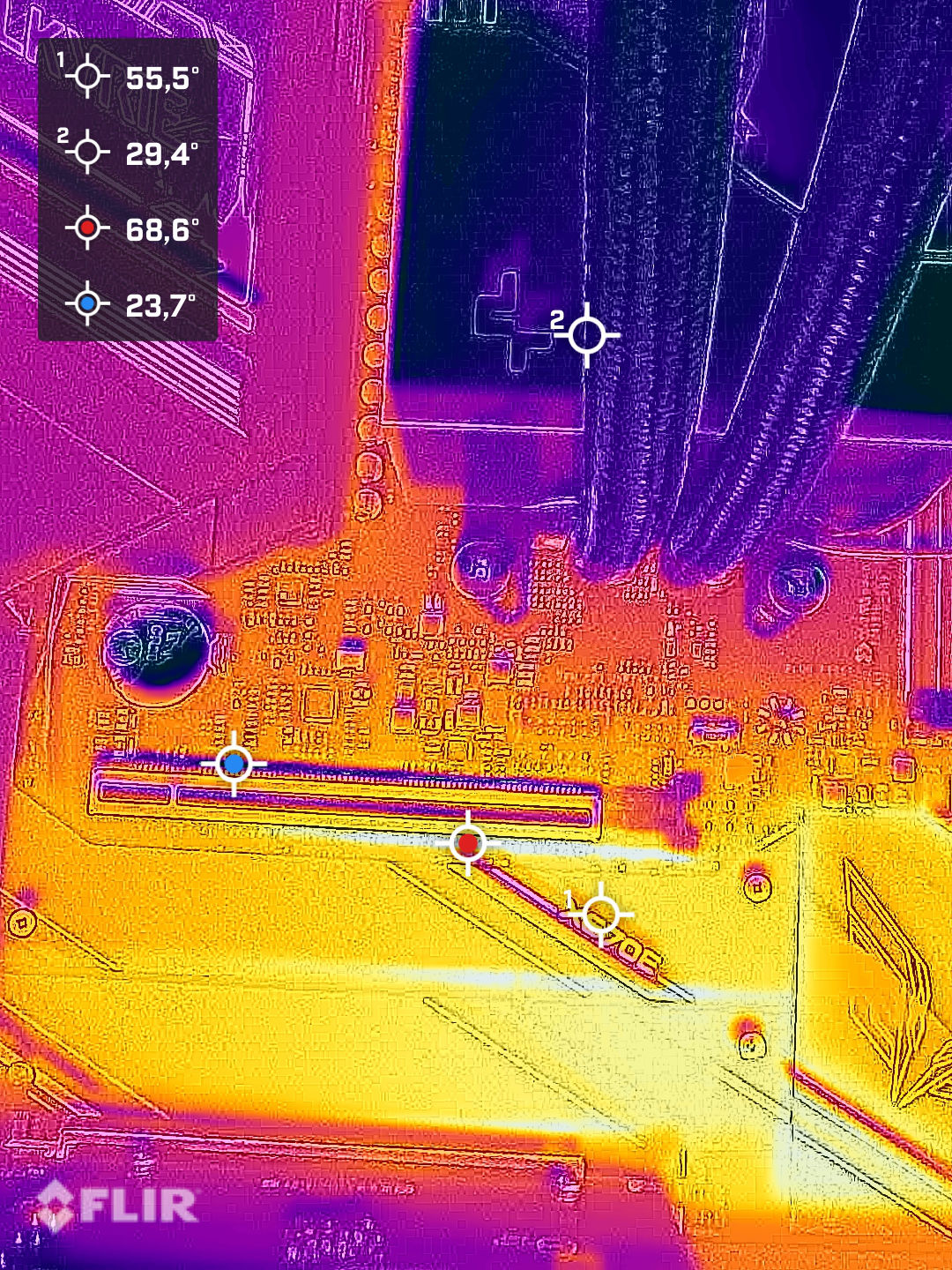 PNY CS3250 Wärmebildaufnahme (Image © PCMasters.de)
PNY CS3250 Thermal Images
The thermal images show that the cooler above the SSD reached around 55 °C and that the SSD underneath is even hotter. The camera detected a hotspot at 68 °C. That’s why it’s generally recommended to ensure proper airflow inside the case, especially if you have an AIO liquid cooling system, because in that case the fans are mounted on the radiator—rather than on the CPU cooler.
 PNY CS3250 1TB Conclusion (Image © PCMasters.de)
Conclusion on the PNY CS3250
In our test, the PNY CS3250 delivered exceptionally strong performance in write throughput and even took first place at the time of testing. Thanks to the PS5028-E28 controller, the SSD delivers exemplary performance while remaining highly efficient, as it did not throttle during the test. Nevertheless, it’s important to note that the CS3250 should also be cooled if you want to achieve consistently good results. The combination of Nanya cache and Micron NAND appears well-balanced.
The package includes only the CS3250; a five-year manufacturer’s warranty seems reasonable. The overall package is thus well-rounded and appropriate for a high-end product. However, there’s one catch that has effectively affected all storage devices since 2025: prices have skyrocketed, and in the case of the CS3250, availability is poor. At the end of 2025, the 1-TB model was introduced for €159.99, but its most recent price was €209.
Pros
- PCIe Gen 5 interface
- Efficient and very powerful PS5028-E28 controller from Phison
- Top performance in benchmark tests
- Efficient and comparatively cool (does not throttle performance)
- High-quality build
- Minimalist packaging with little waste
- 5-year manufacturer’s warranty
Cons
- Write throughput lower than read throughput
- Price and availability