 Computer Forum
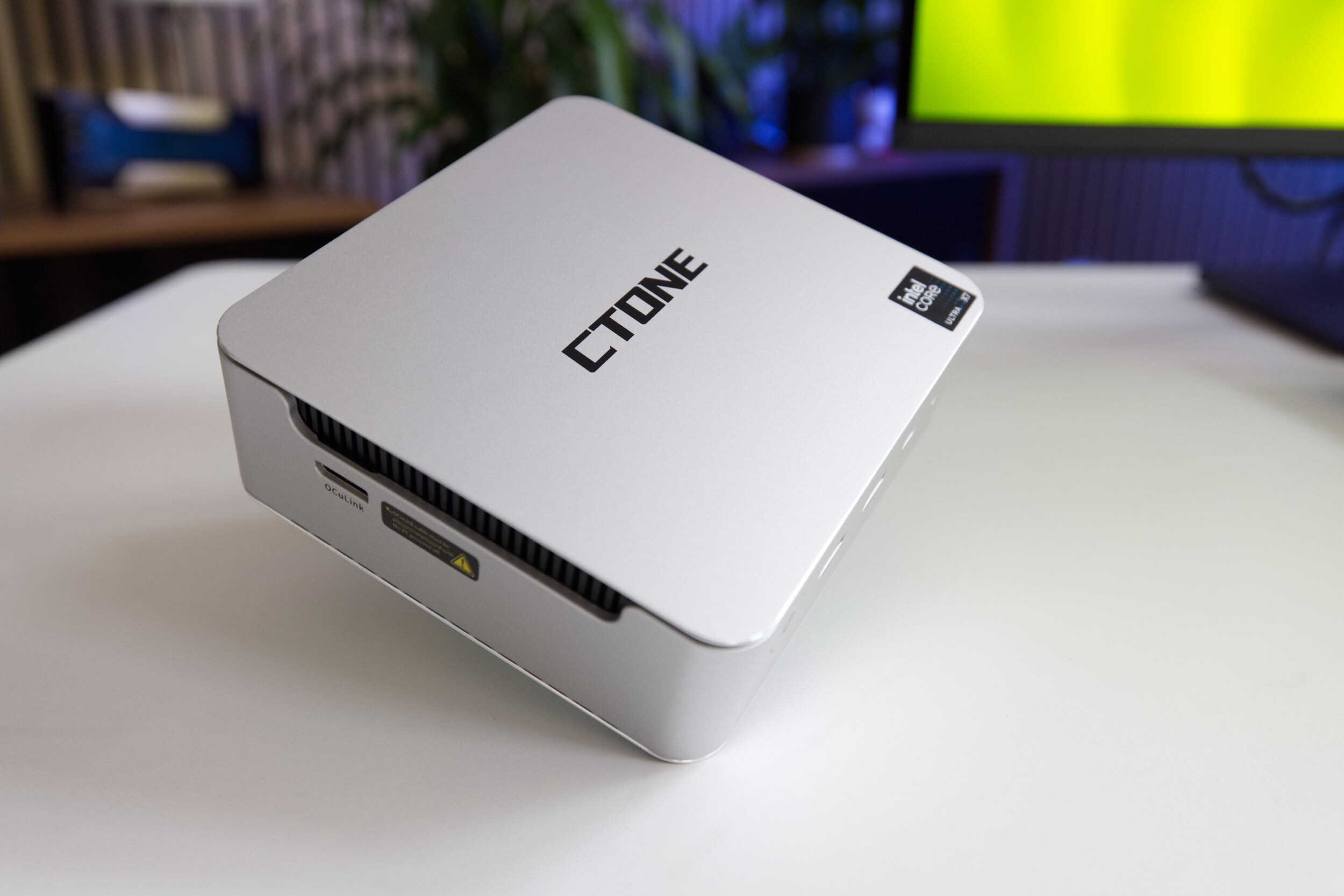 CTONE AM23 Mini PC Test Review (Image © PCMasters.de)
CTONE AM23 in Detail
CTONE is a mini-PC manufacturer primarily found on Amazon. There, the manufacturer currently sells only three models, each of which is available in several configurations. In this review, we’ll take a closer look at the "AM23" mini PC. For this model, CTONE relies on Intel CPUs, which are available with both soldered and plug-in SODIMM RAM. The configurations tend to fall in the upper-midrange segment and even include a high-end option. CTONE currently holds a competitive advantage primarily through its use of Chinese NVMe SSDs as well as DDR4 and DDR5 RAM, which aren’t readily available for purchase in Europe. At the time of this review, the price of the AM23 has risen significantly, and it is available in only one variant:
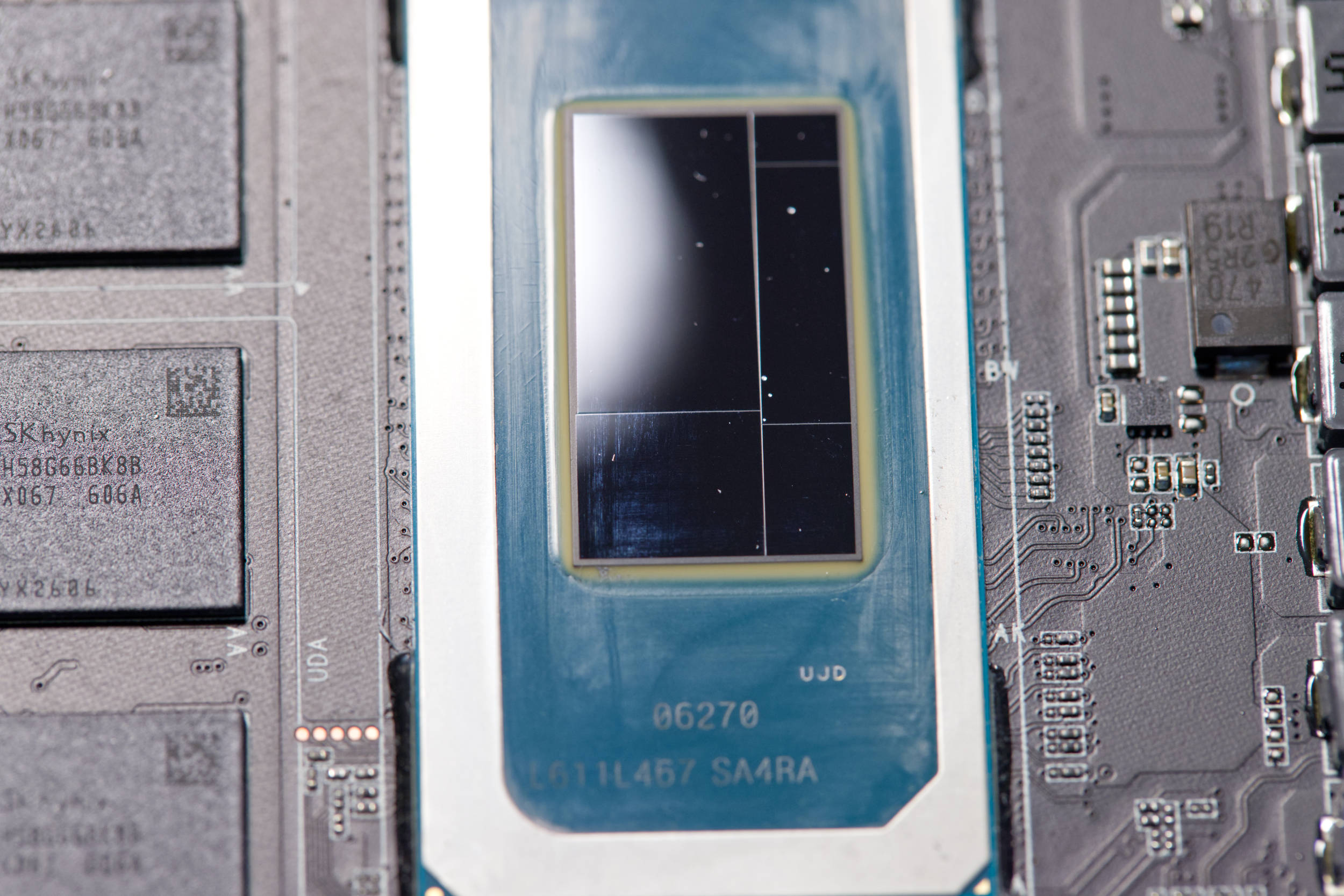 CTONE AM23 Mini PC Core Ultra X7 Prozessor 358H (Image © PCMasters.de)
Intel Core Ultra X7 358H Mini-PC
Our review unit is equipped with the current generation’s high-end processor—specifically, the Intel Core Ultra X7 358H. The CPU was unveiled in Q1 2026, making it particularly exciting. As part of the mobile segment, it belongs to the Panther Lake generation. Once again, the processor combines Intel’s three different core types and has a total of 16 cores. For maximum performance, it offers four performance cores, along with eight efficient cores and four more power-efficient lower-power efficient cores. The number of threads is 16, since Hyper-Threading is no longer supported. The Panther Lake SoC also integrates all the tiles onto a single chip, which is why you can see the tiles on the chip.
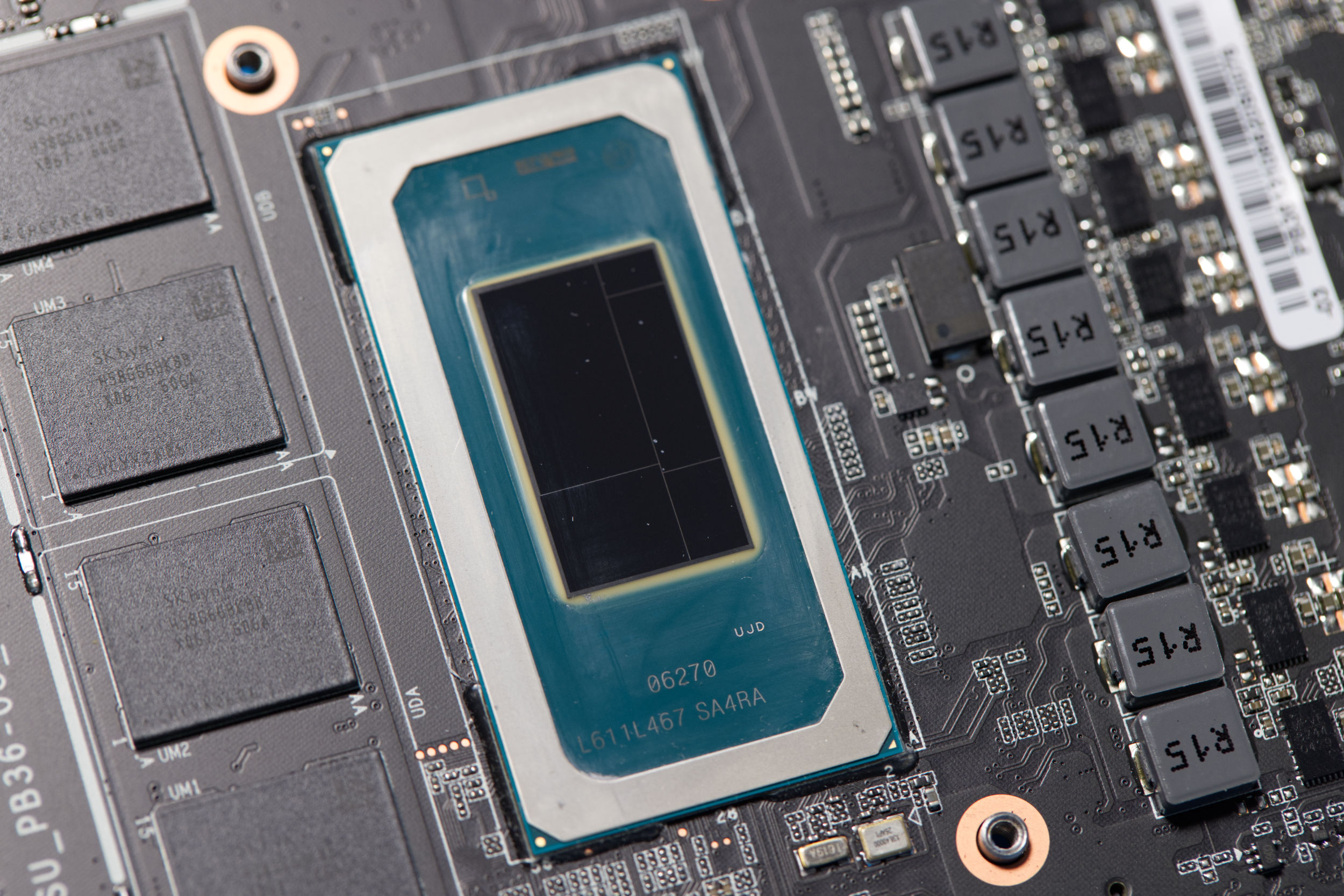 CTONE AM23 Intel Core Ultra X7 Prozessor 358H Die Shot (Image © PCMasters.de)
Due to the division into E- and P-cores, the clock speeds of the cores also differ significantly from one another. The maximum turbo clock frequency of the Performance cores is 4.80 GHz, while the Efficient cores reach 3.50 GHz, and the Lower Power Efficient cores reach a maximum of 3.3 GHz. The bus clock remains at approximately 100 MHz, and the multiplier is adjusted accordingly.
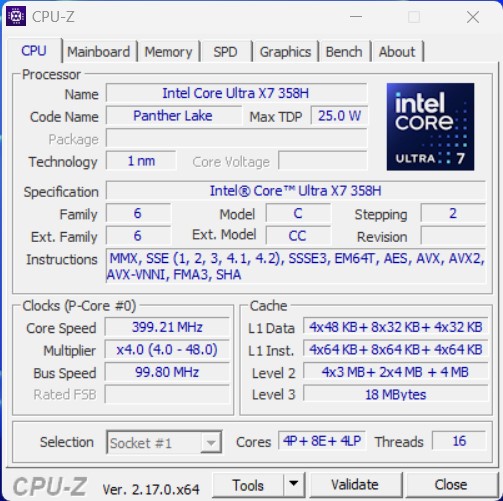 CTONE AM23 Mini PC CPUz (Image © PCMasters.de)
The base power consumption is only 25 watts, but it can rise to up to 80 watts at maximum Turbo power consumption to deliver peak performance. The minimum guaranteed power consumption is specified as 15 watts. CTONE limits the system to 65 W for the CPU.
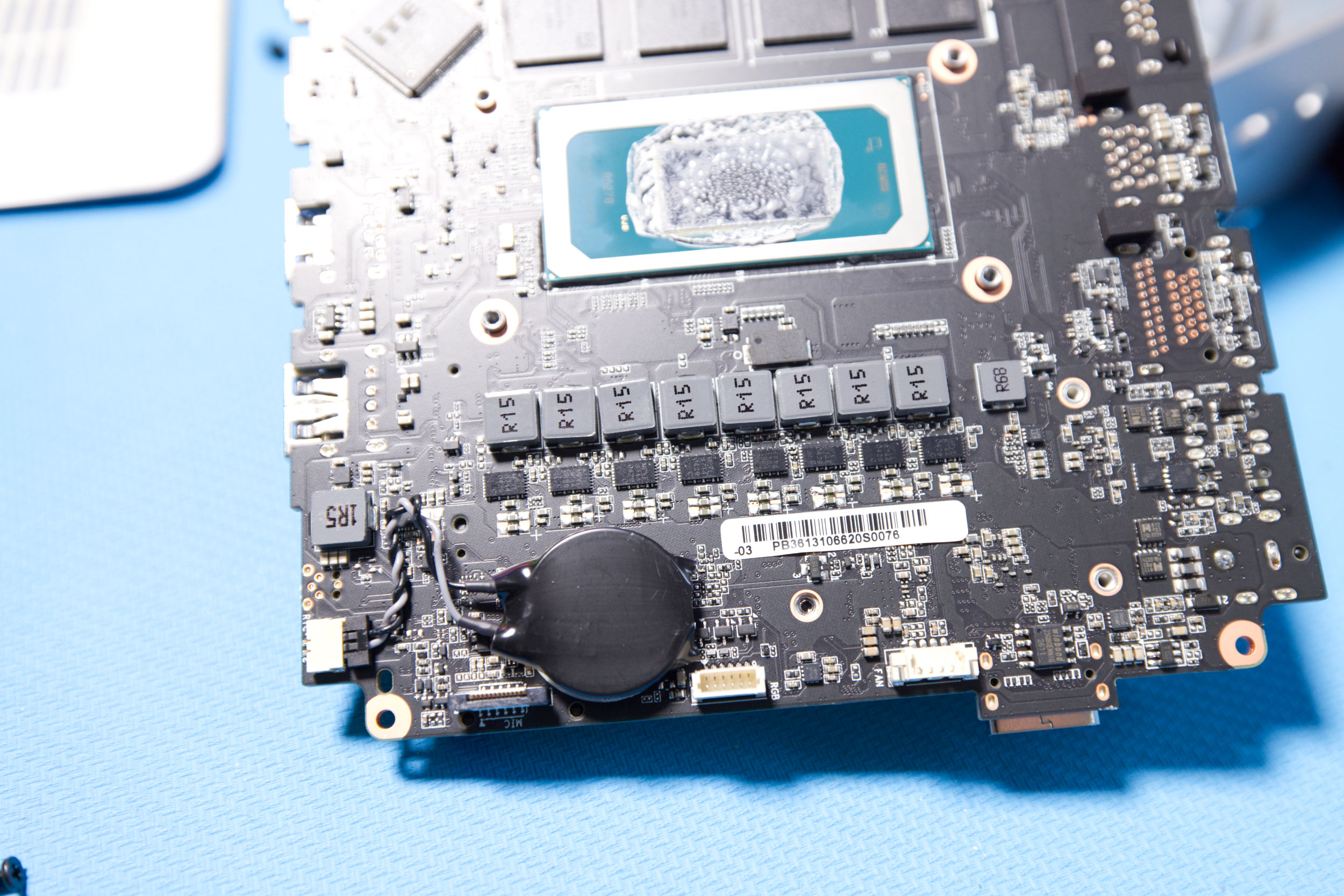 CTONE AM23 Mini PC Spannungsversorgung (Image © PCMasters.de)
The Panther Lake chip is Intel’s most advanced chip to date and is manufactured in-house using the 1.8 nm Intel 18A process. The path to this node was difficult and fraught with obstacles, which is why it’s gratifying that Intel has managed to pull it off.
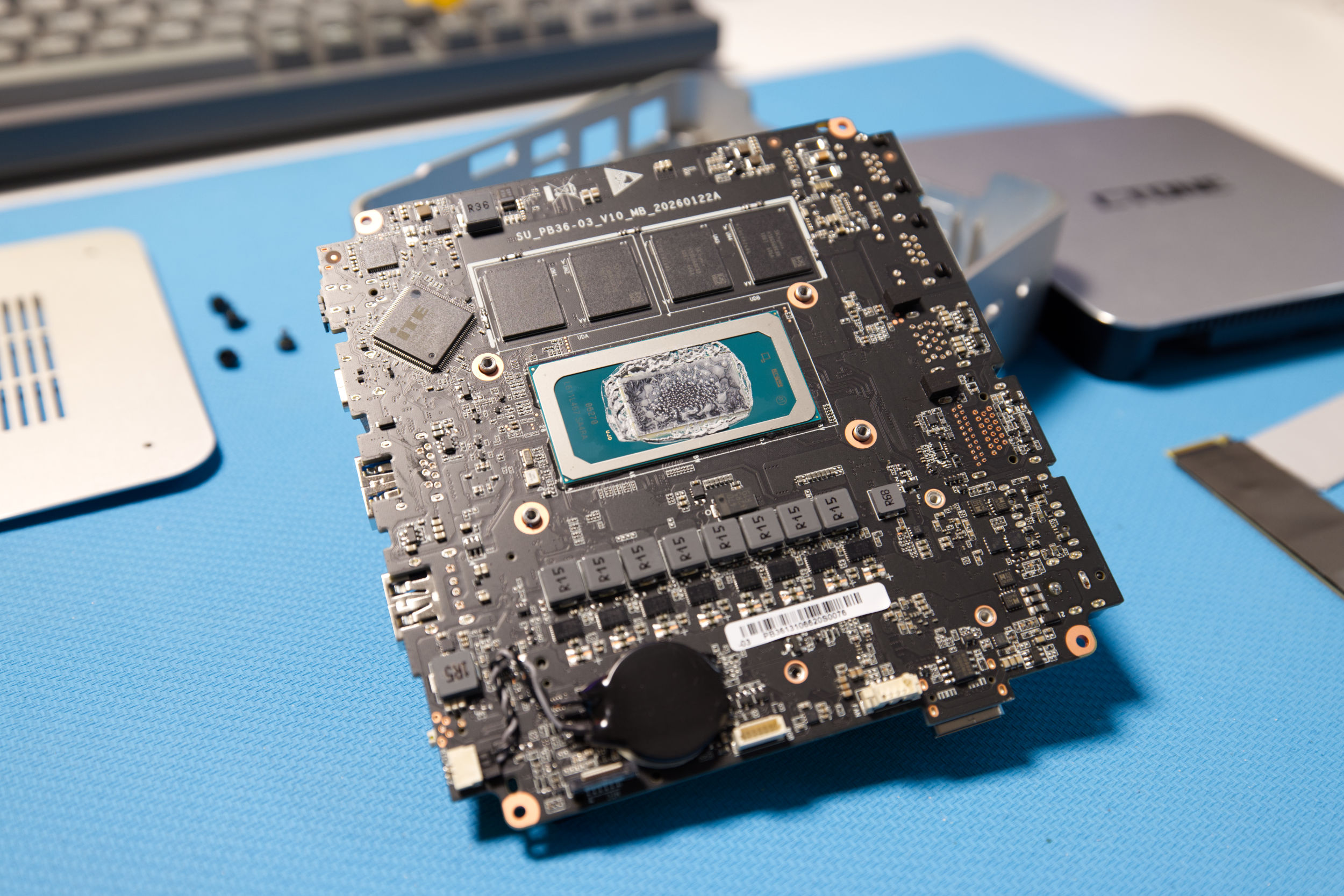 CTONE AM23 Mini PC PCB mit CPU (Image © PCMasters.de)
The package is visible after removing the cooler and measures 50 x 25 mm for the chip. The FCBGA2540 socket is used, which requires the CPU to be soldered in place. The CPU’s T-junction is 100 °C.
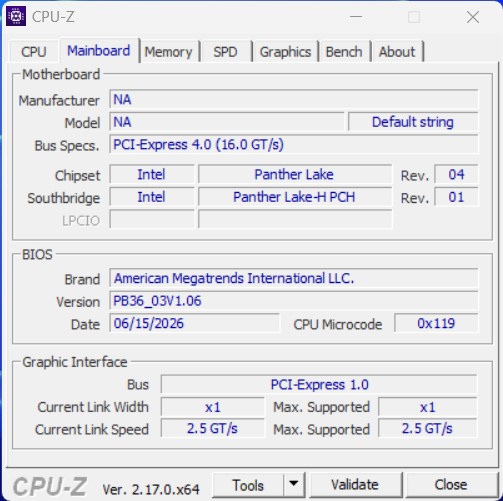 CTONE AM23 Mini PC CPUz Motherboard (Image © PCMasters.de)
The cache configuration of the Core Ultra X7 358H is designed so that each core has its own L1 data and L1 instruction cache. This varies depending on the core type. While each P-core is equipped with 48 KB of L1 data cache and 64 KB of L1 instruction cache, the E and LPE cores have 32 KB of L1 data and 64 KB of L1 instruction cache. The Level-2 cache is also differentiated by core type; each P-core has 3 MB, and four E-cores share a 4-MB cache block. In total, there are 24 MB of very fast L2 cache. Behind this is an 18-MB L3 cache, which the CPU shares collectively.
The Panther Lake -H PCH chipset is also located close to the CPU tiles on the package and supports Thunderbolt 4. According to the specifications, the CPU supports PCI Express Gen 5 and 4, while the PCH is connected via PCIe Gen 4 at 16 GT/s. According to the specifications, the configuration is as follows:
- x4 PCIe 5 (1x4, 2x2)
- x4 PCIe 4 (1x4, 2x2, 4x1)
- x4 PCIe 4 (1x4, 2x2, 4x1)
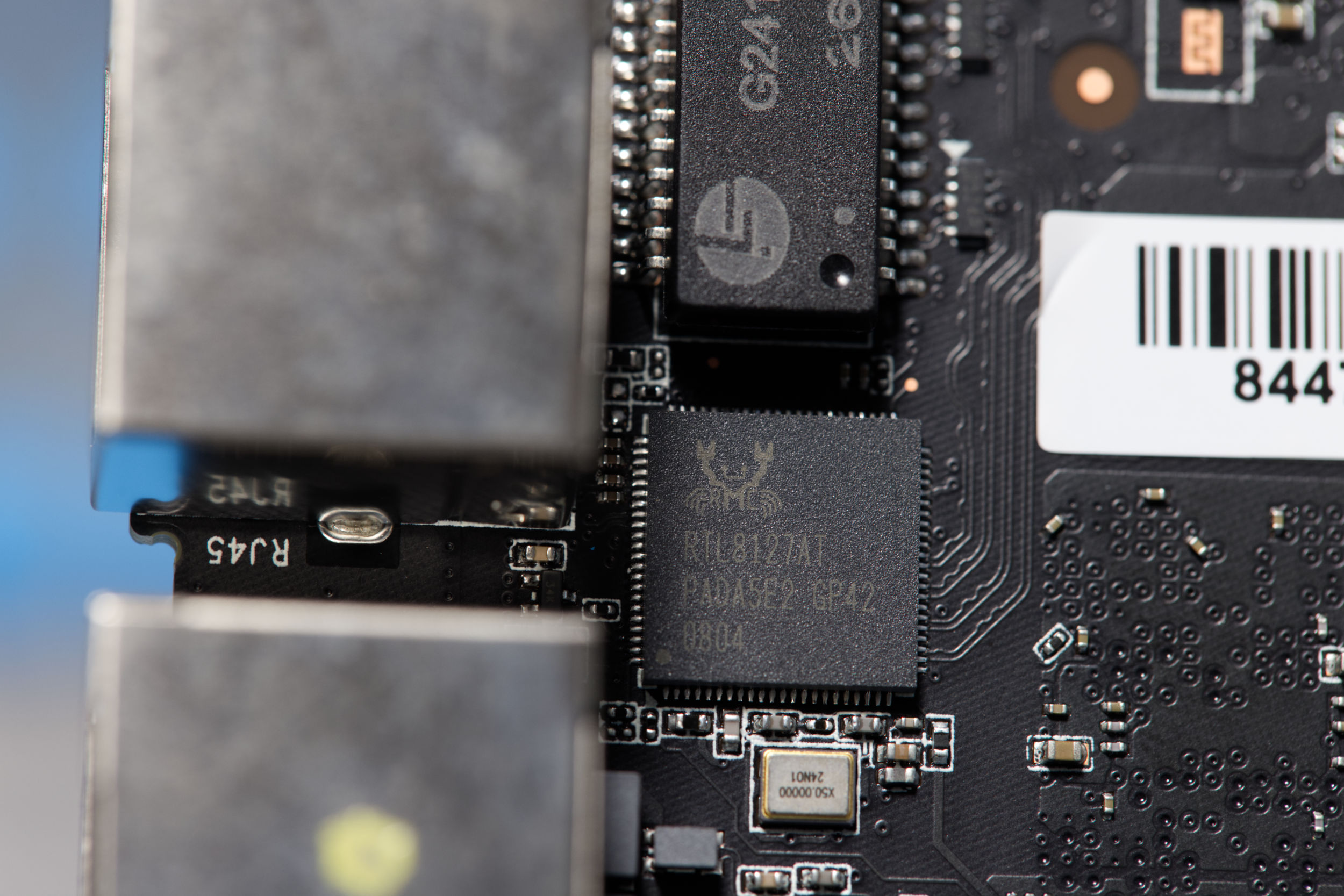 CTONE AM23 Realtek TRL8127AT PADA5E2 (Image © PCMasters.de)
On the PCB, we also find the Realtek RTL8127AT (PADA5E2) chip, which handles the 10-Gbit NIC network interface.
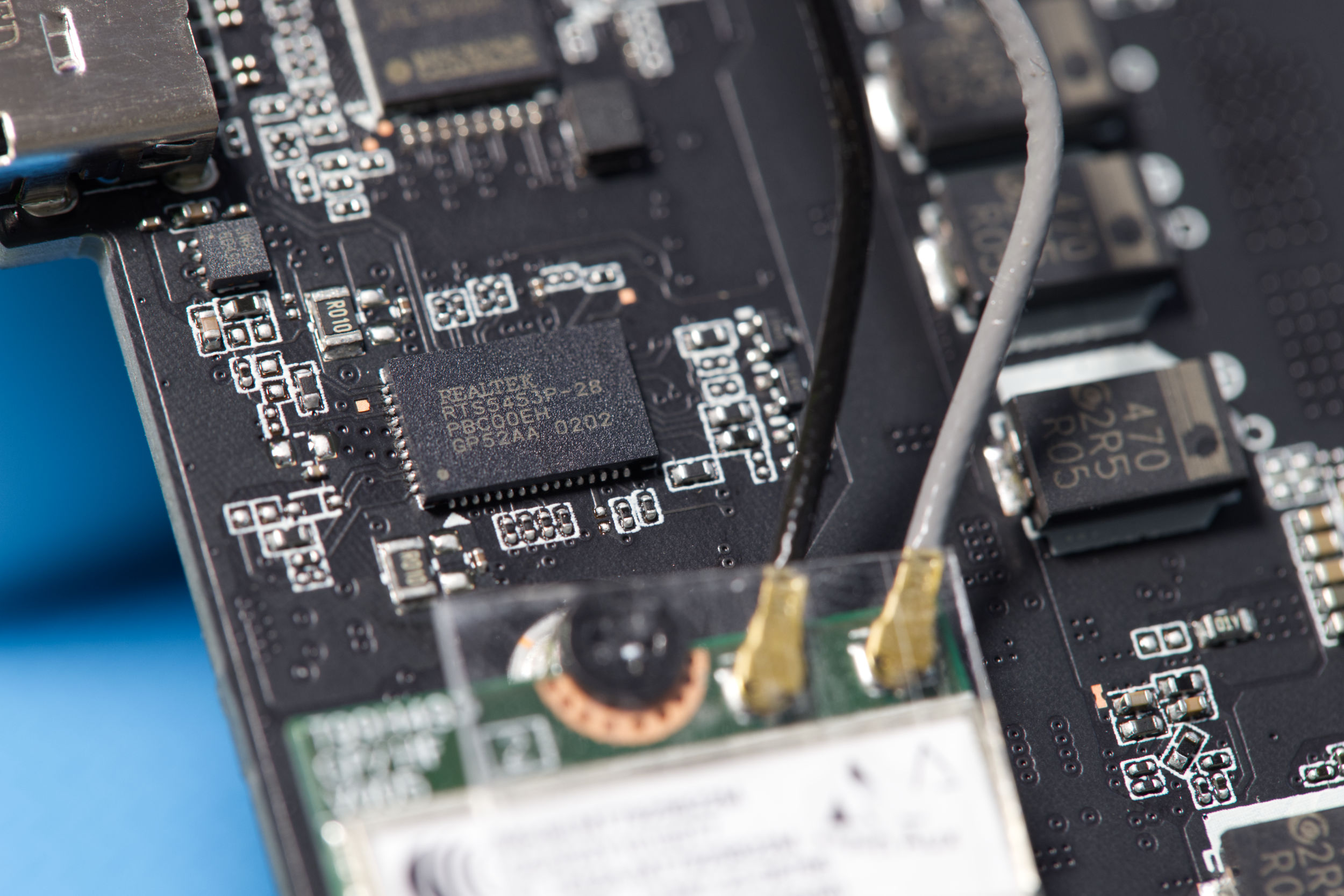 CTONE AM23 Realtek RTS5453P 28 PBCQ0EH GP52AA (Image © PCMasters.de)
In addition, next to the ports is a Realtek RTS5453P Power Delivery controller, which handles power delivery via Type-C ports.
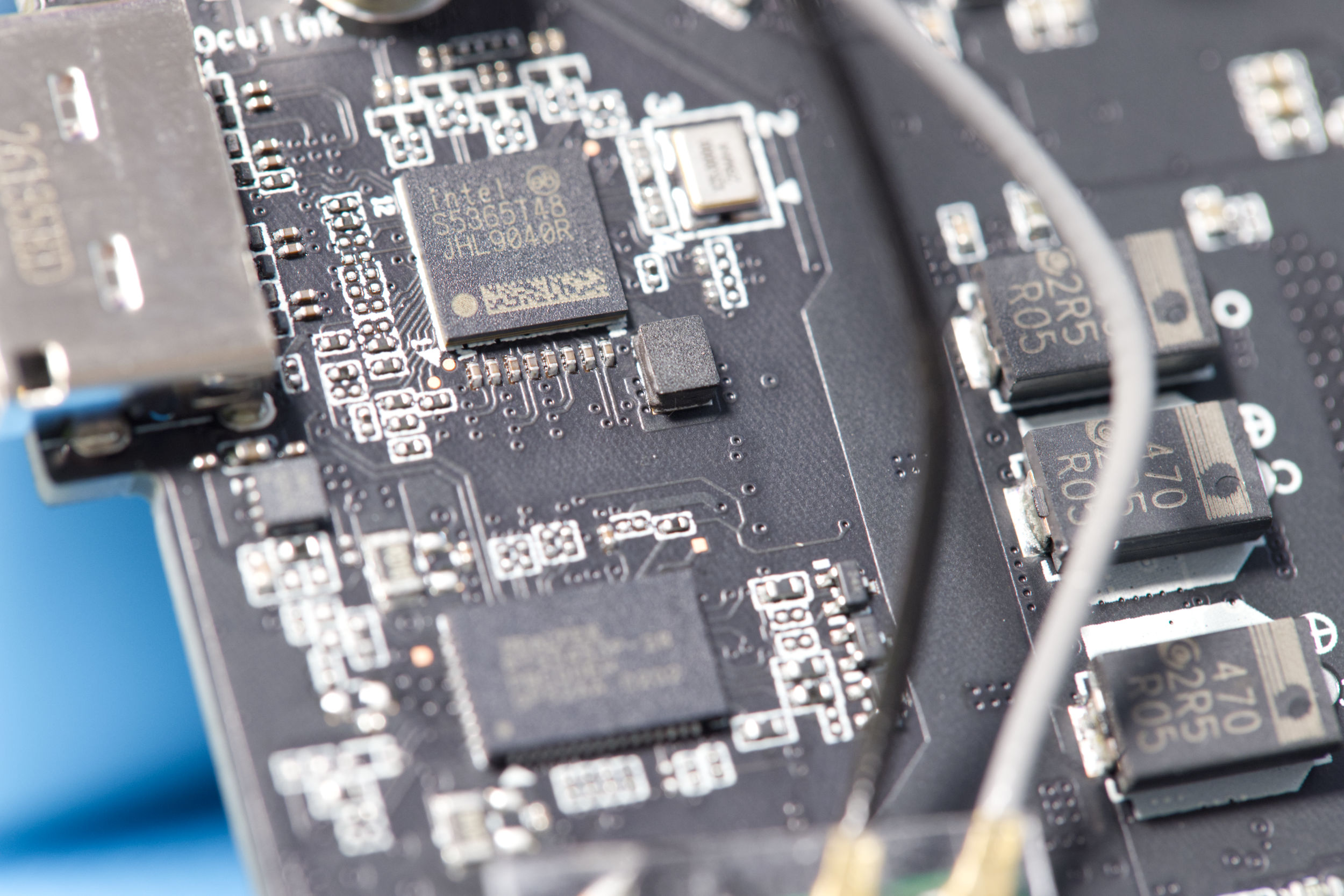 CTONE AM23 Intel S5365T48 JHL9040R (Image © PCMasters.de)
The Intel S5365T48 JHL9040R Retimer is used for Thunderbolt 4
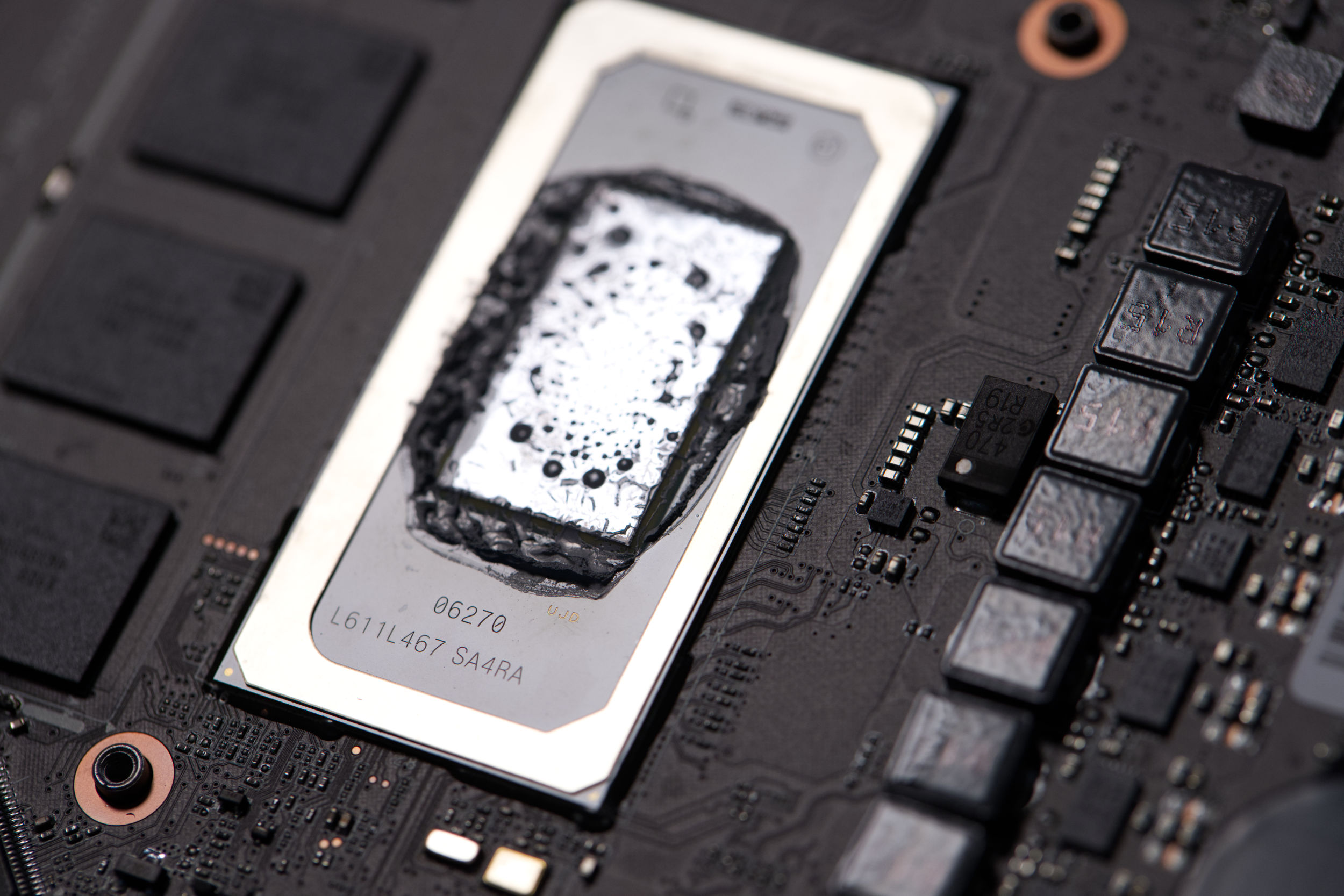 CTONE AM23 Mini PC Intel Core Ultra X7 Prozessor 358H CPU (Image © PCMasters.de)
Intel Arc B390 GPU
Another standout feature of Panther Lake is the significantly more powerful iGPU, which is also suitable for gaming. To achieve this, the chip features 12 Xe3 cores clocked at up to 2.5 GHz. The iGPU’s total performance is reported to be 122 TOPS (Int8).
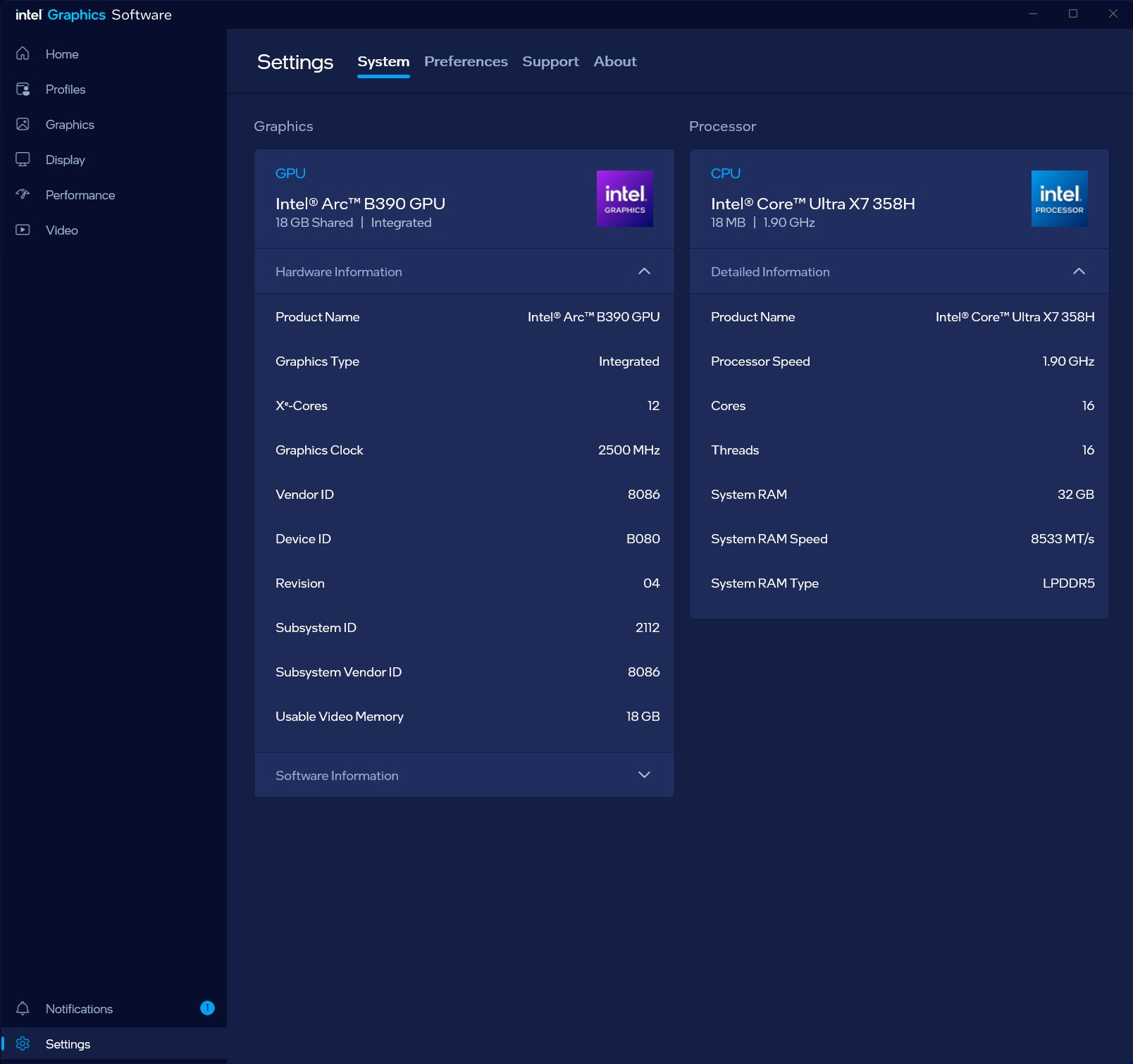 CTONE AM23 Mini PC Intel Info (Image © PCMasters.de)
However, the chip must share graphics memory with the CPU, as is often the case with mobile CPUs. As a result, the standard version of the Arc B390 utilizes 18 GB of LPDDR5-8533 system memory.
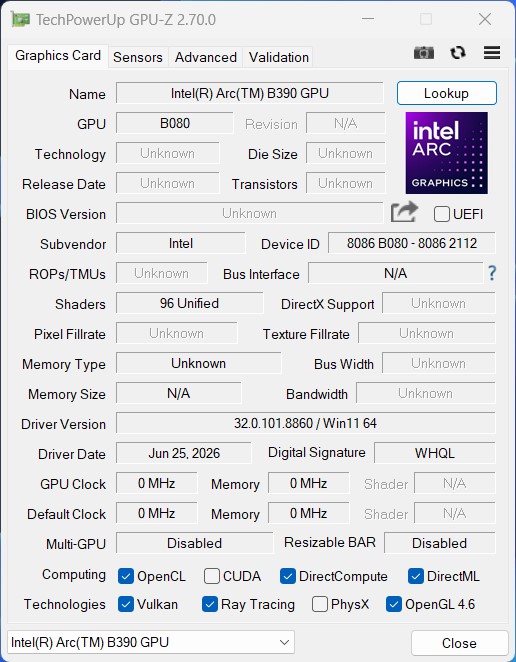 CTONE AM23 Mini PC GPUz (Image © PCMasters.de)
Since Intel can use different tiles here, the GPU is manufactured by TSMC using the N3E process. Intel lists the video outputs as eDP 1.5, DP 2.1 UHBR20, HDMI 2.1 FRL, and the maximum resolutions (DP) as 7680 x 4320 @ 60Hz.
Intel lists OpenVINO, WindowsML, DirectML, ONNX RT, WebGPU, and WebNN as compatible AI software frameworks.
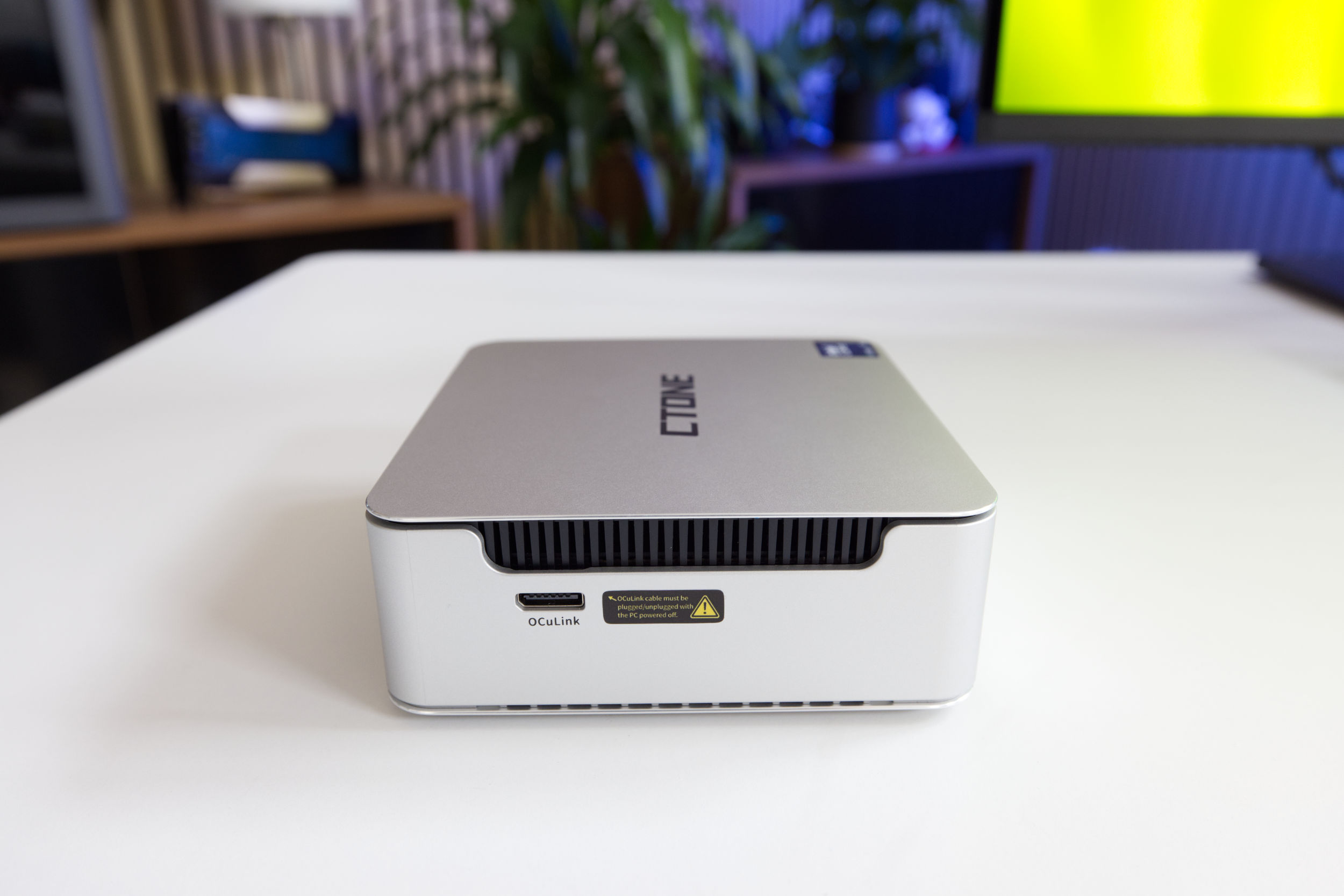 CTONE AM23 Mini PC OcuLink (Image © PCMasters.de)
OcuLink Port for External Graphics Cards
Another unique feature of the CTONE AM23 is the OcuLink port. This allows us to connect an external graphics card or NVMe drive to the PC. However, connecting a graphics card would make the most sense, since the internal NVMe port is sufficient for our purposes. It’s important to note that the port does not supply power via the connector, so the GPU must be powered by an external power supply—which is also the best approach.
In principle, however, you can connect any type of PCI Express hardware via this interface. CTONE implements PCIe 4.0 here, giving us access to 4 lanes. This enables a data throughput of 7 to 7.4 GB/s.
Due to time constraints, we weren’t able to set up a dedicated test configuration for this test, but we plan to do so later. It’s important to note that you must power off the mini-PC when connecting an OcuLink cable, since PCIe enumeration occurs during boot and there is no hot-plug support.
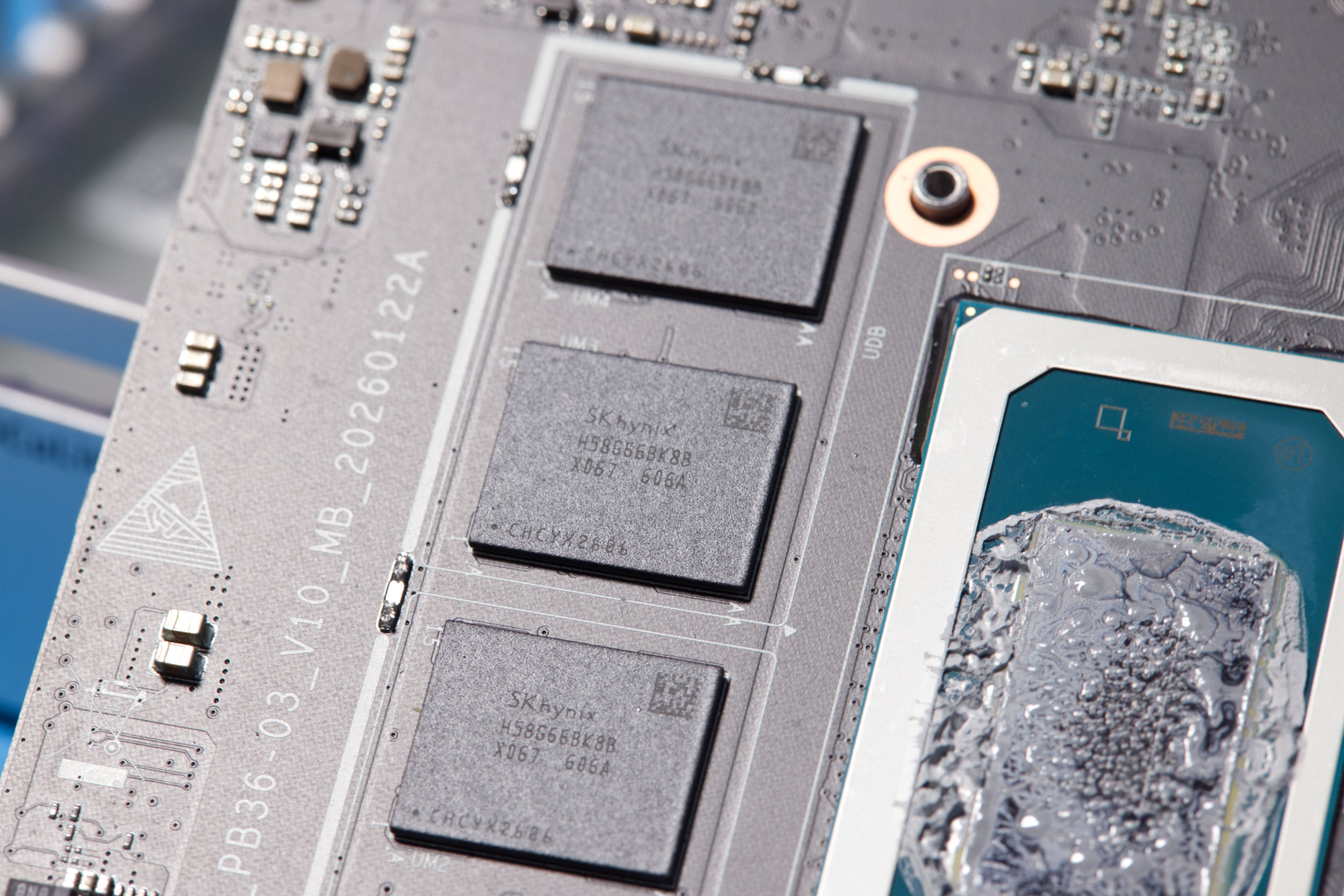 CTONE AM23 Mini PC SKhynx H58G66BK8BX96 606A LPDDR5 (Image © PCMasters.de)
Soldered-on LPDDR5 RAM with 32 GB capacity
There’s a lot to like about the memory in our configuration. Since CTONE uses 32 GB of LPDDR5 RAM here, it runs really fast at 8,533 MT/s. The downside is that you can’t easily expand or replace this soldered-on RAM.
However, with a 32 GB capacity, this system offers a well-sized amount of memory. Many manufacturers, such as Valve with its Steam Machine, have opted to include only an 8 GB RAM module because the cost of RAM is too high. The CTONE AM23 thus has significantly more and should be well-equipped for most use cases.
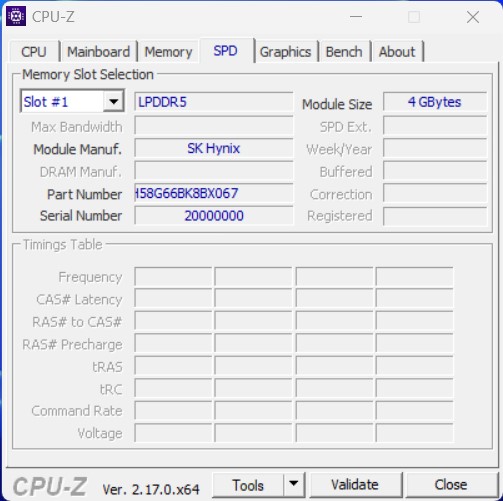 CTONE AM23 Mini PC CPUz SPD (Image © PCMasters.de)
A look at CPU-Z reveals that the memory comes from SK Hynix, and the memory chips confirm this. The identifier on the chips is H58G66BK8BX967 606A.
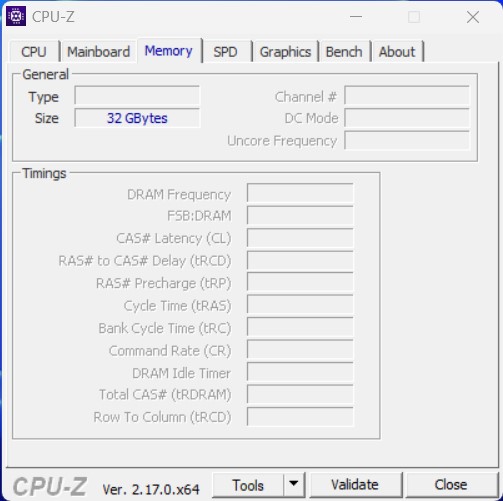 CTONE AM23 Mini PC CPUz Memory (Image © PCMasters.de)
Unfortunately, the program cannot provide any further information.
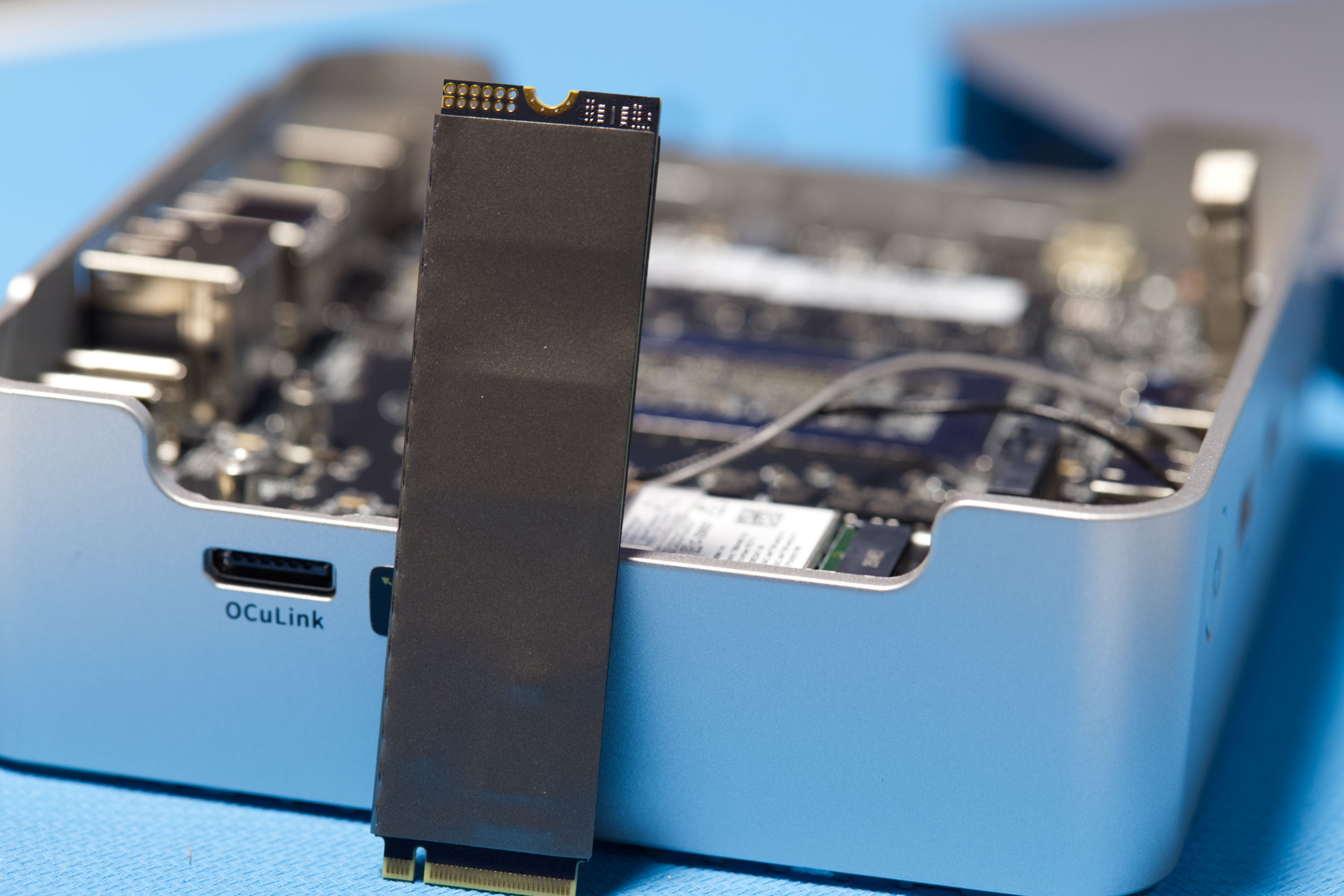 CTONE AM23 SSD (Image © PCMasters.de)
Bestoss GM888 1 TB NVMe SSD
Our unit of the AM23 came with a pre-installed 1 TB NVMe SSD. The mini-PC offers two M.2 2280 NVMe slots, one of which is even connected via PCI Express Gen 5 with 4 lanes. The actual NVMe module is covered with a black sticker and bears no identification. However, the system recognizes it as a Bestoss GM888 1TB SSD.
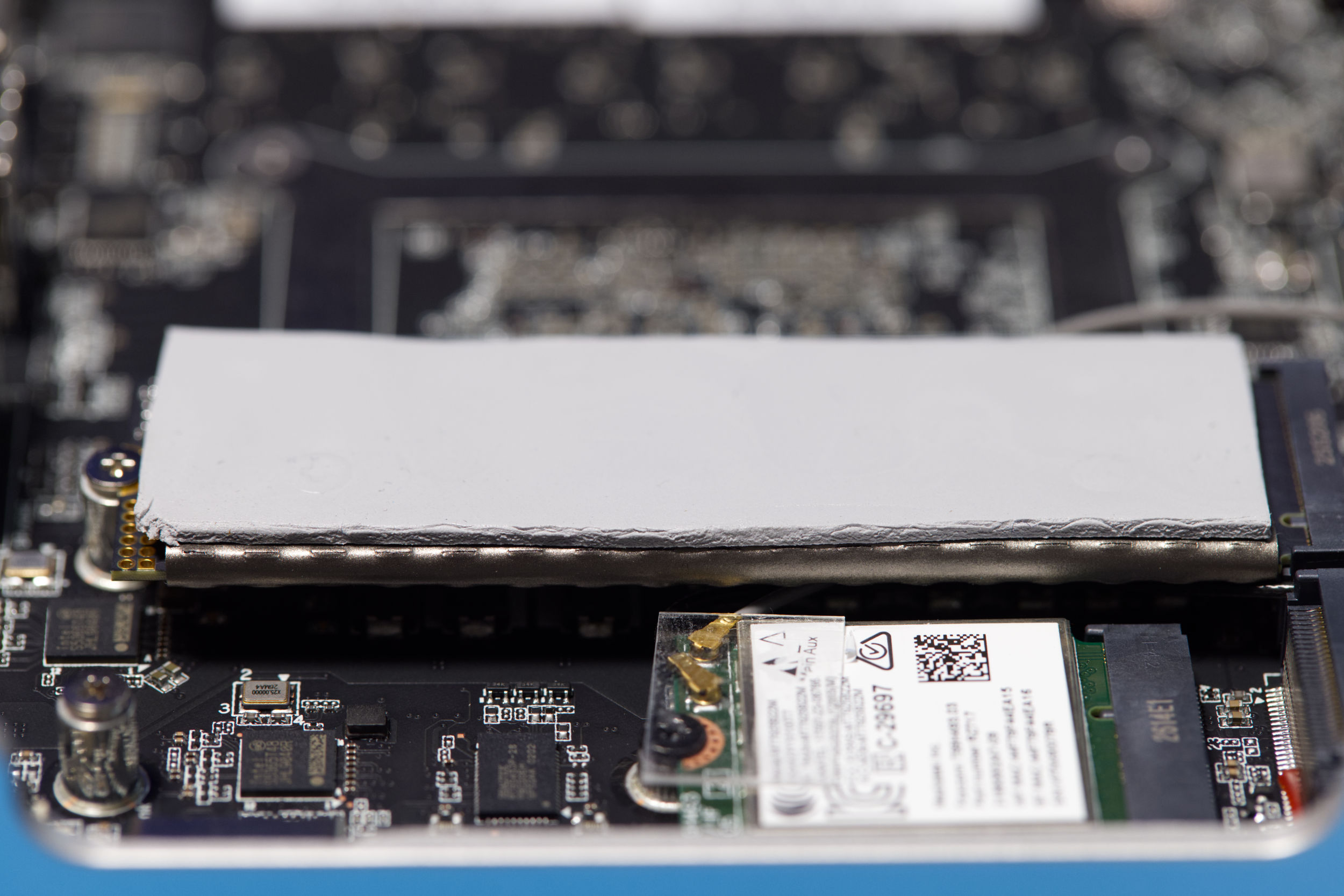 CTONE AM23 SSD Wärmeleitpad (Image © PCMasters.de)
A relatively thick thermal pad is placed on the SSD; it is intended to conduct heat and assist with cooling the SSD.
 CTONE AM23 Mini PC Bestoss GM888 (Image © PCMasters.de)
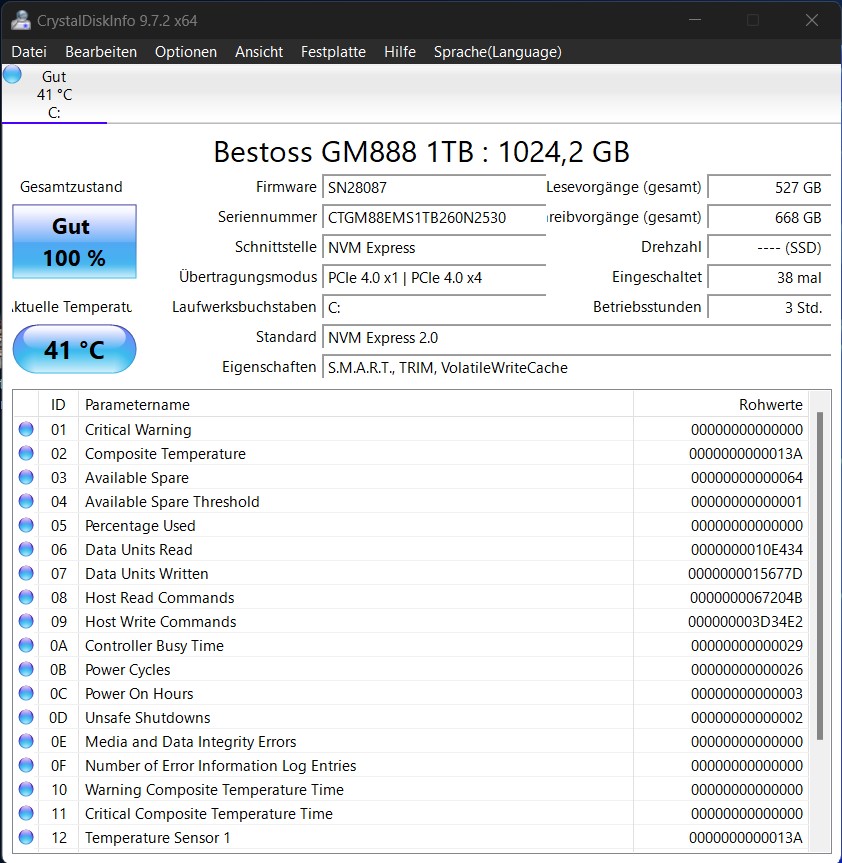
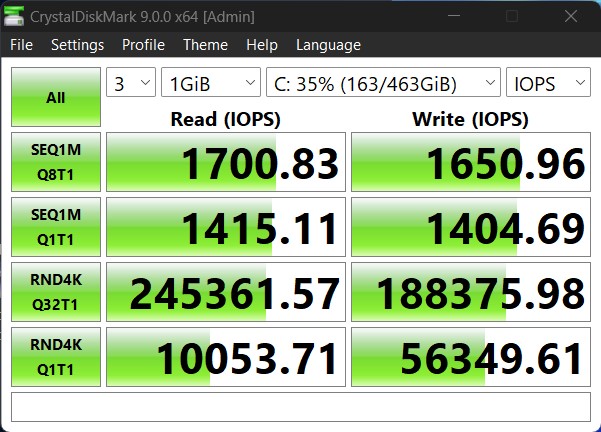
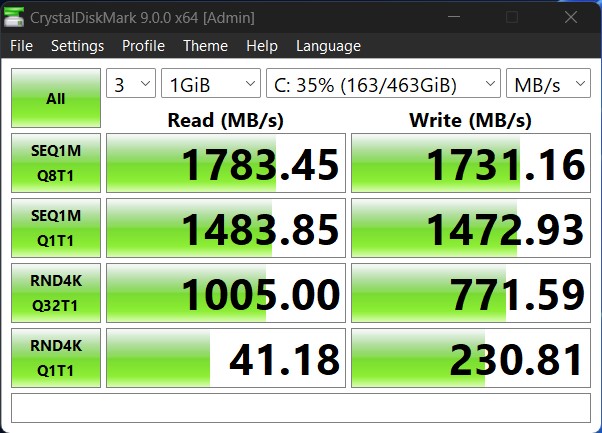
CrystalDiskInfo detects the SSD and informs us that PCI Express 4 is being used as the interface, even though PCIe 5.0 is supported. However, the SSD was installed in the wrong slot by default, as one of the slots has only a PCIe -4-lane, while the other has 4 lanes. Only after switching slots did we achieve proper data transfer rates. In the other slot, sequential read and write speeds were limited to a maximum of 1.7 GB/s, whereas in the PCIe 4x4 slot, they reached 7 GB/s and 6.3 GB/s, respectively (see charts below).
 CTONE AM23 Mini PC ChrystalDisk 2 (Image © PCMasters.de)
 CTONE AM23 Mini PC ChrystalDisk 1 (Image © PCMasters.de)
The measured values are thus within a good range after moving the SSD to a different slot.
 CTONE AM23 Mediatek WiFi Chip MT7925B22M (Image © PCMasters.de)
Wi-Fi 7 and Bluetooth 5.4
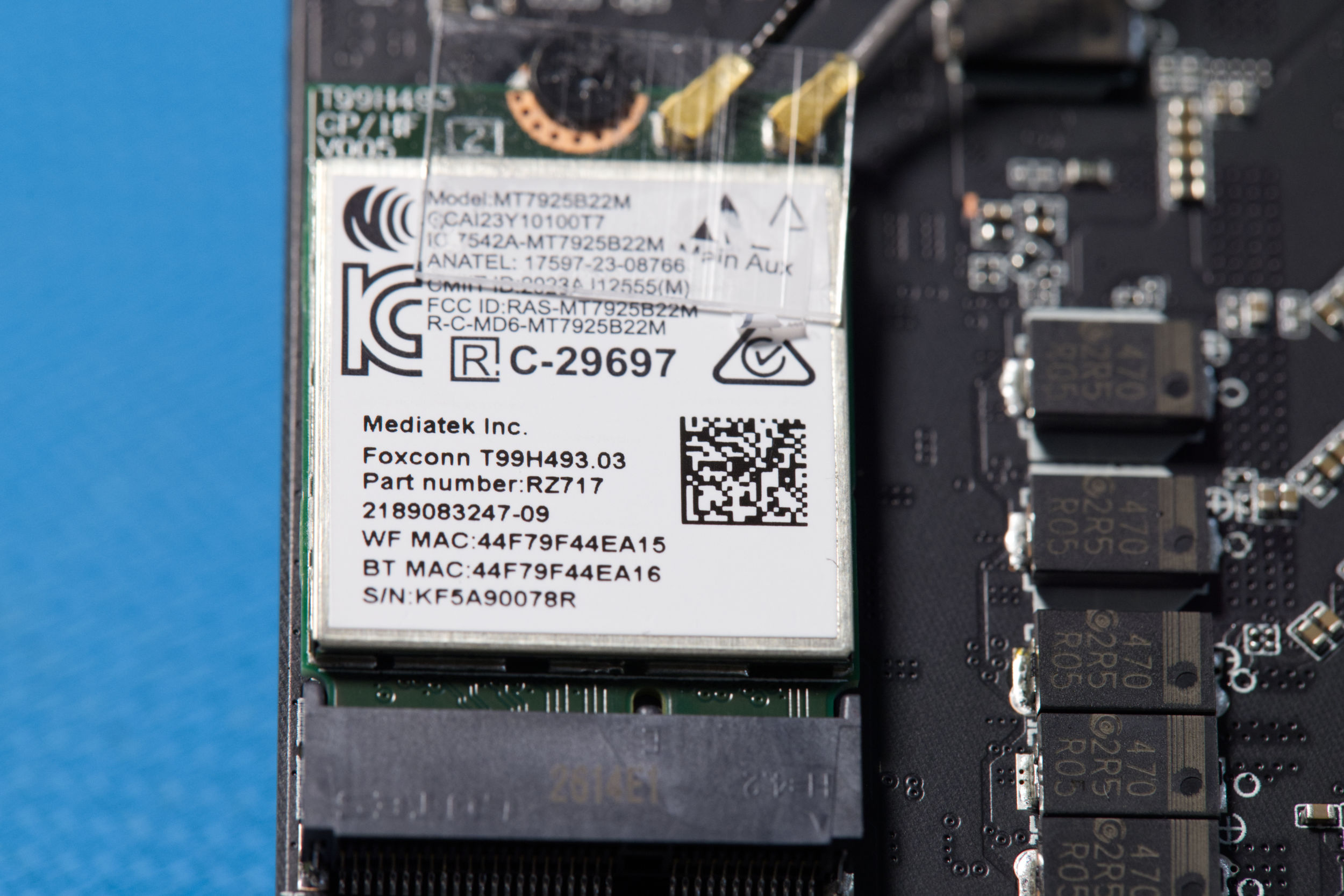
Below the SSD, there is also an M.2-2230 form factor slot that uses a Key A/E interface. This slot is occupied by a Mediatek module with the part number MT7925B22M. It implements the Wi-Fi 7 standard (802.11be) and offers a theoretical maximum throughput of up to 30 Gbit/s when paired with a compatible router. The module operates on the three bands: 2.4 GHz, 5 GHz, and 6 GHz. The module itself is reportedly specified for a data throughput of up to 5.4 Gbit/s. This is achieved using 2x2 antennas that are built into the mini PC.
This combo module also supports Bluetooth 5.4.
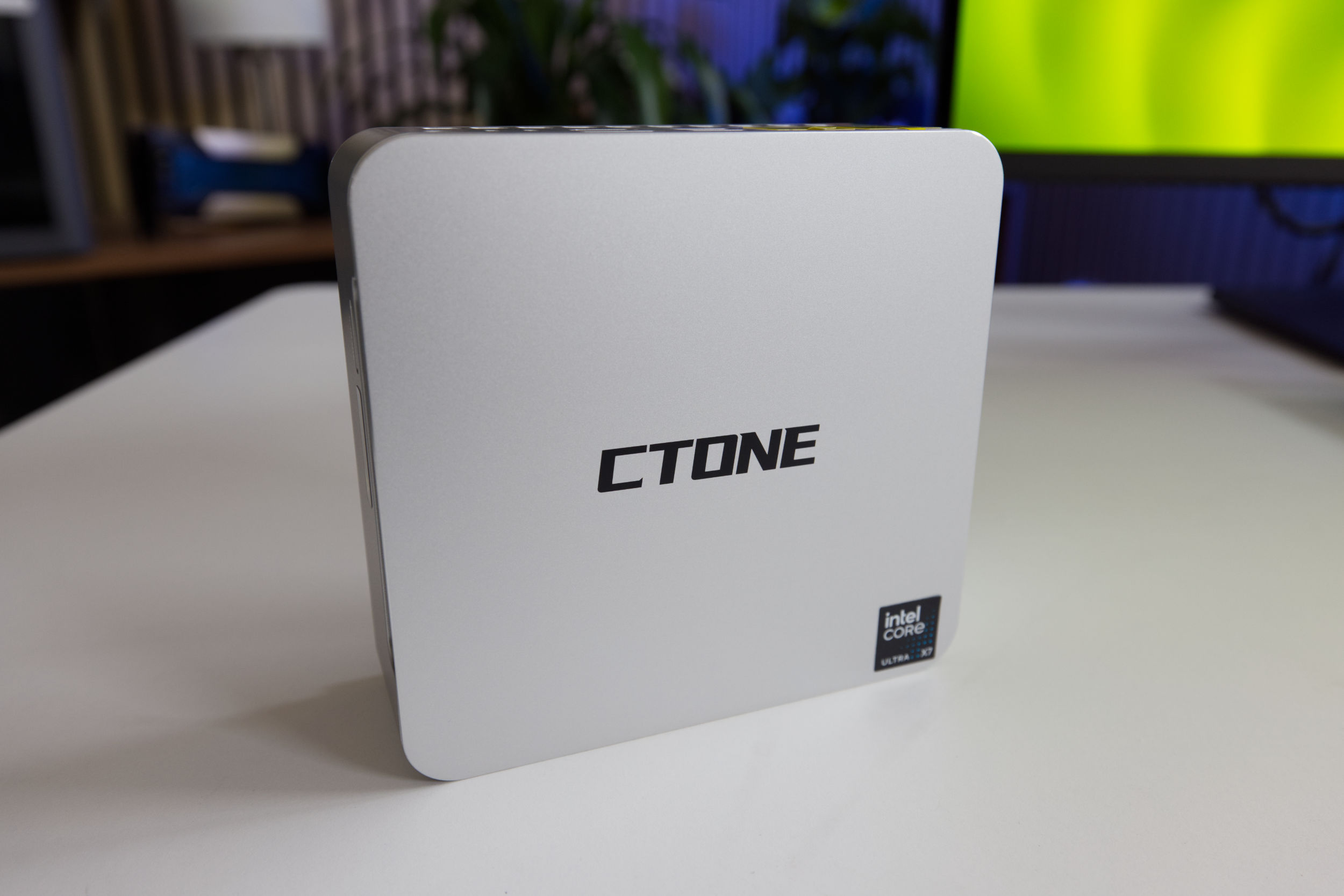 CTONE AM23 Mini PC Front (Image © PCMasters.de)
Design and Appearance
The CTONE mini PC is a real eye-catcher when it comes to design. Measuring 131 × 138 × 49.9 mm, it is medium-sized and fits well on a desk. The case has an aluminum-like appearance, but it is actually made of plastic. The top cover, however, is made of aluminum and thus offers more than just the look of aluminum. We’d rate the build quality as excellent, and the mini PC feels very high-end. The top cover features a reflective CTONE logo, and there’s also a black Intel sticker on the cover.
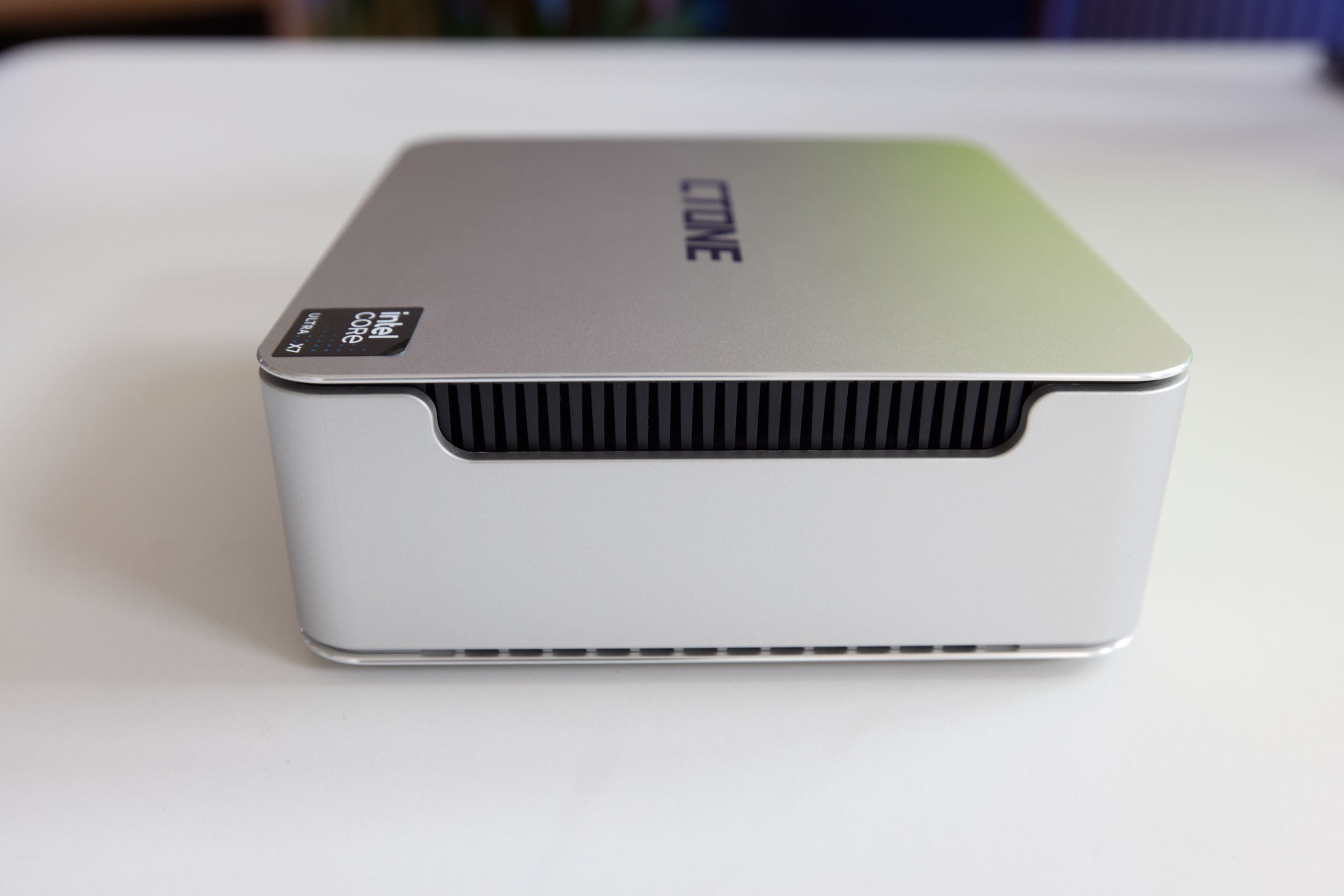 CTONE AM23 Mini PC Seite 2 (Image © PCMasters.de)
The sides feature clean cutouts with rounded corners, which is also a nice touch. There’s also about a 3 mm gap between the lid and the chassis, which adds some visual interest to the design. The interior is made of black material and also aids in cooling, as there’s a small fan mounted in the center. There are many vents on the bottom that serve the same purpose.
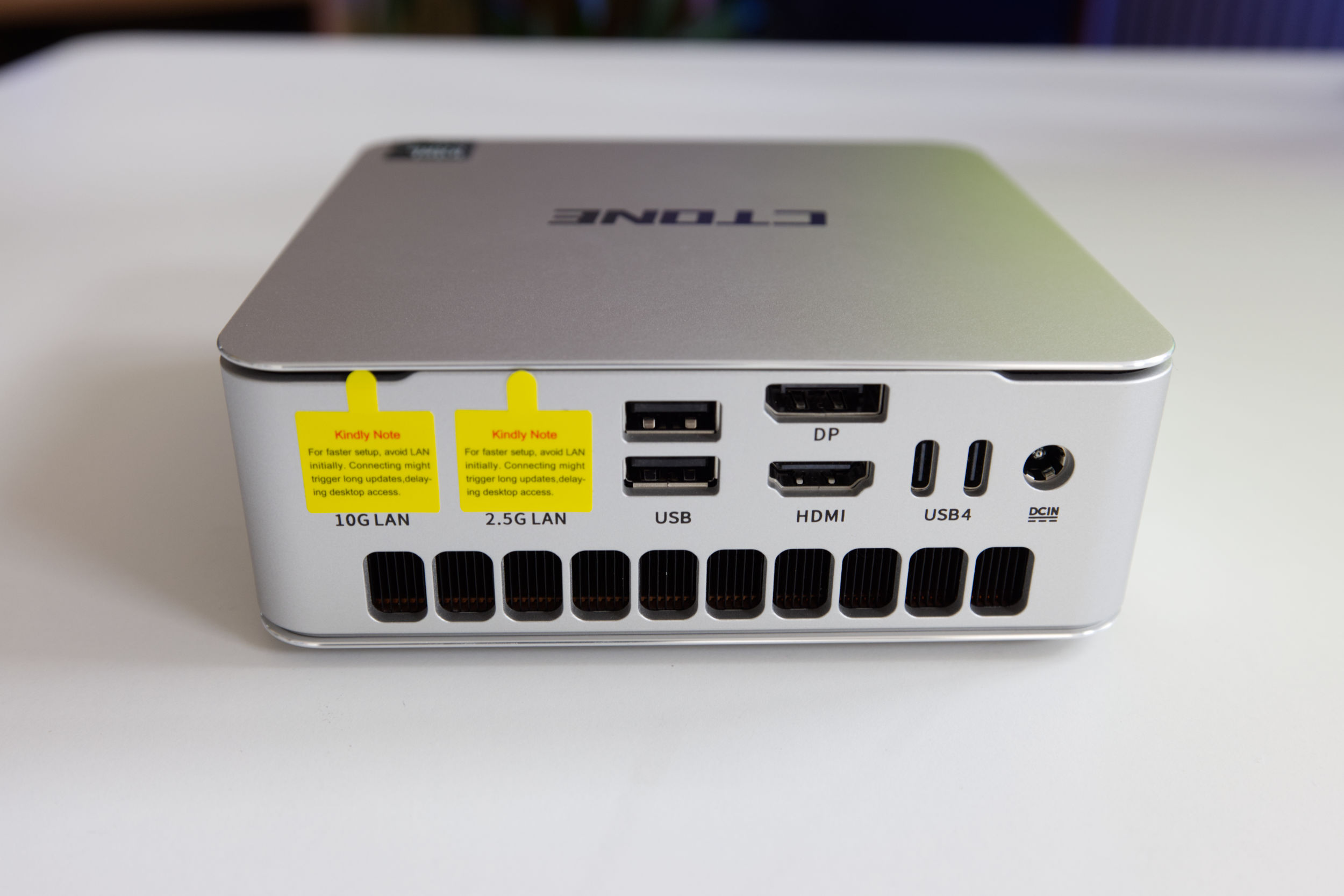 CTONE AM23 Mini PC Rückseite (Image © PCMasters.de)
The back panel has many more openings designed for airflow. The rounded shape also looks cool. The ports are located above them.
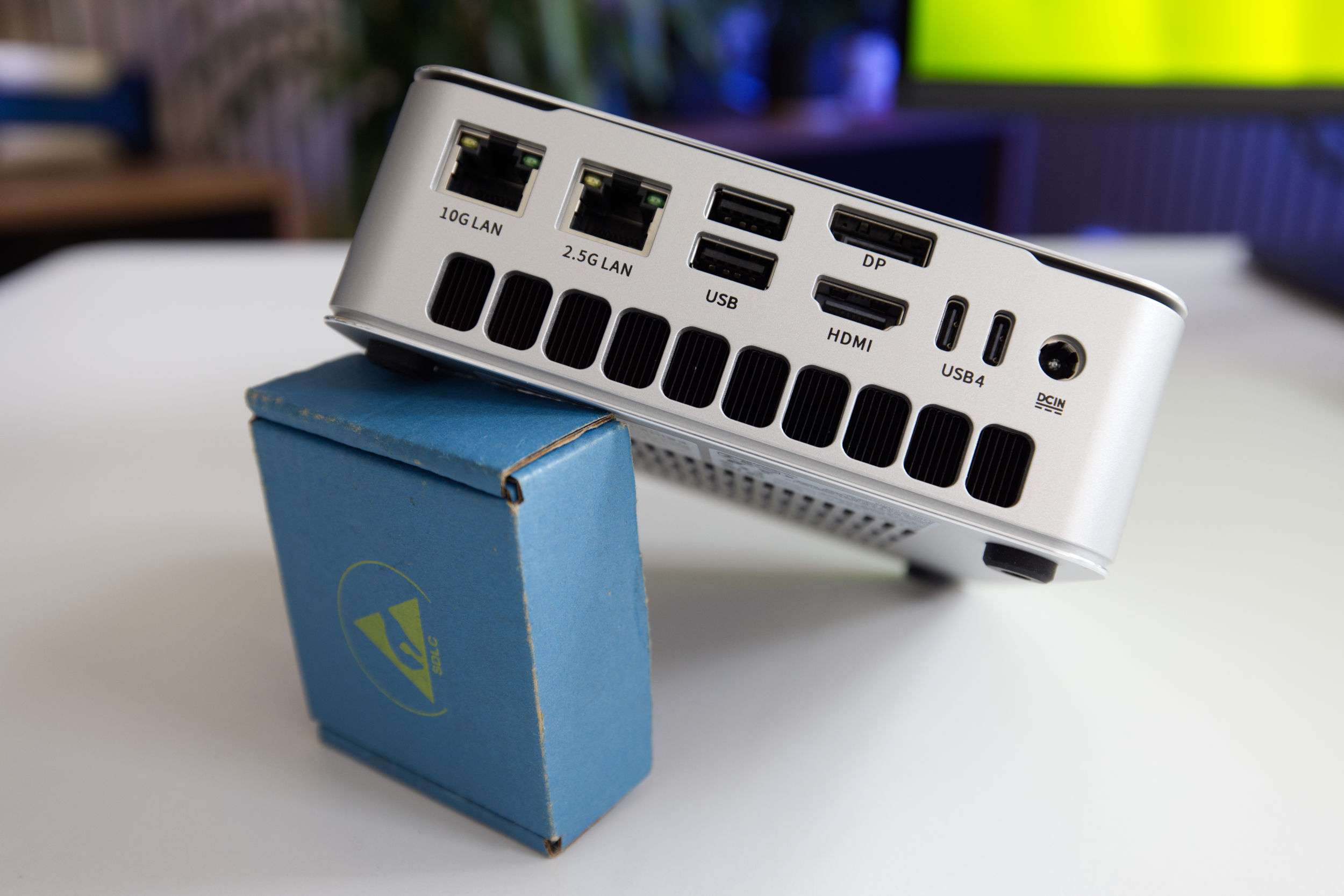 CTONE AM23 Mini PC hinten (Image © PCMasters.de)
The bottom looks similar, as there are many slits here designed for air intake. The rubber feet provide the necessary clearance from the surface and prevent the transmission of vibrations. There are screws under the feet, so you’ll need to remove them to access the screws.
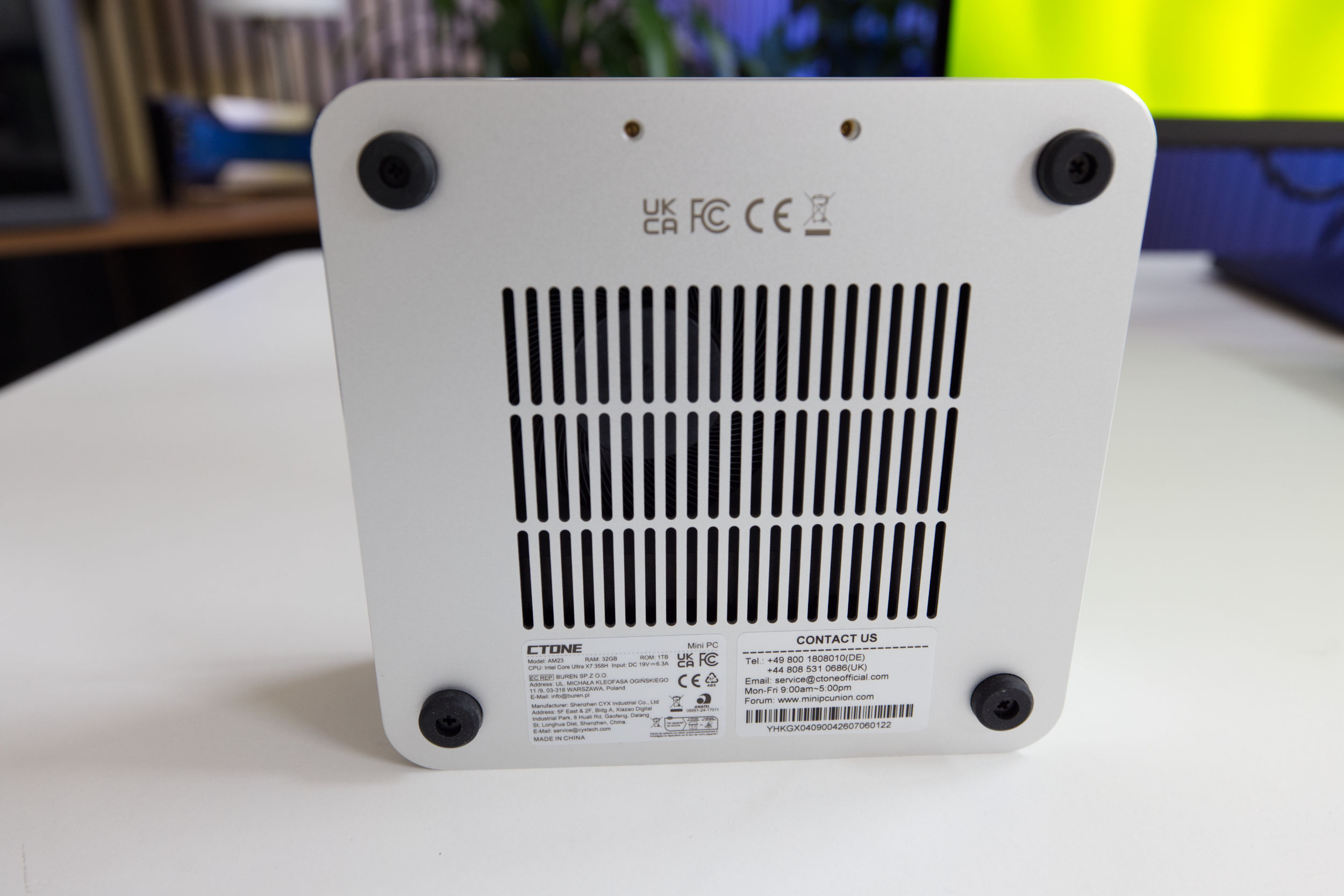 CTONE AM23 Mini PC Ansicht unten (Image © PCMasters.de)
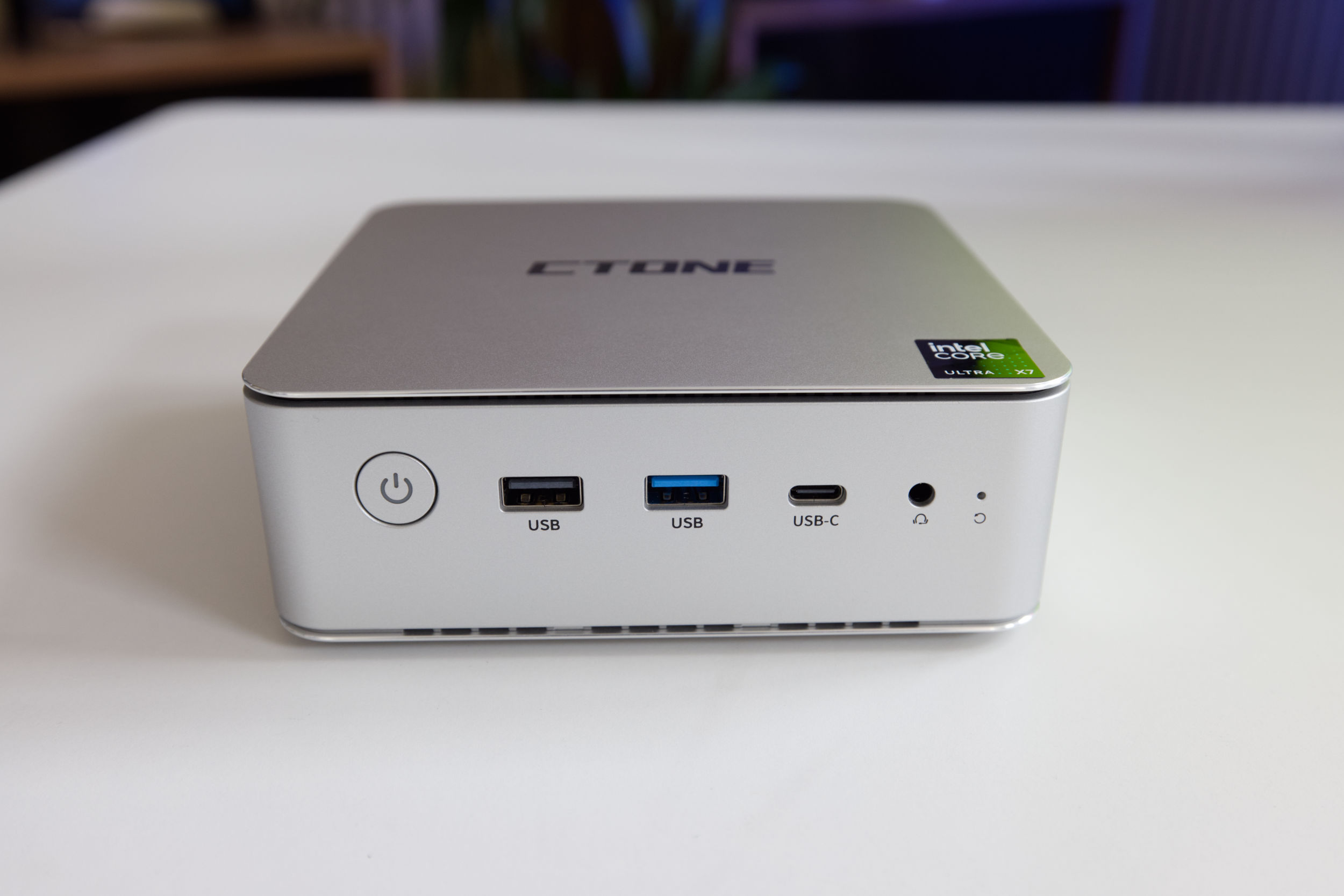 CTONE AM23 Mini PC Front Ansicht (Image © PCMasters.de)
Connectors on the CTONE AM23
The front of the mini-PC is uncluttered, and the elements are arranged fairly symmetrically. Next to the large power button is the now-familiar connector configuration. Here we find a USB 2.0 Type-A port and a USB 3.2 Gen 2 Type -A port. Next to these is a USB 4 Type-C port, although we assume this also supports Thunderbolt 4, which is enabled by a chip on the PCB. However, CTONE does not provide any information regarding Thunderbolt 4. There is a 3.5mm jack for headphones, and right next to it is a CMOS reset button that is recessed.
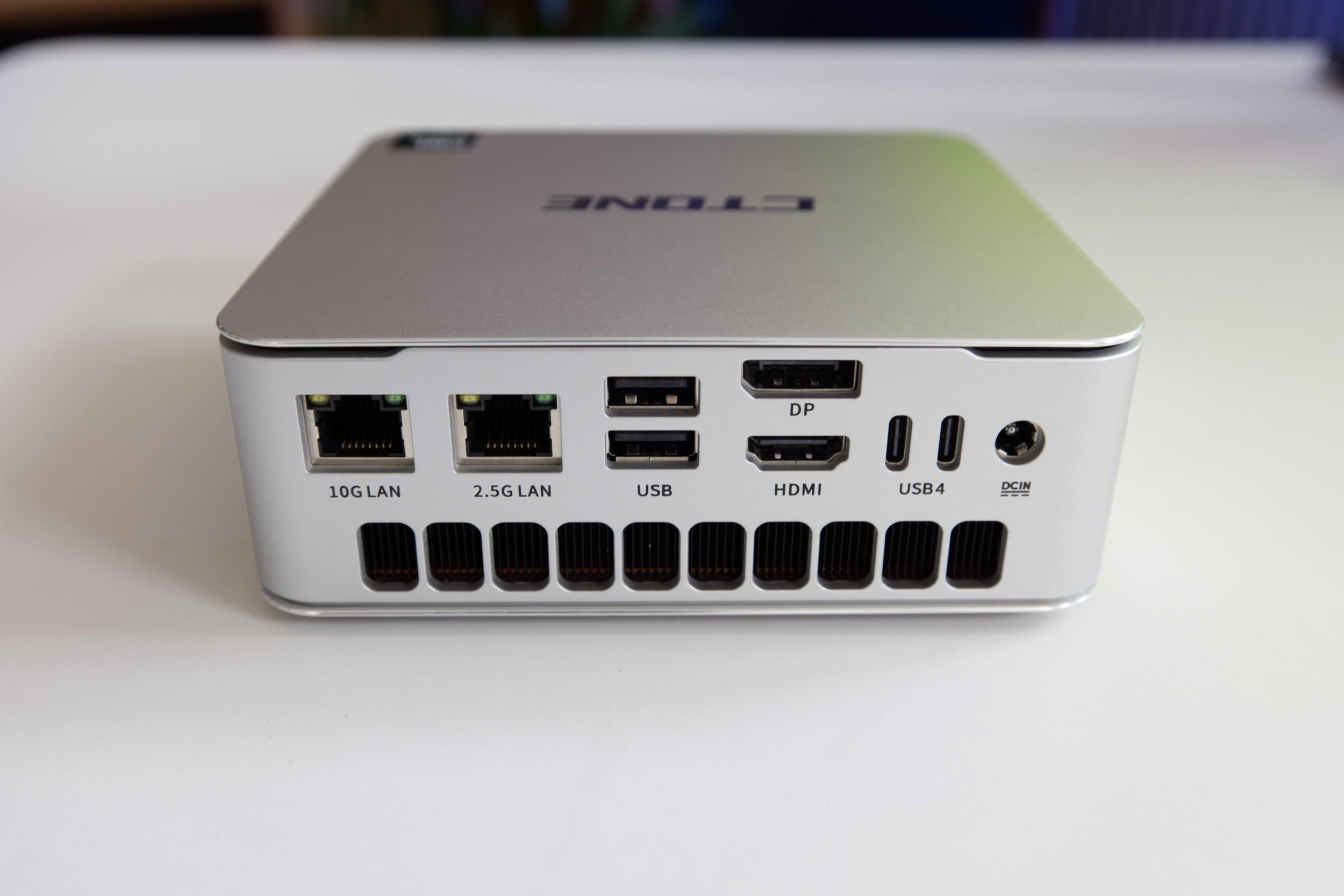 CTONE AM23 Mini PC Anschlüsse hinten (Image © PCMasters.de)
The back panel features a DisplayPort 1.4 and an HDMI 2.1 port for connecting monitors. Regarding resolution, the Amazon listing states that the HDMI 2.1 port supports 8K@60 Hz and 4K@120 Hz, while the DisplayPort 1.4 supports up to 8K@60 Hz. In addition, the two USB-4 Type-C ports on the back also support DisplayPort with up to 8K@ 30 Hz. It’s also worth noting that the two USB-4 ports offer a bandwidth of up to 40 Gbit/s and Power Delivery of up to 100 W.
Both Ethernet ports are covered by stickers intended to prevent users from having to create a Microsoft online account. You can safely remove these stickers. All ports are labeled on the bottom so it’s clear exactly which port is which.
The two Ethernet ports mentioned are quite unique, as we even get a 10GbE port that supports 10G/5G/2.5G/1G/100M. The second port operates at a maximum of 2.5GbE via the Intel I226-V chip.
The remaining two USB 2.0 Type-A ports are suitable for connecting input devices because they are very slow.
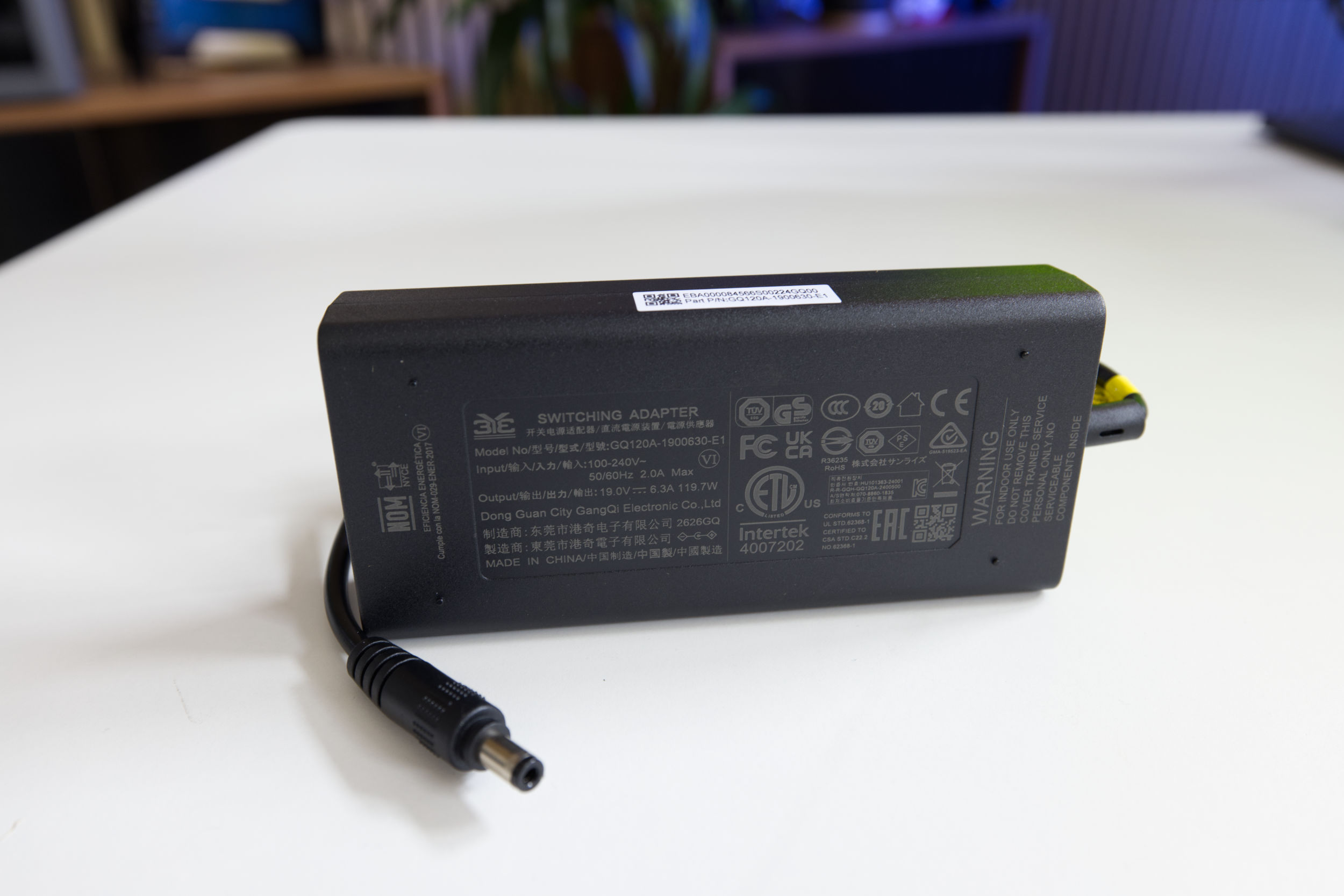 CTONE AM23 Mini PC Ladegerät (Image © PCMasters.de)
Power is supplied via a large, external power supply unit. A 2-pin, round connector is used. This connector supplies the mini-PC with 19 volts and a maximum of 6.3 A. This brings the power supply’s maximum output to an impressive 119.7 watts. Since the AM23 operates at a 65-watt TDP under continuous load and a short-term peak power of 80 watts, the power supply should not be overloaded. We measured the total power consumption at approximately 100 watts, which is also well within acceptable limits.
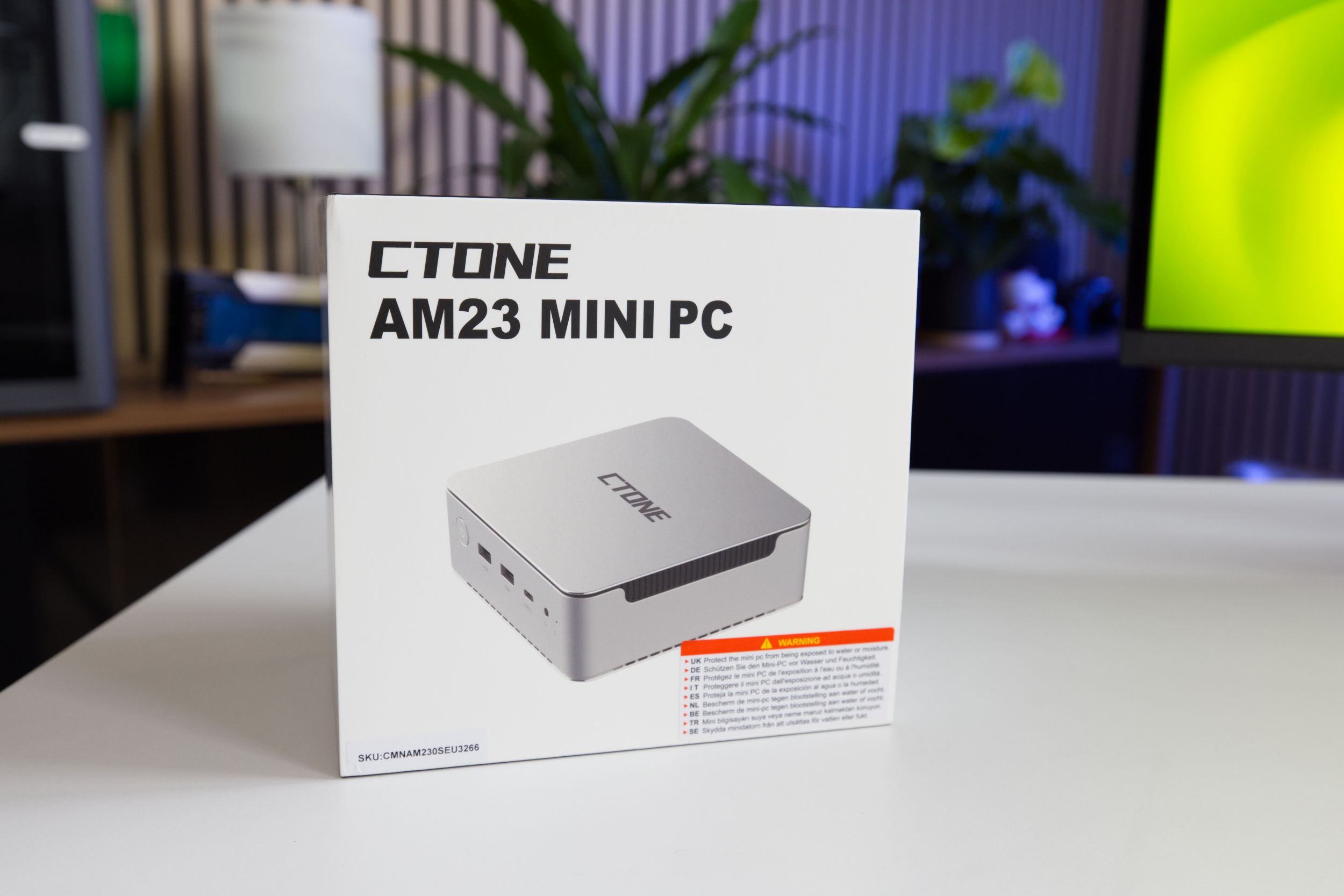 CTONE AM23 Mini PC Verpackung (Image © PCMasters.de)
Packaging and Contents
The CTONE AM23 comes in a very simple, white cardboard box. The front features a silver-gray print of the mini-PC, and the back lists several checked options indicating the mini-PC’s configuration.
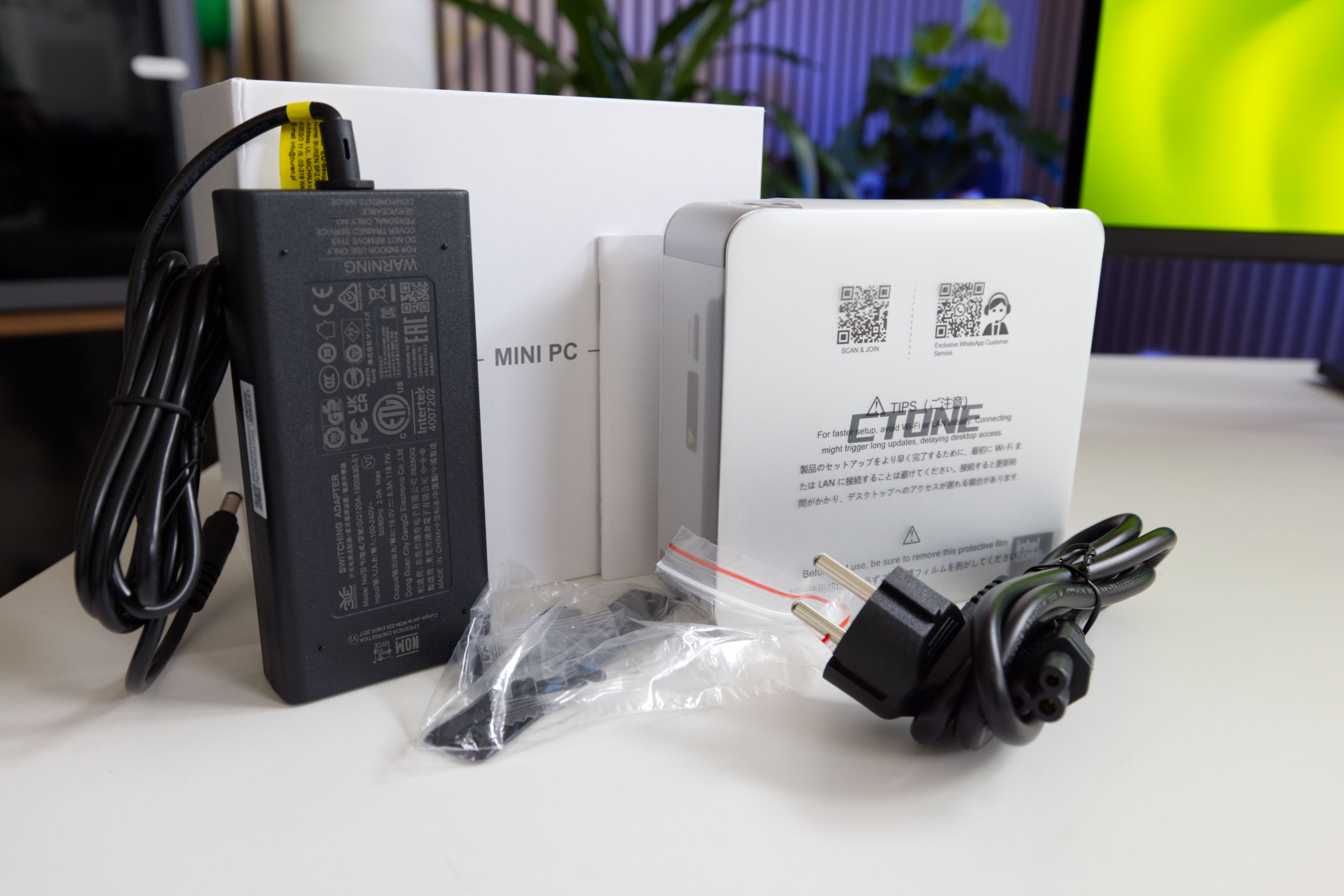 CTONE AM23 Mini PC Lieferumfang (Image © PCMasters.de)
The box consists of two parts, with the top section pulling out upward. Inside, the mini-PC is located at the very top, with the accessories underneath. This is very typical for CTONE. On both sides, a cardboard structure provides a roughly 5-mm buffer zone for protection during transport.
The package contents are sufficient and include, in addition to the mini PC and the power supply, a VESA mount with screws, a mini manual, and an HDMI cable. It’s a solid package, if not overly lavish.
Windows 11 Preinstalled
The CTONE AM23 ships with Windows 11 Pro preinstalled, offering a modern operating system. With advanced features tailored to professional environments, users can enjoy seamless multitasking and robust protection against modern threats, as the antivirus solution maintained by Microsoft itself is better than many of the other tools on the market. As long as you apply patches regularly, you’ll be on the safe side.
The Pro license is tied to the PC, and while the Windows 11 key can be retrieved, it’s stored in the device’s BIOS, which is why no activation was required after reinstallation. The Windows 11 Pro installation allows for a quick setup and doesn’t require an online account, which is otherwise mandatory with Microsoft. No bloatware was pre-installed either. To be on the safe side, however, we formatted the SSD and performed a clean install of Windows 11 on it. You can also install Linux if needed, which would definitely be a good option here.
CTONE AM23 Benchmarks
We use benchmarks to test the mini-PC’s performance in workloads and games.
| CTONE AM23 | ACEMAGIC Retro X3 | CTONE Kron Mini K2 | NiPoGi Pinova P1 | SAPPHIRE EDGE AI 370 | ACEMAGIC AM06 PRO | HUAWEI MateBook 14 | Ryzen 7 3700X | NiPoGi AM06 PRO | ACEMAGIC RX16 | ACEMAGIC V1 | ACEMAGIC AMR 5 | ACEMAGIC TK11 | |
|---|---|---|---|---|---|---|---|---|---|---|---|---|---|
| CPU | Intel Core Ultra X7 358H | AMD Ryzen 7 255 (H255) | Intel Core i5 12450H | AMD Ryzen Embedded R2544 | AMD Ryzen AI 9 HX 370 | AMD Ryzen 5 7430U | Intel Core i5-1340P | AMD Ryzen 7 3700X | AMD Ryzen 7 5825U | AMD Ryzen 7 H255 | Intel N97 | AMD Ryzen 5 5600U | Intel Core i5 11320H |
| RAM | 32 GB SKhynx LPDDR5-8533 (soldered) | 16 GB SAMSUNG LPDDR5-6400 (soldered) | 24 GB LPDDR5-5200 (soldered) | 16 GB Yinchu DDR4-2666 (SO-DIMM) | 32 GB Kingston DDR5-5600 (SO-DIMM) | 16 GB HOGE DDR4-2666 (SO-DIMM) | 16 GB DDR4-2666 (SO-DIMM) | G.SKILL Trident Z DDR4 (F4-3600C14D-32GTZN) | 16 GB SODIMM, DDR4-2666 (SO-DIMM) | 16 GB HOGE DDR5-4800 (SO-DIMM) | 16 GB Kinsotin DDR4-2666 (SO-DIMM) | 16 GB DDR4-2666 (SO-DIMM) | 16 GB DDR4-2666 (SO-DIMM) |
| SATA/NVMe SSD | Bestoss GM888 1TB (NVMe, PCIe 4) | faspeed P9 1 TB (NVMe, PCIe 4) | KPART512GBC2DVT 512 GB (NVMe, PCIe 3) | Colorfire 512 GB (SATA600) | Kingston OM8TAP41024K1-A00 1 TB (NVMe, PCIe 4) | AirDisk 512 GB (SATA600) | WD SN740 512 GB (NVMe, PCIe 4) | Sabrent Rocket 4 Plus 1 TB (NVMe, PCIe 4) | UDSS UD2CS1HT301-512G 512 GB (SATA) | G932E1M 512 GB (NVMe, PCIe 3) | Rayson RS512GSSD310 512 GB (SATA) | CYX-SSD-S1000 512 GB (SATA)> | 512 GB (SATA) |
| TBP/TDP | 65 W | 45 W | 45 W | 28 W | 45 W | 15 W | 25 W | 88 W | 15 W | 45 W | 19 W | 20 W | 32 W |
Below are some additional notes on the test conducted on the EDGE AI 370 Mini-PC:
- SAPPHIRE EDGE AI 370 (Performance): This is not the Windows Power Management option, but rather the BIOS setting that optimizes the system to prioritize performance over noise levels or power efficiency.
- SAPPHIRE EDGE AI 370 (Balance): This is the mini-PC’s default setting, and it represents the performance you’ll get when you unbox the PC and use it as it comes out of the box.
Note on the Comparison System
When testing the AMD Ryzen 7 3700X, we used the standard desktop system. - Motherboard: ASUS ROG Strix X570-I Gaming - Graphics Card: GeForce RTX 3090 Founders Edition - SSD: Samsung SSD 840 PRO 256 GB, Samsung 850 EVO 500 GB - M.2 SSD: Sabrent Rocket 4 Plus 1 TB - RAM: G.SKILL Trident Z DDR4 F4-3600C14D-32GTZN at DDR4-3600 - CPU Cooler: MSI MEG CORELIQUID S360 - Power Supply: Corsair RM-750X - 750 W - Fans: 0 - Case: Open-frame - Operating System: Windows 11 21H2
CTONE AM23 Benchmark (Synthetic)
Synthetic benchmarks allow for relatively good comparisons between different CPU architectures. Depending on the benchmark, the focus is on specific workloads, and this is where the respective CPU can demonstrate its performance.
Cinebench R15
Cinebench R20
7-Zip
Corona 1.3
HandBrake
WinRAR
Geekbench 5 CPU Benchmark
POV-Ray v3.7
3DMark CPU Benchmark
3DMark Time Spy
PCMark 10
It’s important to note that the graphics card plays a significant role in PCMark, and the Ryzen 7 3700X was tested with the RTX 3090 FE. Therefore, this comparison isn’t directly applicable. Later, we’ll compare additional mini PCs that provide a better comparison, since those tests evaluate the entire system.
Unigine Superposition (720p, Low)
CTONE AM23 Gaming Benchmarks
Gaming performance could only be tested to a limited extent. The games we normally use require a more powerful graphics card capable of handling ray tracing if necessary. After all, the goal here is simply to determine to what extent the CPU limits gameplay. However, this setup uses an iGPU, which is limited in performance.
Final Fantasy XV Benchmark
Resident Evil VILLAGE
Shadow of the Tomb Raider
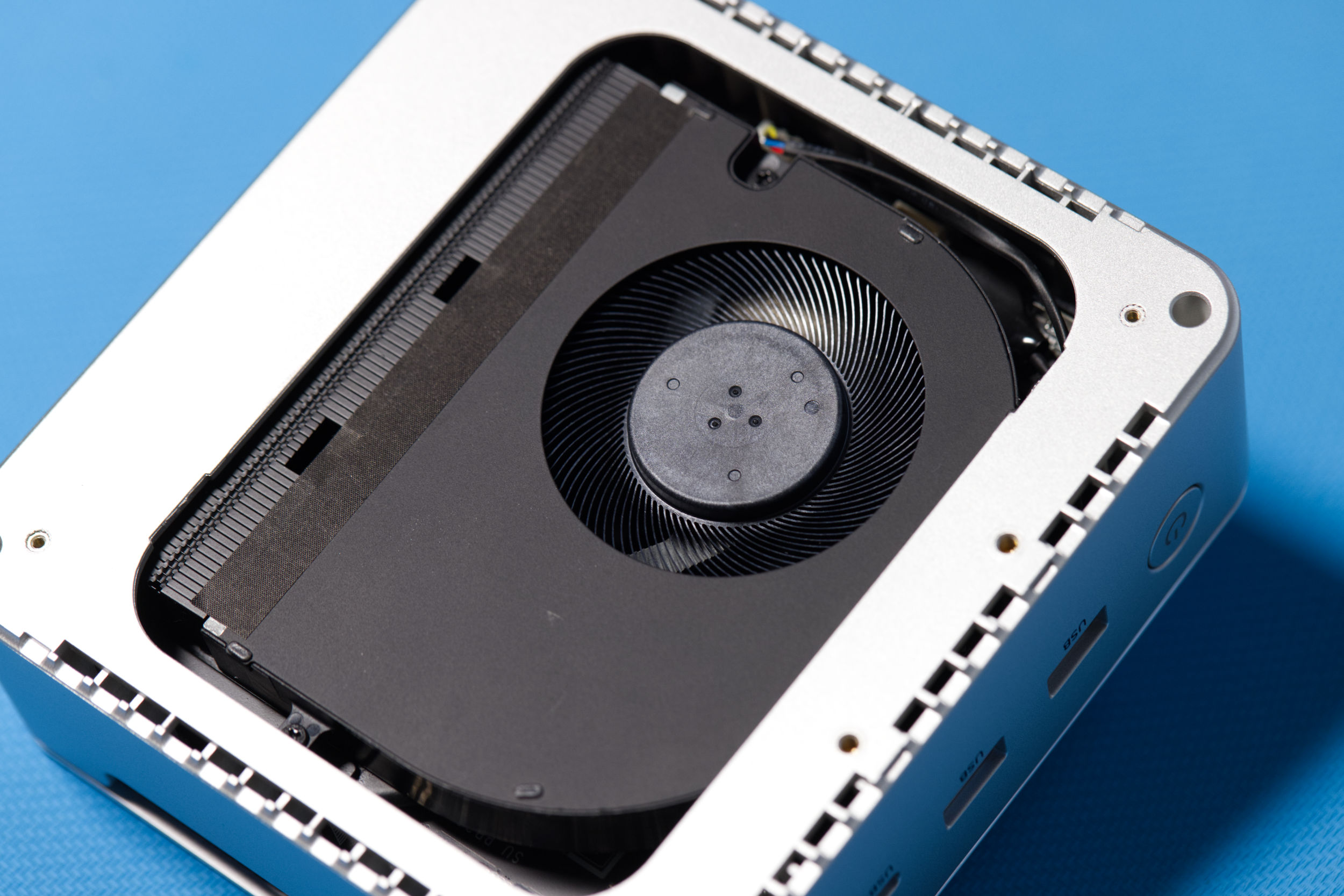 CTONE AM23 Lüfter eingebaut (Image © PCMasters.de)
CTONE AM23 Cooling
If you remove the rubber feet and then take out the screws, you can remove the bottom cover. The cooler is revealed underneath. To access it, you can loosen the screws holding the top cover in place.
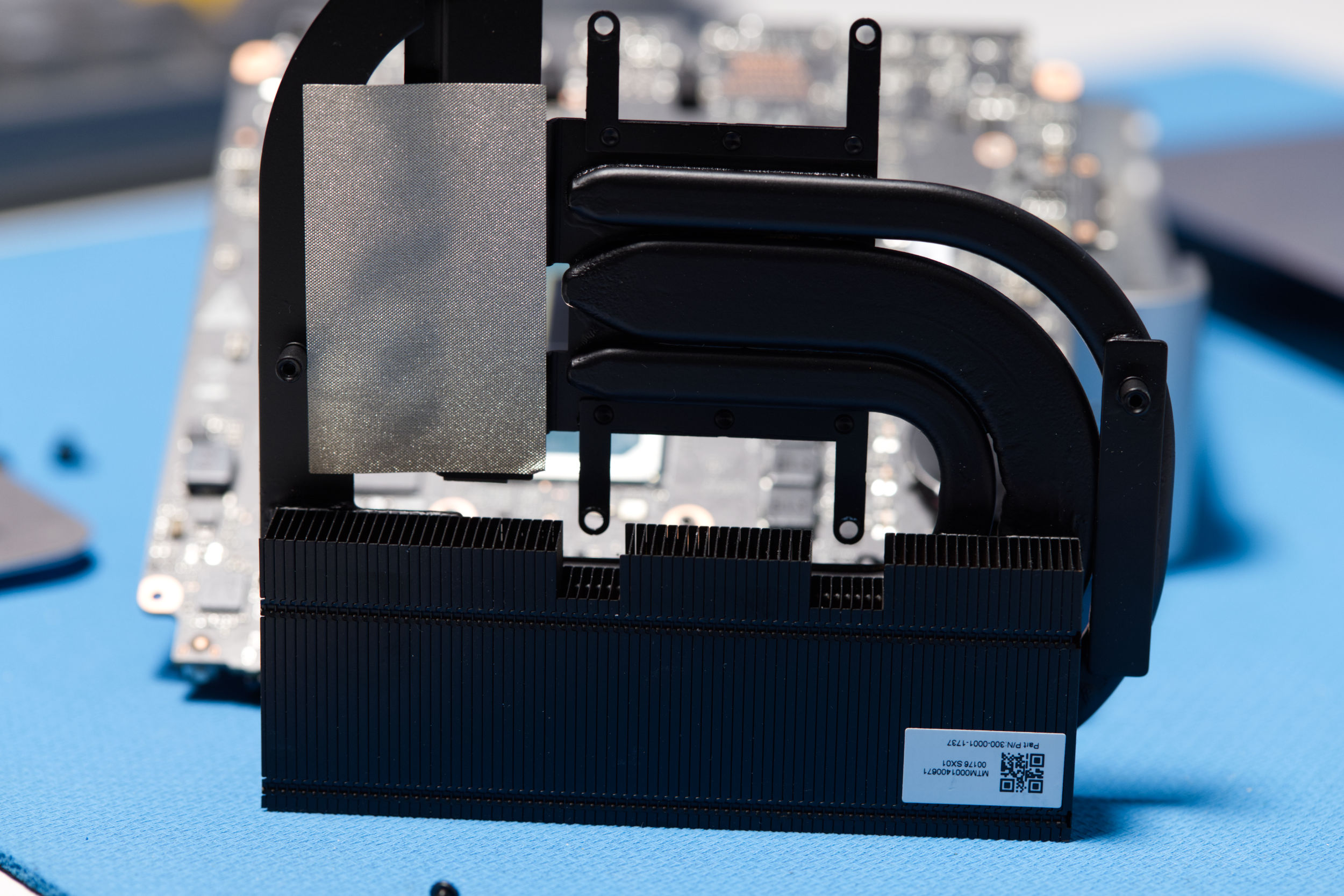 CTONE AM23 Kühler lackiert (Image © PCMasters.de)
The installed heatsink is quite large and covers almost the entire PCB. CTONE uses one very thick heat pipe and two 6-mm heat pipes, which are pressed. The heatsink is made of copper, with one side painted black. The other side is unfinished. The pipes are connected to two stacks of fins, and the fan is positioned between them, forcing air out through this area. Cool air is drawn in from below.
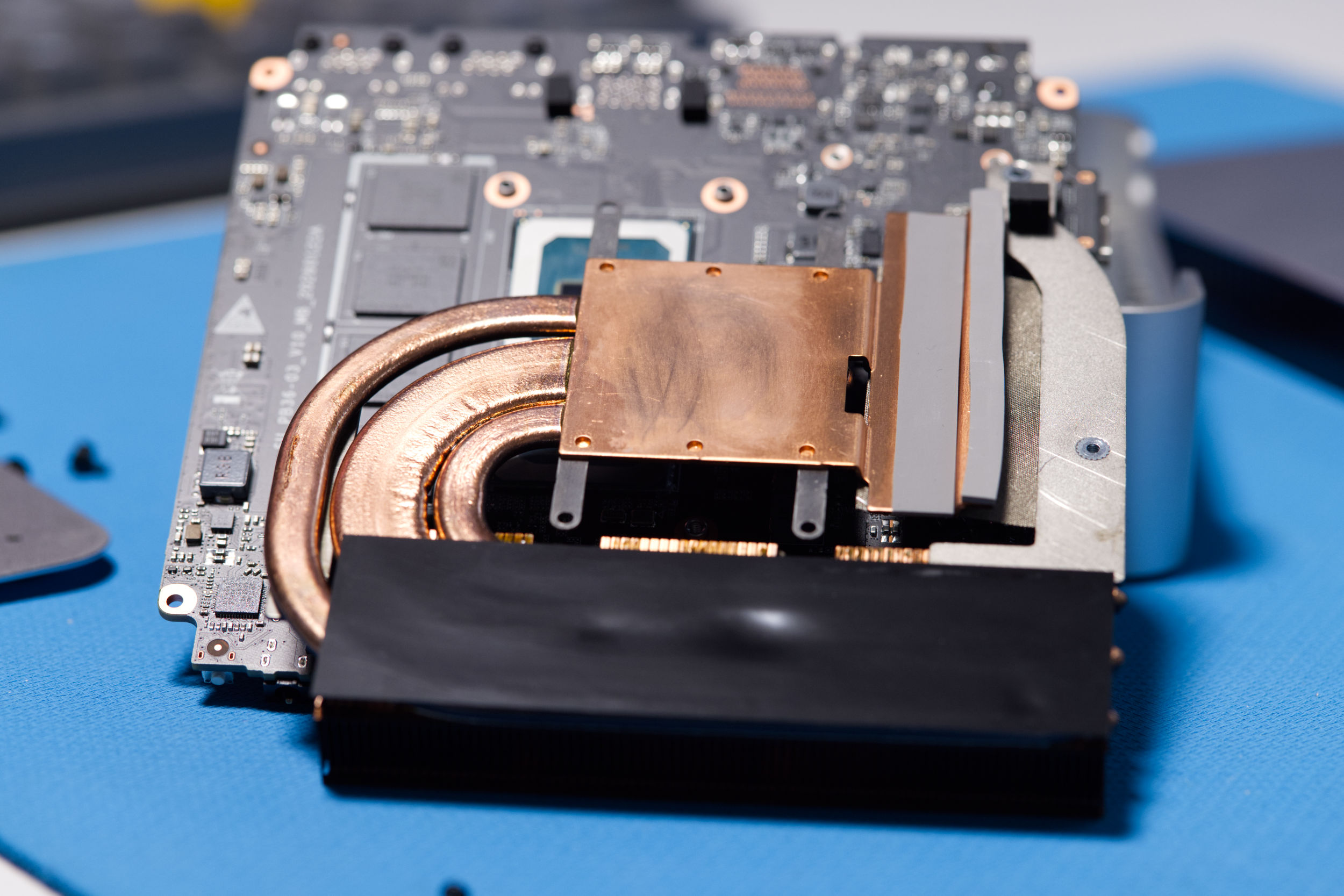 CTONE AM23 Kühler (Image © PCMasters.de)
The fan is powered by 5 volts and is typical for laptops. At the two seams, the junction between the fan and the fins is covered with tape.
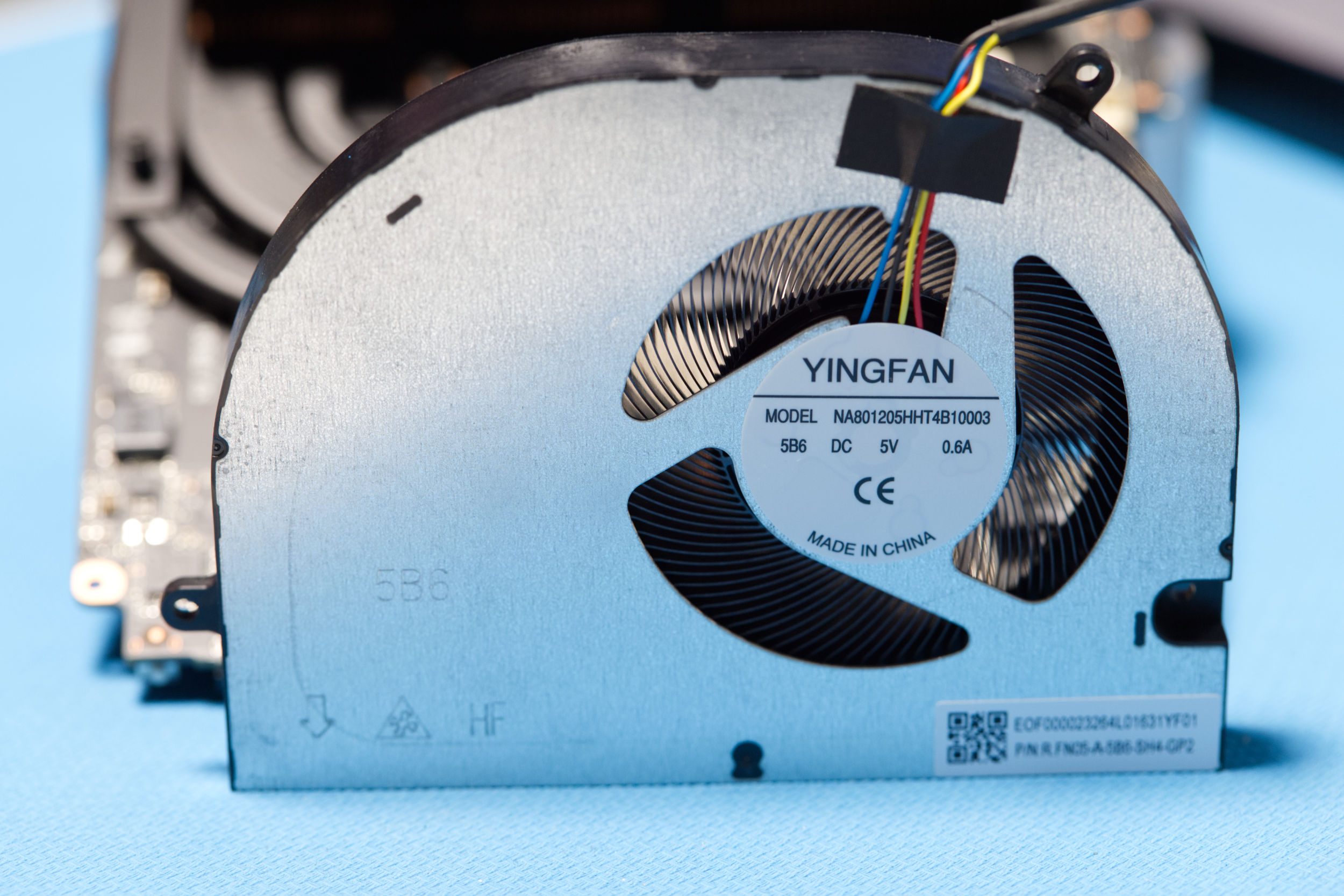 CTONE AM23 Lüfter (Image © PCMasters.de)
On the top cover, we find a small fan designed to dissipate the hot air from the SSDs.
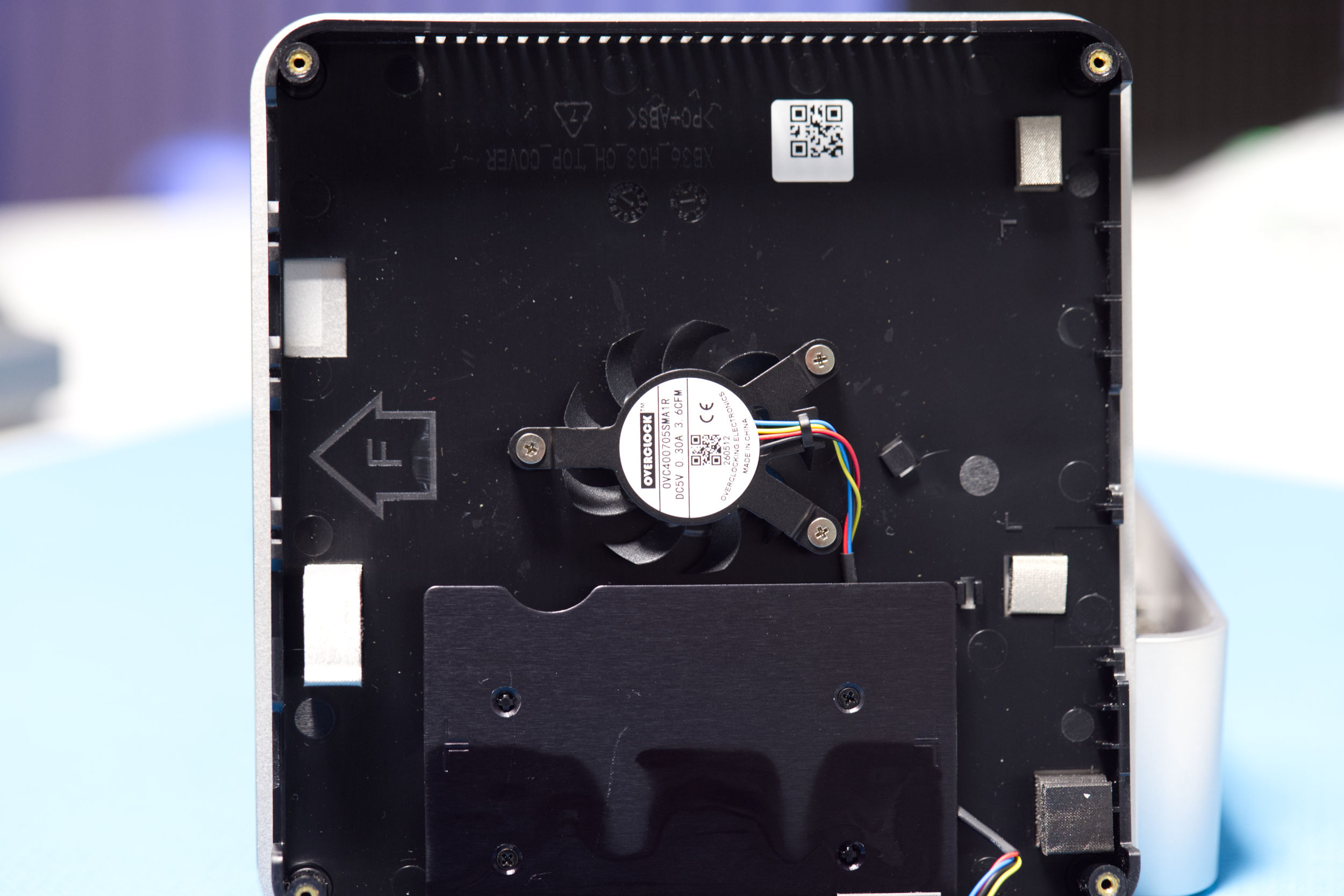 CTONE AM23 Zusatzlüfter (Image © PCMasters.de)
When looking at the peak temperature, the AM23 stands out negatively because it tends to run rather hot. Even though the cooler is relatively large, it could be even larger for the high-end Intel CPUs of the Panther Lake generation. This would create more headroom, even if the CPU hasn’t throttled its performance.
The measured values are delta values, with room temperature factored out.
Volume and Background Noise
Under constant full load, the AM23 becomes significantly louder than other models. When measured from a distance of 20 cm, the PC was clearly audible.
The fan noise sounds like that of a laptop fan and, at approximately 47.6 dB(A), is rather loud when the CPU is under full load. During normal operation, the fan briefly revs up every now and then and then slows down again. It isn’t too distracting, but we find the noise level under full load to be somewhat high.
Power Consumption
With its 65-W TDP CPU configuration, the CTONE AM23 falls in the middle of the pack, as it’s designed to deliver solid performance. Considering its performance, the AM23 mini-PC is quite energy-efficient and impresses.
When measuring the power consumption of the entire mini-PC, it comes to approximately 98 watts under full load. This places it above the power consumption of the Ryzen 9 6900H but also above the 72 watts of the Ryzen AI 9 HX 370.
Performance in Gaming, Multi- and Single-Thread Applications (Rating)
When looking at performance in single-threaded applications, the AM23 ranks a strong second. Its single-thread performance thus exceeds that of AMD’s Ryzen AI 9 HX 370.
Multi-threaded performance is important for everyday tasks, because all operating systems use many processes and benefit from multitasking. While the AM23 performs well, the Ryzen AI 9 HX 370 is on par with it and is faster in Performance mode. This is because the Intel Core Ultra X7 358H does not have 16 equivalent cores, but only 4 Performance cores, while the other Efficient cores offer lower performance. However, the Ryzen AI 9 HX 370 actually has one drawback: it’s "only" equipped with 12 cores.
Where the AM23 with the Core Ultra X7 358H really shines is in gaming. The Intel Arc B390 GPU extracts impressive performance from the iGPU, placing the mini-PC in third place—with only the two desktop PCs featuring dedicated graphics cards ahead of it.
CTONE AM23 Mini PC Front Ansicht (Image © PCMasters.de)
Conclusion on the CTONE AM23

Even though CTONE isn’t yet a very well-known manufacturer, the products it has introduced so far are surprisingly good. With the AM23 mini-PC, CTONE has unveiled a truly powerful model that ranks high in our Mini PC Comparison 2026. The 32 GB of LPDDR5 RAM, which is soldered directly onto the board, is well-suited for this CPU, and the internal 1 TB SSD (PCIe Gen 4) fits well into the overall package—though it can also be expanded via a second, slower NVMe slot. But this little powerhouse also features an OcuLink port on the side, two Thunderbolt 4 ports, and even a 10-Gbit and a 2.5-Gbit LAN port on the back. This configuration makes the AM23 a compact workstation with plenty of potential.
As usual, the mini-PC ships with Windows 11 Pro pre-installed and a license included, and thanks to its VESA mount, it can easily be mounted elsewhere in the workspace.
The Panther Lake CPU can keep up with the Ryzen AI 9 HX 370 in many benchmarks, but it’s at a disadvantage when it comes to efficiency. The built-in cooler appears large but can barely handle the system’s heat dissipation, which means the AM23 gets loud under full load. It stands out from the Ryzen AI 9 HX 370 primarily in gaming performance, where the AM23 ranks highest among mini-PCs.
The price on Amazon is listed at €2,499, but it drops to €1,799 as soon as you add it to your cart. This makes the CTONE AM23 only slightly more expensive than the competition, but significantly better than the base price of €2,499.
Pros
- Good single- and multi-threaded performance
- Integrated WiFi 7 combo module
- 32 GB LPDDR5 (from SK Hynix)
- Sleek design
- 1 TB NVMe SSD installed (Chinese manufacturer)
- Two M.2 slots for SSDs (PCIe 5.0 x4 + PCIe 4.0 x1), one already occupied
- NVMe slot accessible for upgrades
- Windows 11 Pro installed and licensed
- Strong gaming performance from the Arc B390
- Compatible with Linux
Cons
- RAM is soldered in place
- Price was high at the time of testing
- Quite loud under full load