
 Computer Forum
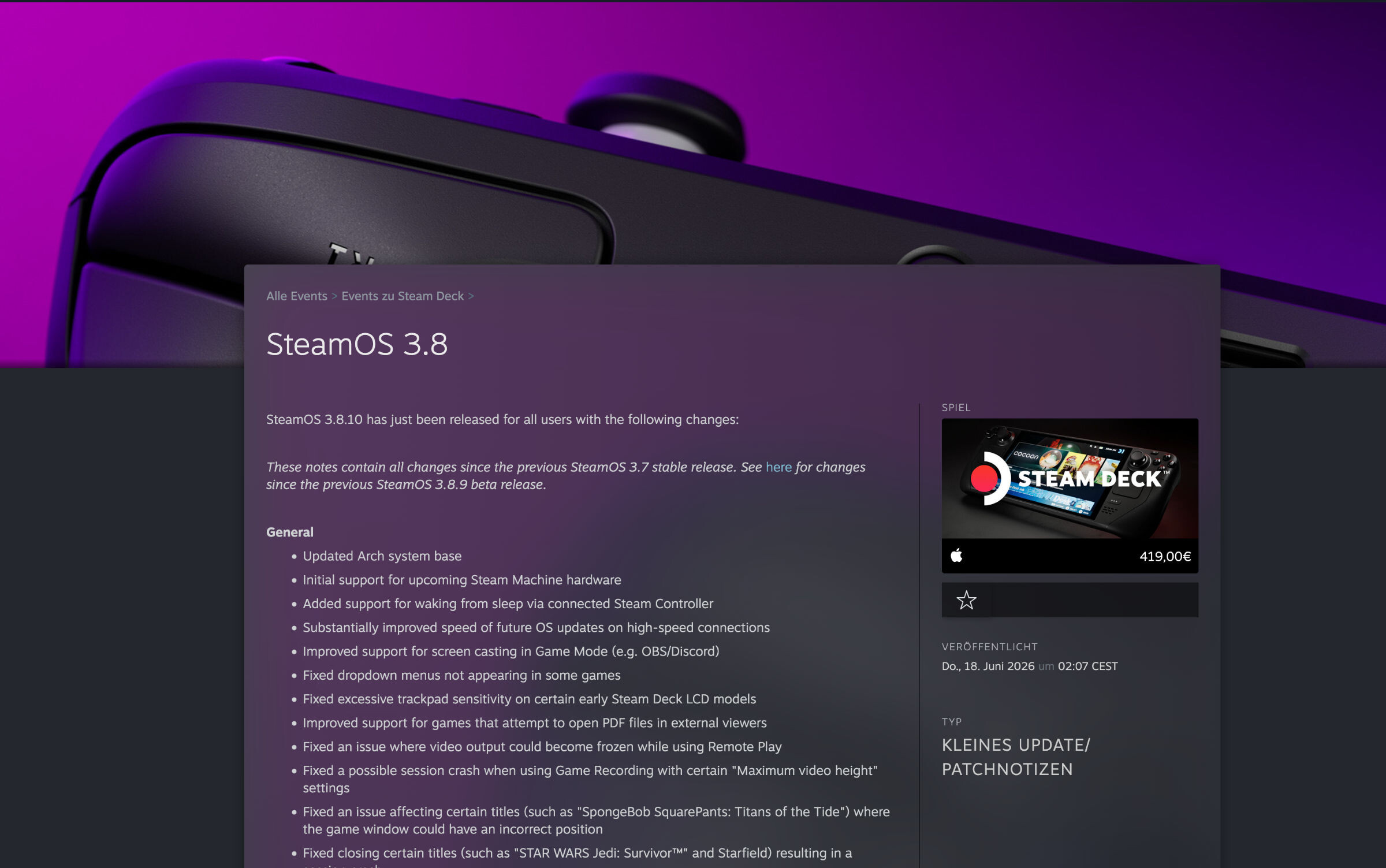 SteamOS 3 8 (Image © Valve)
Desktop mode and system architecture
The most noticeable change in this release is the update to KDE Plasma 6.4.3, which replaces Wayland X11 as the default session manager. This change fixes previous performance differences between desktop and game modes while also enabling advanced display features, including per-screen scaling factors and native support for external HDR and VRR monitors.
In the background, the operating system has been updated to the latest Arch system base and the Linux kernel has been updated to version 6.16. Developers also benefit from new features such as the ability to set desktop passwords in the developer settings and initial support for running the operating system as a guest in a virtual machine.
Integration of third-party handheld devices
SteamOS 3.8 significantly expands its scope beyond the Steam Deck. There is now comprehensive controller and system support for a wide range of devices, including the Lenovo Legion Go series, the MSI Claw and the ASUS ROG Ally. In particular, the update reduces controller input latency from 5-8 ms to 100-500 µs for a more responsive experience. For users of newer hardware, the update offers fixes for a smoother system startup as well as support for night mode and color temperature sliders on Z2E and later AMD APUs. In addition, improvements have been made to the reliability of SD card performance for the MSI Claw and Legion Go series.
Display and performance optimizations
The graphics drivers have been updated to improve overall stability and performance. An important new feature is the preliminary support of HDMI Variable Refresh Rate (VRR) for devices with native HDMI output. Valve has also refined VRR frame pacing and fixed issues where the FSR icon was not displayed in the performance overlay. The update also introduces initial support for upcoming Steam Machine hardware, indicating that the operating system is being prepared for a wider range of hardware configurations.
Audio and accessibility improvements
Several refinements have been made to the audio stack, including the ability to detect the number of HDMI channels for surround sound configurations. To improve accessibility, a new option allows users to force mono audio output. In addition, Bluetooth headset microphones are now supported, although the system will indicate a reduction in playback quality when the microphone is active.
Firmware and hardware fixes
The update includes important BIOS updates for existing Steam Deck models. The LCD version (v133) introduces preliminary support for sleep mode and new memory performance options, while the OLED version (v114) has had its charging LED adjusted to change color once a user-defined charging limit is reached.
Overall stability has been improved with fixes for session crashes on high profile titles as well as fixing issues with video freezing during remote play sessions. Support for external USB devices, especially steering wheels that boot in non-standard save modes, has also been improved.