
 Computer Forum
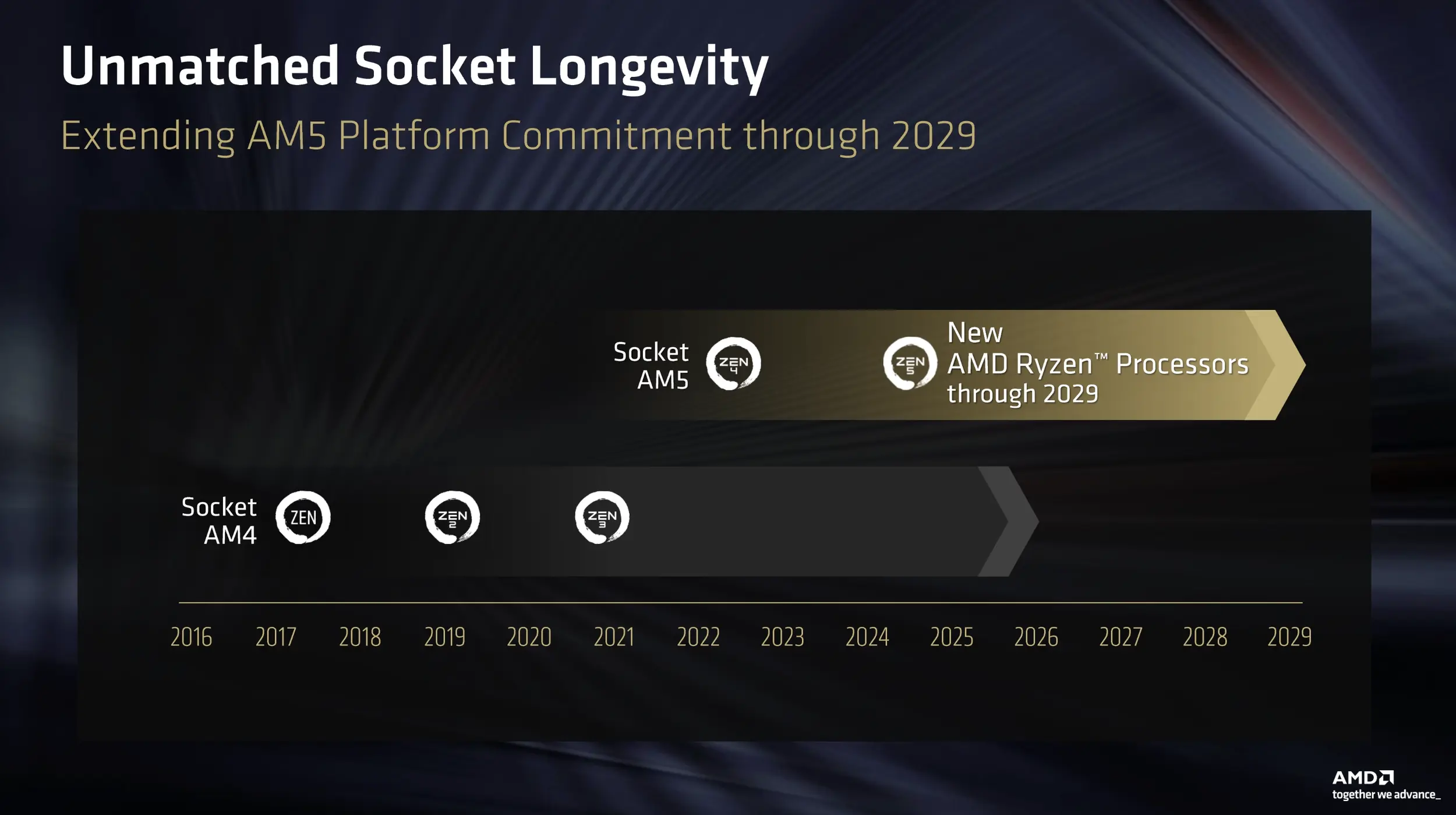 AM5 und AM4 Lebenszyklus erweitert (Image © AMD)
Socket AM4 provided long-term stability by supporting a wide range of architectures. This began with the original Zen and Zen+ designs in the Ryzen 1000 and 2000 series, followed by the Zen 2 architecture in the Ryzen 3000 and 4000 APUs. The platform peaked with the Zen 3-based Ryzen 5000 series, which established a performance edge over Intel's competing desktop offerings. To continue supporting this ecosystem, AMD has launched a new production run of the Ryzen 7 5800X3D, currently the fastest gaming processor for the AM4 socket.
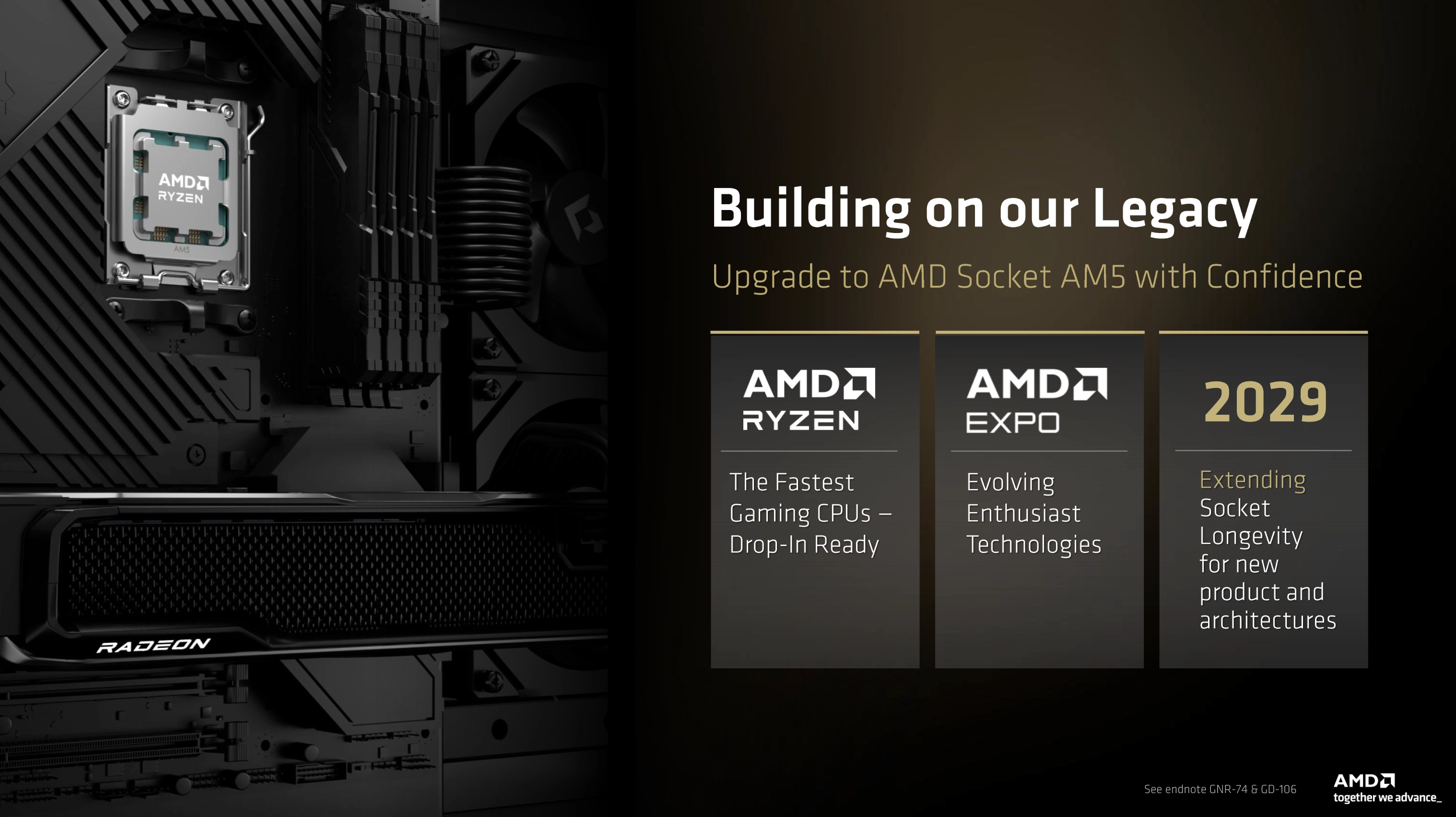 AM5 und AM4 Lebenszyklus 2 (Image © AMD)
The transition to the AM5 socket took place in 2022 with the release of the Zen 4 architecture and the Ryzen 7000 series. While the company had originally indicated a support period until 2027, AMD has now officially extended the lifespan of the AM5 platform until 2029.
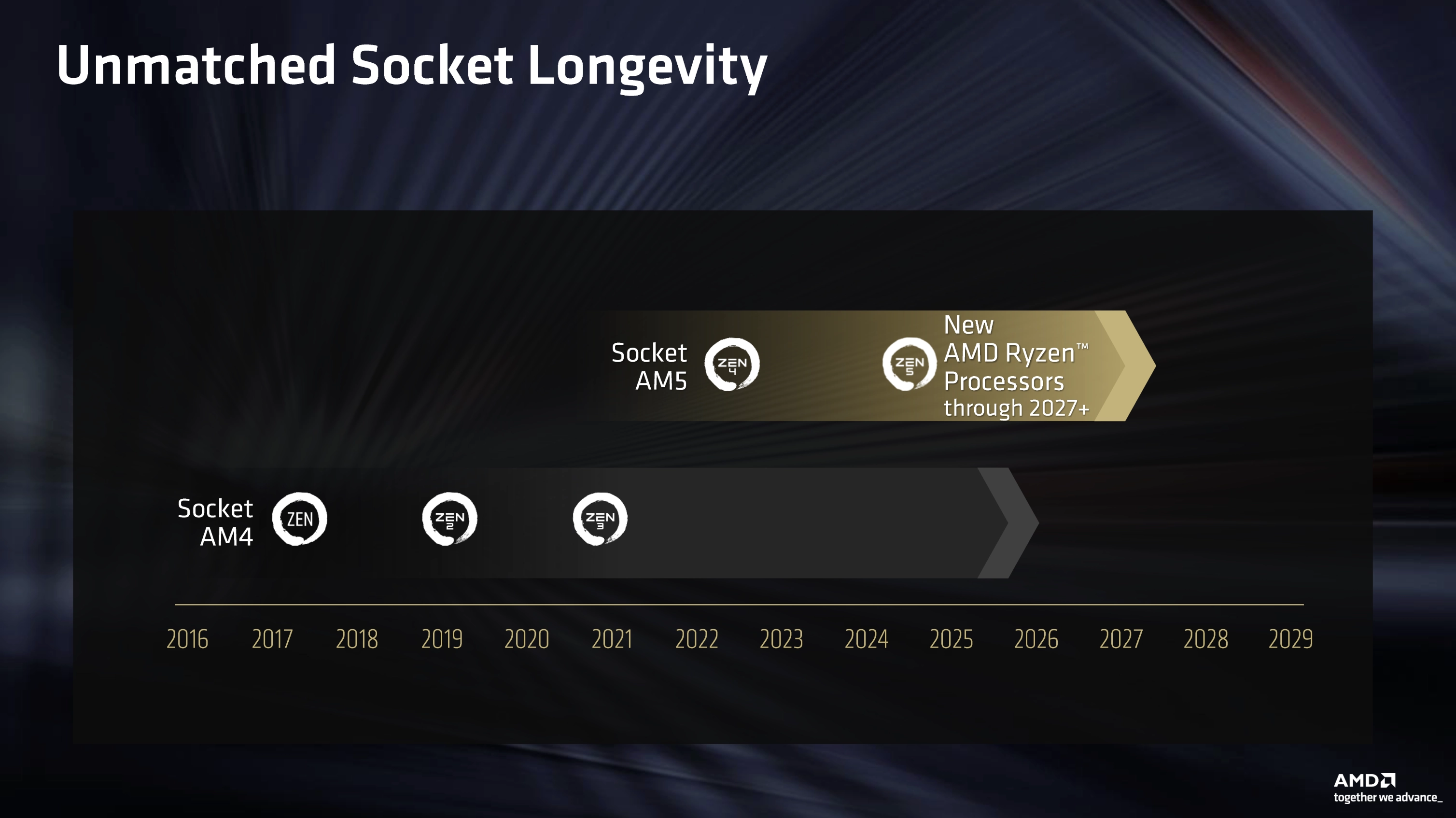 AM5 und AM4 Lebenszyklus (Image © AMD)
The current AM5 product range includes the Ryzen 8000 series APUs, the Zen 5-based Ryzen 9000 series and the recently launched Ryzen AI 400 desktop APUs. Although AMD has not explicitly named the next generation of processors, the extension of the socket lifecycle strongly hints at the imminent launch of the Zen 6 microarchitecture.
As no specific details on Zen 6 were released during Computex, it is not expected that the architecture will be launched as early as 2026. Market analysis suggests that AMD will likely introduce or preview Zen 6 in 2027, with the subsequent product launch filling out the remainder of the AM5 lifecycle until 2029.