
 Computer Forum
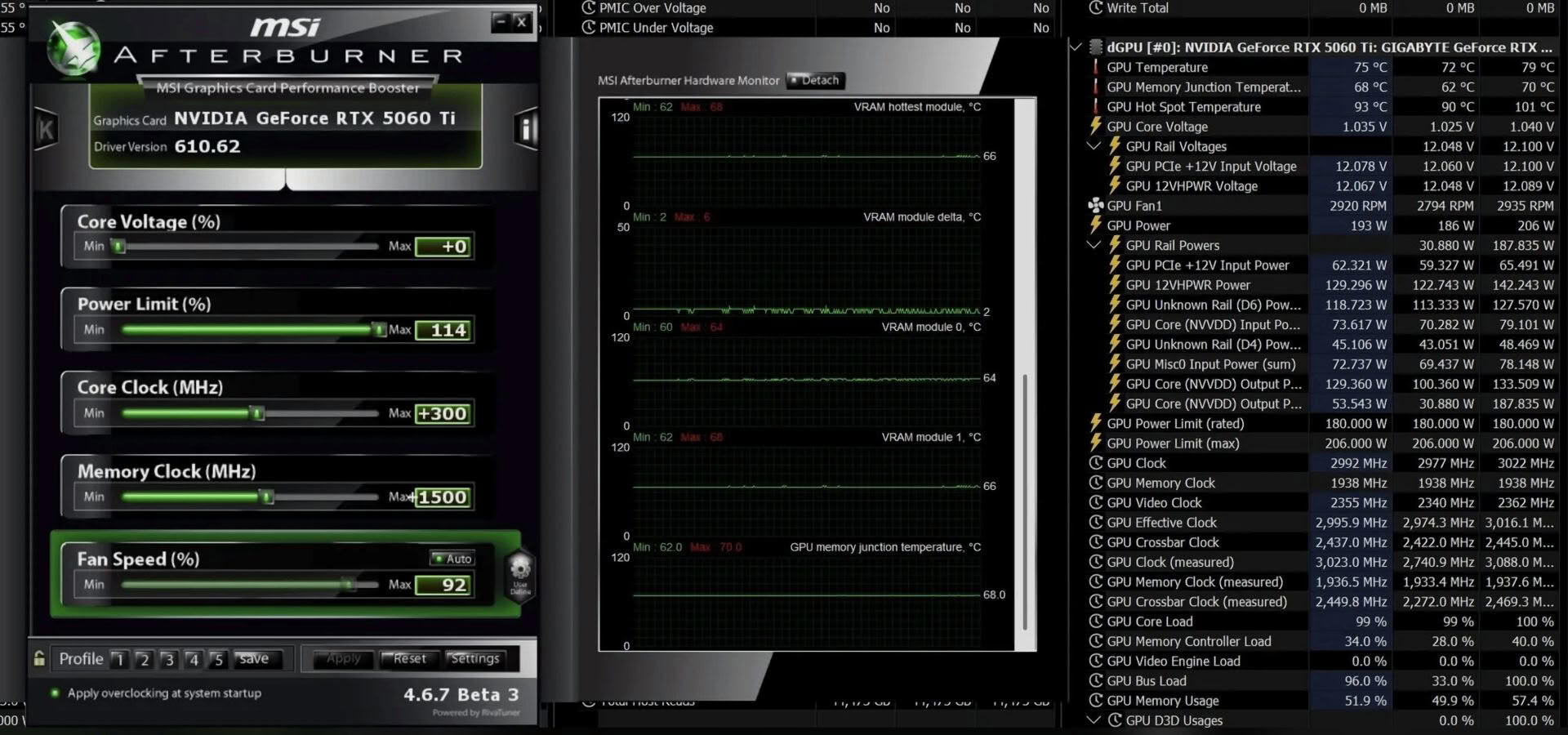 GDDR7 Temperaturüberwachung (Image © Videocardz)
Technical experts from various sectors of the GPU community—including repair specialists, tool developers, and Linux programmers—have developed a plugin for MSI Afterburner known as “Hotspot.dll.” While this plugin previously focused on accessing hidden data from the GPU chip, it has now been updated to interface with the temperature sensors embedded directly into the GDDR7 memory ICs.
The tool allows users to view separate temperature readings for each memory module. On a GeForce RTX 5090, which has sixteen 2-GB GDDR7 modules, the software can potentially retrieve sixteen different readings. However, the number of available measurement points depends on the physical layout of the circuit board. In systems with a clamshell configuration—where memory chips are mounted on both the front and back of the board—the total number of accessible sensor locations may be reduced. For example, an RTX 5090 with this layout would offer eight primary measurement points instead of sixteen.
The ability to monitor temperatures per module offers a crucial advantage for system stability and hardware lifespan. Since individual modules can overheat if thermal pads are missing or have worn out over time, these detailed readings allow you to identify specific cooling issues that would otherwise be masked by a single average memory temperature value. By supplementing existing data—such as GPU die hotspots, hotspot delta, and memory junction temperatures—with these module-specific metrics, the Blackwell series now offers comprehensive thermal monitoring capabilities.