
 Computer Forum
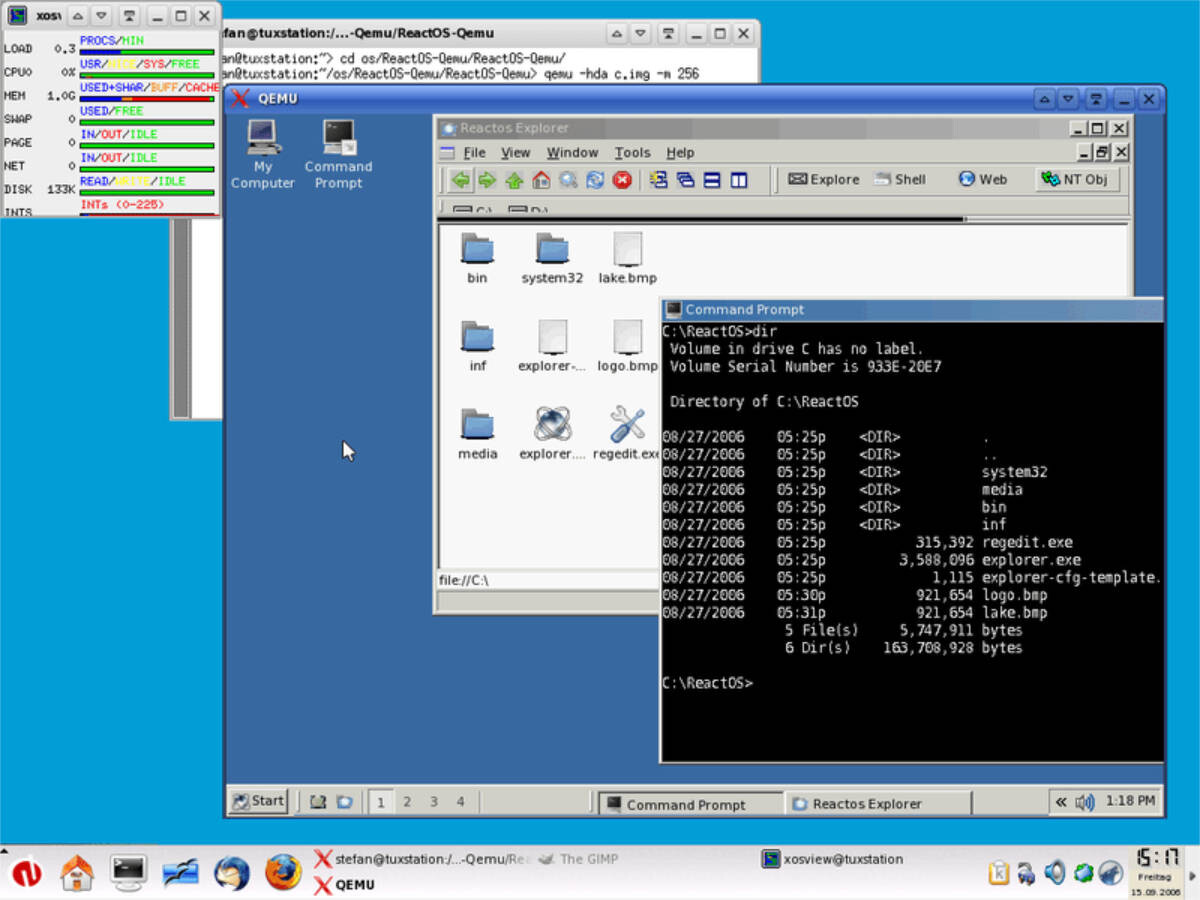 QEMU (Image © QEMU)
Updates to Guest CPU Architectures
ARM Architecture
ARM support has been significantly expanded in this version. Users can now configure the cache topology for virtual machines on the “virt” board. A new machine type, “imx8mp-evk,” has been added to emulate the i.MX 8MM Evaluation Kit board. For those using a 64-bit TCG CPU, it is now possible to boot a 32-bit guest using specific CPU flags.
Performance for NVIDIA Tegra241 hardware has been improved through support for Command Queue Virtualization (CMDQV), which provides dedicated hardware SMMUv3 command queues for each VM. In addition, the update implements nested virtualization and platform vGIC for the “virt” board under hvf. This version also emulates a variety of new architectural features, including updates for MTE, SME, and various floating-point extensions.
RISC-V and Miscellaneous
A major new feature for RISC-V is the introduction of support for big-endian target systems. The update also adds KVM support for BFloat16 and Zicbop extensions, as well as preliminary support for the Zbr extension. On the hardware side, support for the K230 board has been implemented, while the Spike machine is no longer the default.
Other architectural highlights include:
- PowerPC: Power11 is now the default CPU for the pseries, and PowerNV11 is the default for powernv machines.
- s390x: Support for ASTFLE function 2 has been added to improve nested virtualization.
- Hexagon: Initial system emulation is now available, though functionality remains limited until features for the interrupt controller are added.
Device Emulation and Security Patches
This release addresses several security vulnerabilities in various device emulators. Fixes have been implemented in the 9pfs subsystem to prevent write protection bypass (CVE-2026-63318) and host memory exhaustion (CVE-2026-8348). The update also addresses a heap buffer overflow in V9fsPath as well as various denial-of-service vulnerabilities.
In USB emulation, there were important updates to the “usb-redir” device to address potential “use-after-free” issues (CVE-2026-15705) and crashes caused by infinite loops (CVE-2026-63319). In addition, an issue involving out-of-bounds heap access in the XHCI sysbus device was fixed (CVE-2026-16043).
In the area of hardware emulation, support for UFS 4.1 specifications—specifically “Write Booster” and “Host Initiated Defragmentation” (HID)—has been added. In the graphics area, text mode now supports blinking in VGA mode.
System Subsystems and User-Mode Emulation
The QMP and HMP monitors have been structurally redesigned. They can now be created as objects using the -object flag, which allows monitor instances to be added on the fly. The previous -mon syntax is now deprecated.
Migration performance has been optimized by reducing downtime during CPR transfers for FD lookups. Additionally, new parameters for the size of RDMA migration blocks have been introduced to better control the process.
For user-mode emulation, QEMU 11.1 now supports the preadv2() and pwritev2() system calls. To improve compatibility with systemd, the fsmount series of system calls has been implemented. The update also includes expanded coredump support for architectures such as hppa, riscv, alpha, sparc, and mips64.