
 Computer Forum
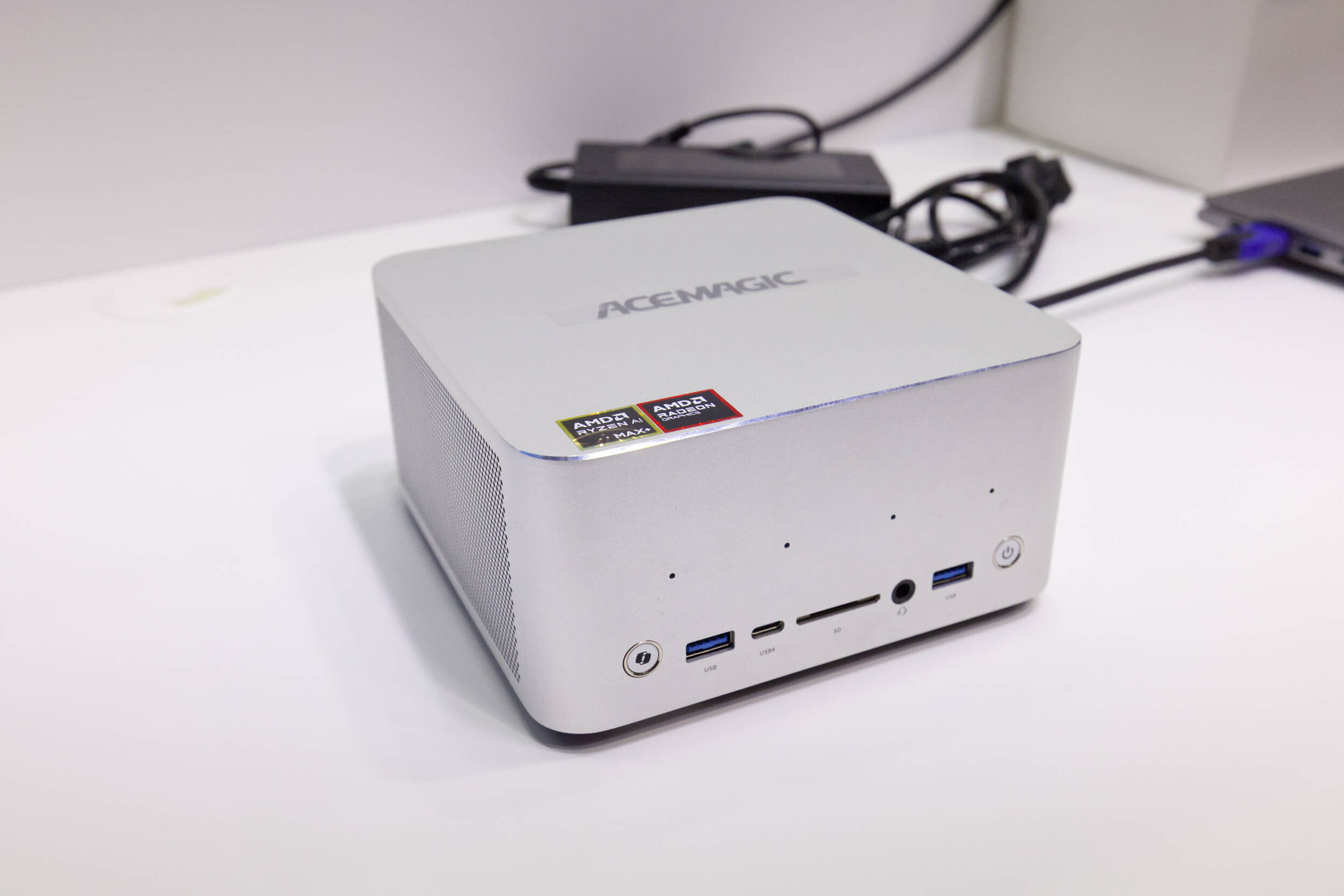 Acemagic F9A Ryzen AI Max 395 PRO 495 Release (Image © PCMasters.de)
F9A Mini AI Workstation with a Mac Studio-Style Design
One of the highlights at the Acemagic booth is, first and foremost, this little powerhouse. Acemagic plans to sell the fully equipped MiniPC—featuring a Ryzen AI Max+ PRO 495 CPU, a 2 TB SSD, and 192 GB of soldered-on LPDDR5x RAM—through its own online store as well as Amazon this month for a whopping €8,000. This is the most powerful configuration we’ve seen with a Ryzen AI Max+. The model will be well-suited for local LLMs, as even massive top-tier models can be loaded into RAM. The CPU is paired with the Radeon 8065S iGPU.
The PC is also available in variants featuring the Ryzen AI Max+ 395. The TDP of both CPUs is said to be a whopping 120 W, and the PPT is even reported to be 140 watts. The iGPU is the Radeon 8060S, and if you’re up for it, you can use a PCIe 4.0x4 interface via the Oculink port to connect dedicated eGPUs.
Both CPUs are 16-core processors with 32 threads, combined with 80 GB of L2+L3 cache. The Ryzen AI Max+ 395 achieves a total of 126 TOPS, while the Ryzen AI Max+ PRO 495 variant reaches as high as 131 TOPS.
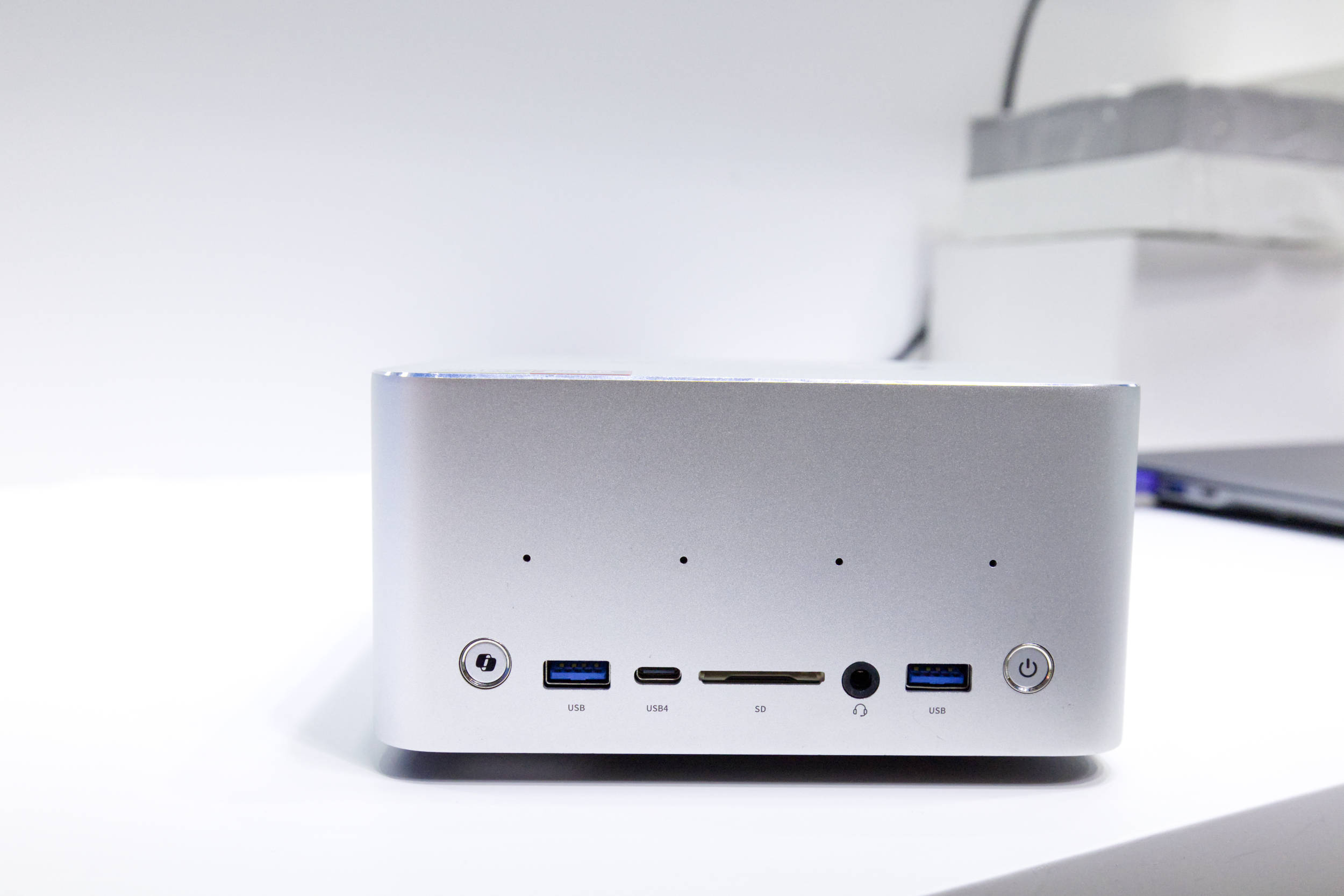 Acemagic F9A Ryzen AI Max 395 PRO 495 Ports (Image © PCMasters.de)
One striking feature of the F9A is that it’s packed with ports. On the front panel, there’s a USB 4.0 Type-C port with 40 Gbps + Alt DP 2.0 + PD 15W, followed by two USB 3.2 Gen 2/10 Gbps Type-A ports, a 3.5-mm jack, and an SD card reader. On top, there are a total of four holes, behind which four microphones are located. These are presumably intended for some kind of AI feature, though this was not explained in further detail.
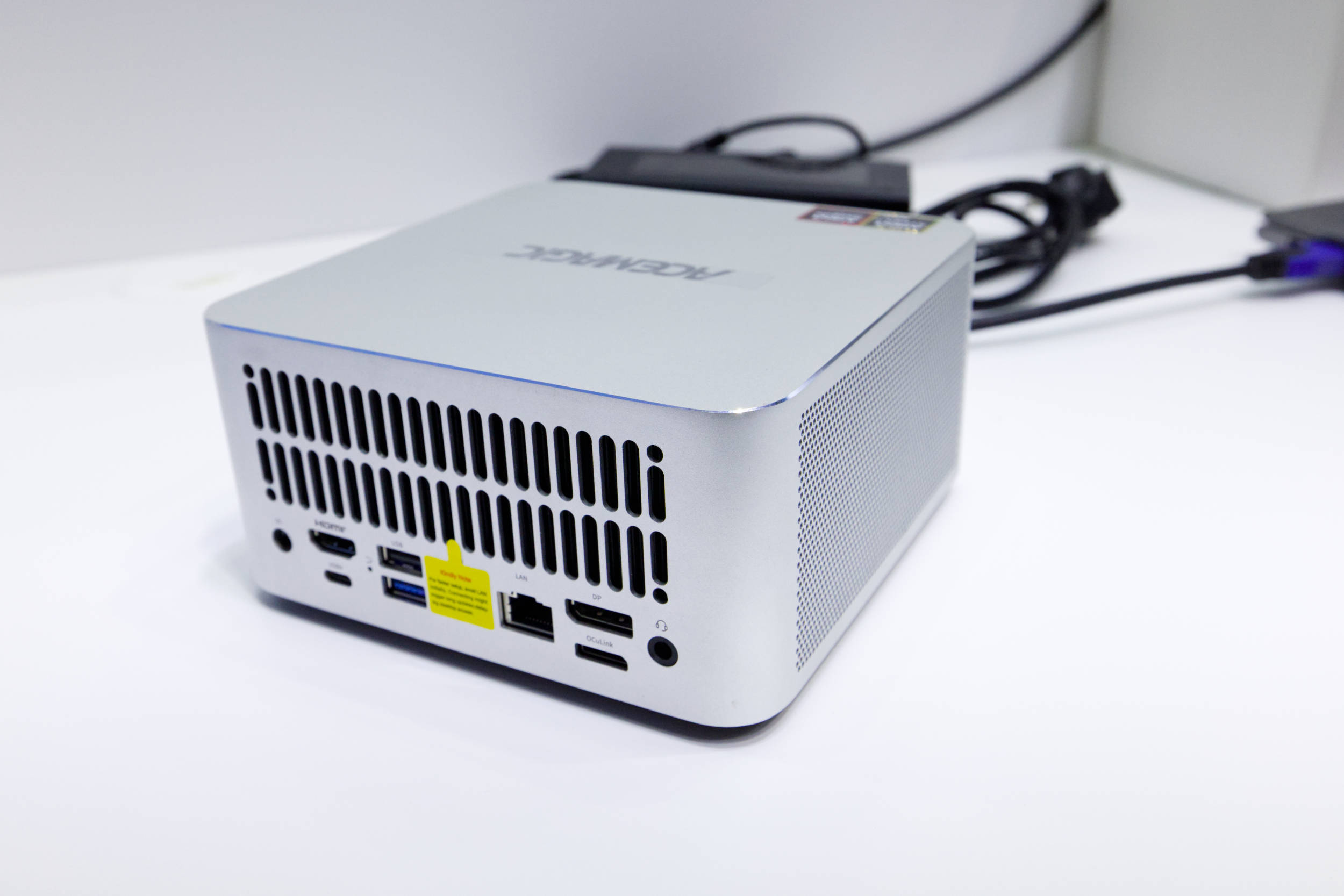 Acemagic F9A Ryzen AI Max 395 PRO 495 Rückseite (Image © PCMasters.de)
On the back, we find even more ports, including dual 2.5 Gbit LAN via RJ45 ports, a DisplayPort 2.1 (up to 8K@60Hz/4K@120Hz), a USB 3.2 Gen 2/10 Gbps Type-A port, a USB 4.0 port (40 Gbps + legacy DP 2.1 + PD 15W), a USB 2.0 Type-A port, and an HDMI 2.1 port (up to 8K@ 60Hz/4K@120Hz), the aforementioned Oculink port, and a line-out jack.
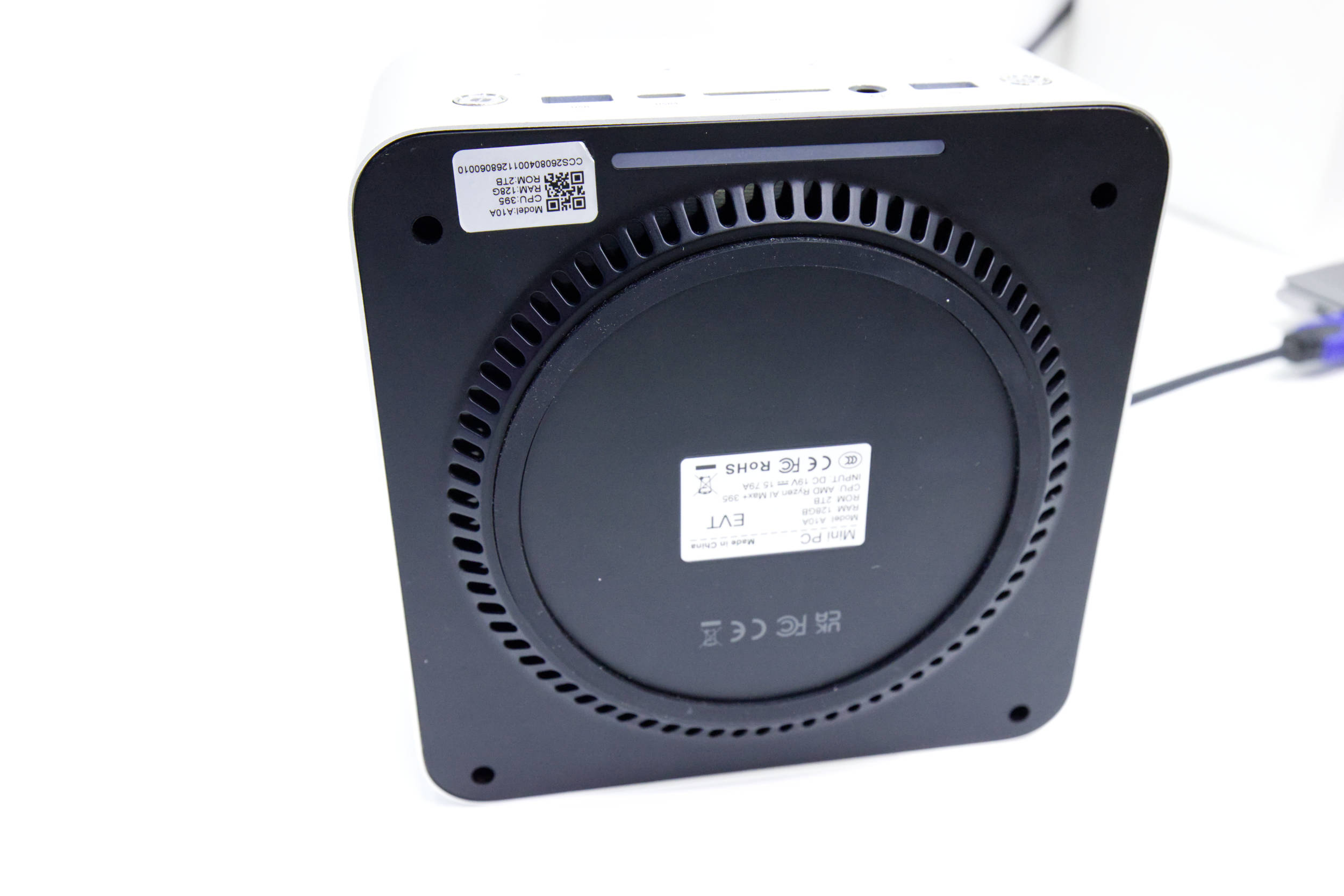 Acemagic F9A Ryzen AI Max 395 PRO 495 unten (Image © PCMasters.de)
SSDs are connected internally via PCIe Gen 4. There are two M.2 slots, one of which can be equipped with either a 1 TB, 2 TB, or 4 TB SSD. The SSDs are accessible from the bottom by unscrewing the cover, as is typical with Acemagic products.
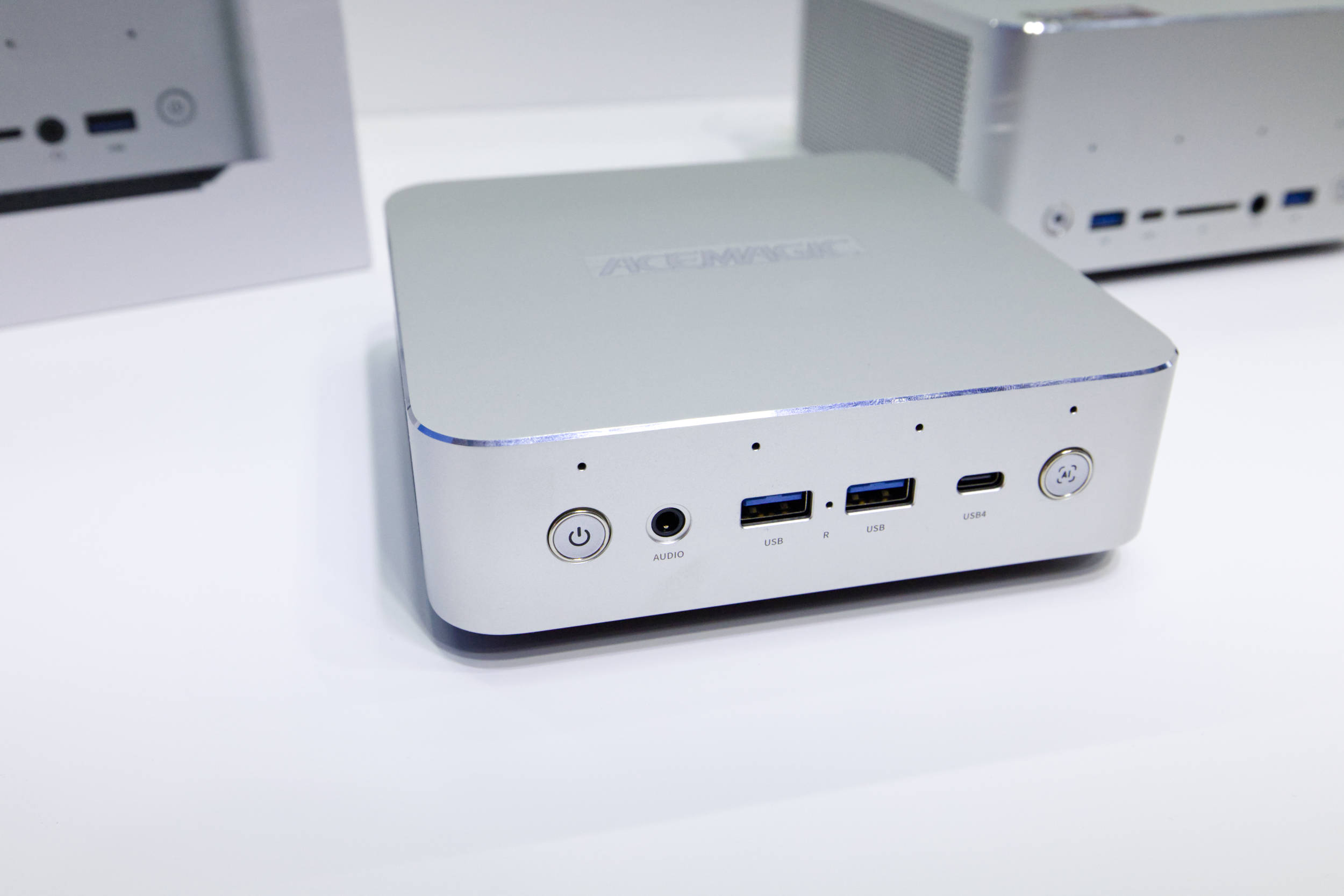 Acemagic F7A 358H 64G Front (Image © PCMasters.de)
F7A Mini-PC with Intel Core Ultra X7 358H
Acemagic always takes a two-pronged approach, so there’s also a mini-PC featuring the Core Ultra X7 358H from Intel’s Panther Lake generation. The F7A can certainly still be called a mini-PC, as it’s more compact. Just from the Intel specs, it’s clear that the processor has 16 cores, but not all of them are the same. It’s the mix that makes the difference: Intel uses four performance cores, eight efficient cores, and four low-power efficient cores. Hyper-Threading is disabled. According to the specifications, the CPU can reach a maximum of 80 watts, and Acemagic lists a PL1 of 65 watts.
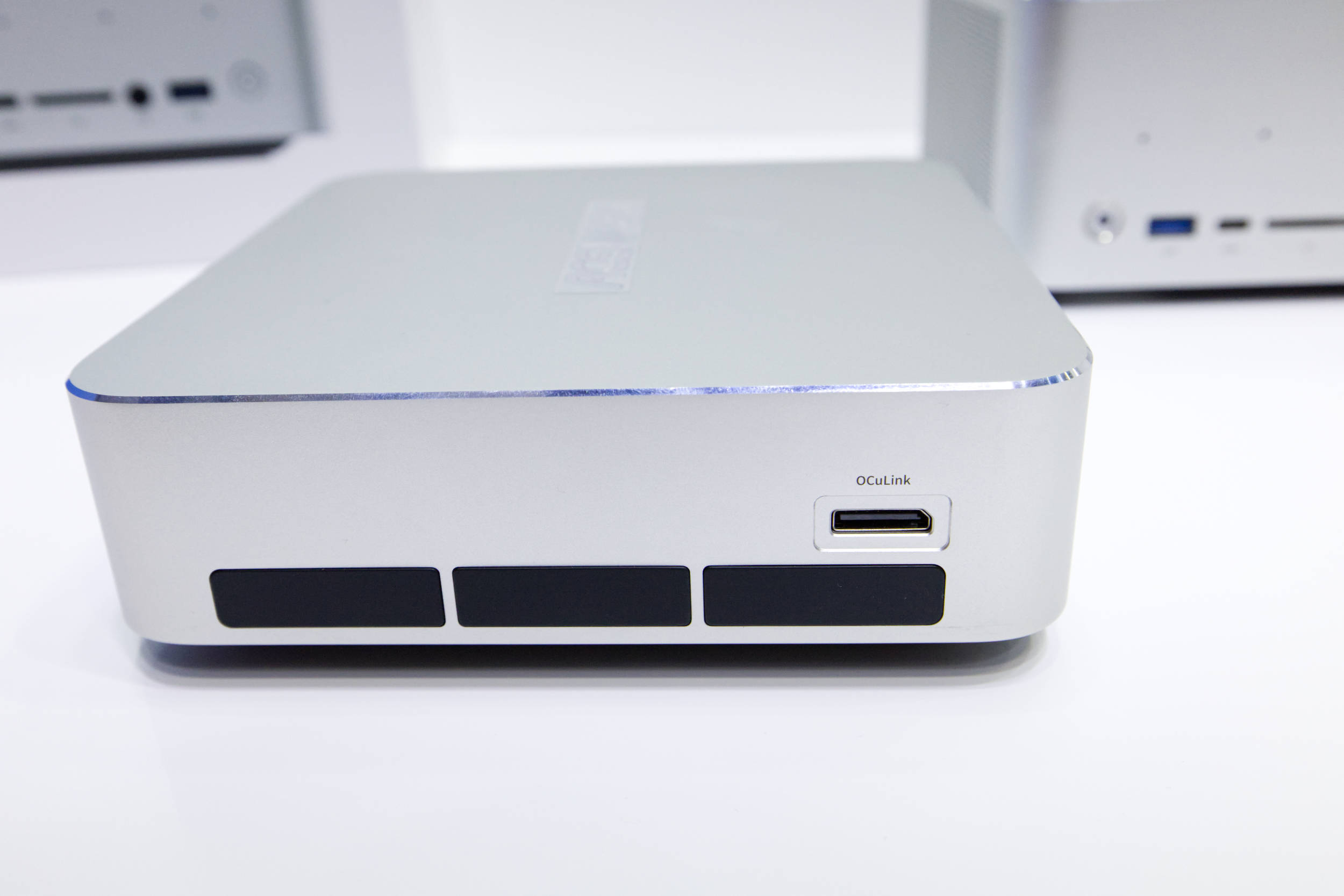 Acemagic F7A 358H 64G Oculink (Image © PCMasters.de)
The entire system relies on PCI Express 5.0 and 4 lanes; the OCuLink port on the side also appears to use the Gen 4 interface. Here, too, you can connect an SSD or graphics card to the mini-PC as an eGPU. This is an excellent option when it comes to upgrades. For SSDs, there are two M.2 2280 NVMe slots, one of which supports PCIe Gen 4.0 x4 and the other PCIe Gen 5.0 x4. SSDs up to 2 TB are supported. As is often the case, an M.2 2230 slot is used for a combo card with Wi-Fi 7+BT 5.4.
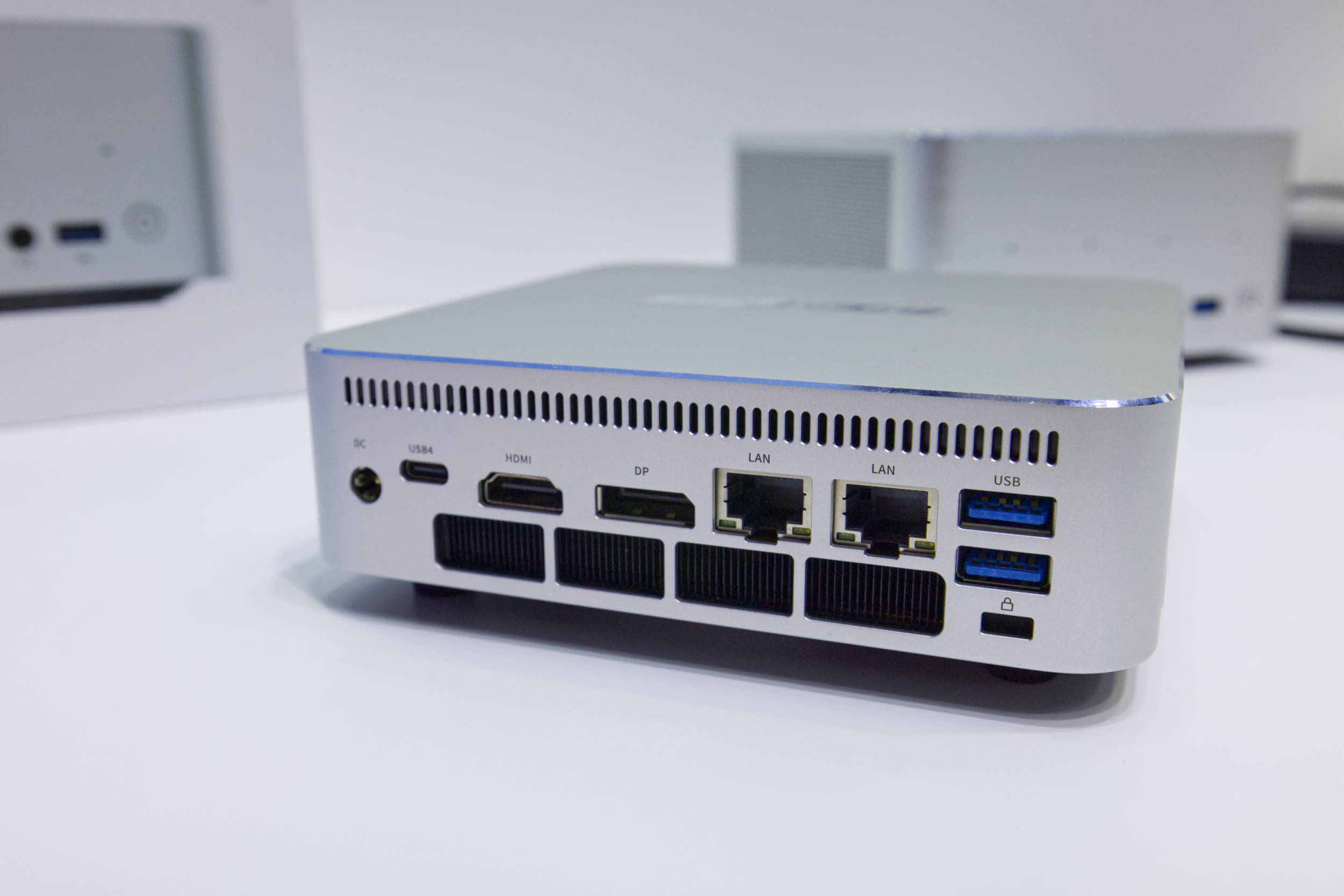 Acemagic F7A 358H 64G Anschlüsse (Image © PCMasters.de)
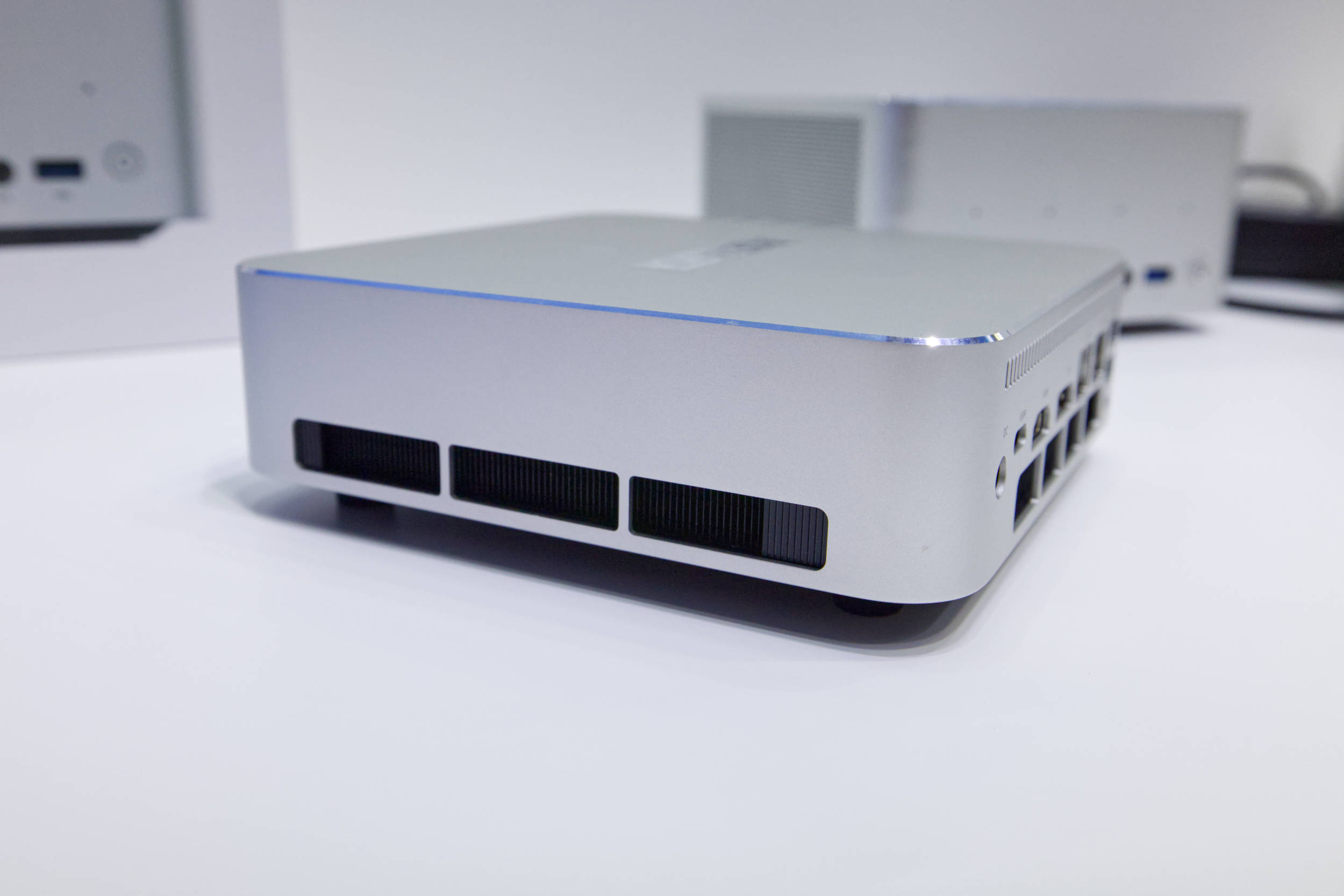 Acemagic F7A 358H 64G Seite (Image © PCMasters.de)
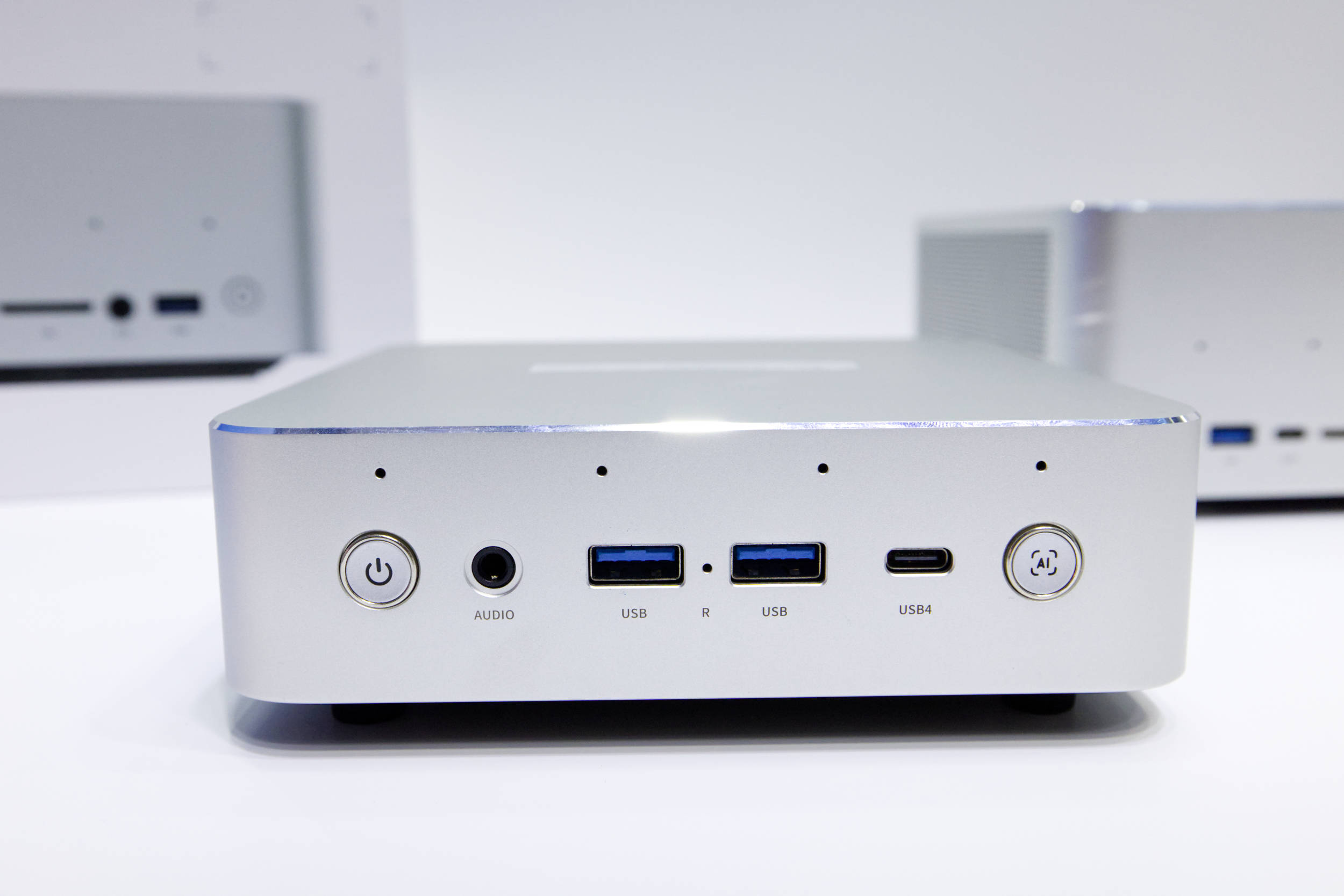
The version on display at the trade show is equipped with 64 GB of LPDDR5X RAM. The RAM in this model runs at a speedy 8533 MT/s, although there will likely be models with standard DDR5 SO-DIMM memory.
 Acemagic F7A 358H 64G Front 2 (Image © PCMasters.de)
We were particularly impressed by the high-quality build of both PCs, and the aluminum casing on both mini-PCs was truly flawless. The rubber feet on the F7A are noticeably more flexible, which is especially beneficial for vibration dampening and stability on the desk. The lineup thus made a very good impression and demonstrates the manufacturer’s potential.