
 Computer Forum
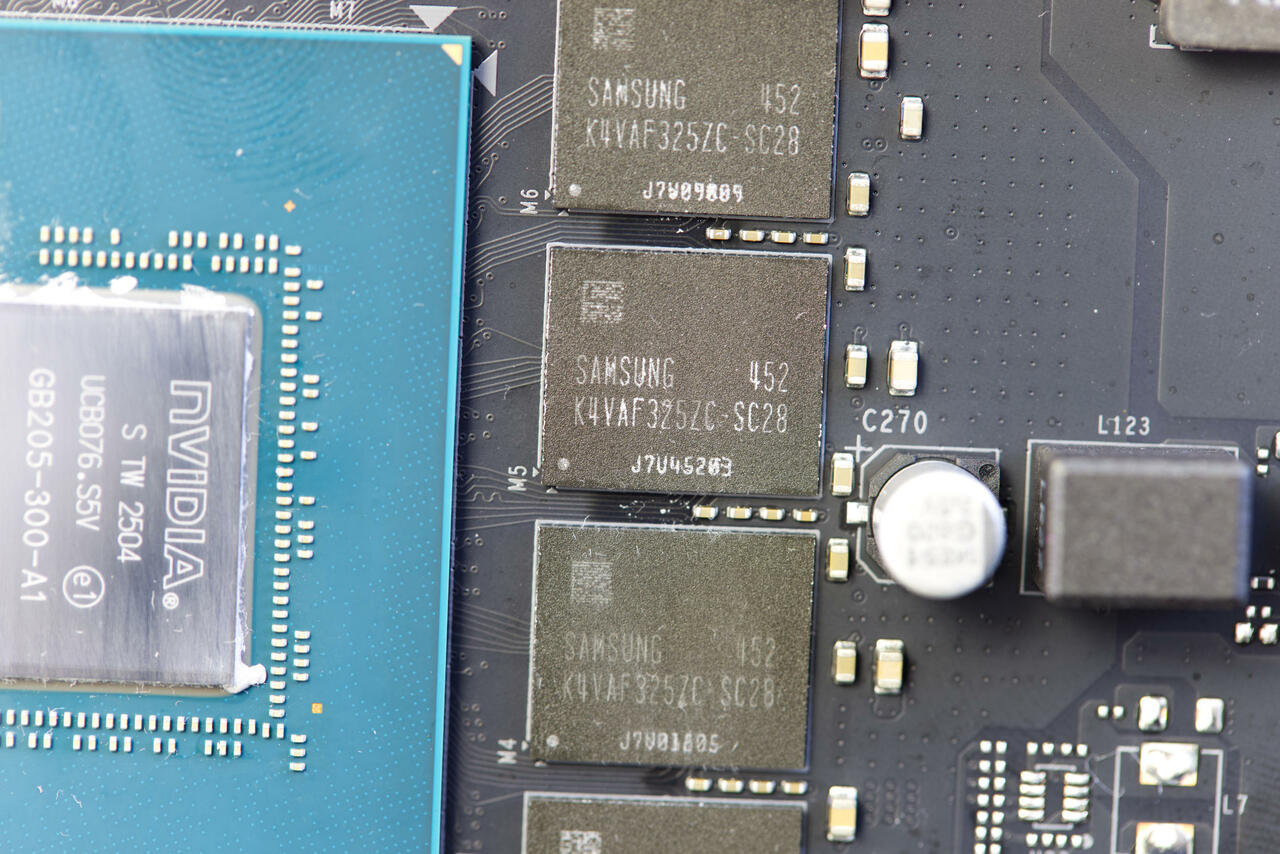 KFA2 GeForce RTX 5070 1Click OC Samsung GDDR7 K4VAF325ZC SC28 (Image © PCMasters.de)
The introduction of 4-GB and 6-GB modules will allow graphics card manufacturers to increase the total video RAM (VRAM) without requiring wider memory buses or an increase in the number of physical memory chips. For example, a 128-bit memory interface typically uses four memory chips. With the current 2-GB modules, this results in 8 GB of VRAM. However, the use of 4-GB chips would enable a 16-GB configuration on the same 128-bit bus, while 6-GB chips would allow for a 24-GB configuration. With a 256-bit interface using eight chips, the use of 4-GB modules would result in a total capacity of 32 GB.
In addition to increasing the total capacity, chips with higher memory density also reduce the total number of components on the printed circuit board (PCB). This is particularly advantageous for workstation-class GPUs, where limited space on the PCB and complex wiring for a large number of memory modules often complicate the design process.
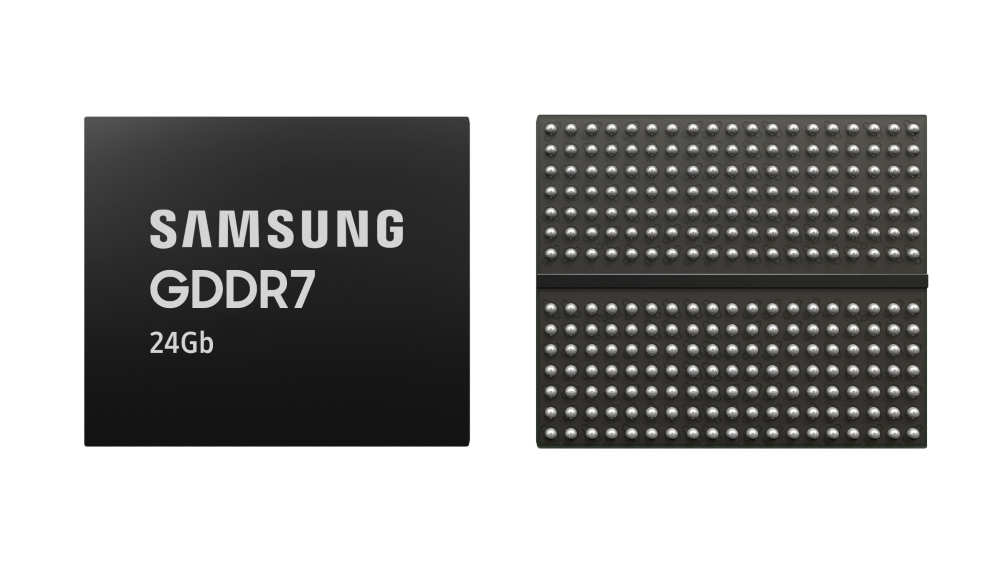 Samsung 24Gb GDDR7 (Image © Samsung)
Market Constraints and Cost Factors
The current shortage of higher-capacity GDDR7 memory is largely due to the high cost of 3-GB modules. These modules are currently reserved for specific high-margin products, such as the RTX 5090 laptop GPU and the RTX PRO 6000, with the latter using 32 of these 3-GB modules.
The costs associated with 3-GB chips have reportedly contributed to the delay or cancellation of certain hardware SKUs, including the 9-GB version of the RTX 5050 and certain RTX 50 SUPER refresh models. It is expected that 4-GB chips will see wider adoption in mainstream GPUs due to their better price-performance ratio, while 6-GB chips are likely to remain limited to professional workstation hardware for the time being.
GDDR7 Specifications
GDDR7 brings several technical advancements compared to previous generations. It utilizes PAM-3 signal transmission and a quad data rate (QDR), enabling significantly higher bandwidth. The first generation of GDDR7 offers 32 Gbit/s per pin, although the specifications allow for a maximum of 48 Gbit/s. In addition, the standard operates at a reduced voltage of 1.2 V, compared to the 1.35 V required by GDDR6X.