
 Computer Forum
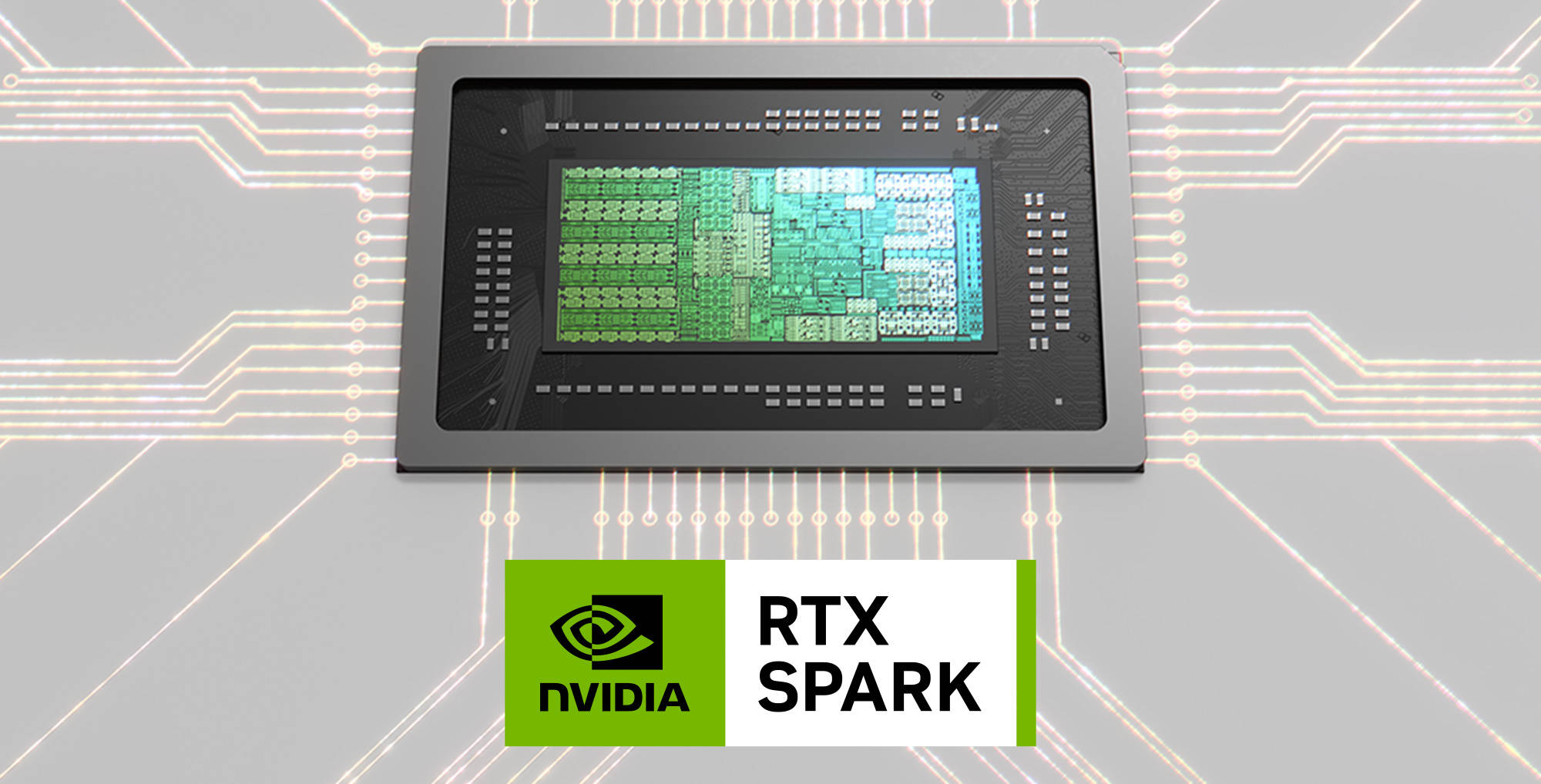
 Nvidia RTX Spark (Image © NVIDIA)
A key component of this integration is the general availability of Microsoft Execution Containers (MXC). MXC serves as the operating system-level infrastructure required for AI agents to run securely and continuously in the background. By directly embedding these building blocks into Windows, the system enables agents to be managed and monitored under strict operating system control. This infrastructure is designed to provide a secure foundation for the next generation of IT and ensure that local agents can perform tasks without compromising system integrity.
 MSI Prestige N16 Flip AI NVIDIA RTX Spark (Image © MSI)
RTX Spark – Hardware Specifications and Performance
As part of the partnership, RTX Spark is being introduced—a powerful AI stack integrated into a new generation of laptops and compact desktops. The hardware architecture combines an NVIDIA Blackwell RTX GPU with up to 6,144 cores with a Grace CPU offering up to 20 cores. These components are connected via a high-speed link with a bandwidth of 600 GB/s.
In terms of computing power, RTX Spark delivers one petaflop of FP4 AI performance and supports up to 128 GB of unified memory. These specifications enable the local execution of massive models, such as the 125B-parameter “Qwen 3.8 Flash Next” model, without the need to transfer data to external cloud servers.
The RTX Spark stack is tailored to three main user groups:
- Developers: Full support for the NVIDIA CUDA platform enables the migration of models and workflows from RTX Spark to the DGX Station without the need to rewrite code.
- Creatives: The hardware includes 5th-generation Tensor Cores with NVFP4 support, hardware-accelerated AV1, and 4:2:2 video encoding and decoding, in addition to RTX ray tracing.
- Gamers: The systems support AAA games at 1440p resolution with over 100 frames per second using DLSS 5, Reflex, and G-SYNC.
Hardware implementations are available from several manufacturers, including Acer, ASUS, Dell, HP, Lenovo, Microsoft, MSI, and Gigabyte. The Microsoft Surface Laptop Ultra was specifically tailored for the RTX Spark architecture. Pre-orders for the laptops are currently available, with shipping beginning on October 16, while compact desktop versions designed for 24/7 operation will be available starting in November.
Enterprise-Class Computing Power: DGX Station for Windows
To meet the demands of cutting-edge AI development, the NVIDIA DGX Station for Windows was unveiled. This marks the first time that GB300 Grace Blackwell-class infrastructure has been directly integrated into the Windows ecosystem. Previously, the DGX Station was limited to Linux, forcing enterprise developers to maintain separate environments for compute-intensive AI workloads and standard Windows productivity tools. The Windows-native version eliminates this separation and enables Fortune 500 companies to standardize their AI development on their existing operating system.
The DGX Station for Windows is powered by the GB300 Grace Blackwell Ultra Desktop Superchip. Technical specifications include:
- Memory: 748 GB of coherent memory.
- Computing Power: Up to 20 petaFLOPS of FP4 AI computing power.
- Model scaling: Ability to run and optimize models with up to one trillion parameters locally.
Our Take on This Topic
For professional use, Linux remains the preferred choice because it offers more freedom. Microsoft is integrating Linux to gain an edge, but in our opinion, Windows isn’t the right platform for developers—even macOS is a better choice. The products presented here are also extremely expensive and are taking a difficult path. The hardware has become more expensive, primarily due to NVIDIA, and is consequently facing increasing criticism. The keynote at Computex 2026 clearly showed us that NVIDIA has abandoned pro users and end customers and has taken an anti-consumer path that we do not support.