
 Computer Forum
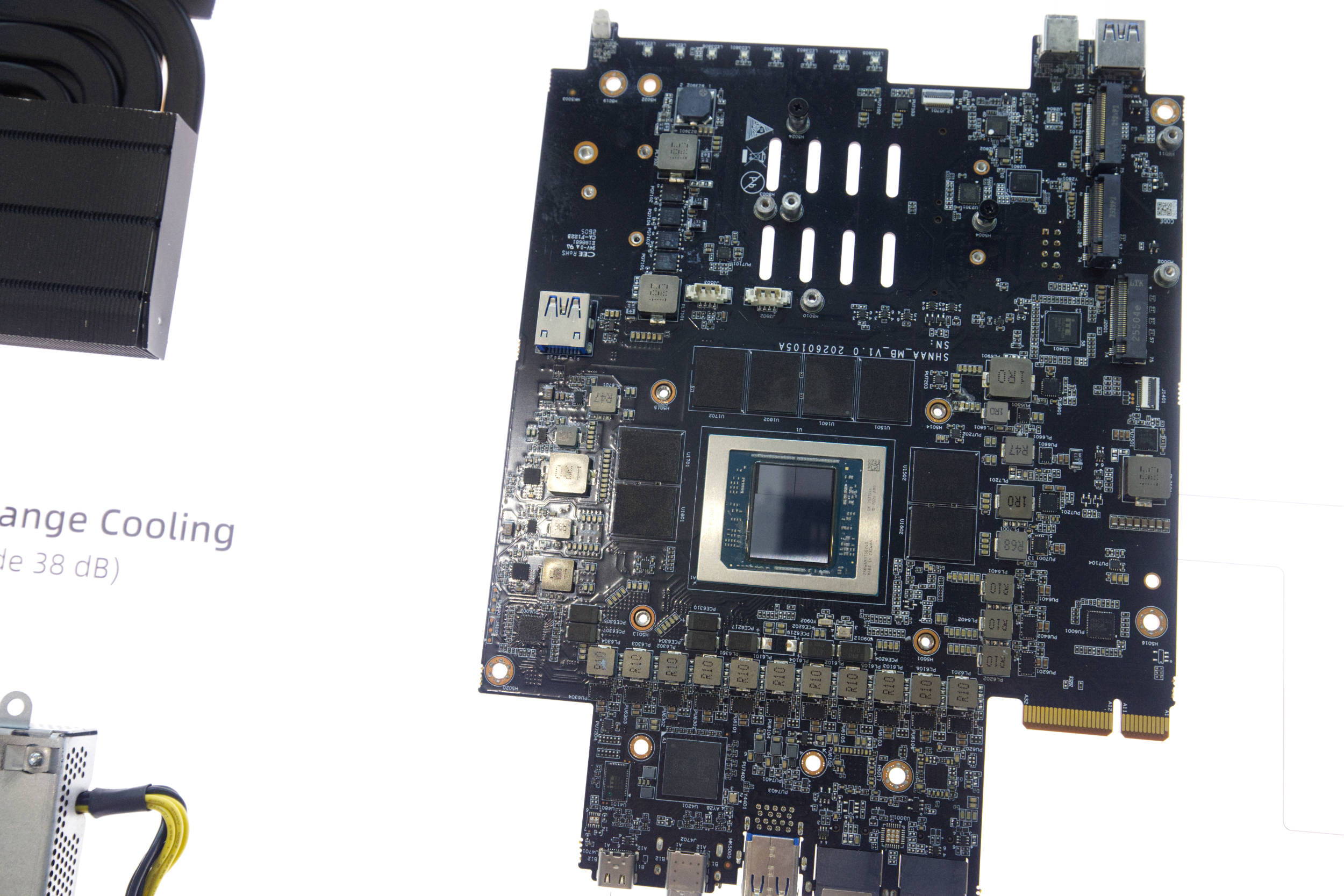 AMD Gorgon Halo Ryzen AI MAX Pro 495 (Image © PCMasters.de)
The Ryzen AI Max+ PRO 495 serves as an update to the Strix Halo series. The processor features 16 Zen 5 cores with a maximum boost clock speed of 5.2 GHz. The integrated graphics component, the Radeon 8065S, includes 40 RDNA 3.5 compute units and operates at a clock speed of 3.0 GHz, representing a slight increase over the 2.9 GHz of its predecessor, the Radeon 8060S. Memory throughput is handled by LPDDR5X-8533, which offers a bandwidth of 273 GB/s. Tests were conducted on multiple systems with 192 GB of RAM, though power delivery and thermal conditions varied between the test units.
Gaming Performance at 1080p Resolution
Tests on the FEVM FAEX2, a 1-liter mini-PC capable of delivering 160 W for 18 minutes, allowed for a direct comparison between the Radeon 8065S, the Radeon 8060S, and the GeForce RTX 5060. In “Forza Horizon 5” (1080p Ultra, FSR disabled), the Radeon 8065S achieved 133 FPS, outperforming the Radeon 8060S’s 125 FPS but falling short of the 142 FPS achieved by the RTX 5060. In “Cyberpunk 2077” (1080p, “High” settings), the 8065S achieved 104 FPS, compared to 90 FPS for the 8060S and 109 FPS for the RTX 5060.
In other titles, the performance gains from the new hardware were more pronounced:
- Shadow of the Tomb Raider: 151 FPS on the Radeon 8065S compared to 107 FPS on the Radeon 8060S.
- Black Myth: Wukong (highest preset): Performance increased from 72 FPS on the 8060S to 79 FPS on the 8065S.
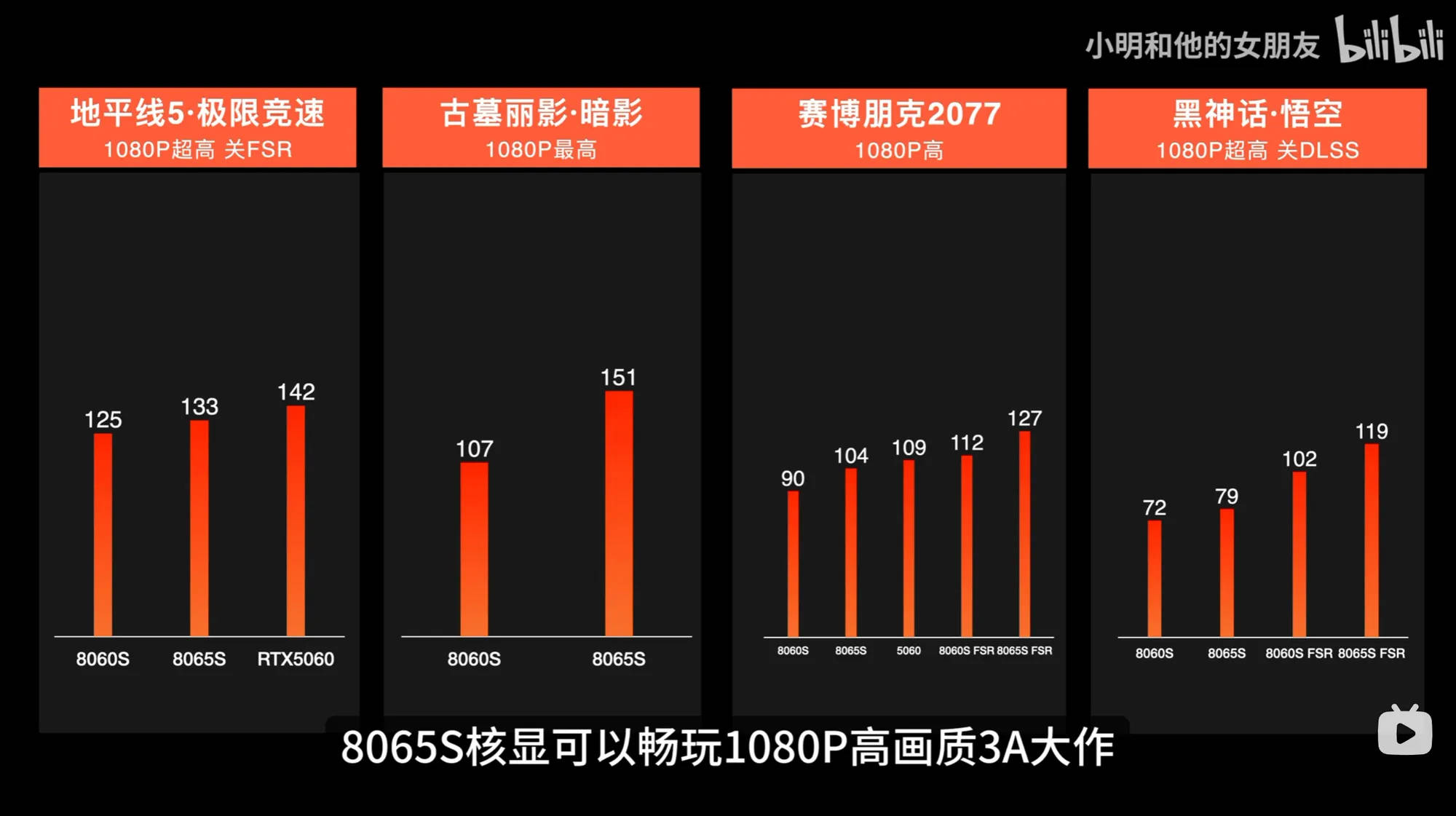 AMD Ryzen MAX 495 RADEON 8065S VS RADEON 8060S Benchmarks (Image © BiliBili)
Performance at High Resolution (1440p)
Additional tests were conducted using the GMKtec EVO-X5 Pro, which was operated under a sustained power limit of 120 W. For this system, the focus was on 1440p settings at “Ultra.” In “Cyberpunk 2077,” the system averaged 69 FPS using FSR 4.1 upscaling. “Red Dead Redemption 2” averaged about 87 FPS with a combination of “Ultra” and “High” settings without using FSR. “Forza Horizon 6” was also tested natively at 1440p with “Ultra” settings. To maintain an average frame rate in the mid-90s in “Crimson Desert” at 1440p with “Ultra” settings, the system had to use FSR Multi Frame Generation.
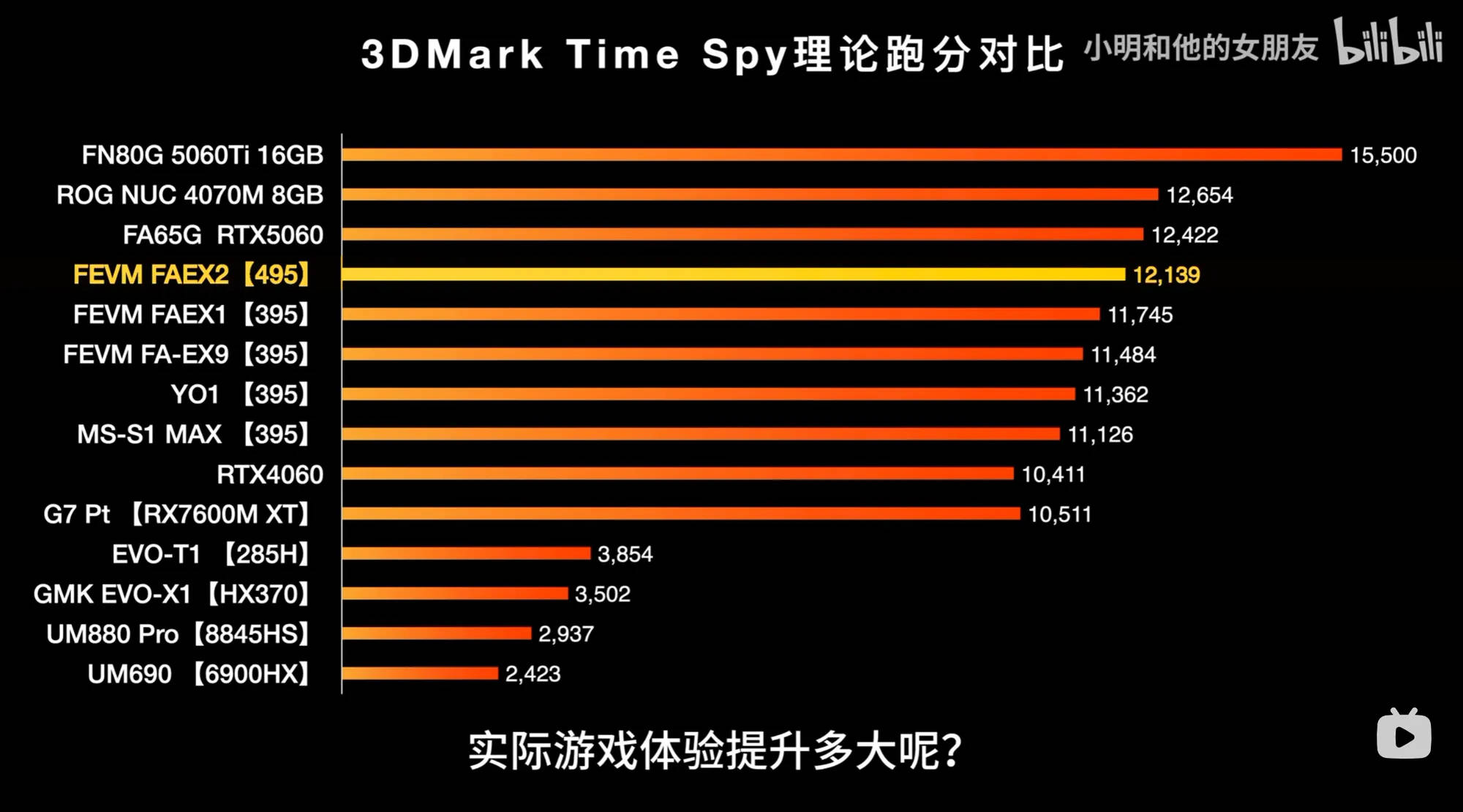 AMD Ryzen MAX 495 RADEON 8065S VS RADEON 8060S 3Dmark Time Spy (Image © BiliBili)
Synthetic Benchmarks and Computing Performance Gains
Synthetic tests show performance gains, though the extent of the gains depends on the specific system configuration.
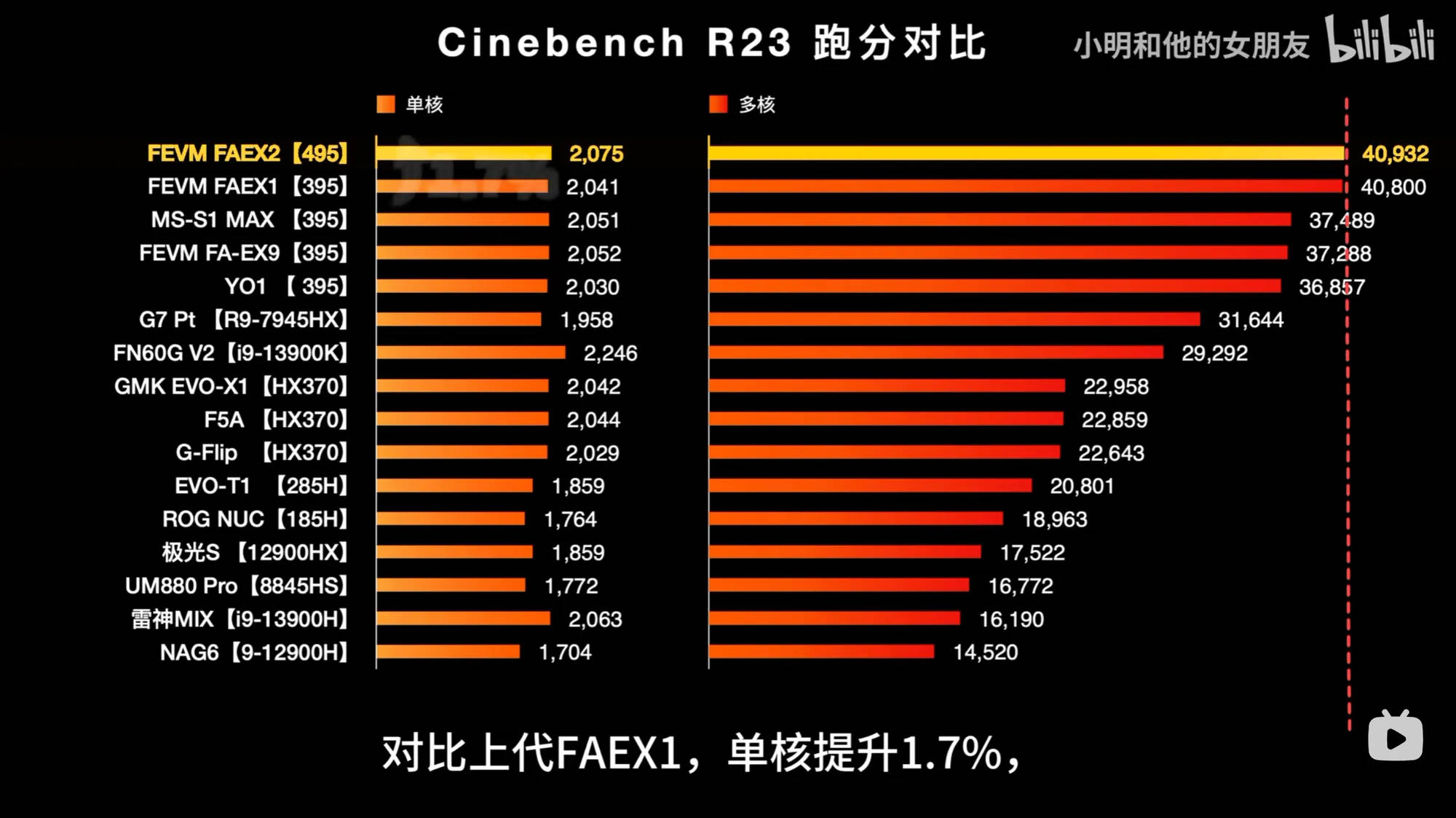 AMD Ryzen MAX 495 RADEON 8065S VS RADEON 8060S Cinebench R23 (Image © BiliBili)
The FEVM FAEX2 scored 12,139 points in 3DMark Time Spy, representing a 3.4% increase over the FEVM FAEX1 equipped with the Ryzen AI Max+ 395. The GMKtec EVO-X5 Pro scored 11,743 points, representing an 11.8% increase over the EVO-X2 when both were set to a power level of 120 W. Specifically, graphics performance improved by 11.3%.
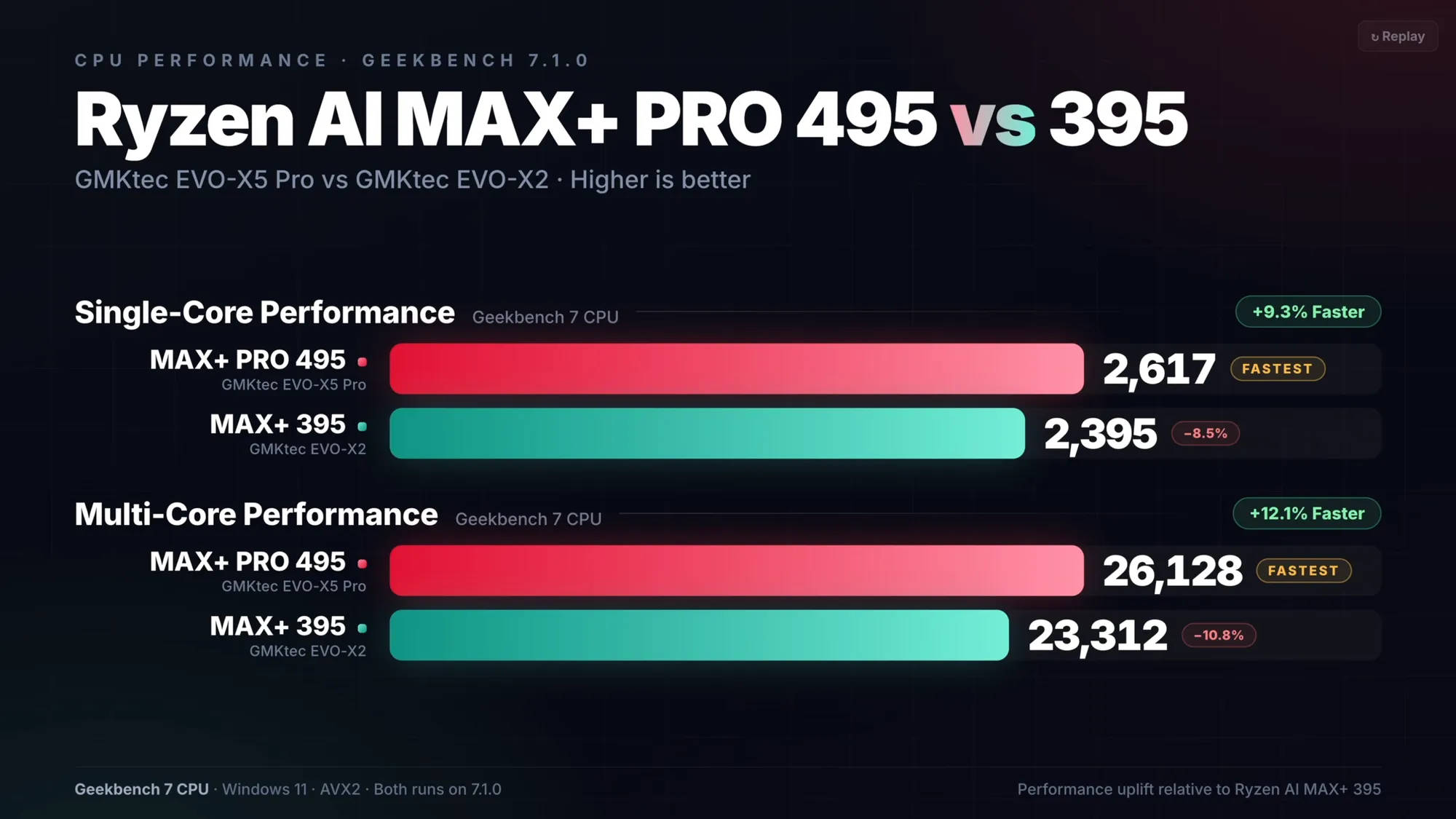 AMD Ryzen MAX 495 RADEON 8065S VS RADEON 8060S Single und Multi Core 1 (Image © BiliBili)
CPU performance was measured using Geekbench 7 and showed gains in both categories:
- Single-core performance: 9.3% increase.
- Multi-core performance: 12.1% increase.
Factors Affecting Performance
The observed performance gains of the Radeon 8065S can be attributed to several factors that go beyond the architecture itself, including improved thermal management in newer mini-PC cases, the transition to faster LPDDR5X memory, and optimized driver sets. It will be interesting to see how much these systems will cost, since the large amount of RAM is anything but cheap.