
 Computer Forum
 DDR5 MRDIMMs DDR6 Leistung (Image © @intelfabs auf X)
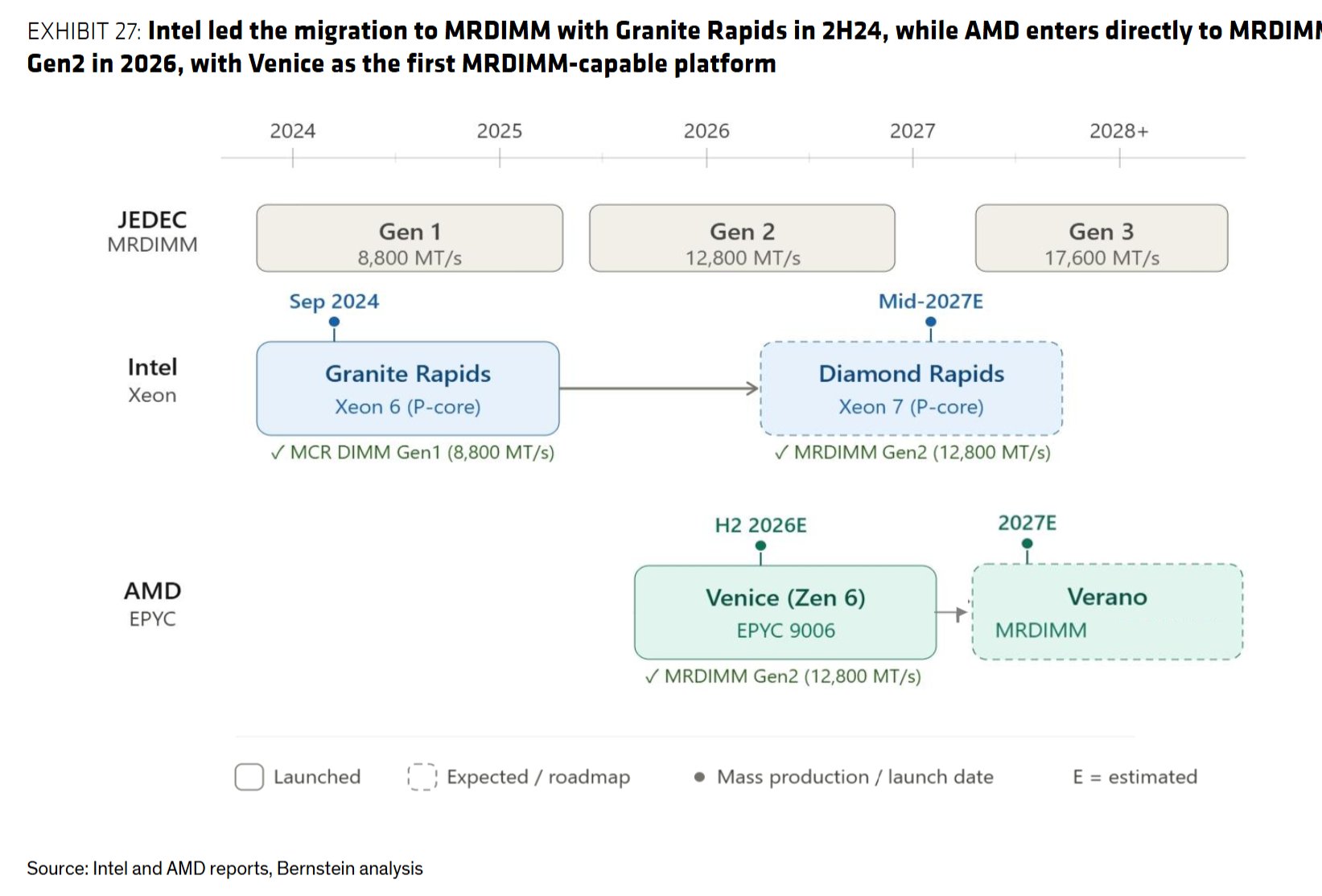
This works by integrating a multiplexer directly into the memory module. This component manages data across different ranks, which speeds up data transfer between the processor and memory. Intel has already implemented this with its Xeon 6 Granite Rapids chips.
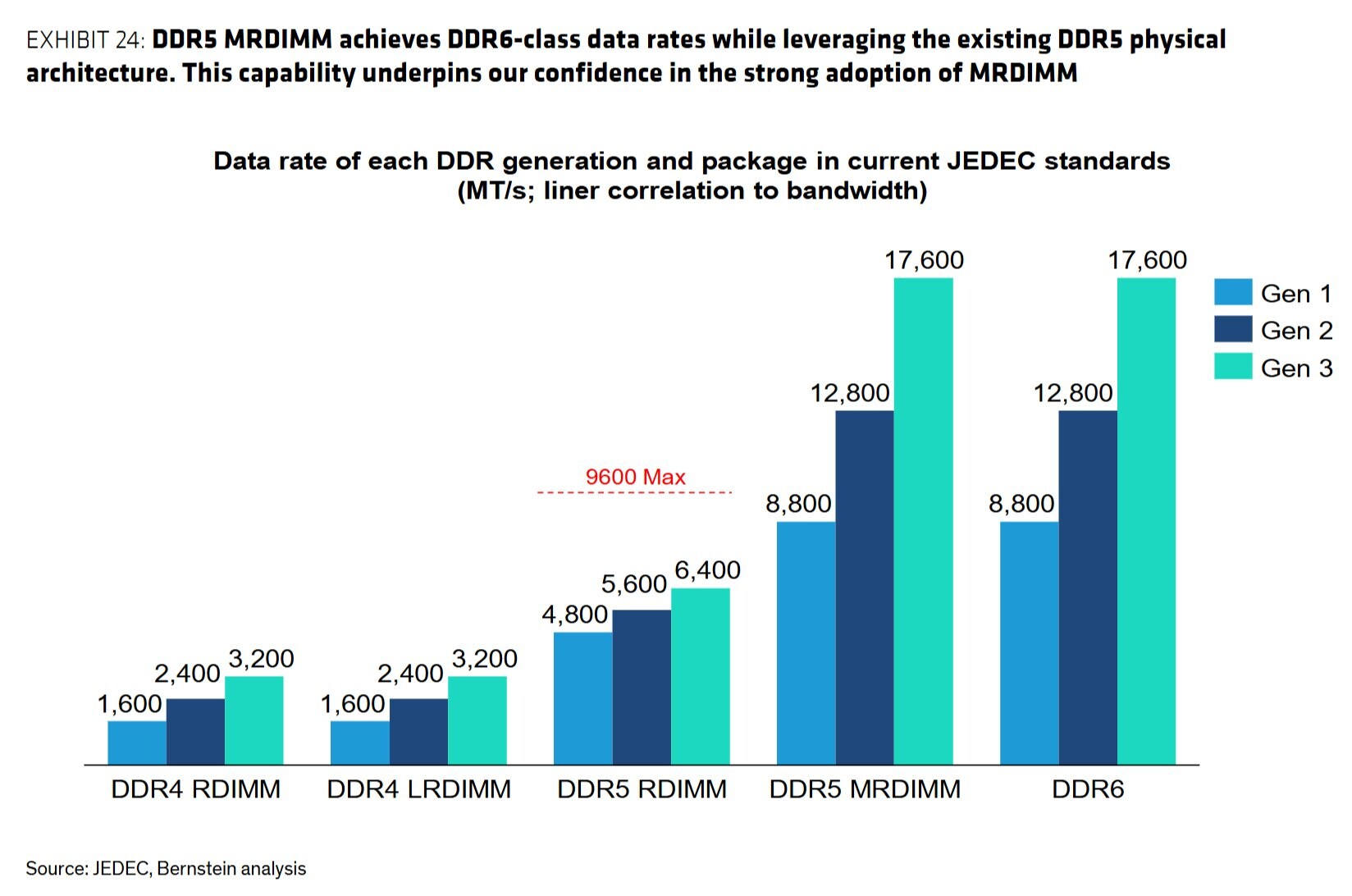
The performance gap is significant. Standard DDR5 RDIMMs typically reach a maximum of 6,400 MT/s. The first generation of MRDIMMs increases this figure to 8,800 MT/s, offering a 37.5% increase in bandwidth and capacities of up to 256 GB.
The roadmap points to even steeper increases. Second-generation modules are expected to reach 12,800 MT/s. By 2030, the third generation is projected to reach 17,600 MT/s. That is nearly three times the speed of the fastest standard DDR5 RDIMMs currently available.
 DDR5 MRDIMMs Outlook (Image © @intelfabs auf X)
This transformation is taking place at a time when AI and compute-intensive workloads are placing a heavy strain on existing infrastructure. While DDR6 could resolve these bandwidth bottlenecks, it brings its own set of challenges. In particular, it requires different pin configurations and is more expensive to implement.
An analysis by Bernstein suggests that MRDIMMs can offer transfer rates similar to those of the corresponding generations of DDR6. This allows companies to retain their current server chassis while still benefiting from high-speed memory.
The industry is moving rapidly toward this standard. Intel’s “Diamond Rapids” Xeon 7 CPUs, based on the 18A-P process, are expected to use second-generation MRDIMMs. AMD is expected to do the same with its Zen 6-based EPYC Venice series. However, AMD will likely use LPDDR5X for its Verano chips, as they are specifically designed for AI inference.
Both major chip manufacturers support the MRDIMM standard because it is open. This collaboration is likely to lead to these high-speed modules becoming increasingly widespread across various server platforms in the coming years.