
 Computer Forum
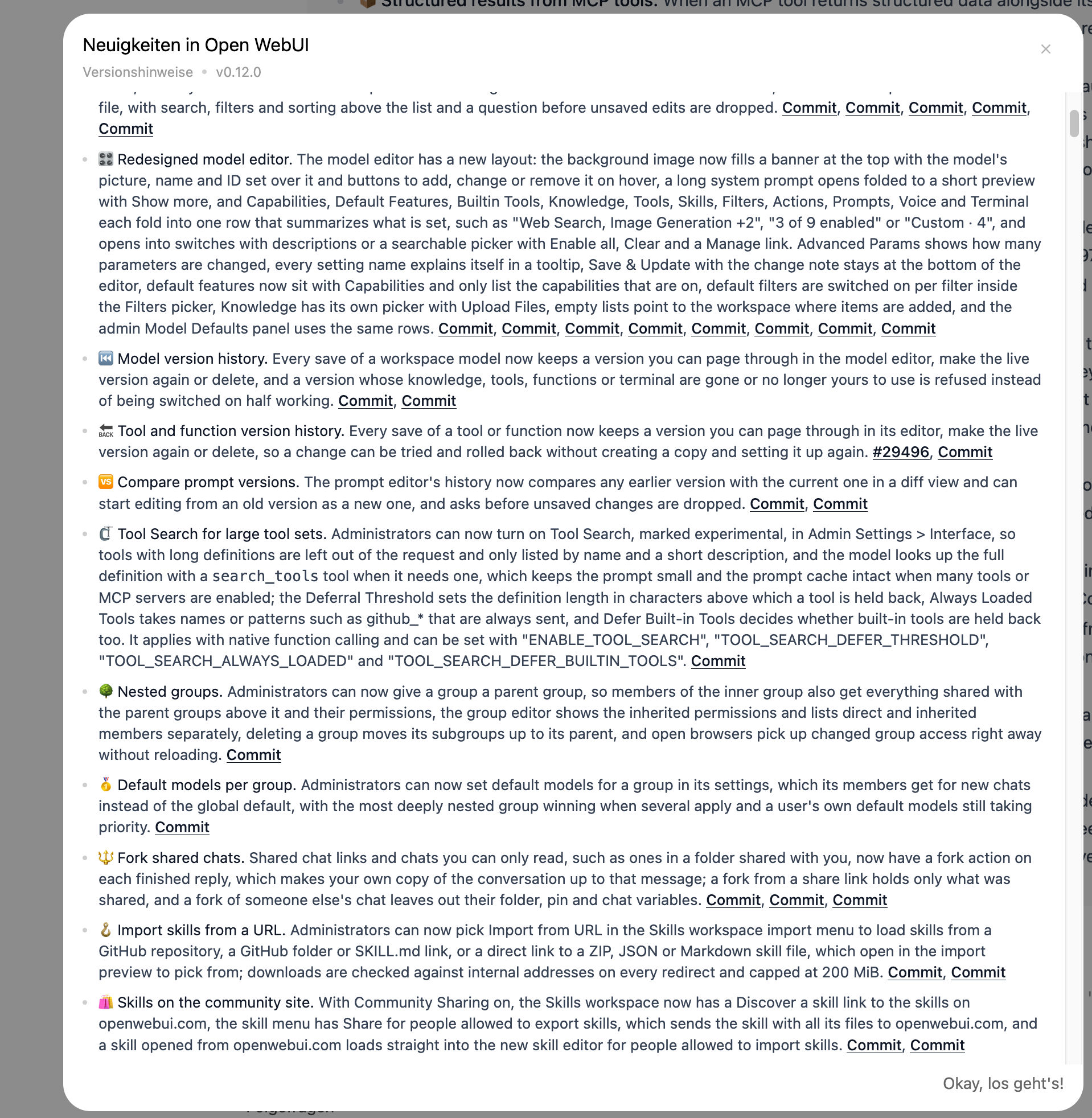 OpenWebUI v0 12 0 (Image © PCMasters.de)
Real-Time Voice Communication and 3D Avatar Integration
Update v0.12.0 introduces real-time voice calls, allowing administrators to switch the call mode from “Standard” to “Real-Time” in the audio settings. This feature uses the OpenAI real-time language model, specifically gpt-realtime-2.1-mini, with the “Marin” voice selected by default. In this mode, the language model independently handles conversational fillers and small talk, while delegating complex tasks and inquiries to the selected chat model. The system retains the conversation history and access to tools, and transmits the spoken response while displaying the full text in the chat interface.
To implement this, administrators can use environment variables, including AUDIO_REALTIME_ENABLED, AUDIO_REALTIME_OPENAI_API_BASE_URL, AUDIO_REALTIME_OPENAI_API_KEY, AUDIO_REALTIME_MODEL, AUDIO_REALTIME_VOICE, AUDIO_REALTIME_TRANSCRIPTION_MODEL, and REALTIME_CALL_PROMPT_TEMPLATE. Calls are subject to the “Allow Calls” permission and are limited to one hour.
The audio updates are complemented by animated avatars. Models can now be assigned rigged VRM avatars (up to 25 MB) to replace the default speech bubble. The Model Editor supports uploading VRMA clips (up to 10 MiB) for the “Inactive,” “Listening,” and “Speaking” states. Additionally, up to 16 named gestures with descriptions can be configured, which the speech model triggers depending on the conversation context.
Security and Access Control for Enterprises
Security has been significantly improved in this release with the introduction of two-factor authentication (MFA). Administrators can require the use of authentication apps via the admin settings or by setting ENABLE_MFA. Users must configure MFA using a QR code when logging in and will receive ten one-time recovery codes. Exceptions for OAuth and “Trusted Header” logins can be managed using MFA_ALLOW_OAUTH_BYPASS and MFA_ALLOW_TRUSTED_HEADER_BYPASS. For users who have lost access to their authentication app, the command open-webui mfa reset generates a one-time recovery token.
Administrator group management has also been expanded to include nested groups. This allows a group to have a parent group, ensuring that members of the inner group inherit all shared resources and permissions from the parent group. In addition, administrators can now define group-specific default templates that take precedence over global default settings for new chats created by group members.
Further Development of Collaborative Chats and Shared Workspaces
The sharing model for chats and folders has evolved from a simple cloning system to a mode that allows replies. This enables multiple users to contribute to a single ongoing conversation. The user interface now displays the name and profile picture of each contributor, with live updates for all active participants. While the owner retains control over chat settings and tags, participants can edit, rate, or regenerate their own messages. Users with read access to shared links or folders now have the option to fork a conversation, thereby creating a private copy up to a specific message.
For more information, see: OpenWEBUI Git Repo