
 Computer Forum
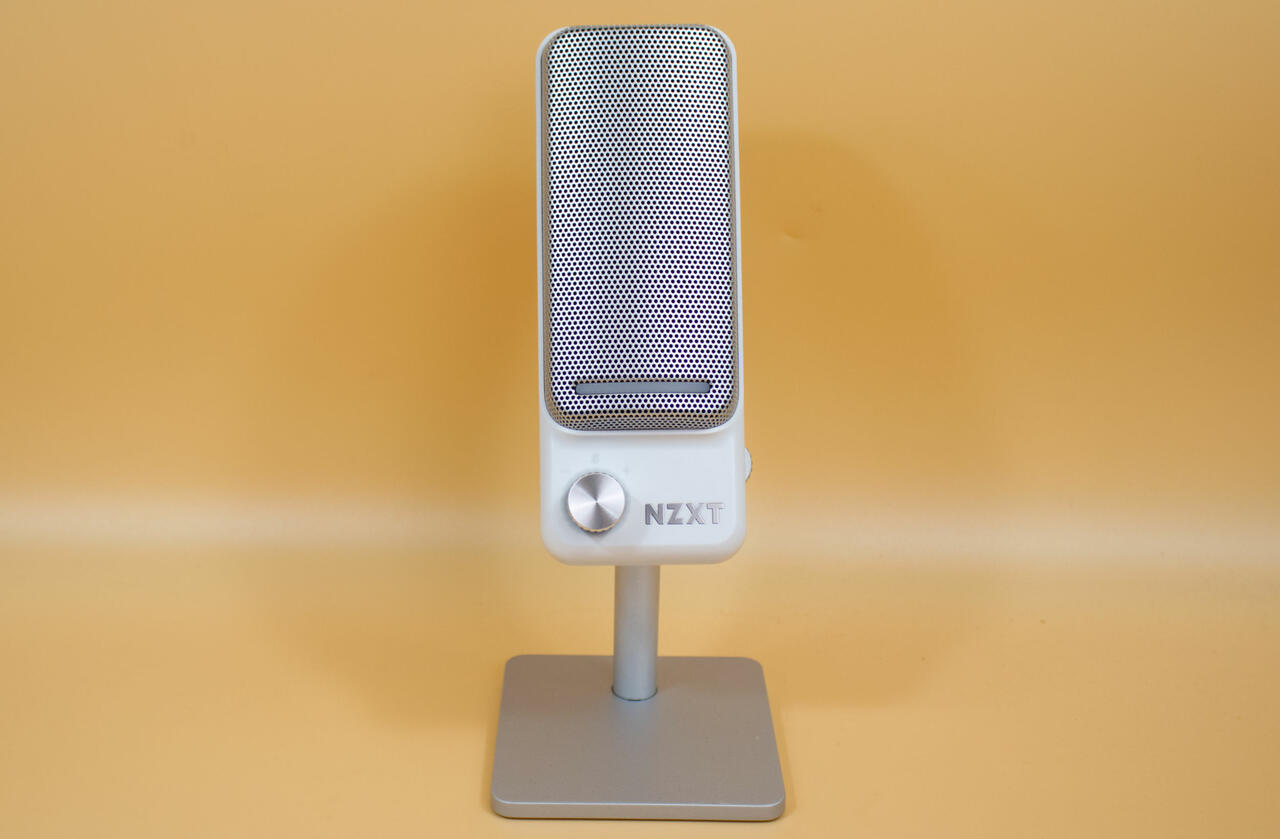 NZXT Capsule Elite Test Review (Image © PCMasters.de)
NXZT company history
NXZT was founded in 2004 by Johnny Hou, who turned his hobby into his profession. His credo is to bring design and function together beautifully. His design language is often recognized by the clear lines and clean finishes of his cases. The Californian company is expanding and so it is not surprising that NXZT is now also developing other product areas. In addition to cases, NXZT now manufactures power supplies, mice, keyboards, motherboards and audio products, such as the Capsule Elite tested here, all of which usually have their own touch of design.
Technical data
| NZXT Capsule Elite - Technical data | |
|---|---|
| Dimensions (rounded) | 241 x 97 x 97 mm |
| Color variants | White and black |
| Microphone type | Condenser |
| RGB illumination | yes, radiating to the rear, LED status on the front |
| Mounting types | Stand or on the microphone arm |
| Capsule size | 25 mm |
| Screw thread | 3/8 inch female |
| Weight | 561 g with base 292 g without foot |
| Connection | USB-C |
| Bit depth / sampling rate | 24 bit / 192kHz |
| Frequency response | 20 Hz - 20kHz |
| Max sound pressure level | 120 db |
| Characteristic | Cardioid |
| Price | 107 € (Affiliate) |
 NZXT Capsule Elite Verpackung Front (Image © PCMasters.de)
Packaging
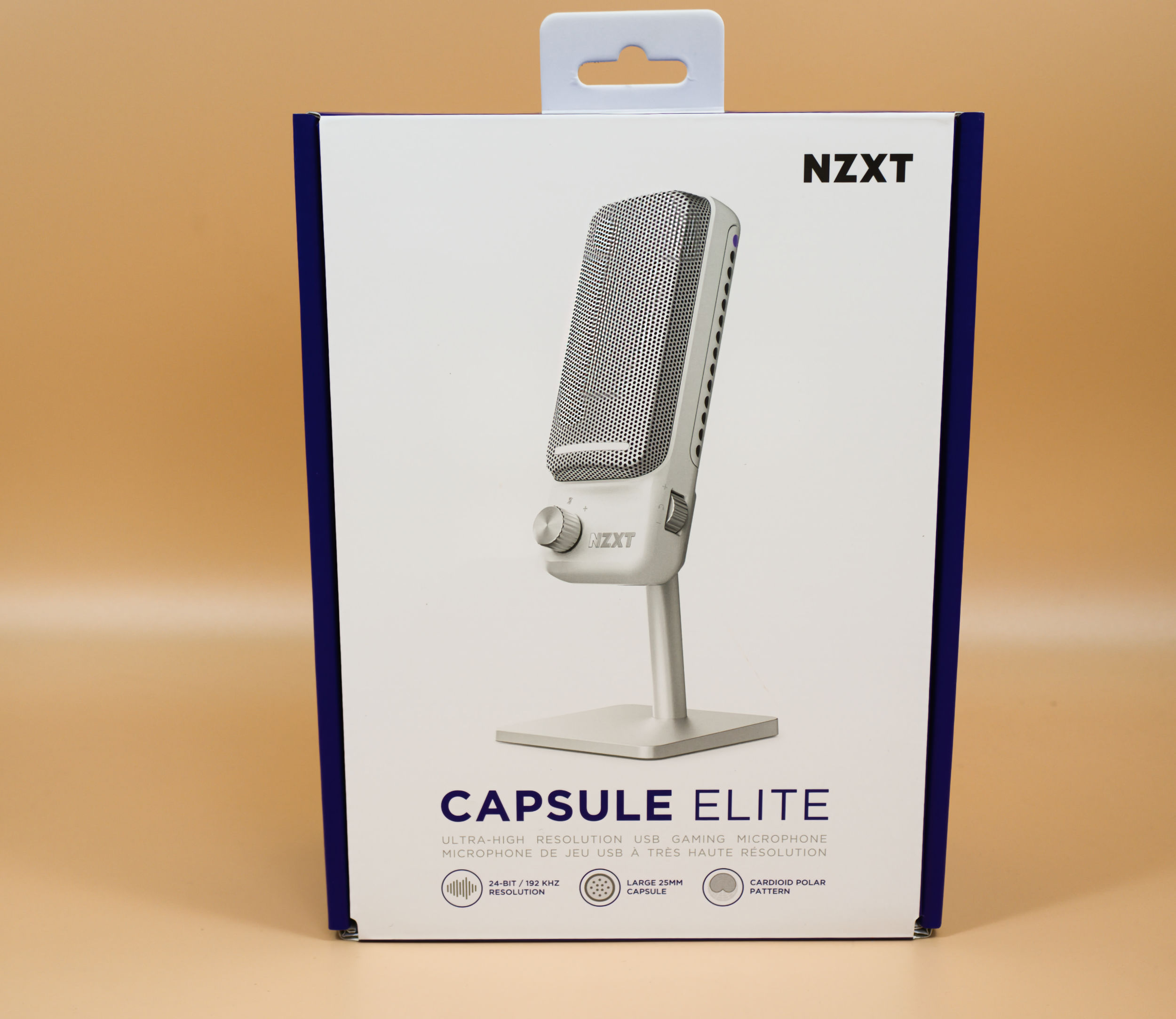
The front of the packaging is white, but is framed by the side panels, which pick up on NZXT's typical design and range from blue to purple depending on the incoming light. The front shows a product photo, the name and the main features of the microphone.
 NZXT Capsule Elite Verpackung Rückseite (Image © PCMasters.de)
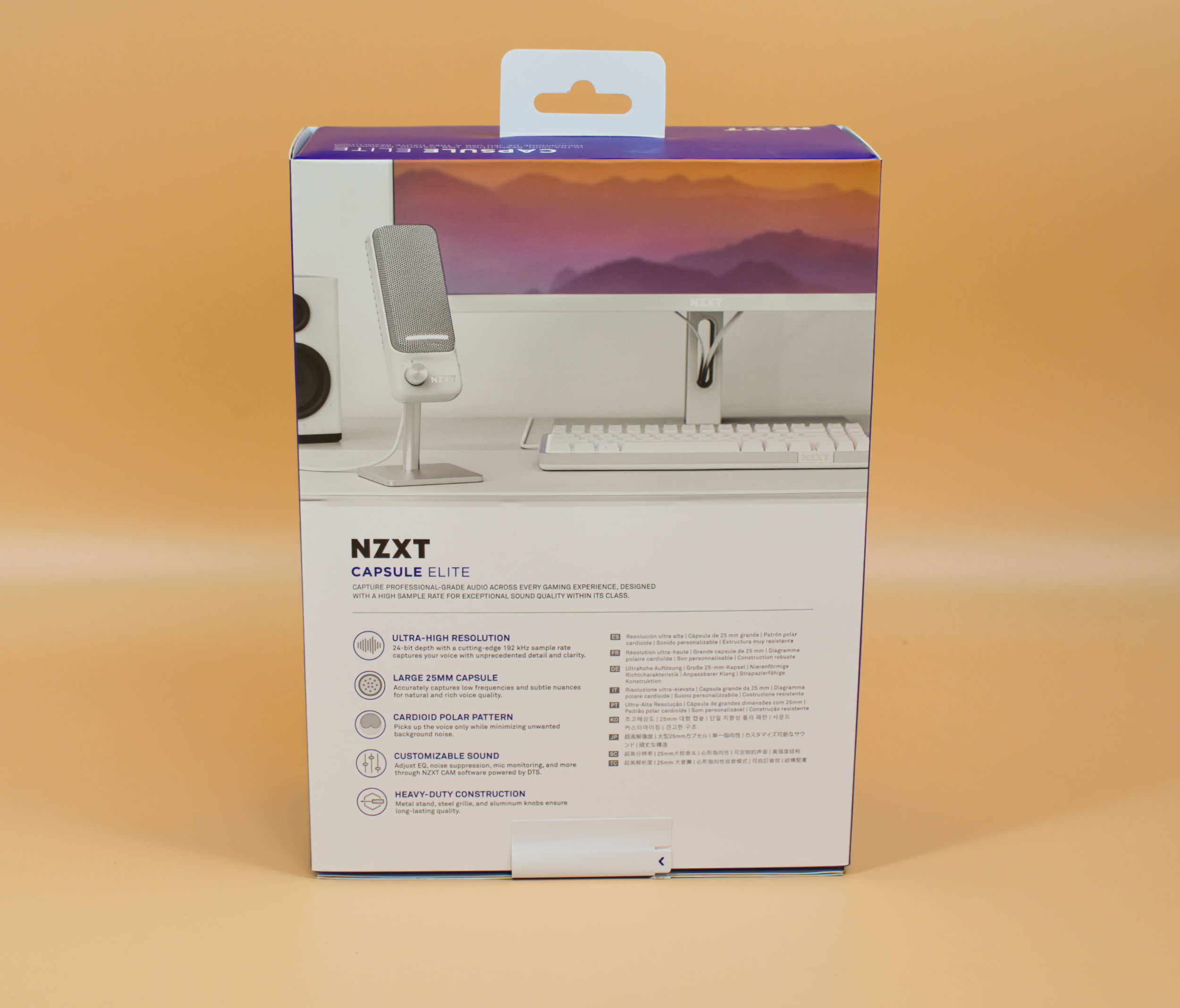
On one side are the specifications and on the other is a quick guide to the product where all the connections and buttons are explained. The back shows a possible version of a desk with the microphone and the main attributes of the product are explained in more detail.
 NZXT Capsule Elite Verpackung innerer Aufbau (Image © PCMasters.de)
Scope of delivery
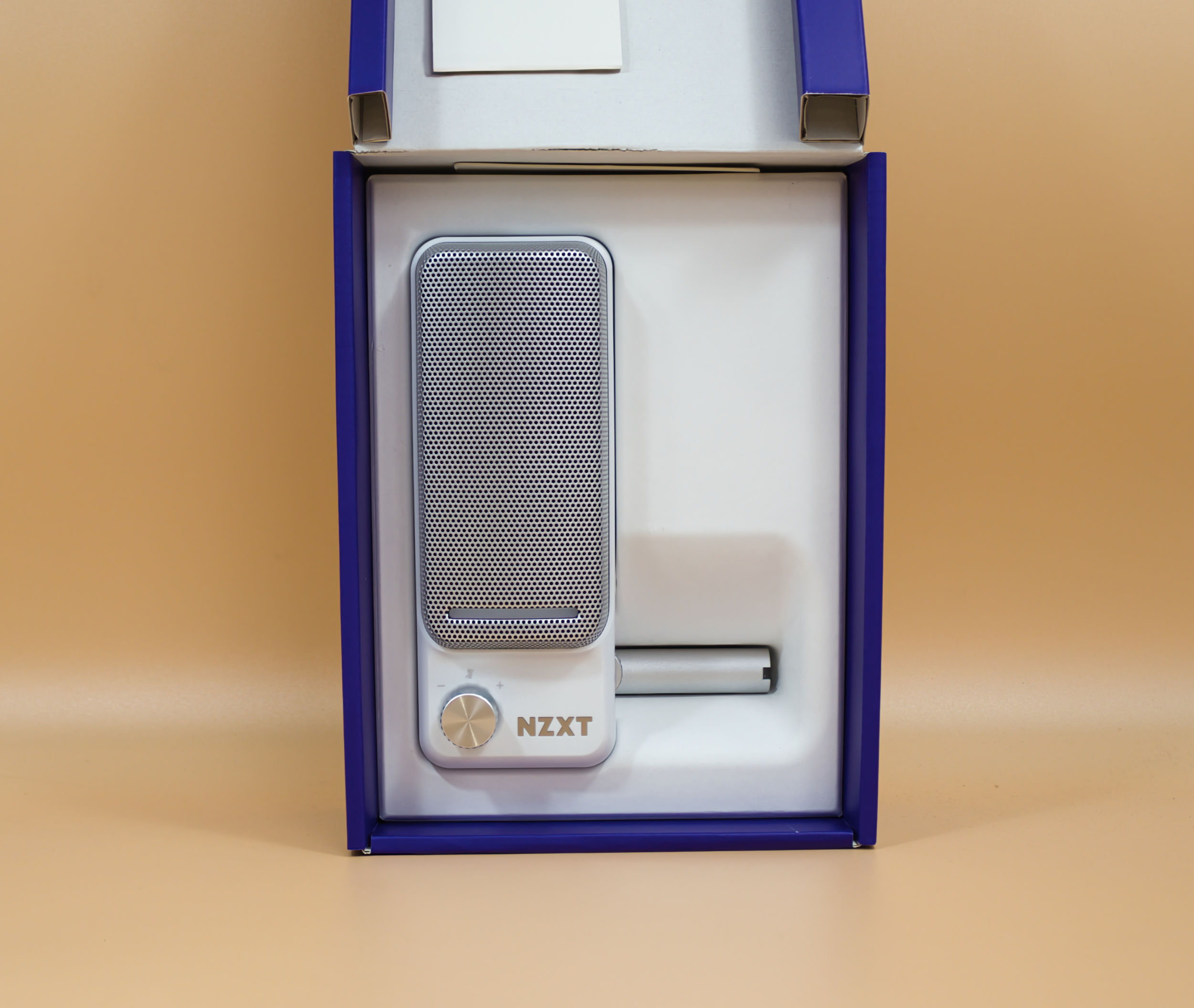
The scope of delivery includes the microphone, a desk stand, an approx. 2m long USB-A to USB-C connection cable and a quick start guide on the packaging. The complete manual can be downloaded from the NZXT website. The absence of plastic bags or similar is striking, which is good for the environment and means that the outer packaging can be disposed of in the paper waste without hesitation.
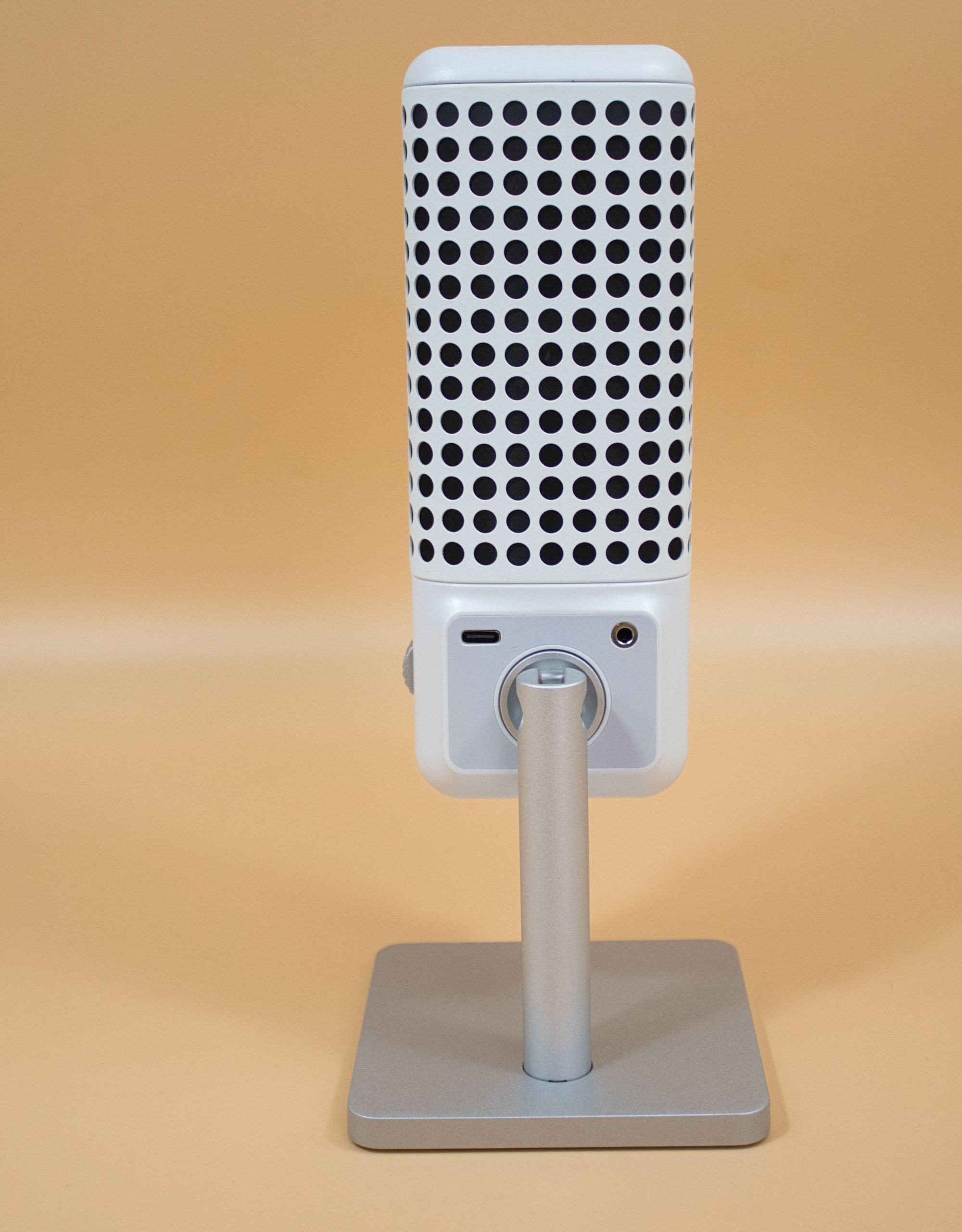 NZXT Capsule Elite Rückseite (Image © PCMasters.de)
Processing quality
Our sample was very well made in terms of the gap dimensions, especially the cut-outs on the back are extremely well made. The Capsule Elite is a stylish microphone with a rather retro design, but it has been equipped with chic modern elements. The RGB lighting is mounted on the rear and can be used as chic but rather dim indirect lighting when mounted at 90 degrees, especially when using a bright mouse mat such as the NZXT Zone. The design also fits in very well with the NZXT design language, e.g. if the desktop consists of NZXT products.
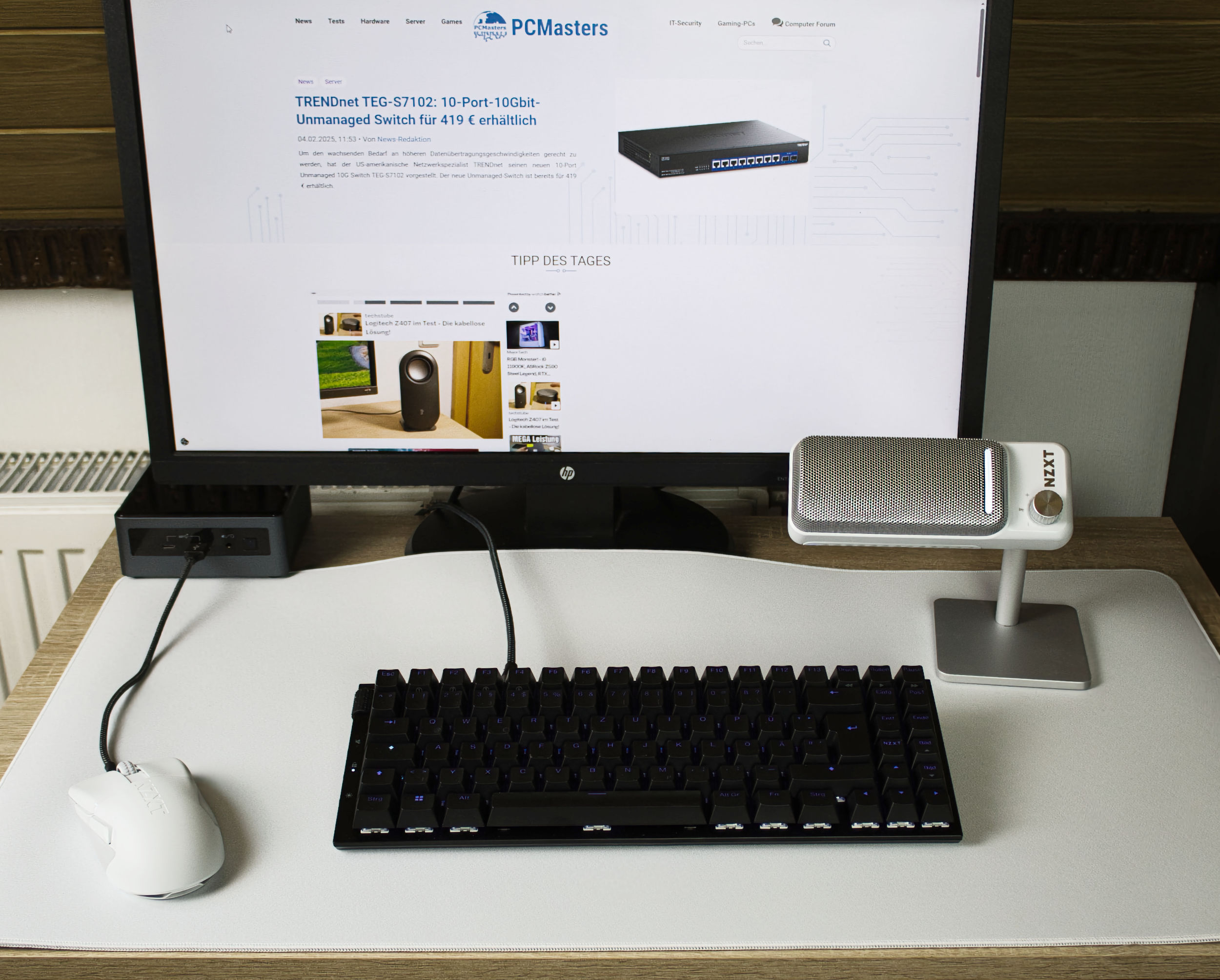 NZXT Capsule Elite Desktop 90 Grad gewinkelt (Image © PCMasters.de)
The front wheel has a floating bearing and can be moved easily around its axis, which we can still define as OK, and the grid and sluggishness also leave a positive impression. However, the same cannot be said about the side dial, which is very smooth-running and the ratcheting is only very slightly perceptible. Unfortunately, it can happen that the dial skips some inputs, especially when turning quickly. However, this works without any problems when turning slowly. The stand is made of metal and blends in well with its silver look. A pop guard is fitted behind the front perforated plate. The weight of the overall construction alone suggests value. The plastic looks quite valuable in places, but in some lighting scenarios this can also be a little off-putting. However, this is more a matter of taste and should be checked beforehand.
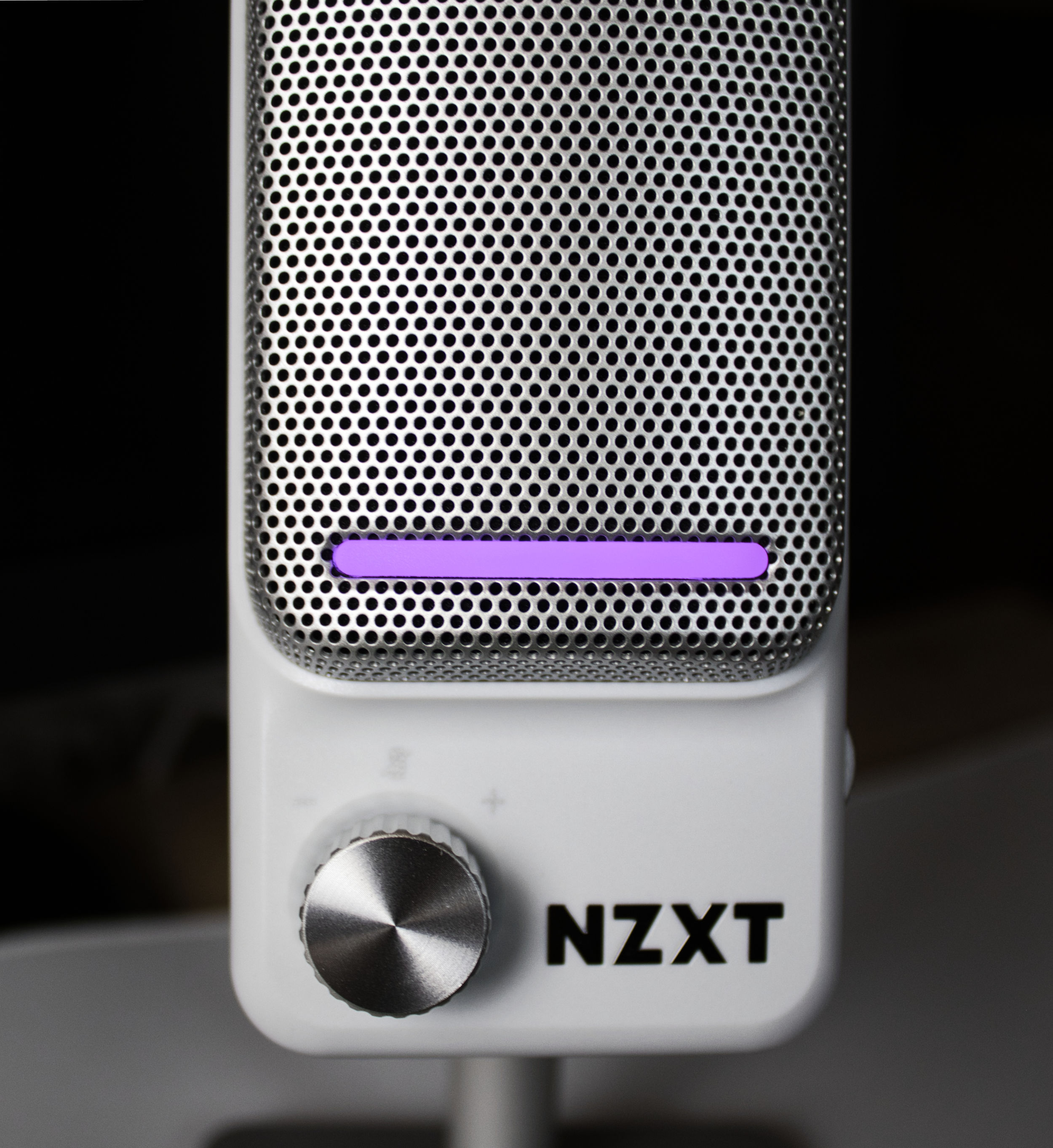 NZXT Capsule Elite Status LED Lila Mikrofonlautstärke (Image © PCMasters.de)
Operation
The microphone is connected at the back using the USB-A to USB-C cable supplied, the length of 2 meters is well chosen and is sufficient for most setups. This should not pose any problems for anyone. There is also a 3.5 mm jack connection on the back which acts as a control monitor, with which the recording can be checked to see if, for example, noise or the distance to the microphone is correct.
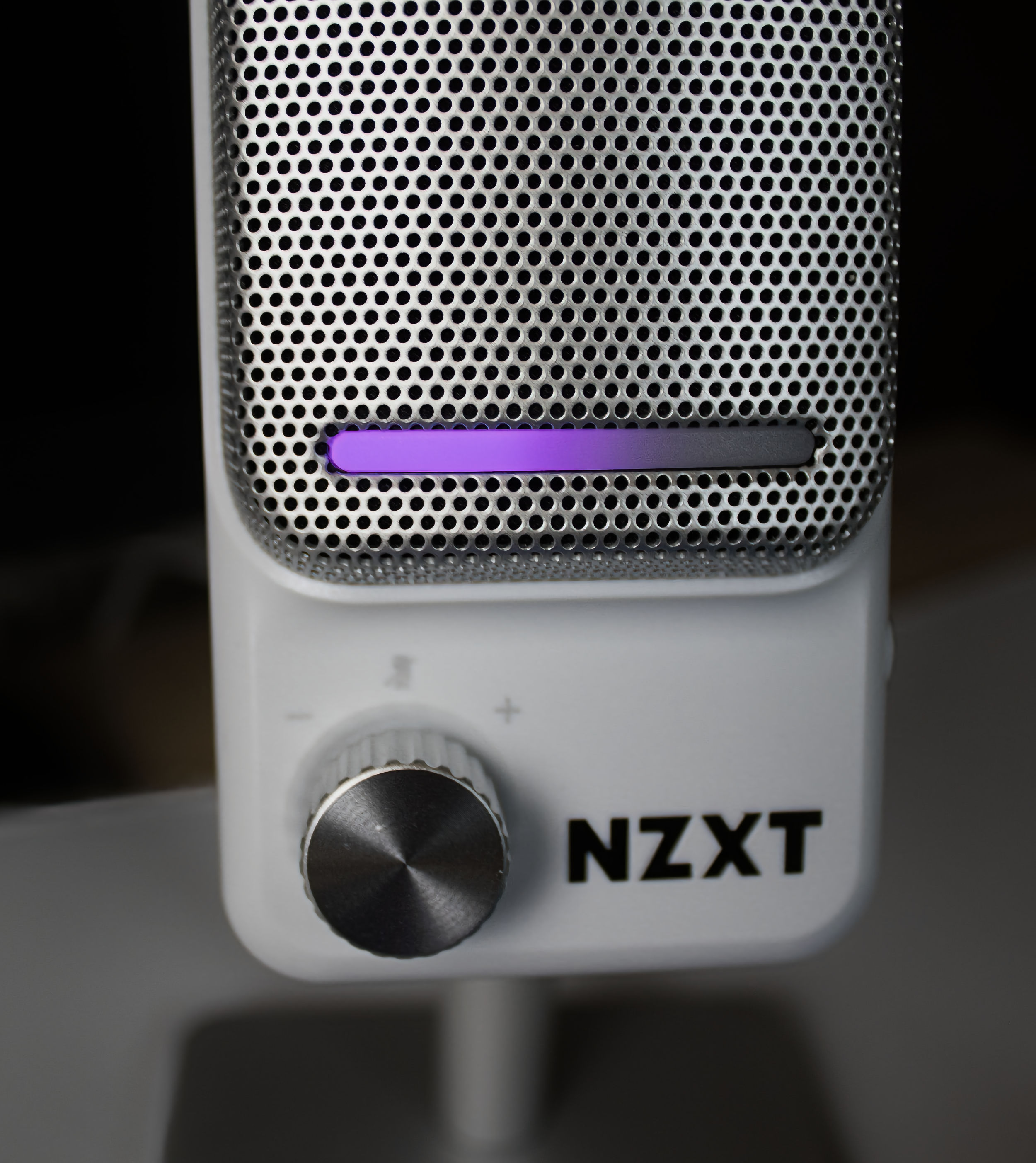 NZXT Capsule Elite Status LED Lautstärke Mikrofon hälfte (Image © PCMasters.de)
The front-mounted rotary knob is responsible for the recording volume and when it is pressed, the microphone is muted. When adjusting the recording volume, the status bar on the front is filled depending on the level. This is shown in purple and when the microphone is muted, the bar is illuminated in red.
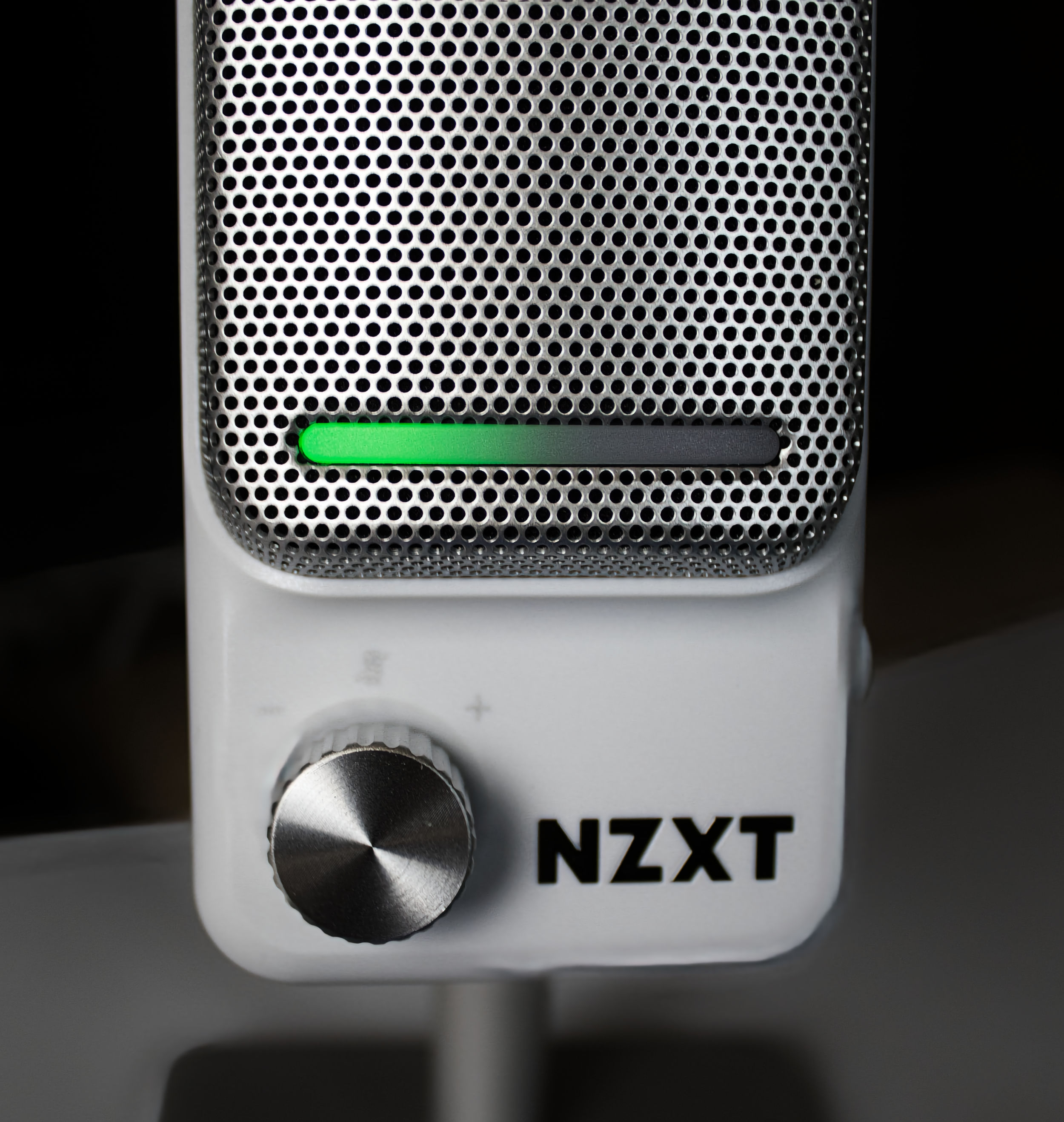 NZXT Capsule Elite Status LED Headset Lautstärke (Image © PCMasters.de)
The headset is set using the rotary wheel on the side. This is shown in green. When the microphone is ready to record, the status bar is white.
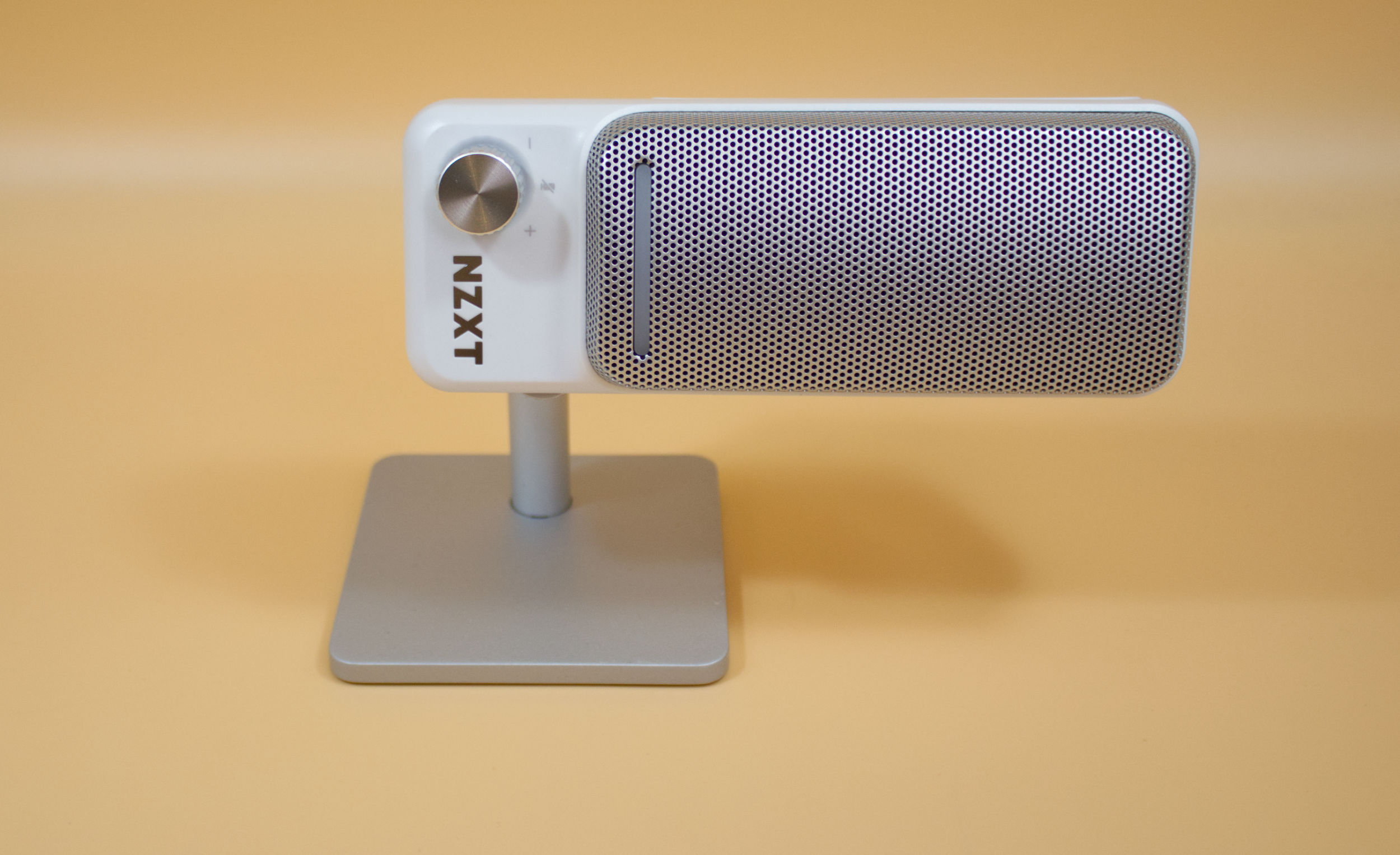 NZXT Capsule Elite gekippt (Image © PCMasters.de)
Recording quality
The recordings are always subjectively assessed and may vary from listener to listener. However, we try to reproduce our listening impressions as objectively as possible. The software settings offered by the Capsule Elite can also completely change the overall impression. That's why we test here with the factory settings.
We first test the close-up range of the microphone (approx. 1-5 cm) and find that the pop protection quickly reaches its limits here and the Capsule tends to roll over a little. We were not really surprised, as this is not the table microphone's area of application. However, if you manage to keep your plosive sounds in check, you can expect usable recordings. The microphone feels most comfortable at a distance of 15 cm to 60 cm. This is where the recordings work best as the pop protection works more than well here and the level also behaves best and there are virtually no extremes. The speech is picked up surprisingly cleanly and you really notice how you quickly stop worrying about whether everything is being picked up well. That's how dat. Even vocals are possible here without any compromises and are impressive considering the price.
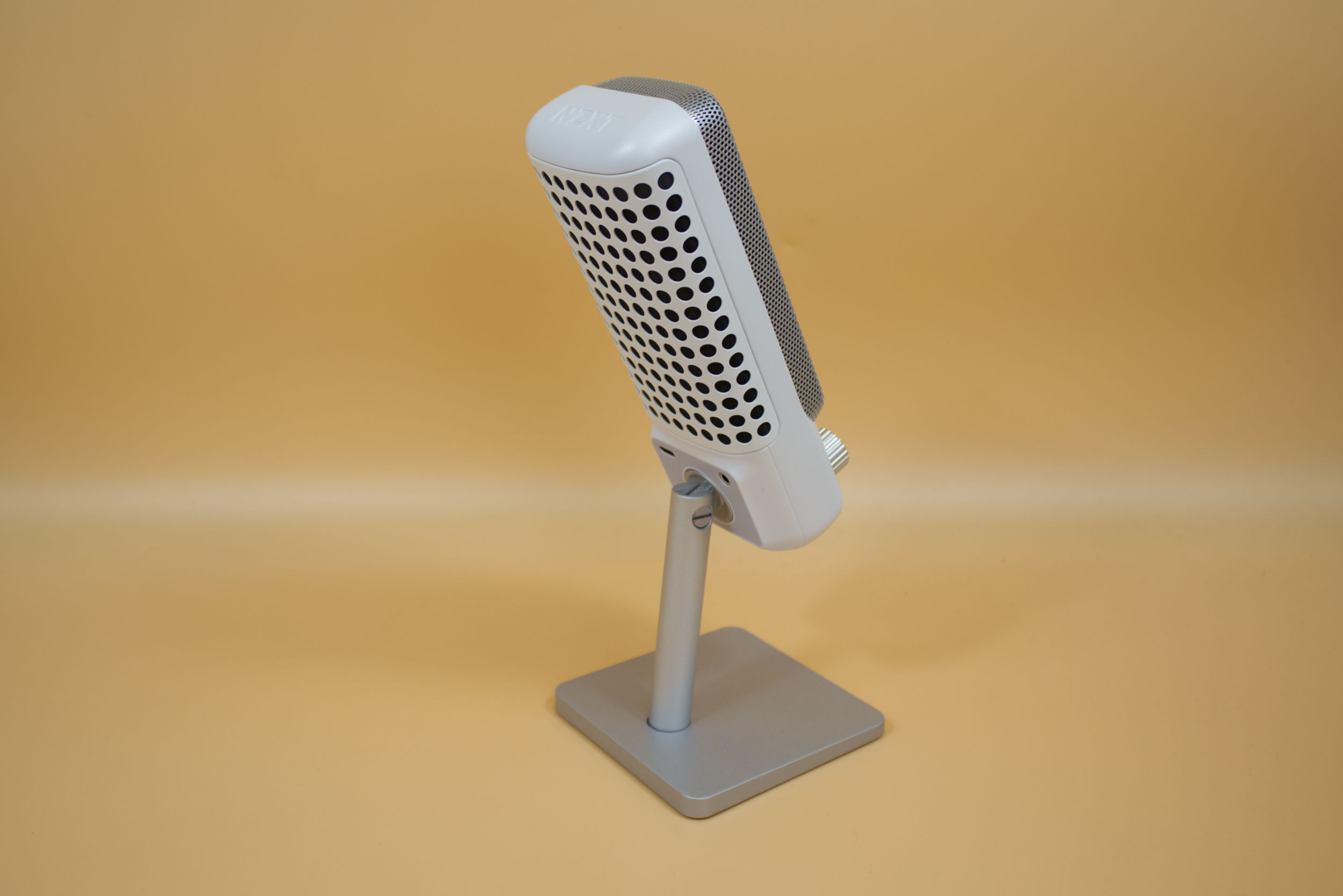 NZXT Capsule Elite Seitenansicht (Image © PCMasters.de)
From a distance of about one meter, the level drops and the room opens up so that it feels as if you are standing much further away than is the case. If you turn up the level here, you can still get something out of it, but here too you can tell that this is simply not the microphone's area of application.
In general, we found the recordings to be quite successful and ambient noise is well suppressed thanks to the cardioid characteristic and can be handled very well using noise suppression. Only the stand proved to be less than ideal as a carrier of shocks, e.g. on a desk, where mounting on a boom arm (mini) would be a better solution.
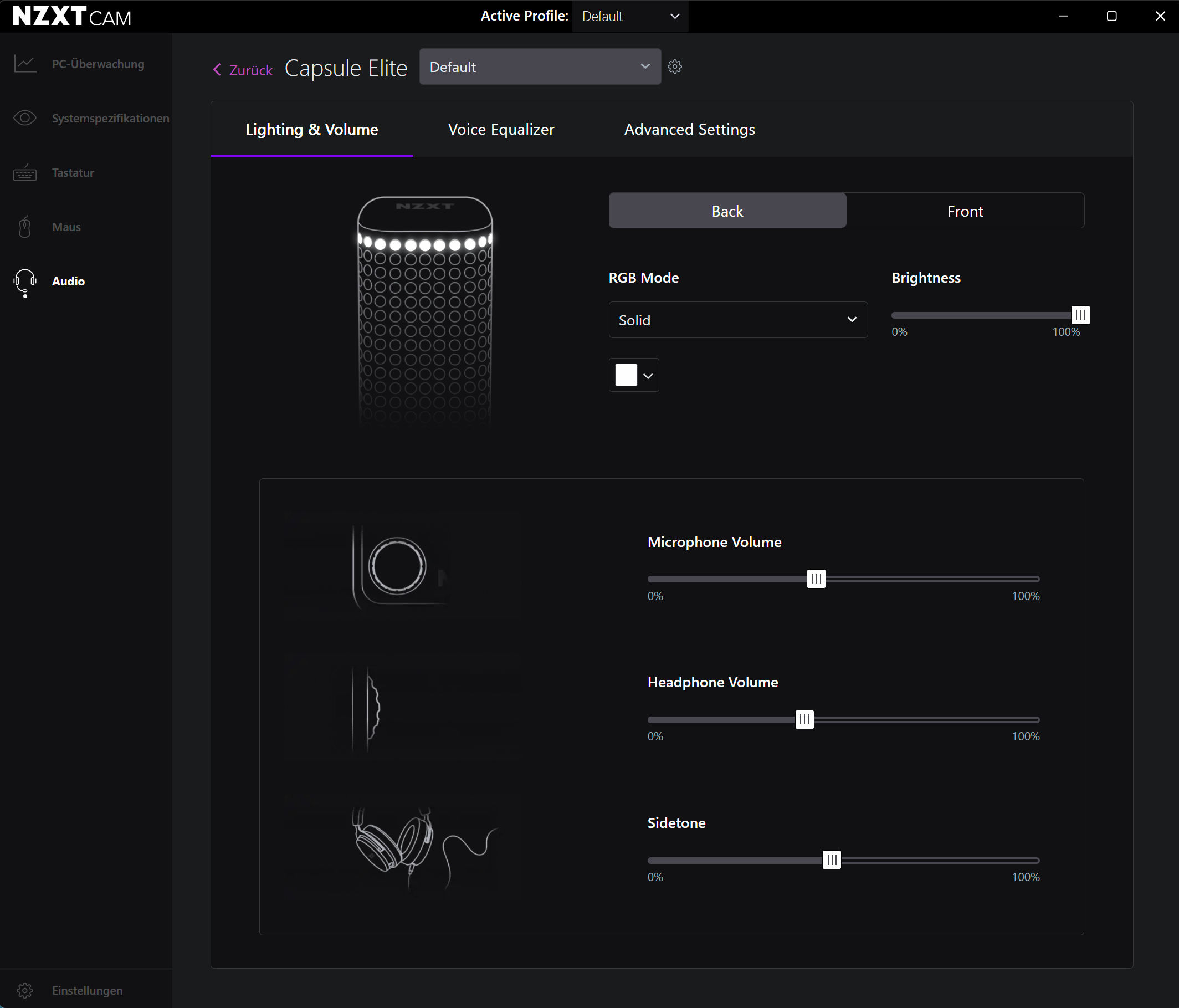 NZXT Capsule Elite Software 1 (Image © PCMasters.de)
NZXT CAM Software
The control center at NZXT is called NZXT CAM and is a software solution with which all NZXT devices can be controlled and PC monitoring is also offered here. As always, we look at the tabs responsible for the Capsule within the software so as not to go beyond the scope of this test.
 NZXT Caplsule Elite Software 2 (Image © PCMasters.de)
The Capsule Elite is configured here via three pages - on the first page, the RGB lighting and the volume are configured. The RGB lighting offers a simple setting and is not overloaded and also quickly configured. All volumes are set here using sliders in 1% increments.
 NZXT Capsule Elite Software 3.1 (Image © PCMasters.de)
 NZXT Capsule Elite Software 3.2 (Image © PCMasters.de)
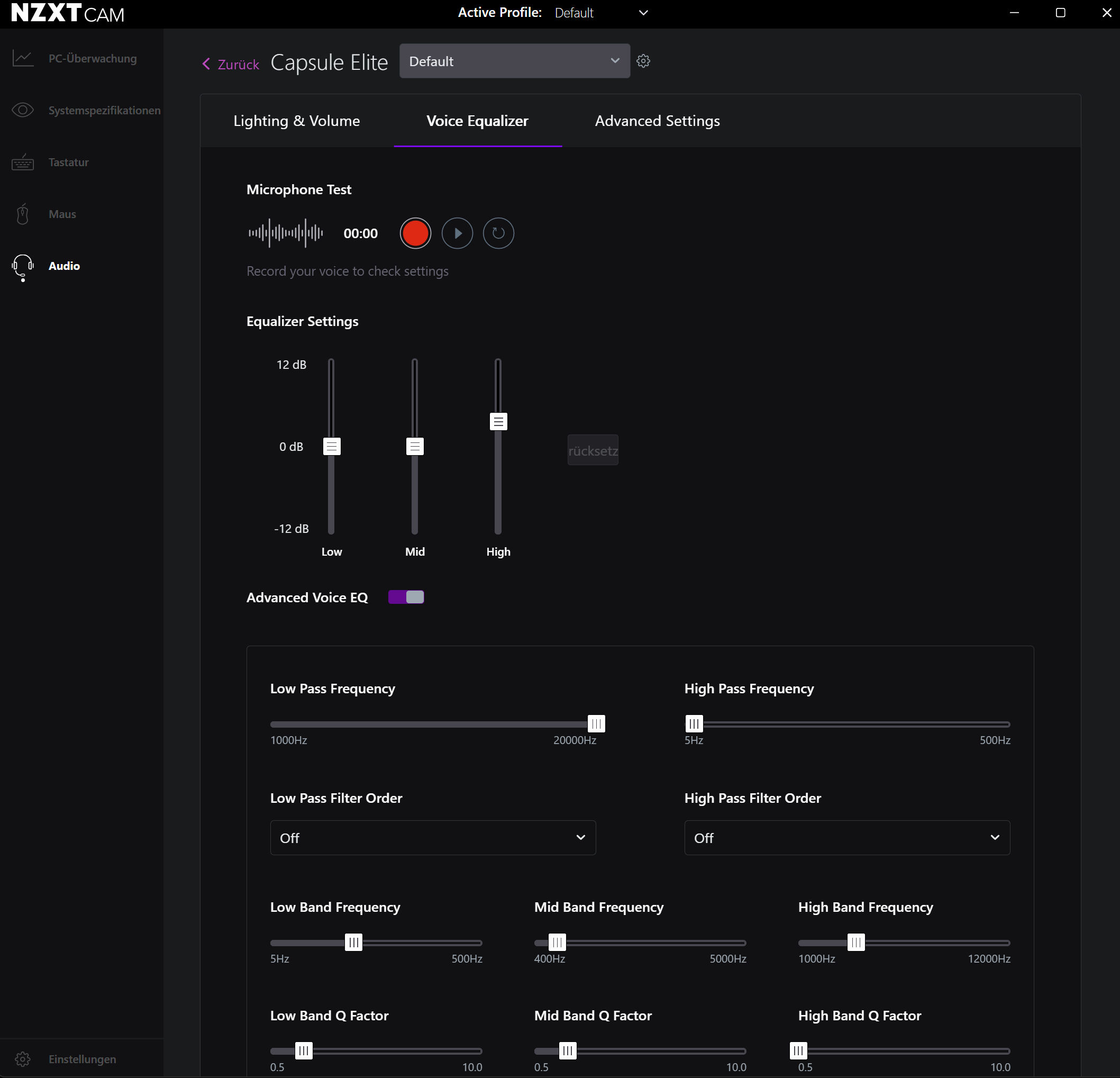
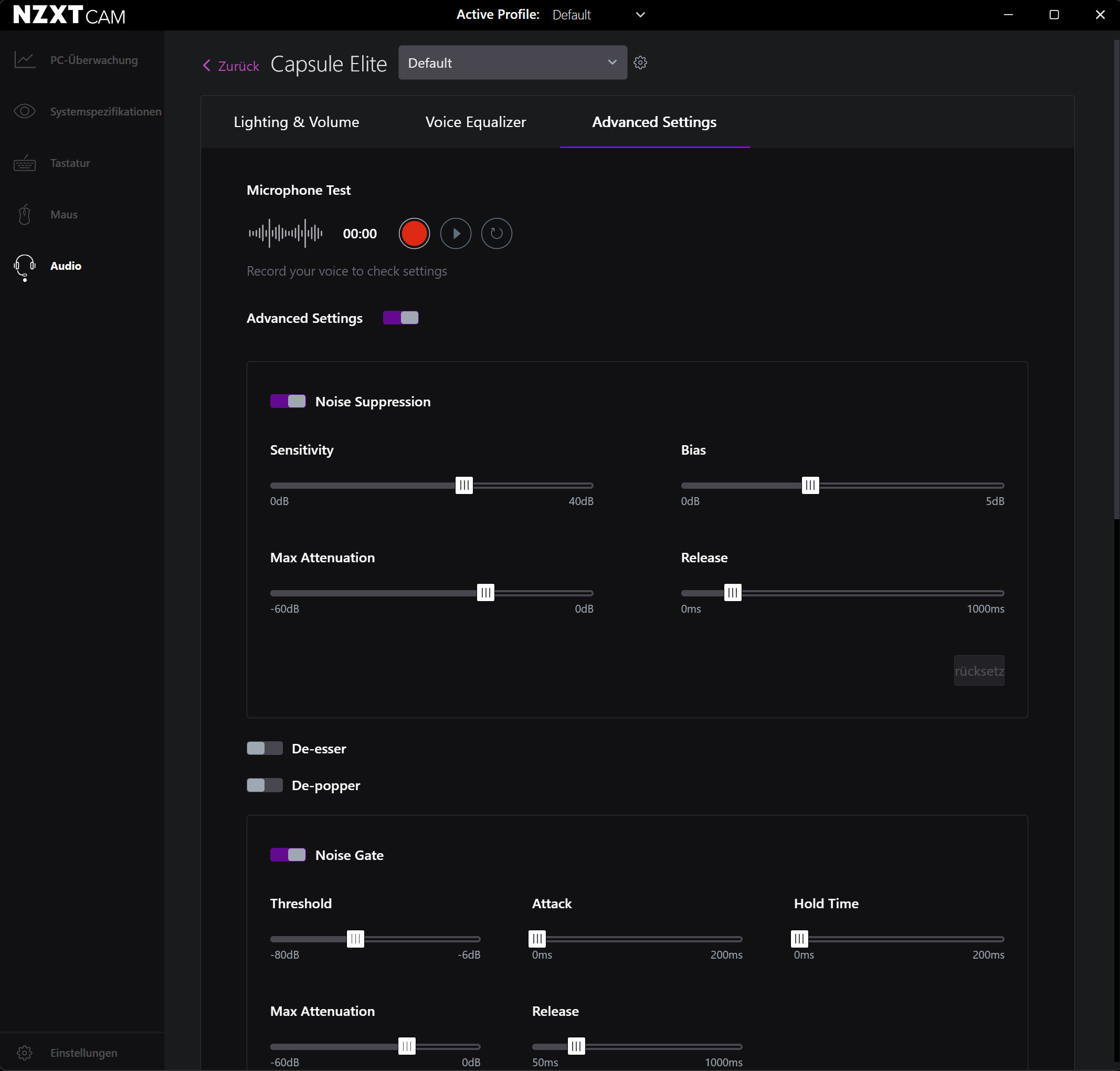
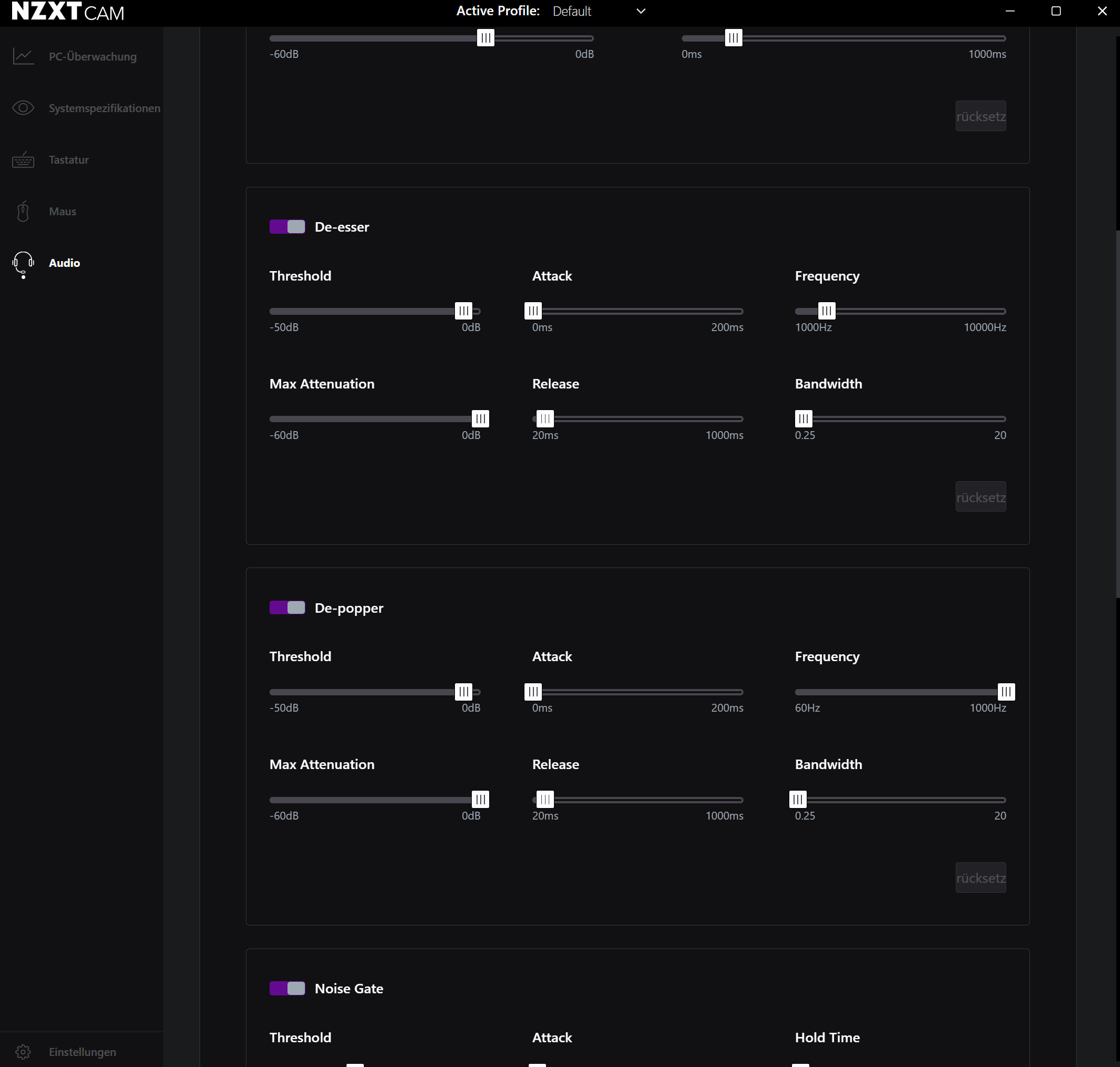
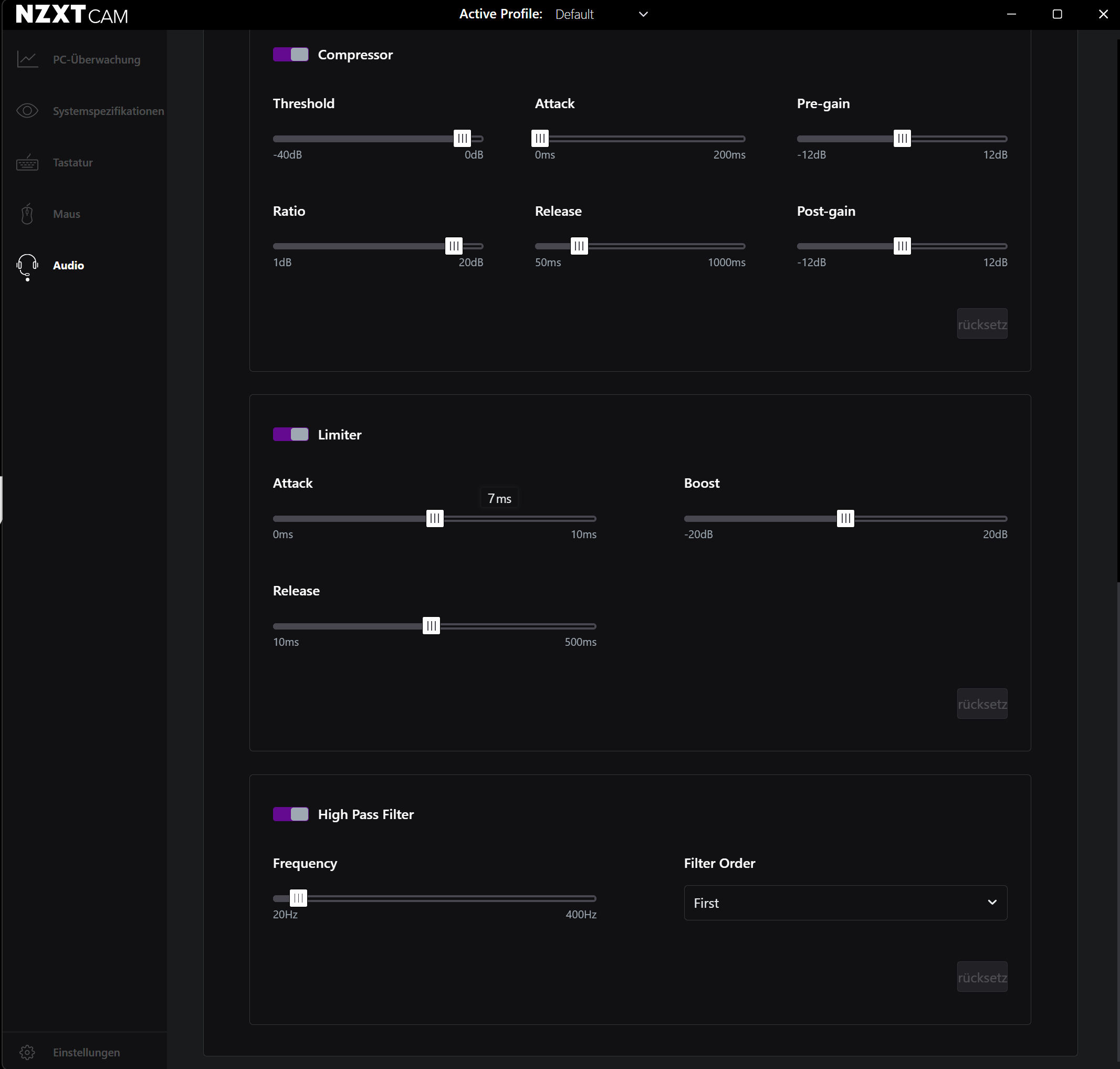
On page two there is a voice equalizer which, in simple mode, only allows you to adjust the low, mid and high frequencies. In advanced mode, various filters and fine adjustments are then activated which allow you to adjust the factory settings according to your personal preferences. The third page switches further options for sound optimization in advanced mode. There are settings here to minimize background noise and plosive sounds. Settings to minimize volume differences are also provided here.
 NZXT Capsule Elite Software 3.3 (Image © PCMasters.de)
The only drawback is that all options are provided in English and those who are not familiar with the jargon will quickly reach their limits here or have to play the "try and error game" (oh, I meant "trial and error" game). But this is something that can be added relatively quickly with a software update.
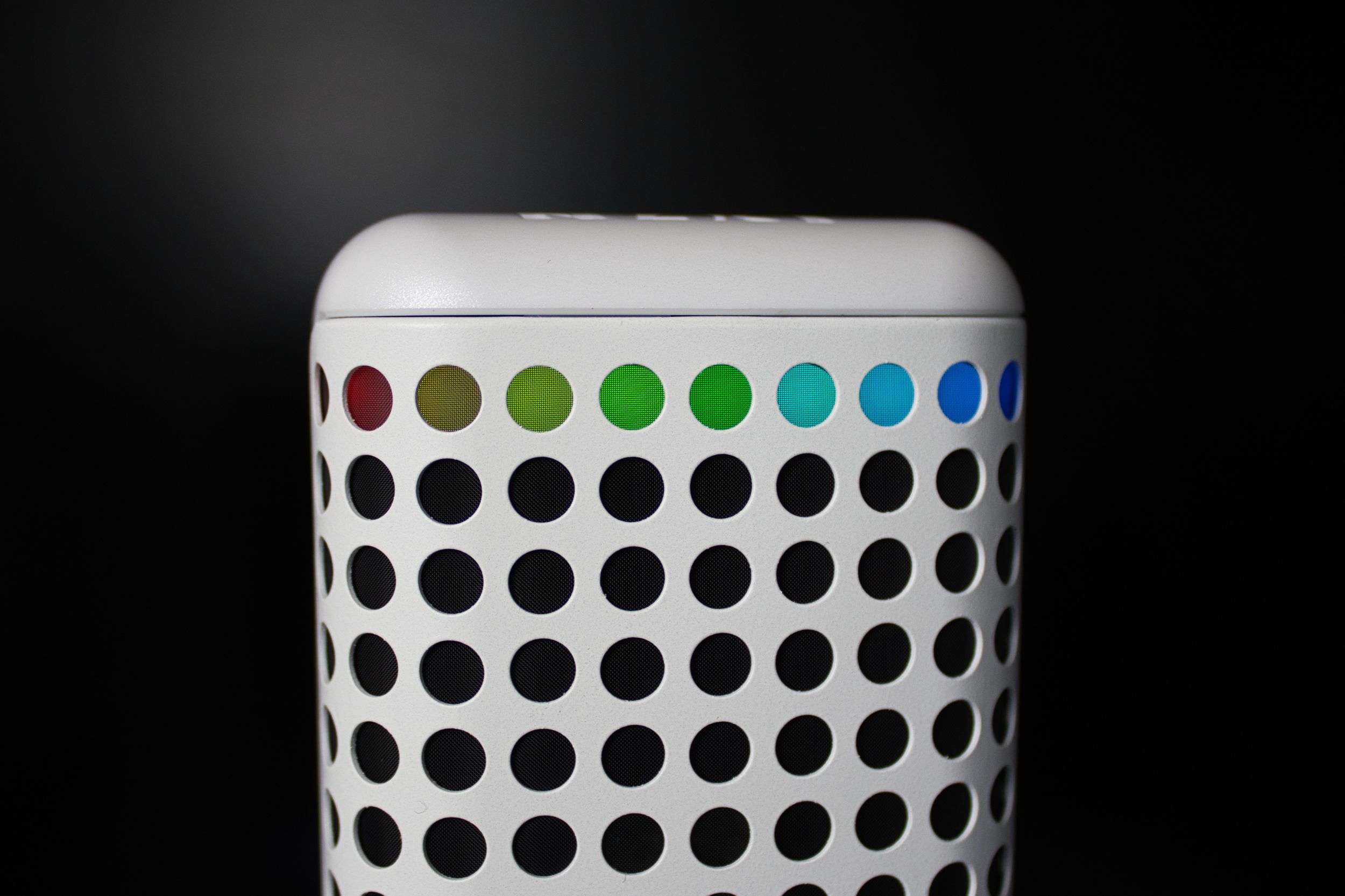 NZXT Capsule Elite RGB Beleuchtung (Image © PCMasters.de)
RGB lighting
The RGB lighting is located on the upper rear part of the microphone, but unfortunately only one row has been implemented here. We would have liked to see the entire surface as a radiating surface to enable more indirect light. This leaves only a very subtle RGB lighting which is hardly noticeable in the upright position and only comes into its own a little more when the microphone is tilted.
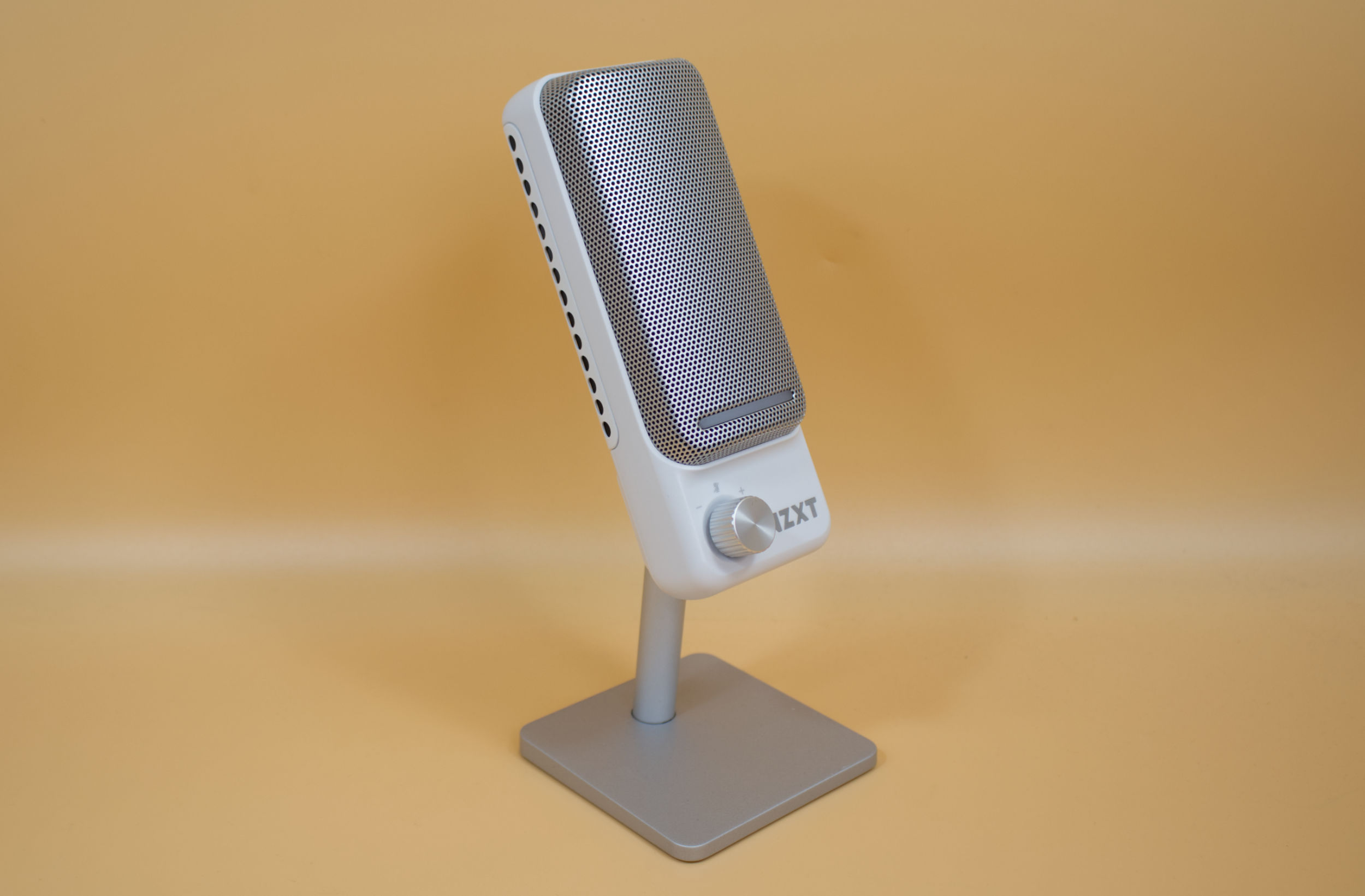 NZXT Capsule Elite Mikrofonfazit (Image © PCMasters.de)
Conclusion
With the Capsule Elite, NZXT has succeeded in creating a very well-made retro-future microphone with subtle RGB lighting, which can score additional points with its high level of user-friendliness and extensive software. Unfortunately, the volume control for the headset is not optimally processed and results in deductions in this sub-rating. The recording quality is more than just satisfactory, but can be described as excellent at the right distance. Due to its cardioid characteristic, the microphone is particularly suitable for recordings that are spoken from the front.
Although the stand is stable, it is only decoupled to a limited extent and should be replaced with the Boom Arm (Mini) for professional applications. The Capsule Elite therefore receives a recommendation from our editorial team for this price.
Pro
- Very good recording quality, at the right distance
- Good, tidy, comprehensive software
- Stable stand
- Plastic-free packaging
- Option for mounting on microphone arms
- Very good price/performance ratio
Contra
- No mounting of an additional pop shield possible
- The integrated pop protection is not sufficient for very close recordings
- Decoupling of the stand not optimal
- Software names only in English
- Volume control for the headset could be of higher quality