
 Computer Forum
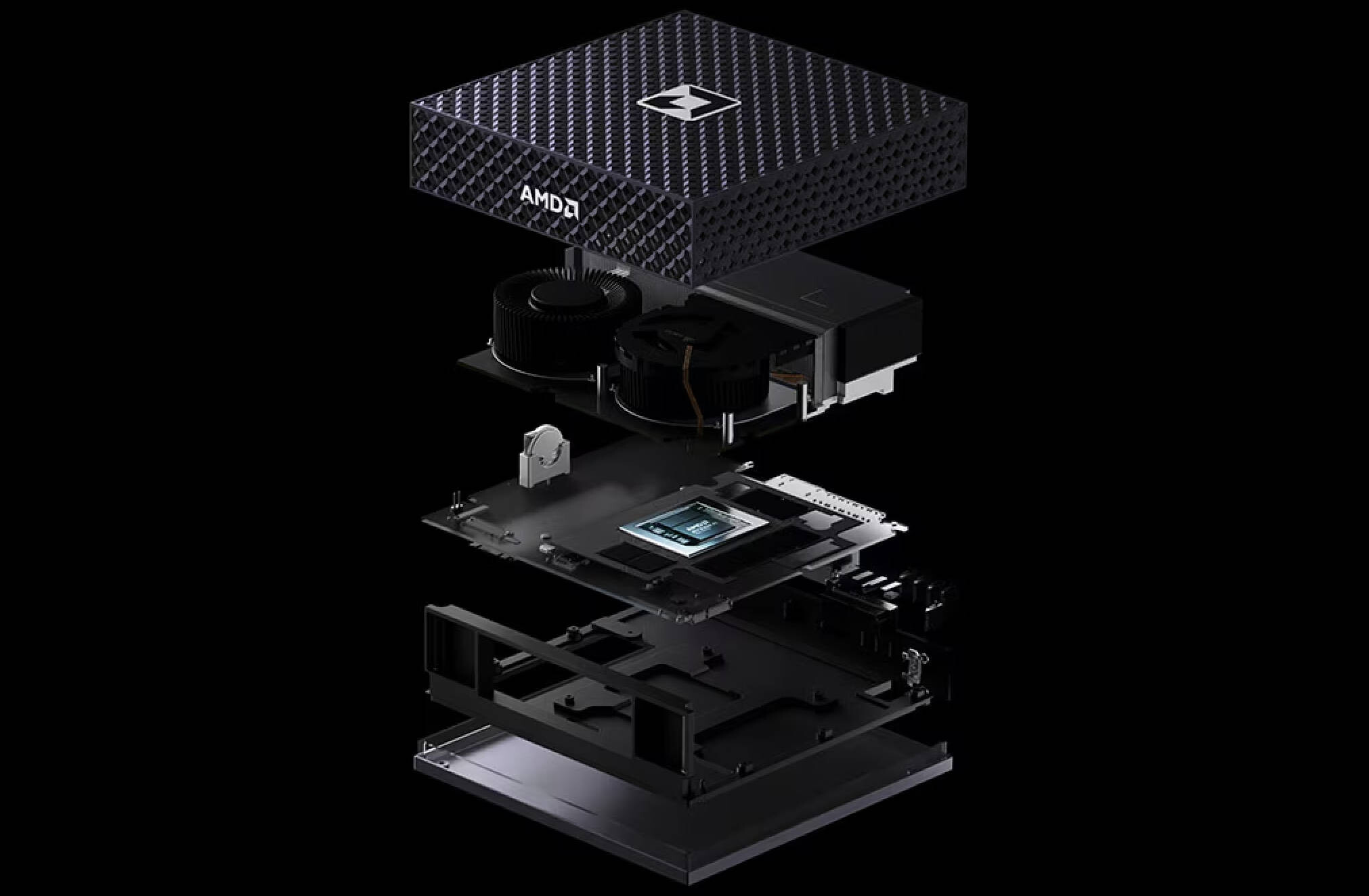 AMD Ryzen AI Halo Workstations mit Ryzen AI Max 395 (Image © AMD)
The Ryzen AI Halo Platform addresses the increasing complexity of AI models with workstation-class features. Powered by the Ryzen AI Max+ 395, these systems feature up to 128 GB of unified memory. This hardware configuration enables users to process larger workloads and run local models with up to 200 billion parameters, ensuring that sensitive workflows remain on the physical device.
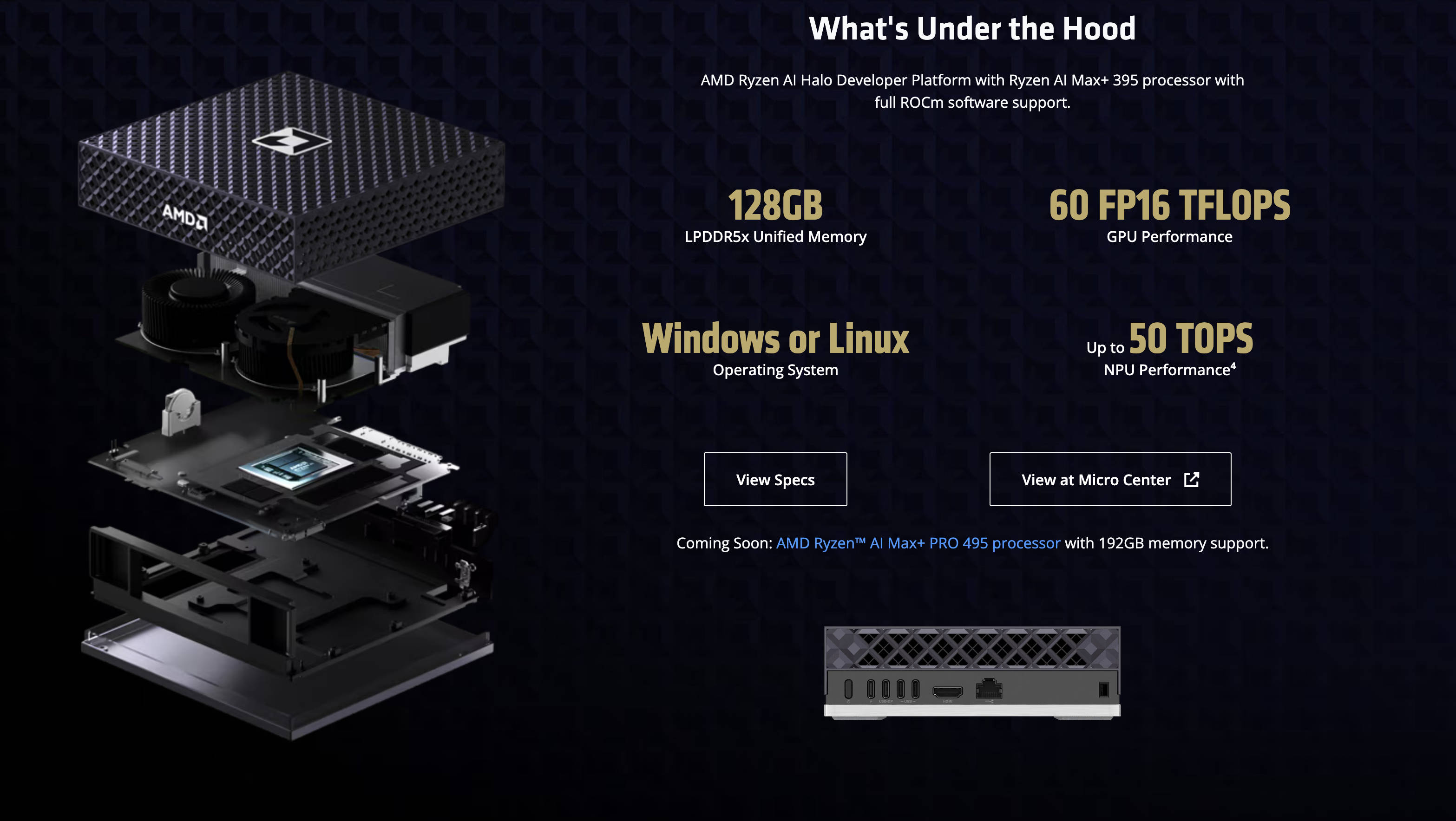 AMD Ryzen AI Halo Workstations (Image © AMD)
To enable immediate deployment, the systems ship with a pre-installed suite of development tools. These include AMD ROCm as well as industry-standard applications such as LM Studio, ComfyUI, and VS Code. AMD also provides dedicated AI guides and monthly software updates to ensure the platform keeps pace with evolving AI requirements.
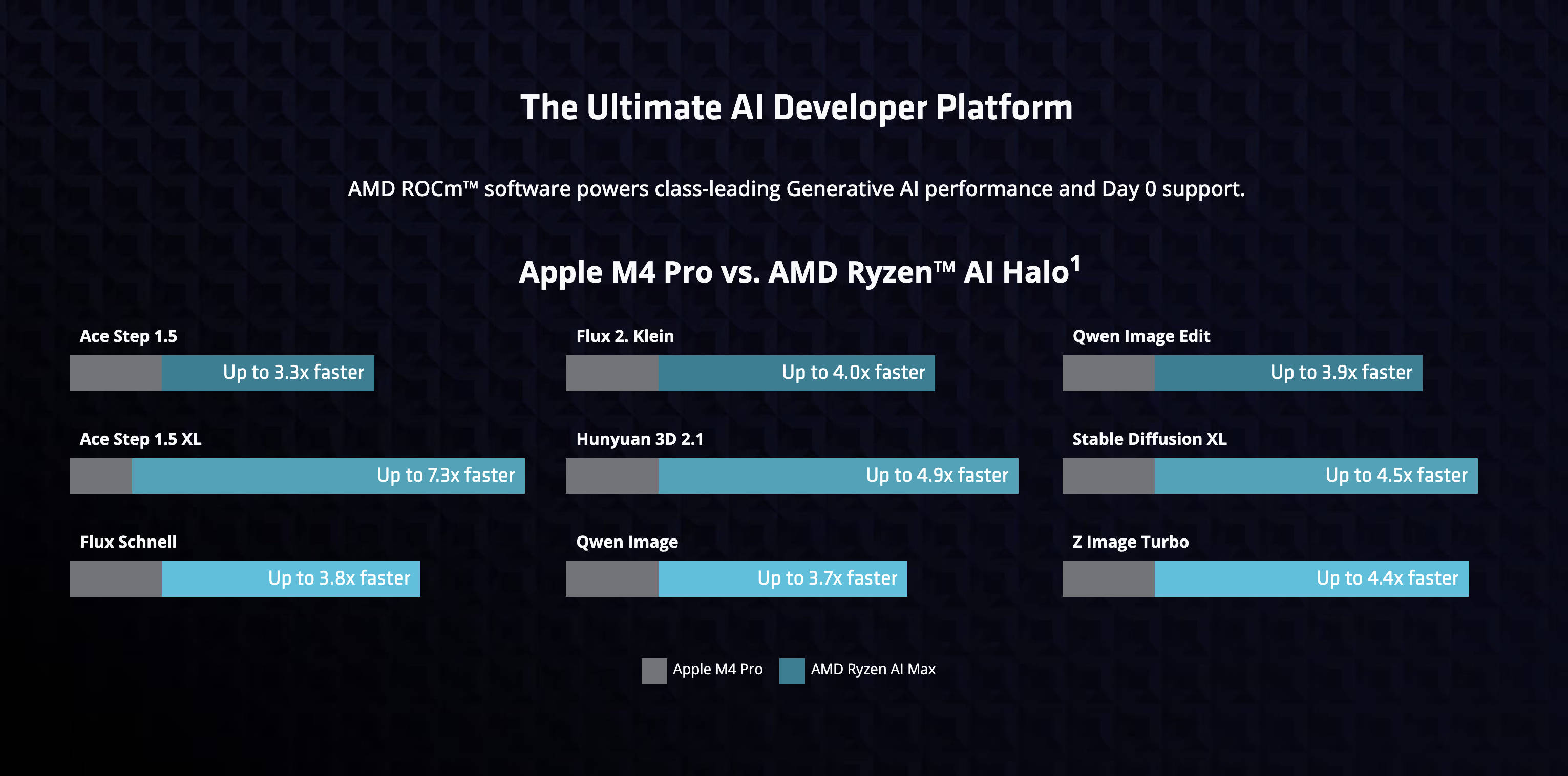 AMD Ryzen AI Halo Performance (Image © AMD)
In terms of performance, the Ryzen AI Halo offers significant advantages over competing hardware. Data shows that when using GLMS 4.7 Flash, it achieves up to 14% faster LLM token generation per second than the NVIDIA DGX Spark. It also offers a more efficient price-performance ratio in terms of LLM throughput compared to the same NVIDIA platform. Furthermore, the system is up to 7.3 times faster than the Apple Mac mini M4 Pro for PyTorch-based generative AI tasks—including image generation models such as Ace Step 1.5 XL.
At the time of release, AMD emphasized that, unlike its competitors, its platform is available in both Windows and Linux configurations. The systems cost the equivalent of 4,161 (3,999 U.S. dollars before tax) and are available in the U.S. through Micro Center. Although they are not yet on the market in the EMEA region, certain AI playbooks developed for these systems are compatible with other Strix Halo hardware that is already available in those markets.