
 Computer Forum
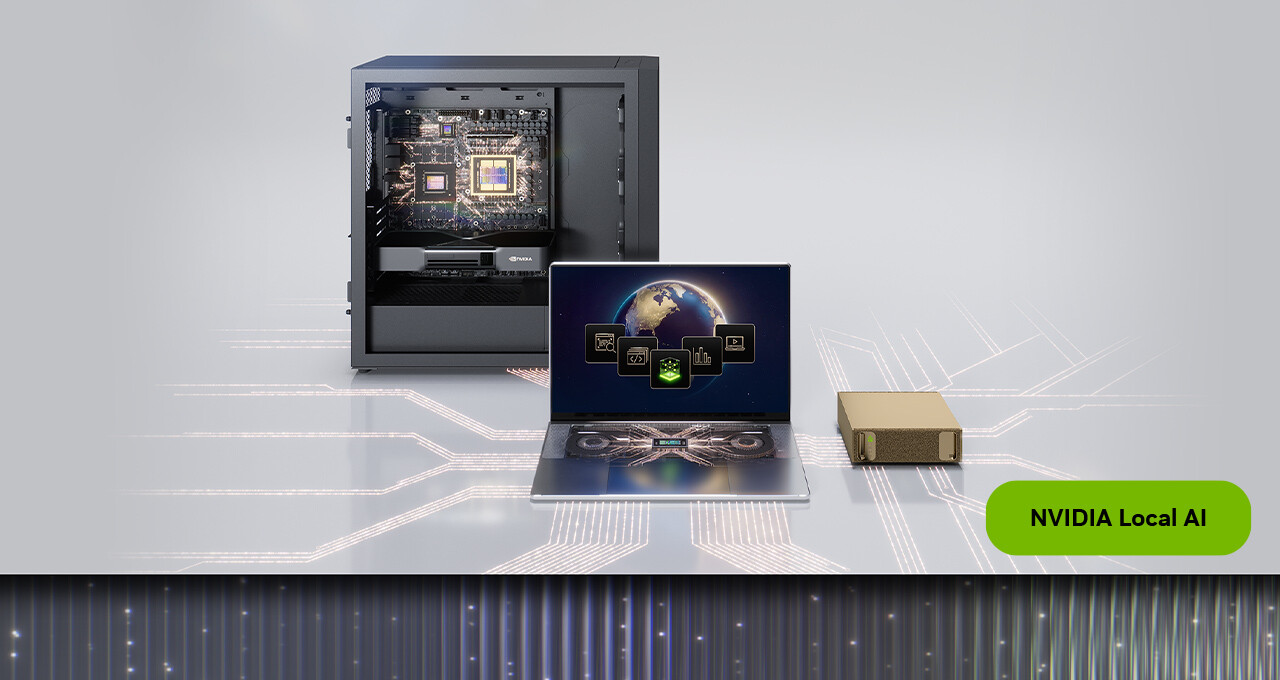 NVIDIA RTX Spark DGX Spark und DGX Station (Image © NVIDIA)
RTX Spark: Local Intelligence for Windows
The RTX Spark is designed to function as a high-performance system for Windows environments, but it also offers full support for Linux, which is simply the better option for AI. The system is intended to deliver personal AI agents and accelerated content creation as a complete package. The system offers up to 128 GB of unified memory and delivers 1 petaflop of AI computing power. This is roughly on par with the Ryzen AI Max+ PRO 495, which, however, offers as much as 192 GB of unified memory. In addition to AI tasks, the system reportedly also supports gaming at a resolution of 1440p at 100 fps, but gamers would never pay the listed price for a system like this.
A software complement is the Underdog Desktop Agent, which uses the model-specific inference engine “Husky” to run AI models entirely on the device. This architecture ensures that user data remains local and does not leave the hardware. To support customization and agent development, several RTX Spark laptop models ship with unlocked bootloaders. The hardware is available through partners such as ASUS, Dell Technologies, HP, Lenovo, Microsoft, and MSI.
DGX Spark: Scalable Development for Linux
The DGX Spark is designed for developers, and most of them don’t use Windows when the tools are more extensive in Linux. A new 64-GB configuration is set to launch on October 23 and supports models such as Nemotron 3.5 Bolt 74B, Qwen 3.8 27B, and Gemma 4. However, there are many more options available in this segment.
For workloads that exceed the capacity of a single unit, the system supports clustering via NVIDIA ConnectX-7 networking technology and the NVIDIA Sync Cluster Assistant. With a manual configuration, up to eight DGX Spark units can be connected to form a cluster with 1 TB of unified memory. This configuration enables the execution of larger models such as GLM 5.3 and allows multiple developers to run parallel sessions on a shared backend.
Upcoming software updates include the NVIDIA Sync Model Launcher, which automates the download of models and containers, as well as a Wi-Fi assistant for managing networks in appliance mode. DGX Spark systems are available through various partners, including GIGABYTE, Acer, ASUS, and others.
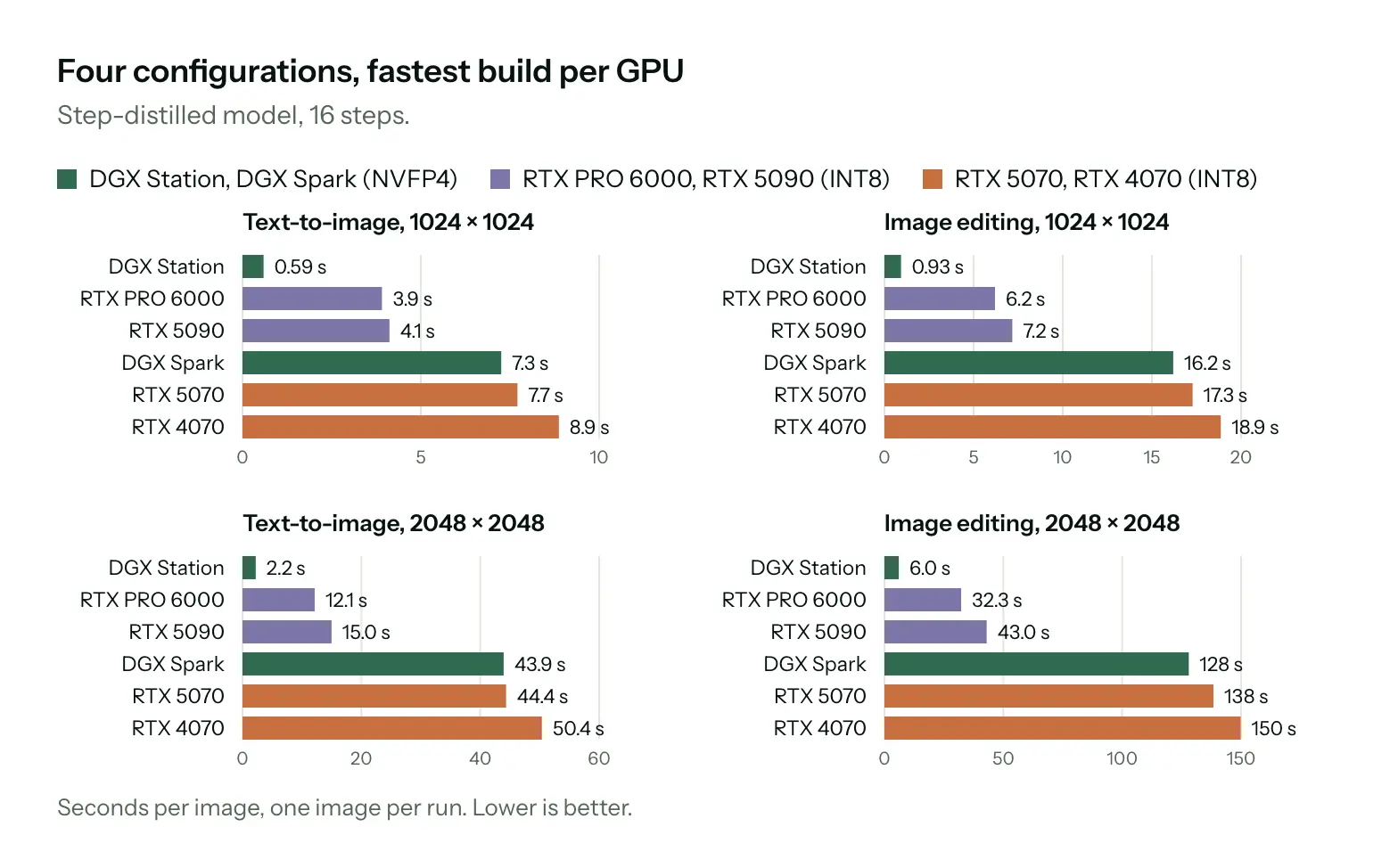 NVIDIA RTX Spark DGX Spark und DGX Station Benchmarks (Image © NVIDIA)
DGX Station: Enterprise-Class Local Inference
For larger enterprises with deep pockets, the DGX Station is set to launch with 748 GB of coherent memory and up to 20 petaflops of AI performance. This enables the system to serve over 30 users at speeds comparable to cloud-based models. Exact specifications are still to come, and it’s expected that there will be several variants available.
Enterprise Management and Windows Integration
To simplify deployment in enterprise environments, NVIDIA has introduced seven new integrations for IT management, including Cisco’s Splunk, Microsoft Intune, Absolute Security, and Tanium. A Windows-based version of the DGX Station is expected in December. This version enables engineers to run local LLMs on NVIDIA GB300 systems while using Windows-native software. Supported applications for manufacturing and engineering include those from Siemens, Dassault Systèmes, MathWorks, and Rockwell Automation.
Robotics and Cloud Functions
The DGX Station serves as a dedicated computing node for robotics, providing resources for post-training fine-tuning and simulations. NVIDIA has released three open-source reference workflows that use GPT-6 Astra and Isaac Lab to fine-tune GR00T 1.7 models and train synthetic data generation using Cosmos world models. In addition, NVIDIA Cloud Functions will be available in early access mode for Linux-based DGX Station systems. This feature enables teams to register local model endpoints in a shared catalog accessible through a single OpenAI-compatible entry point, transforming the Station into a locally controlled inference service.
Recursive Flint and the On-Premises Model Ecosystem
The pioneering AI lab Recursive Superintelligence has released “Recursive Flint,” an on-premises LLM (Large Language Model) optimized for RTX Spark. The model uses a “mixture-of-experts” architecture with a total of 40 billion parameters and 2.5 billion active parameters. On an RTX Spark with 64 GB, it achieves inference speeds of over 220 tokens per second. The model is available on Hugging Face under the Apache 2.0 license.
Day-Zero Model Support
NVIDIA has implemented “Day-Zero” support for several new models:
- Nemotron Bolt E4B: A 4-GB model for local voice assistants and embedded interfaces, set to be released on October 23.
- FLUX.3 Image Small: An image generation model with 5.6 billion parameters that can run on GeForce RTX GPUs with 8 GB of VRAM.
- Liquid AI LFM2.5-24B-A2B: An inference model that activates only 2 billion parameters per token.
- MiniMax M3.1 Flash: An open-source model designed for long-context AI on DGX Station and DGX Spark.
To optimize these models for local hardware, NVIDIA has released a collection of quantized checkpoints, including Qwen 3.8-Flash-Next-FP4-Local, to ensure efficient RAM usage while maintaining accuracy.
Inference Engine Optimizations
NVIDIA has collaborated with the vLLM and llama.cpp communities to improve the performance of agentic workloads on local hardware:
- llama.cpp: The integration of speculative decoding with MTP for Qwen 3.8 Flash Next increases speed on the NVIDIA RTX PRO 6000 Blackwell by up to 1.4x.
- vLLM: New “FlashInfer” prefill kernels and improved speculative decoding boost speed for Qwen 3.8 27B on the DGX Spark by a factor of 1.3 and increase throughput for GLM 5.3 Flash on the DGX Station by a factor of 1.2.
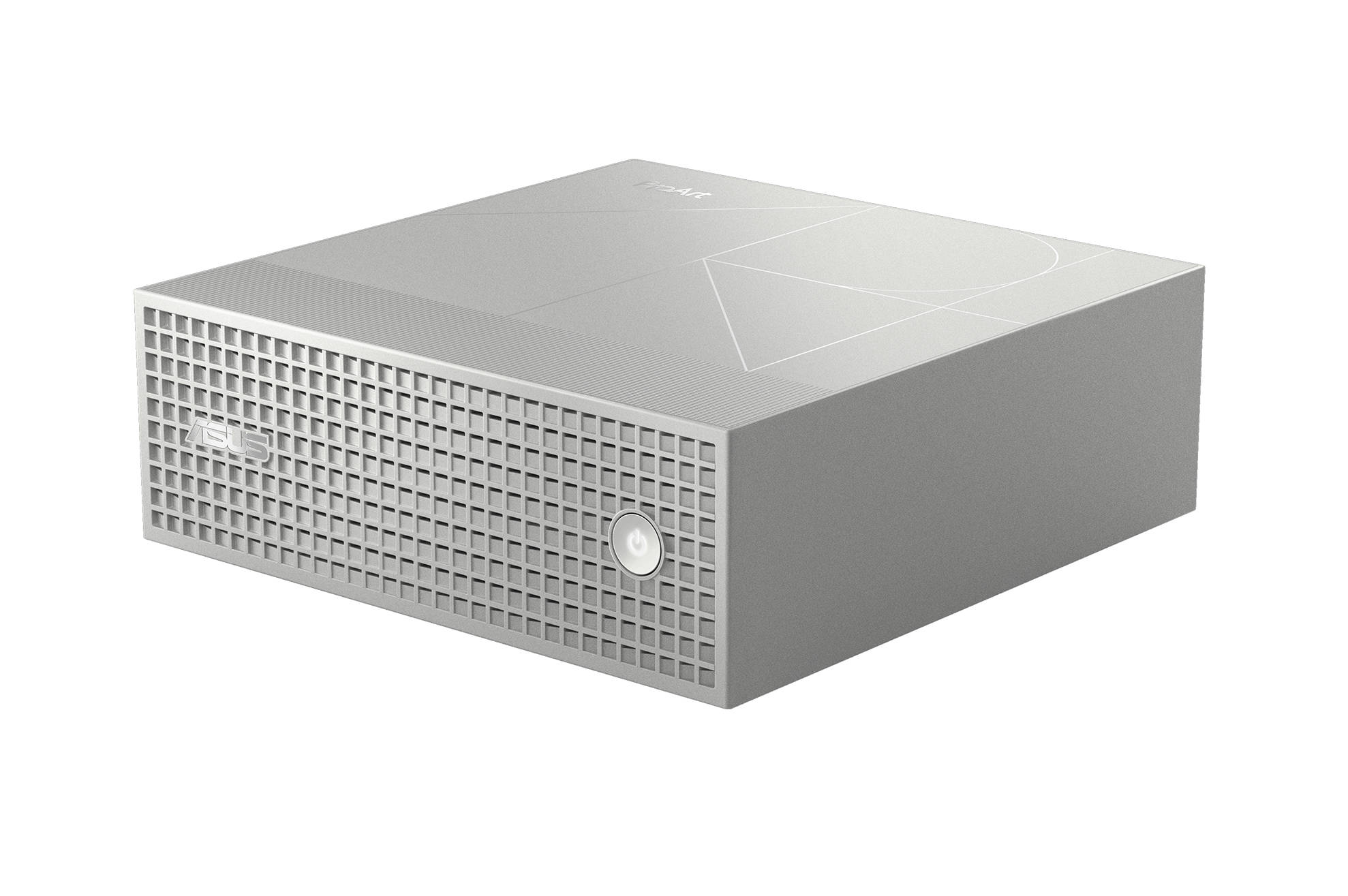 ASUS ProArt GR1X Mini PC Silber (Image © ASUS)
These examples show that NVIDIA not only aims to serve large data centers but also wants to promote local models in the EU to stay ahead of AMD. In recent years, NVIDIA has clearly focused on the U.S., but the current shift is finally making the EU more independent and forcing it to build its own infrastructure—a development NVIDIA intends to leverage to its advantage. Pricing will be interesting to watch, as so far the only DGX Station available is from partners we’ve already written about: