
 Computer Forum
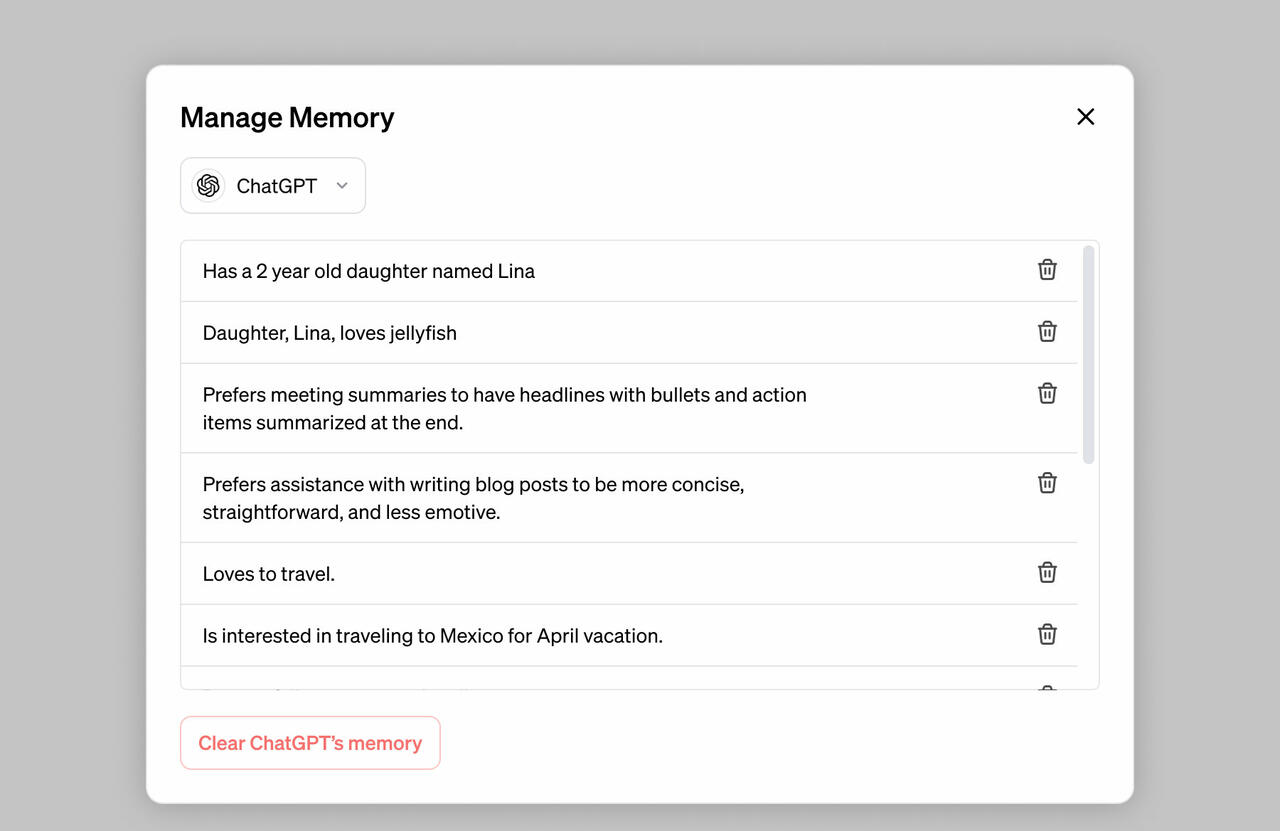 ChatGPT bekommt ein Gedächtnis (Image © OpenAI)
What is an LLM?
LLMs are advanced deep learning algorithms trained on massive datasets. They are central to applications in the field of natural language processing (NLP), where they interpret, summarize, generate, and predict content based on input queries. These models are complex and have millions or billions of parameters.
How do Large Language Models (LLMs) work?
LLMs function like neural networks, which are computer systems inspired by the human brain. Using transformational models, LLMs can quickly process and generate new content by recognizing relationships and patterns in the data. These models consist of multiple layers, including convolutional layers, embedding layers, feedforward layers, and attention layers, all of which contribute to text processing and generation.
The training process for LLMs is extensive and requires massive amounts of data and computational power. First, these models undergo unsupervised learning, during which unstructured data is processed to understand word relationships. This is followed by fine-tuning through supervised learning, during which the model improves its accuracy on specific tasks.
 ChatGPT 4 besser als professionelle Finanzanalysten (Image © DALL-E)
What Are Large Language Models (LLMs) Used For?
LLMs have a wide range of applications, from text classification and answering questions to summarizing documents and generating content. They are highly customizable, allowing them to be tailored to specific organizational needs. Their efficiency and speed, combined with low latency, make them invaluable tools across various industries. LLMs are used in large-scale projects such as OpenAI’s ChatGPT, **Anthropics Claude, Meta’s LLama, and Google Gemini.
Despite the challenges, the potential of LLMs to boost productivity and revolutionize communication is immense. As AI technology continues to advance, LLMs will undoubtedly play a crucial role in shaping future human-machine interaction.