
 Computer Forum
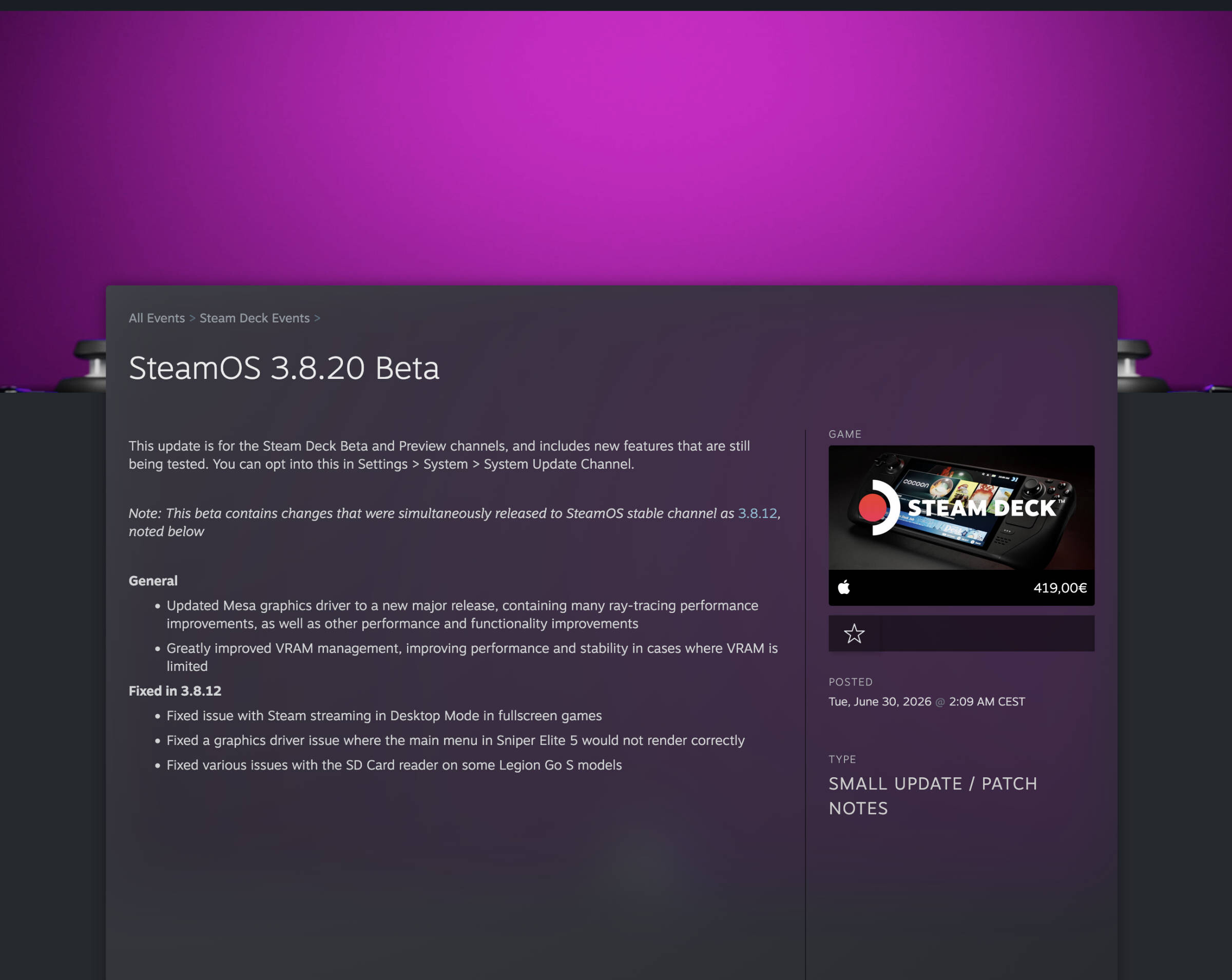 SteamOS 3 8 20 Beta (Image © Valve)
VRAM optimization for discrete GPUs
A key feature of this update is the adoption of memory management patches originally published by software developer Natalie Vock. These changes are aimed at discrete GPUs (dGPUs) that struggle with limited VRAM. By improving memory allocation, Valve aims to increase stability and performance, especially when using the Steam Deck at higher resolutions or running on custom dGPU hardware.
Technical tests conducted on CachyOS and via the dmemcg-booster implementation indicate that these optimizations can significantly reduce performance degradation. In some cases with hardware with low VRAM, performance increases could be almost double, potentially making certain titles playable on older or more limited hardware. However, it should be noted that these improvements do not apply to integrated GPUs, as these components already utilize shared system memory.
Mesa driver update and API stability
The update also upgrades the Mesa graphics driver to version 26.1.2. This major release brings several technical improvements, including enhanced support for ray tracing features and improved driver compatibility for the latest Intel GPU hardware. In addition, the new Mesa version focuses on the stability of the rendering pipeline. Users can expect more consistent frame rates and improved shader compilation when using the OpenGL and Vulkan APIs, reducing stutters and improving overall smoothness when playing games.
Hardware and software bug fixes
Beyond the core driver and memory updates, SteamOS 3.8.20 fixes several specific hardware and software conflicts. One important fix addresses issues with the Legion Go's SD card reader, providing more reliable access to external storage devices. Valve has also fixed bugs that affected streaming performance in desktop mode. The update also includes a targeted fix for the title “Sniper Elite 5”, which fixes previous issues with the graphics driver that prevented the game from displaying correctly on the platform.