
 Computer Forum
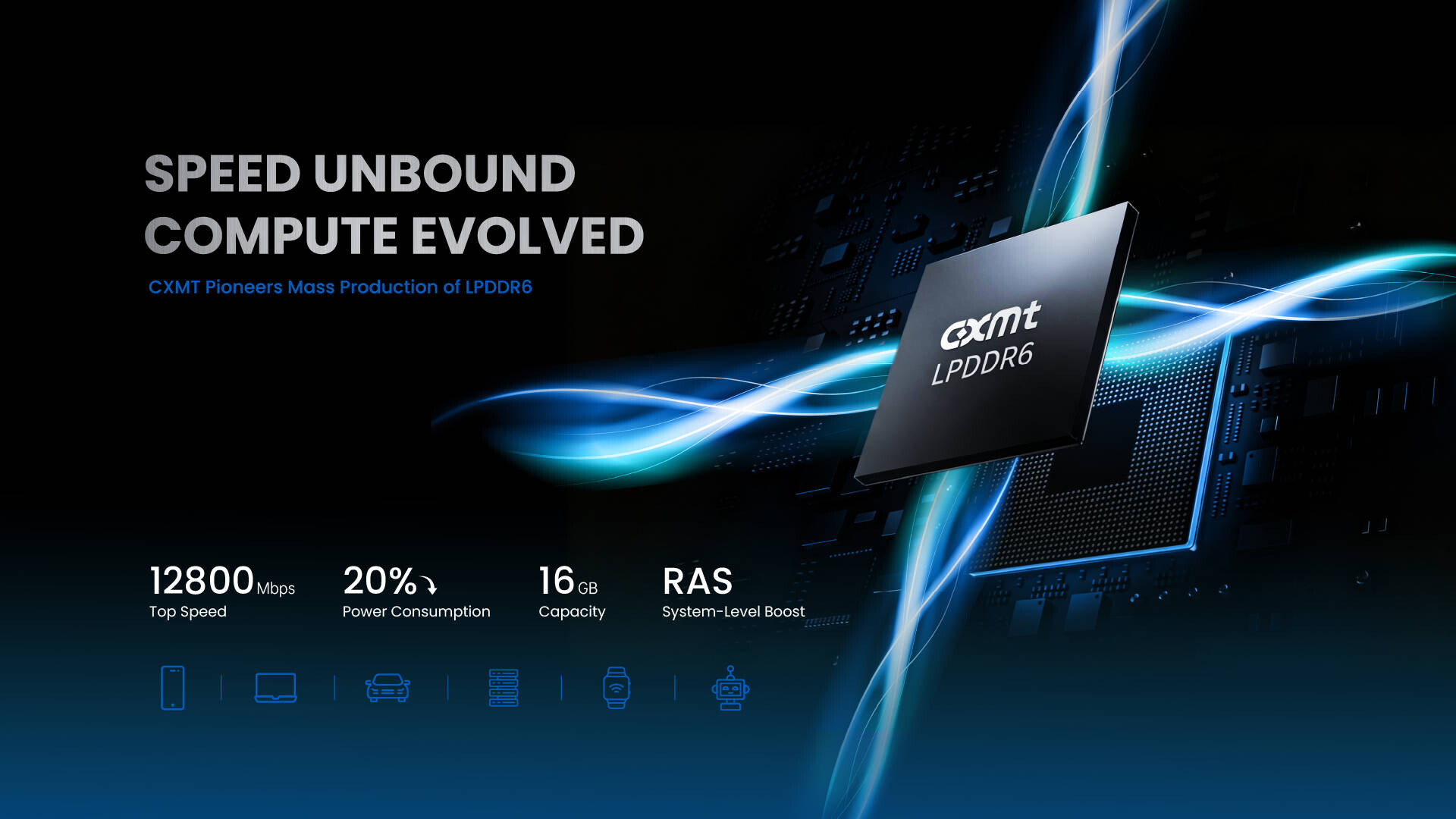 CXMT LPDDR6 Speicher (Image © CXMT)
Initial Market Launch
Xiaomi is the first customer for these LPDDR6 modules, which will be used in the Xiaomi 18 Fold. Since the device’s market launch is scheduled for September, shipments of the memory modules are already underway. Beyond the initial launch with Xiaomi, the manufacturer has confirmed a broad customer list that includes Lenovo, Honor, Vivo, Oppo, and Transsion, as well as enterprise customers such as Alibaba Cloud, ByteDance, and Tencent.
Technical Specifications and Performance Metrics
The first generation of LPDDR6 produced by CXMT offers a base speed of 10.7 Gbit/s, with a peak operating speed of 12.8 Gbit/s. This represents a technical advancement over LPDDR5X, which reached a maximum of 10.7 Gbit/s under extreme overclocking conditions.
The hardware specifications for these modules include:
- Capacity: 16 Gb (equivalent to 2 GB).
- Package: Package-on-Package (POP) package.
- Architecture: Ball Grid Array with approximately 1,295 pins.
Competitive Landscape and Industry Standards
SK hynix is also nearing the mass production phase for LPDDR6. The South Korean company has announced that its modules will utilize the sixth-generation 1c node in the 10-nm process. While SK hynix is aiming for higher potential speeds of up to 14.4 Gbit/s with a capacity of 16 Gb, both manufacturers are operating within the official specifications defined by JEDEC.
Questions and Answers About LPDDR6
What is the main difference in speed between LPDDR5X and LPDDR6?
LPDDR5X achieved a maximum overclocked speed of 10.7 Gbit/s. In contrast, the LPDDR6 standard starts at 10.7 Gbit/s, with the first CXMT production reaching 12.8 Gbit/s.
Which devices will be the first to use CXMT LPDDR6 memory?
The technology is set to make its debut in the “Xiaomi 18 Fold” smartphone, with components scheduled to ship before the device’s market launch in September.
What is the physical architecture of the CXMT LPDDR6 module?
The memory is housed in a “package-on-package” (POP) enclosure and uses a ball grid array with approximately 1,295 pins.
How does the capacity of these new modules compare to the competition?
Both CXMT and SK hynix produce modules with a capacity of 16 Gb, which is equivalent to 2 GB.
Do these memory speeds deviate from industry standards?
No. The speeds achieved by CXMT (12.8 Gbit/s) and SK hynix (14.4 Gbit/s) fall within the official LPDDR6 specifications established by JEDEC.