
 Computer Forum
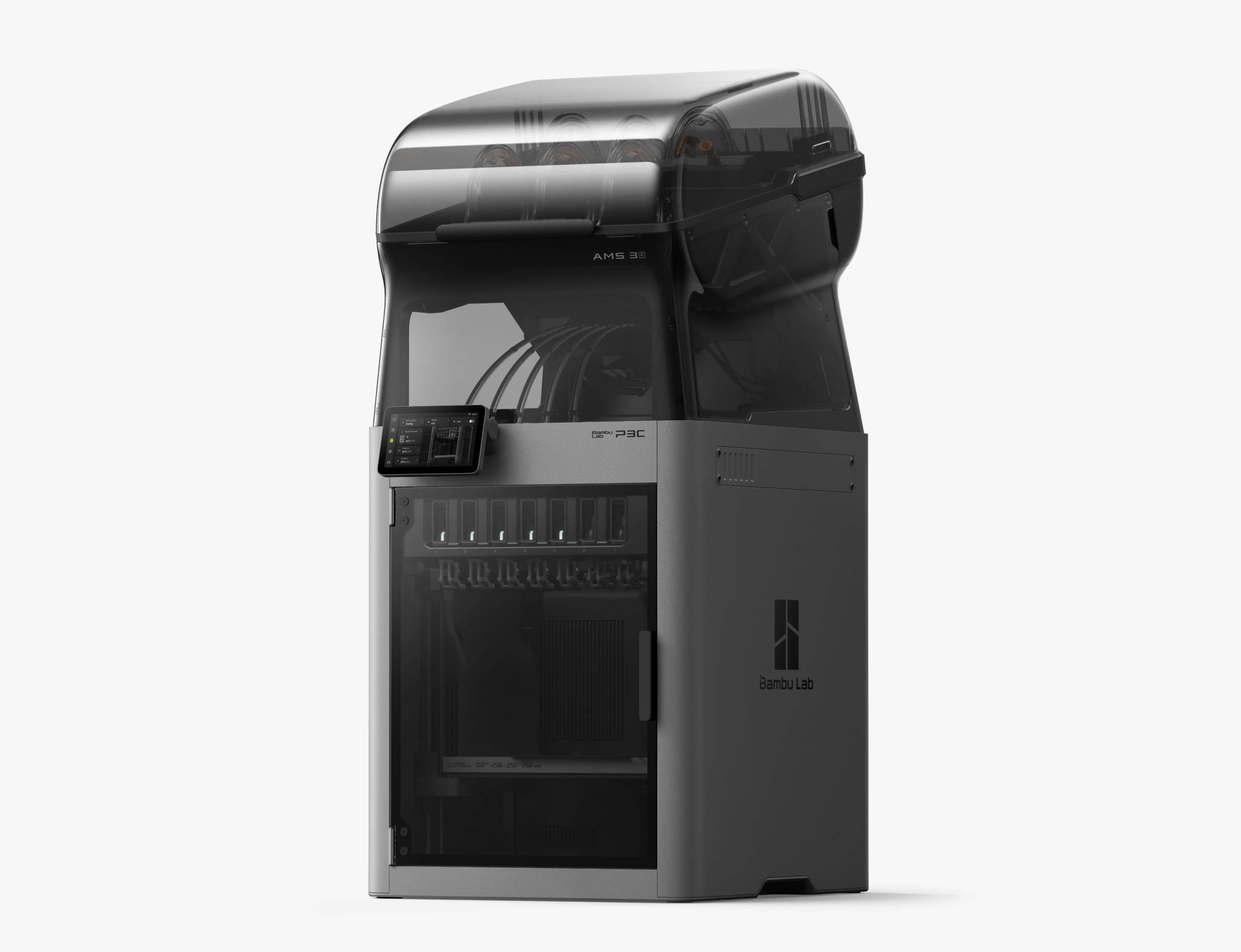
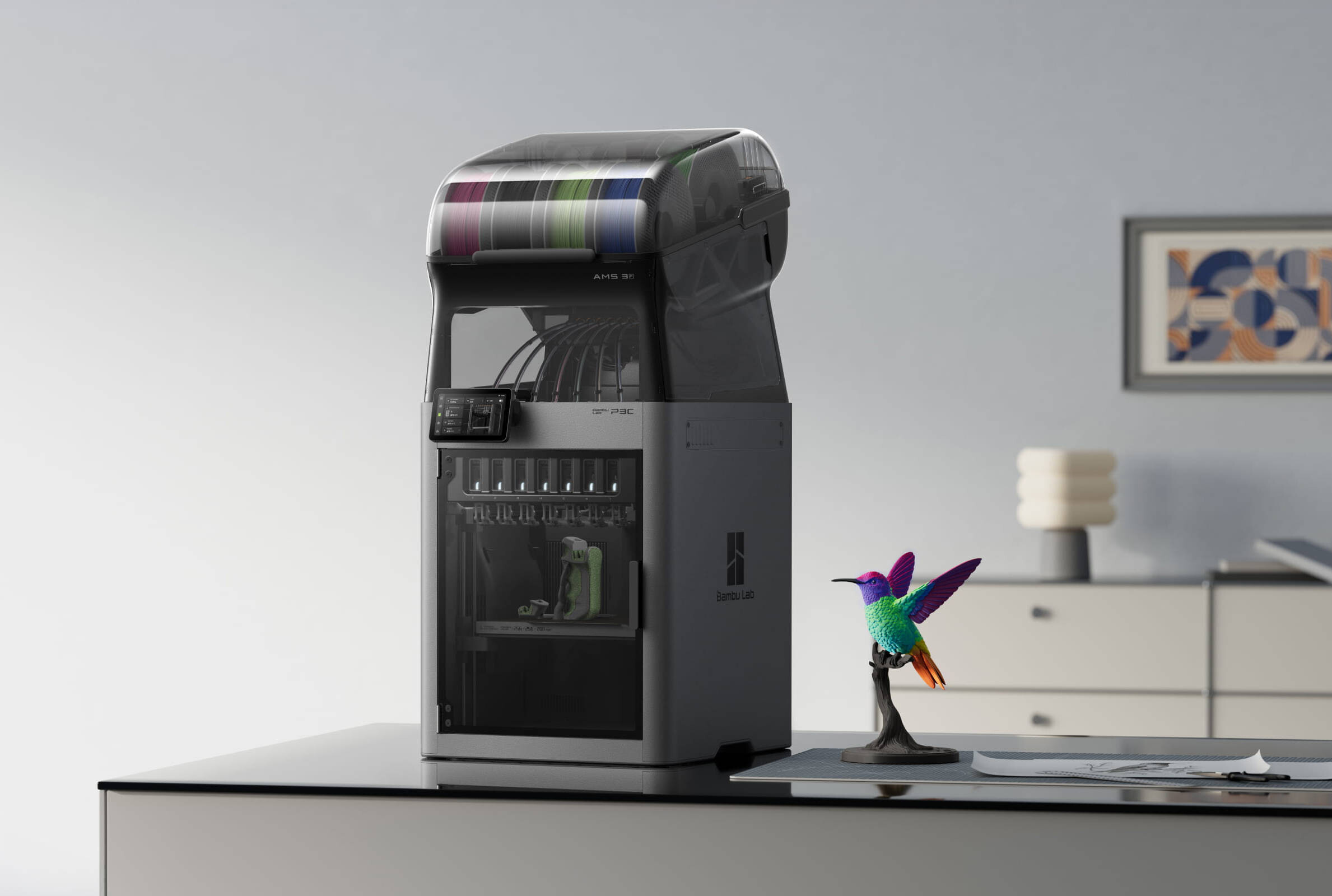 Bambu Lab P3C (Image © Bambu Lab)
Swaptek Tool Change and Material Management
Arguably the most important feature of the P3C—and the one that sets it apart from the P2S (Test)—is the Swaptek system, which allows the printer to switch between different tools in just six seconds. This efficiency is achieved through an active preheating function, in which the next nozzle is preheated for use while the current tool is still printing. The print head is supported by a retractable frame that adjusts its Z-position for precise alignment during docking and retracts during the printing process to prevent vibration-induced errors and collisions with the hoses.
The new 3D printer comes standard with five 0.4-mm PrintTools featuring hardened steel nozzles (HRC 55+). They are also compatible with technical-grade abrasive filaments. The system offers two additional slots for optional upgrades.
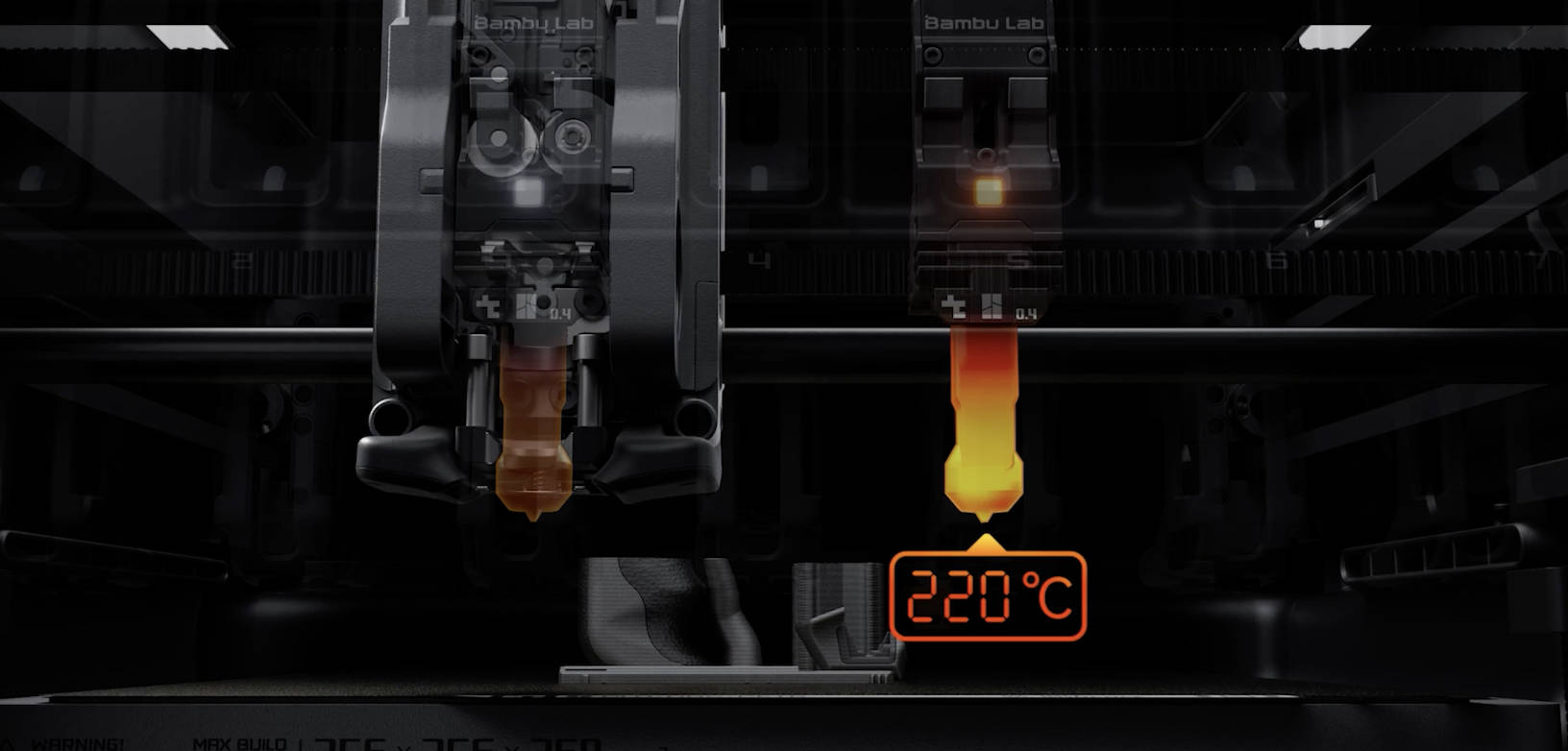 Bambu Lab P3C Heater (Image © Bambu Lab)
Comparison: P3C vs. H3C
The P3C is positioned as a more compact alternative to the H3C. The most important technical differences include the following:
- Build volume: P3C (256 x 256 x 260 mm) vs. H3C (330 x 320 x 325 mm).
- Filament slots: The P3C has 7 slots (5 standard); the H3C has 9 slots (8 standard slots for 1.75 mm and 1 standard slot for 2.85 mm).
- Temperature: The P3C reaches 300 °C at the nozzle / 110 °C on the print bed; the H3C reaches 350 °C at the nozzle / 120 °C on the print bed.
- Temperature Control: The H3C supports active dual-chamber temperature control up to 65 °C, while the P3C does not support active chamber heating.
- AMS System: The P3C uses the AMS 3P (manual feeding, optional drying); the H3C uses the AMS 3H (automatic feeding, integrated drying at 85 °C).
- Monitoring: The H3C features a camera on the print head for calibrating the vision encoder—a feature not available on the P3C.
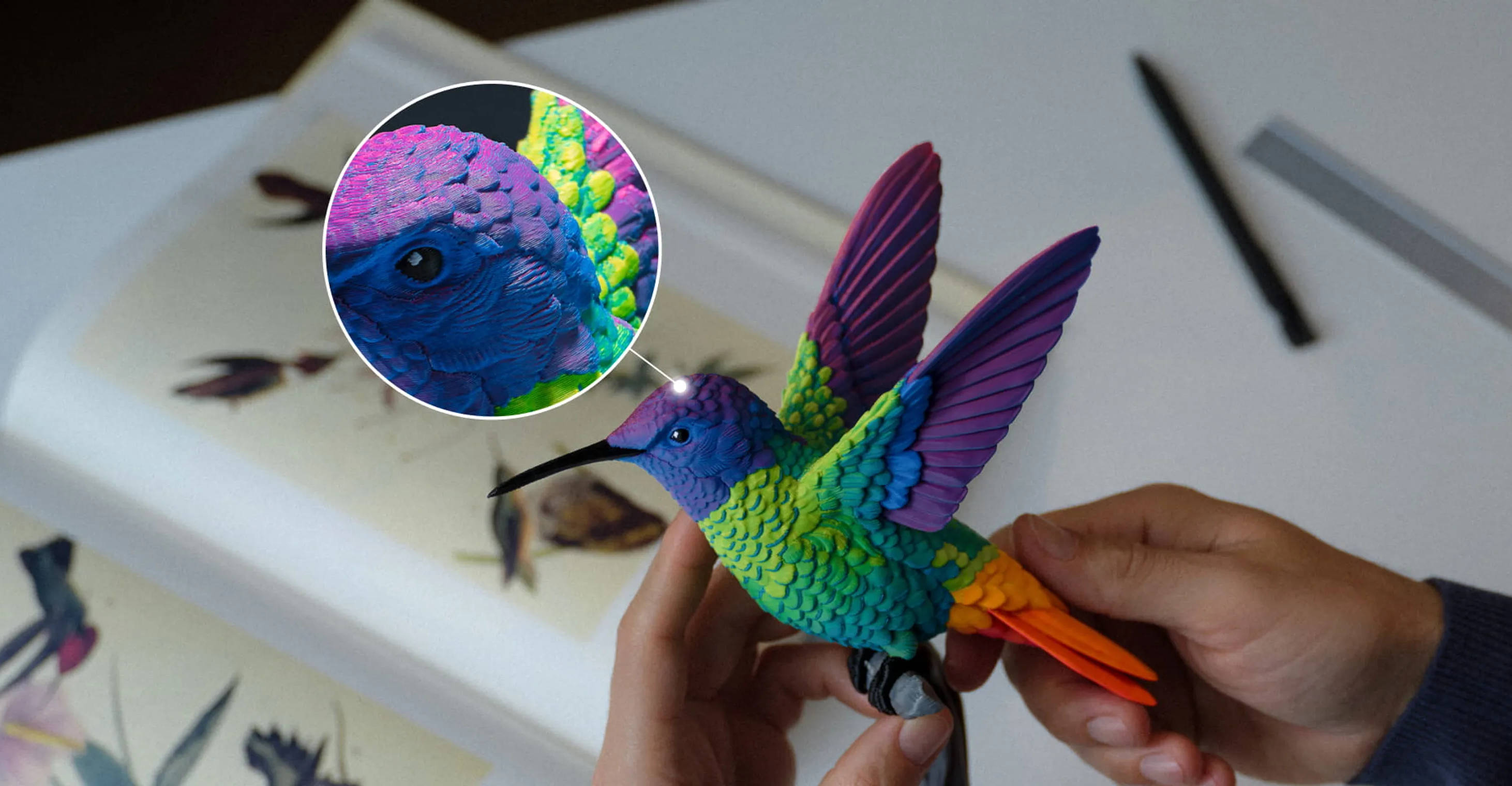 Bambu Lab P3C Muilti Color (Image © Bambu Lab)
Material Variety and TPU Performance
The P3C supports a wide range of filaments, with a particular focus on flexible materials. This allows users to utilize FlexFeed extruders with both 1.75-mm and 2.85-mm filaments. In combination with the optional 2.85-mm TPU PrintTool, the P3C can print ultra-soft materials with a hardness of up to 75A at a volume flow rate up to three times higher than that of conventional printing with flexible materials.
For color production, the system uses a CMYKW color mixing process to achieve the desired color. By using five primary colors and layer-by-layer deposition, the printer can produce a wide spectrum of shades without requiring a separate spool for each individual color.
Integrated AMS 3P Filament System
Filament management is handled by the AMS 3P. This provides a new integrated filament system that houses seven spools in a sealed chamber. The materials are protected from ambient humidity, just as with the AMS and AMS2 Pro. While the standard configuration handles seven materials, the P3C can be expanded to support up to 22 materials by connecting additional AMS units via PrintTool.
For moisture-sensitive materials such as PA, PC, and CF-reinforced filaments, an optional drying module can be inserted into slots 2 and 4 of the AMS 3P, enabling active drying at temperatures up to 75 degrees Celsius.
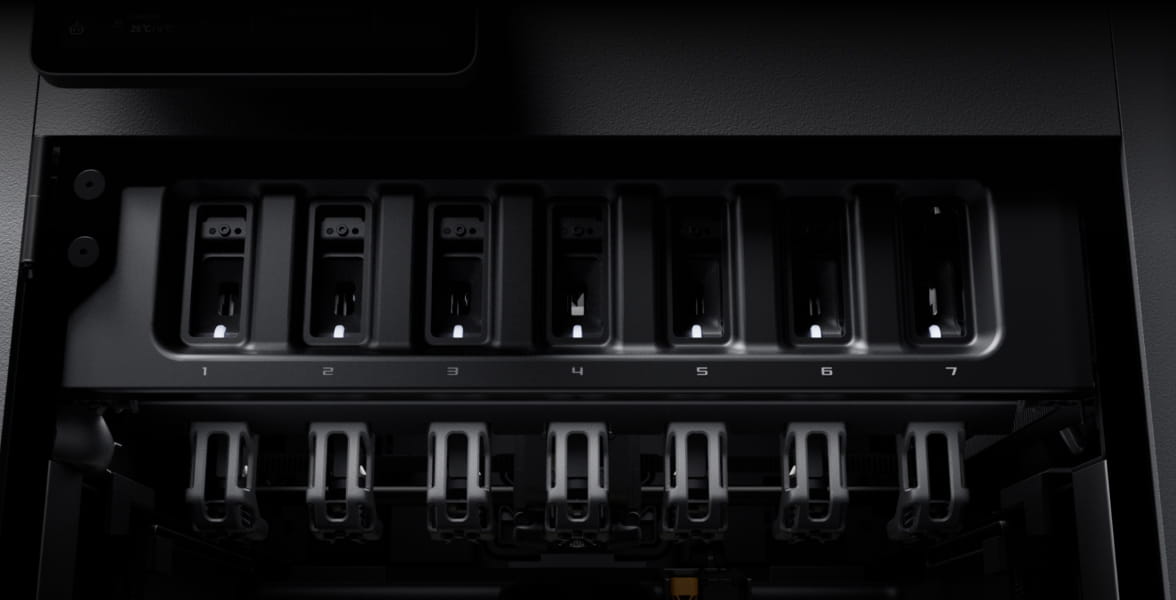 Bambu Lab P3C 2 (Image © Bambu Lab)
Optional Crafting and Specialized Tools
Beyond standard FFF technology, the P3C supports optional CraftTools. With these modules, the printer can also perform tasks outside the printing process, such as cutting, drawing, and embossing. These tools use the same mounting system as the PrintTools and are automatically swapped via the Swaptek system. Users can further optimize their workflow by adding a BirdsEye overhead camera to improve alignment during surface finishing.
 Bambu Lab P3C vs H3C (Image © Bambu Lab)
P3C Specifications
The P3C features a build volume of 256 x 256 x 260 mm and is housed in a steel enclosure with a plastic outer frame. The hardware is designed for high-temperature stability, with a maximum nozzle temperature of 300 degrees Celsius and a maximum build plate temperature of 110 degrees Celsius. The 3D printer complies with cybersecurity requirements in accordance with EU RED Article 3.3(d)(e) and ETSI EN 303 645 V2.1.1:2020.
To reduce downtime, the P3C features several automated systems:
- Fully Automatic Calibration: Automatically adjusts the Swaptek system and nozzle offsets.
- AI Monitoring: An image processing system that detects spaghetti errors, clogs in the flush tank, and blockages.
- HMS and MiniWiki: An on-screen guidance system that provides troubleshooting in plain language and step-by-step instructions for resolving issues.
P3C Prices and Configuration Options
The P3C is available in various configurations, starting at 1,149.00 EUR for the P3C Combo Package. Other available packages include:
- P3C Multi-Colorist Combo starting at €1,259
- P3C Multi-Colorist Combo (with filaments) starting at €1,289
- P3C Multi-Material Combo (with 2.85-mm TPU PrintTool) starting at €1,299
- P3C Complete Experience Combo starting at 1,699 € (includes Bambu Station and E1 air purifier)
Optional accessories include the Bambu Station for an improved working height and storage, as well as the E1 air purifier, which filters out VOCs, PM2.5, and microplastic particles as small as 0.3 micrometers.
As of the time of this news report, the printers were available for delivery starting December 11.