
 Computer Forum
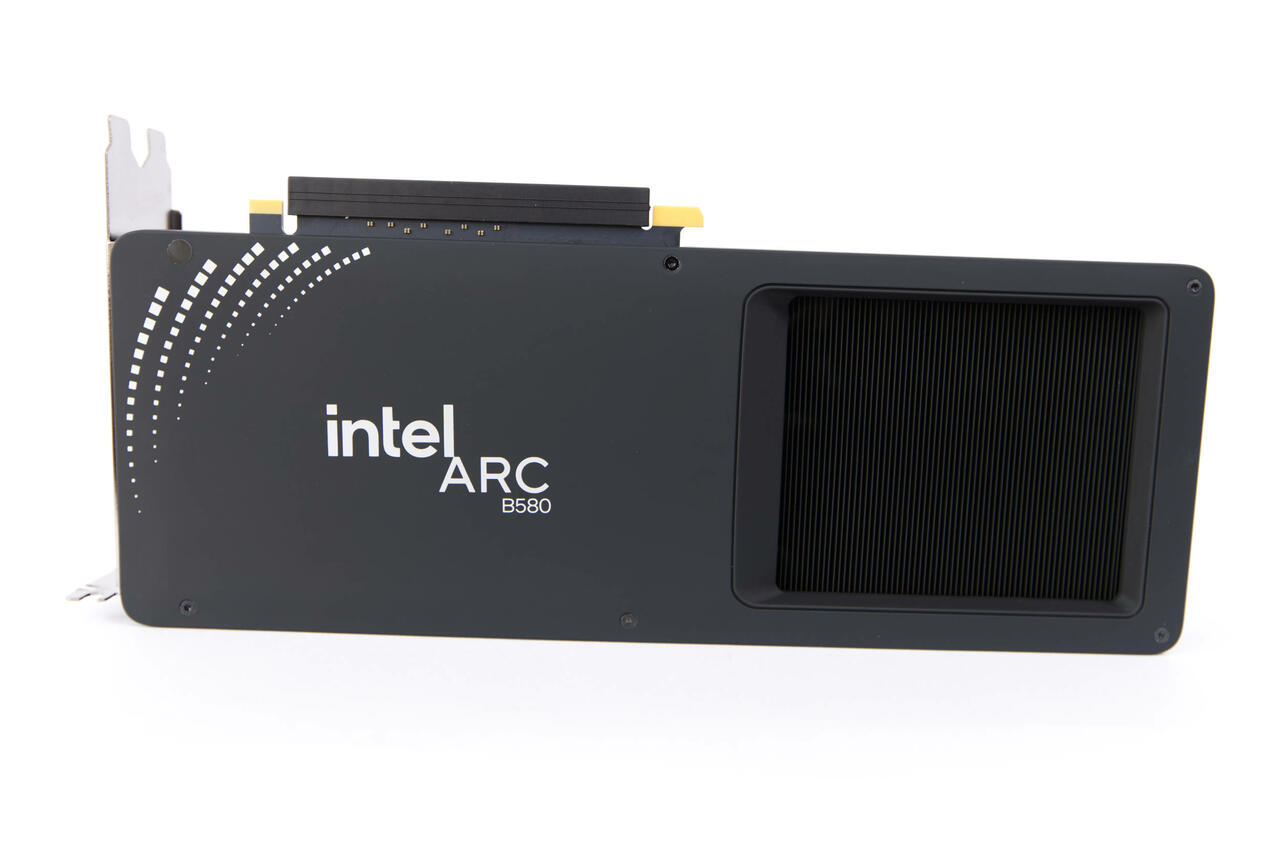 Intel Arc B580 Rückseite (Image © PCMasters.de)
The focus of this update is on refining memory displacement processes, particularly within the AMDGPU driver. Memory displacement occurs when the GPU has exhausted its available vRAM and must move data to the system’s general CPU RAM in order to continue operating. While moving data to system RAM typically results in performance losses, the new patches aim to make this transition more efficient. The goal is to ensure that memory overflow does not lead to drastic drops in frame rate or system instability, thereby guaranteeing a more controllable gaming experience even when reaching hardware limits.
Tests and Performance Results
To verify these improvements, tests were conducted using “Indiana Jones: The Great Circle.” In a specific scenario, the software was configured to require 9 GB of graphics memory on a graphics card equipped with only 8 GB of vRAM. Although the physical memory limit was exceeded by 1 GB, the game remained playable. These results demonstrate that optimized driver behavior can maintain a high level of performance even when significant amounts of data are swapped out to system RAM. However, it should be noted that effectiveness varies; if a title is already struggling to maintain minimum frame rates within the vRAM, further swapping may still result in performance targets being missed.
Deployment and Availability
The current status of this work has already been integrated into both the stable and preview channels of SteamOS. For the broader Linux ecosystem, the first patches have been submitted to DRM-Next and are scheduled to be merged into the mainline kernel for version 7.3. Further improvements to the GPU drivers’ memory behavior are currently being developed for future kernel releases. Users who wish to test these improvements outside of SteamOS can access the changes via the “vramstuff-rebase” branch.