
 Computer Forum
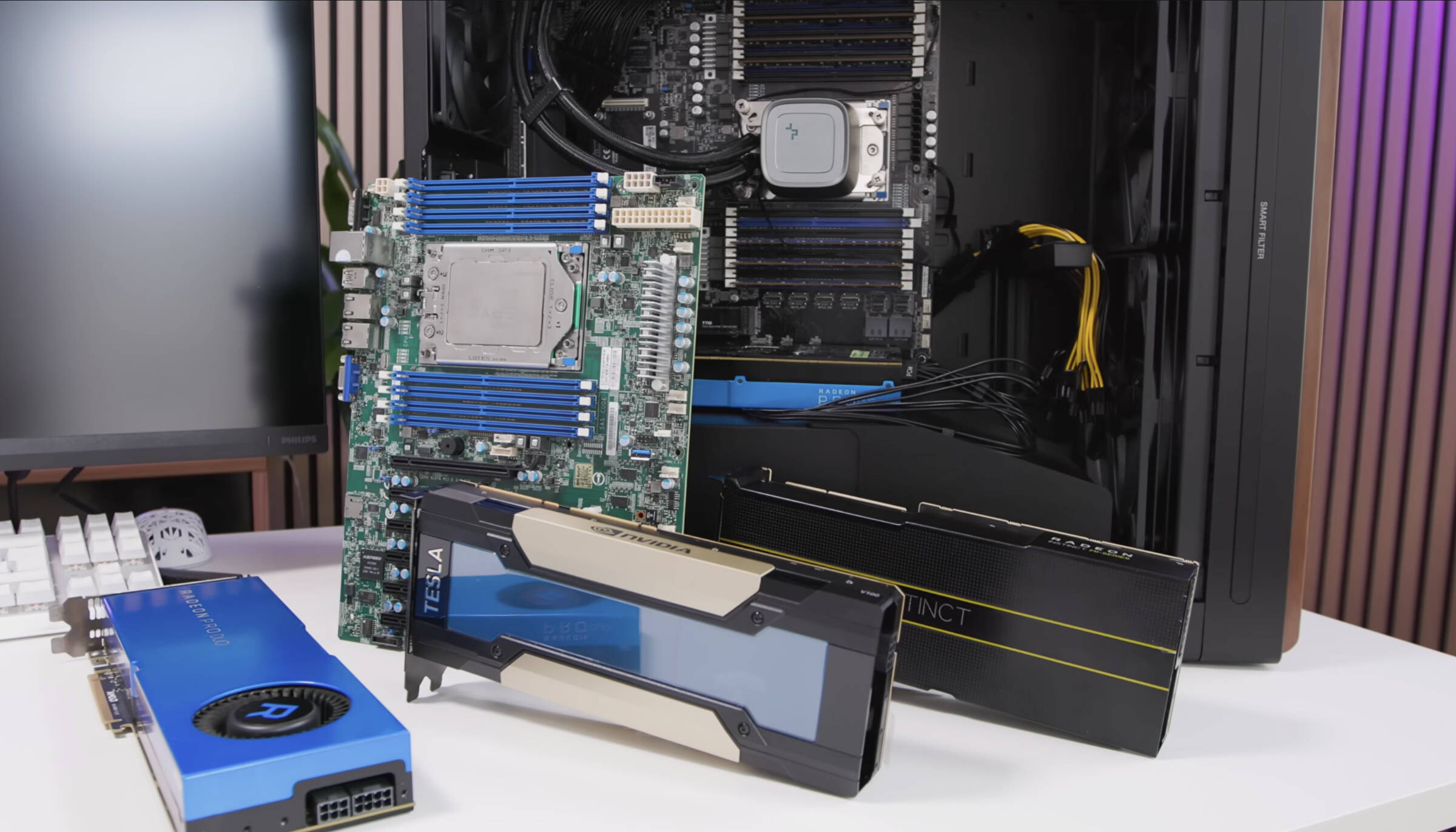 Cheapest AI accelerators for local AI & LLM models (Image © PCMasters.de)
Trend towards local execution
The main reason for local installation is data security. By hosting models on private hardware, organizations and individuals ensure that sensitive information never leaves the local network, effectively eliminating risks associated with third-party data collection.
Beyond security, local deployment frees the wallet from token-based pricing models and prevents lock-in to a specific provider. This autonomy enables complete transparency regarding model architecture and provides the ability to work in environments with limited or no internet connectivity.
AI accelerator for 2026
The hardware required for the local operation of an LLM depends on the number of parameters of the selected model.
For simple tasks, a system with 8 GB RAM and a standard CPU is sufficient to process small models such as Llama 3.3 2B. Users in the medium performance range usually need 16 to 32 GB of RAM and a dedicated GPU, such as the NVIDIA RTX 3060, to achieve acceptable inference speeds for models in the 7B to 13B parameter range. We recently published a performance comparison with cheap AI accelerators, such as the AMD Instinct MI50, NVIDIA TESLA V100 and more, showing the performance of used graphics cards. But there are also , which have over 32 GB of VRAM.
Software frameworks and integration tools
Several tools have been created to simplify the deployment process for non-programmers:
Ollama serves as the primary engine for managing and executing models via a command line interface and provides an optimized environment for macOS, Linux and Windows.
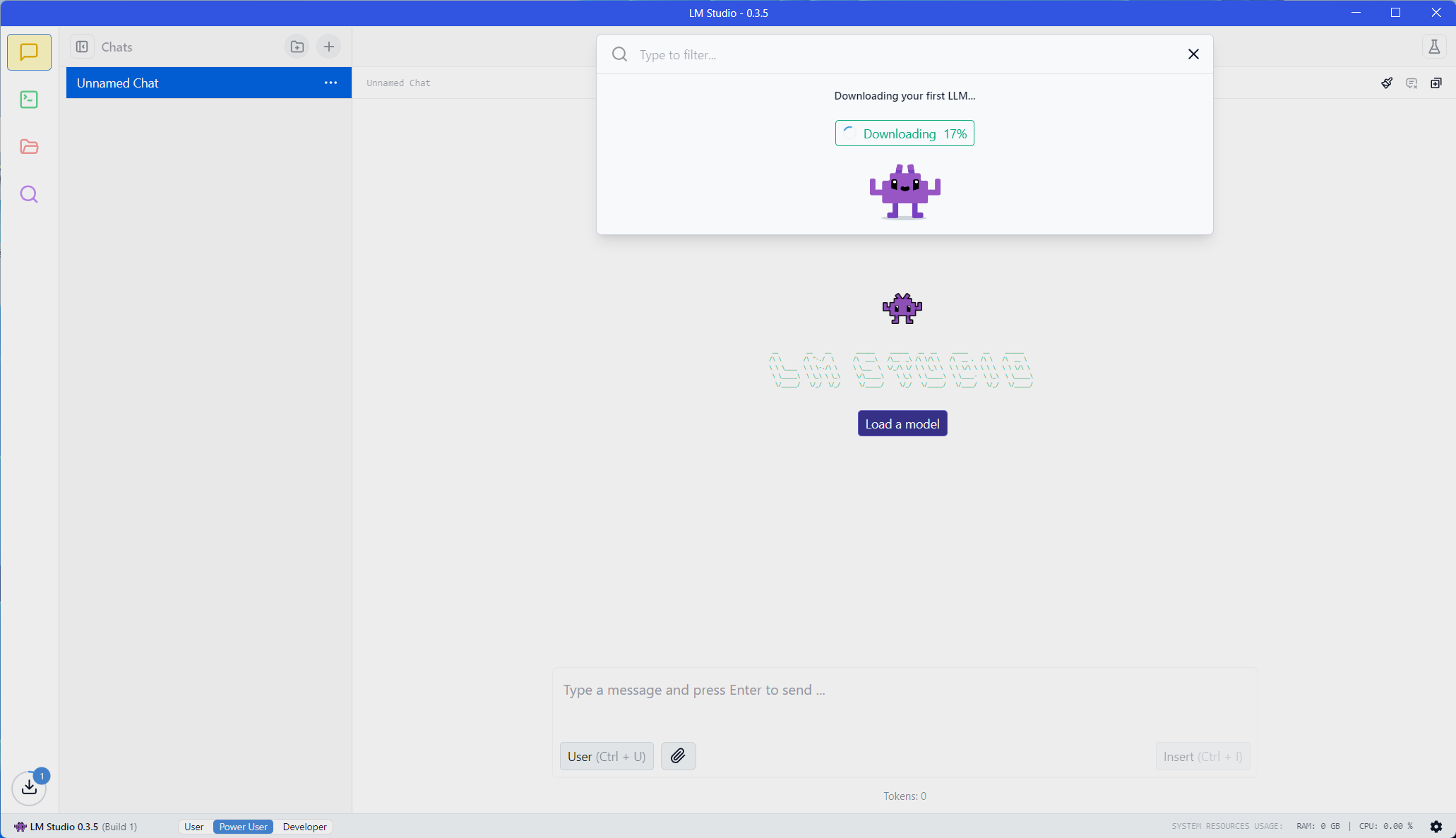 LM Studio Windows (Image © PCMasters)
LM Studio]3 provides a graphical user interface that simplifies finding models via Hugging Face, making it the ideal choice for those who prefer visual management over terminal commands.
GPT4All emphasizes accessibility and allows AI to run on different hardware configurations while providing a LocalDocs feature to analyze private files.
Jan AI and AnythingLLM** serve specific niches. Jan AI focuses on a privacy-first desktop experience, while AnythingLLM is designed for enterprise environments and provides built-in RAG (Retrieval-Augmented Generation) and team-oriented collaboration capabilities.
Analysis of leading open source models
DeepSeek-V3 utilizes a Mixture-of-Experts (MoE) design with 671 billion parameters, only a fraction of which are active per token. This makes it one of the most powerful open-weights models available for general use. Its sister model, DeepSeek-R1, focuses on reasoning and math and mirrors the capabilities of high-end reasoning models through chain-of-thought processing.
Llama 3.3 70B continues Meta's trend of providing highly optimized models with extensive community documentation and tuning options. Meanwhile, Qwen 2.5 has become the industry standard for local programming support due to its high precision in software engineering tasks.
For those with limited hardware, the Phi-3.5, Falcon3 10B and Gemma 2B** models offer a balance between efficiency and performance.
Deployment and performance optimization
Deployment is usually quite simple: install a manager such as Ollama or LM Studio, select a model based on the available RAM and initialize the environment.
To maximize output quality and speed, users often employ quantization - a process that reduces the accuracy of model weights to save memory without significantly sacrificing intelligence. In addition, the integration of RAG allows LLM to access external, local datasets, providing context-specific answers that are more accurate than generic model training.
Licensing remains an important consideration. While the MIT and Apache 2.0 licenses offer extensive freedom, the Meta Llama Community License contains specific restrictions on the number of monthly active users for commercial applications.