
 Computer Forum
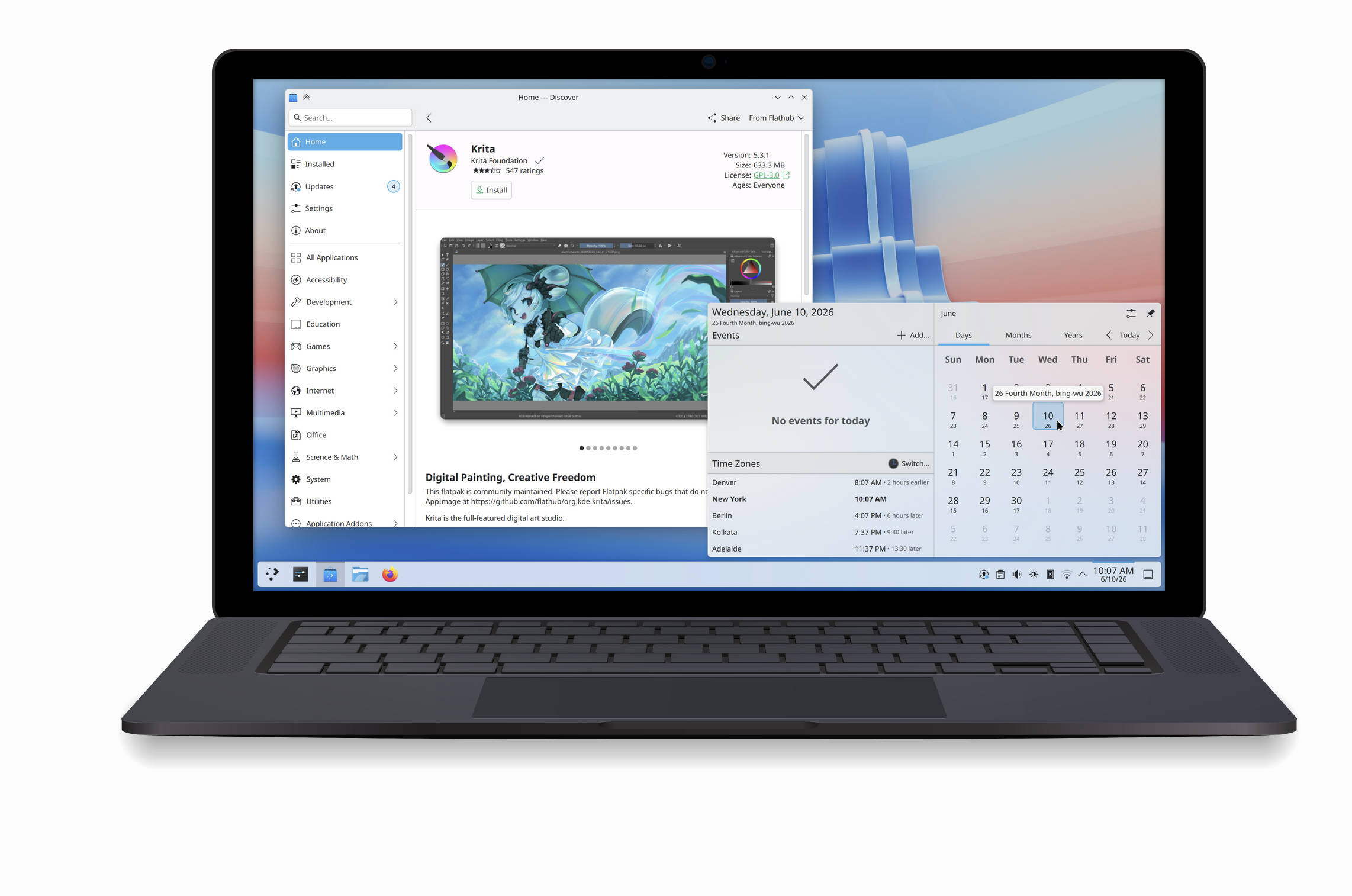 KDE Linux (Image © KDE)
One of the most important innovations is the introduction of a developer mode. This function is intended to hide complex tools and options by default so as not to overload the average user with unnecessary elements. Those who need these tools for debugging or customization can activate them by executing the toggle-developer-mode command in the console. Although the current version is still quite basic, it forms the basis for more advanced, developer-specific customizations in future updates.
In terms of software changes, the distribution has updated its media processing functions. The previously used audiocd-kio has been replaced by Audex for ripping CDs. To ensure easy installation and updates, the developers have packaged Audex for distribution via Flathub.
Significant progress has also been made in quality assurance and system deployment. The project's RAW image has been converted to a hybrid ISO, which increases compatibility and simplifies the boot process in different hardware environments. The team has also updated the project's documentation to reflect the latest changes.
To support error reporting and troubleshooting, a new utility called collect-logs has been introduced. This tool was developed based on the CachyOS error reporting script. It allows users to quickly collect important system data, including output from kscreen-doctor, uptime and the /etc/fstab file, making it easier for developers to diagnose problems using accurate system logs.